Sheet Metal Brake vs Hand Seamer: Which One Should You Buy?
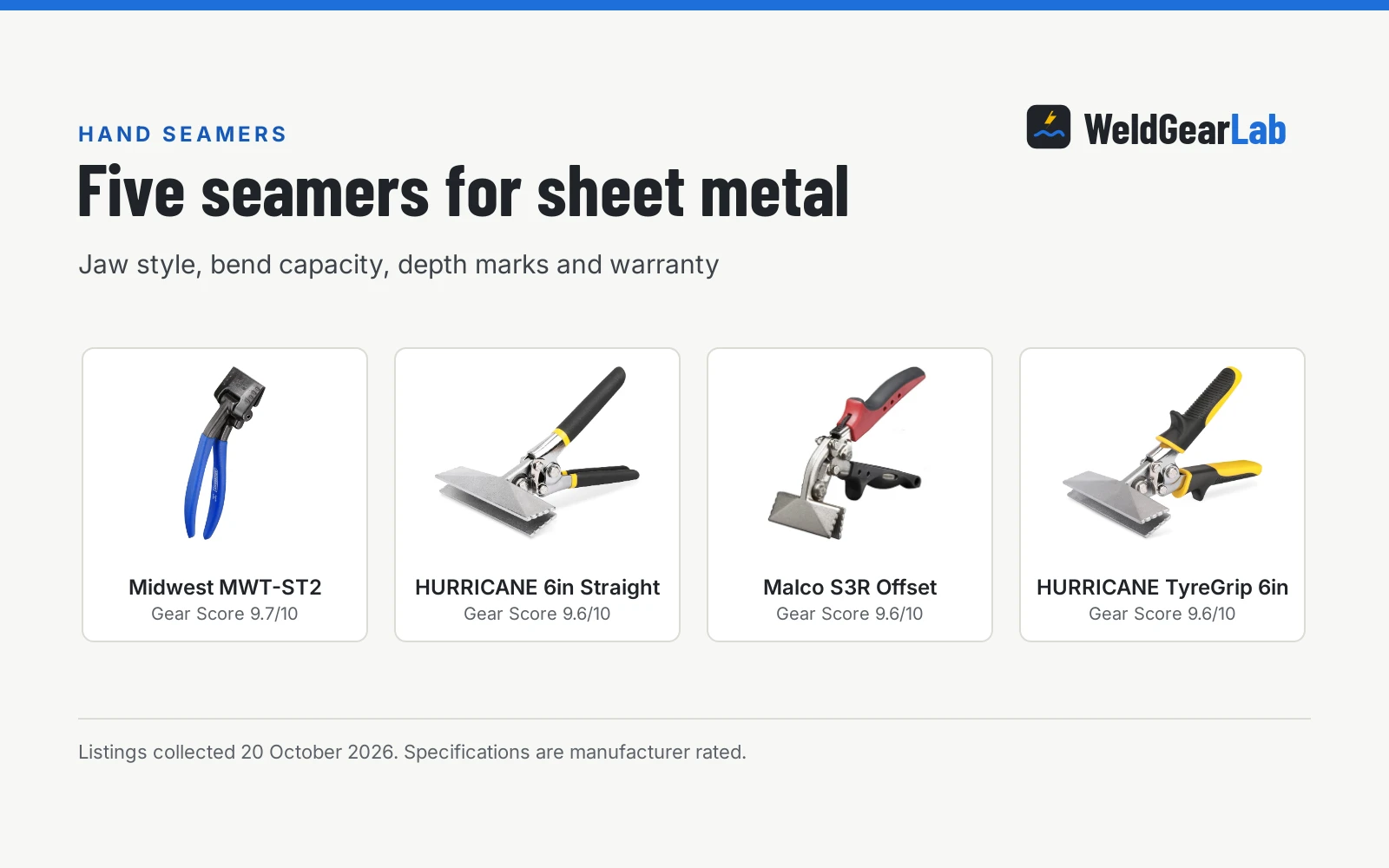
A brake bends long straight runs across a full sheet; a hand seamer folds short hems on installed work. How to choose, plus four bending tools from the listings.

On this page
Top picks at a glance
As an Amazon Associate I earn from qualifying purchases.
- 1
 KF5002 Sheet Metal Brake Steel Bending Brake Sheet Metal9.7/10View on Amazon
- 2
 MIDWEST Seamer Tong9.7/10View on Amazon
- 3
 HURRICANE Sheet Metal Hand Seamer9.6/10View on Amazon
- 4
 VEVOR Sheet Metal BrakeView on Amazon
- 5
 HURRICANE 3inch Sheet Metal Hand SeamerView on Amazon
- 6
 Malco S3R 3-Inch Offset Hand Seamer with Redline HandlesView on Amazon
- 7
 MAXPOWER 3" Offset Sheet Metal Bender Hand Seamer for BendingView on Amazon
- 8
 Malco S6R 6-Inch Hand Seamer with Redline HandlesView on Amazon
- 9
 ToughBuiltView on Amazon
You need a clean ninety-degree bend across a duct panel, and the panel is wider than your arms can reach. That is the job that decides the sheet metal brake vs hand seamer question. Short answer: a brake bends long, straight runs across the full width of a sheet, while a hand seamer folds short hems and seams where the work already sits, like installed ductwork or roofing panels.
Other welders and gear to compare
 VEVOR Sheet Metal BrakeCheck price on Amazon
 HURRICANE 3inch Sheet Metal Hand SeamerCheck price on Amazon
 Malco S3R 3-Inch Offset Hand Seamer with Redline HandlesCheck price on Amazon
 MAXPOWER 3" Offset Sheet Metal Bender Hand Seamer for BendingCheck price on Amazon
 Malco S6R 6-Inch Hand Seamer with Redline HandlesCheck price on Amazon
 ToughBuiltCheck price on Amazon
This guide links to our product roundups, where WeldGearLab gets a commission on purchases made through links on this page, and your price stays the same. Read our affiliate disclosure.
Sheet metal brake vs hand seamer: the short answer
Buy the brake when the work is long straight bends: duct runs, pans, boxes and flashing, where the bend has to stay straight across the whole width. Buy the hand seamer when the work is short folds on material that is already in place, like hems on ductwork or seams on roofing panels. They overlap on small parts, but each one is miserable at the other’s job.
Side by side
| Sheet metal brake | Hand seamer | Why it matters | |
|---|---|---|---|
| What it does | Bends long straight runs across the sheet | Folds short hems and seams by hand | Different jobs, different tools |
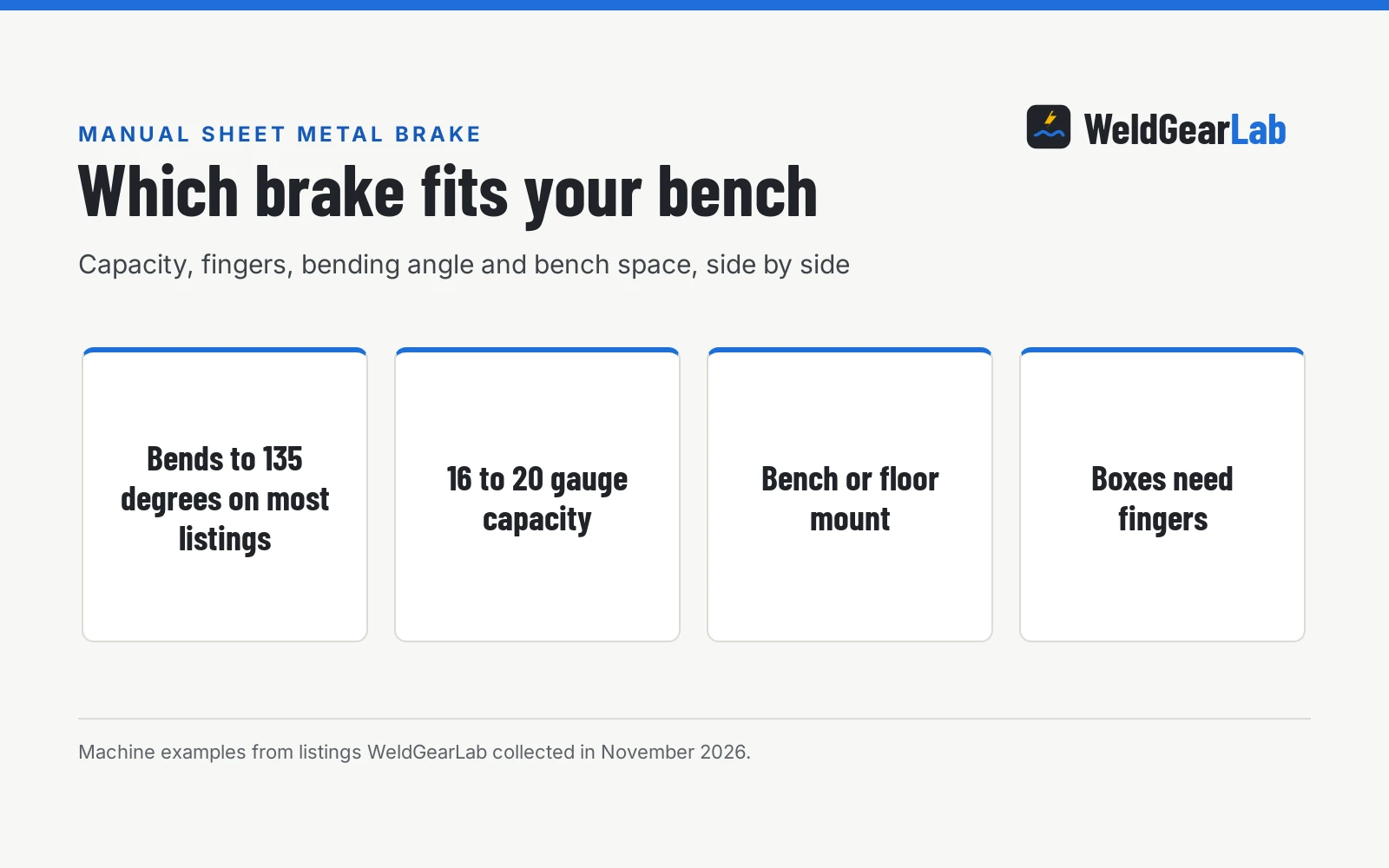
| Bend width | Up to the rated width: 48 or 28 inches here | The tool’s own length: 18 inches here | Measure the widest part you bend |
| Capacity | 20-gauge and 18-gauge steel per the listings | No bending capacity stated | Do not exceed the rated gauge |
| Portability | 61.7 to 312 pounds; bench or floor | 1.96 pounds; carries by hand | Seamers go where brakes cannot |
| The four picks | VEVOR, KASTFORCE and the Van Mark | The Kbiykuy seamer | Three brakes, one seamer |
Widths are per the listings. The VEVOR brake below lists a 0 to 130 degree range in its title and 0 to 135 degrees in its bullets; the Kbiykuy seamer below is the 18-inch version per its title, while its spec table says 12IN. Trust the title and bullets over the spec table.
When a sheet metal brake is the better choice
- Long straight bends. Duct runs, pans and boxes need a bend that stays straight across the full width, which is what a brake’s full-width blade does.
- Repeat work. Bending the same angle on part after part is faster clamped in a brake than folded by hand.
- Thicker stock. The brakes below are rated for 20-gauge and 18-gauge steel; a hand seamer is for light hems.
When a hand seamer is the better choice
- Installed work. Ductwork and roofing panels that cannot come down to the bench get folded in place with a seamer.
- Short hems. The Kbiykuy below folds 3/8-inch and 1-inch hems, the kind of small fold that is awkward on a big brake.
- Tight spots and ladders. At 1.96 pounds the seamer goes where a 61.7-pound brake cannot.
Four tools from the listings
The four bending tools in the listings, ranked by score. Two are brakes, one is a hand seamer, and the Van Mark is a long trim brake.
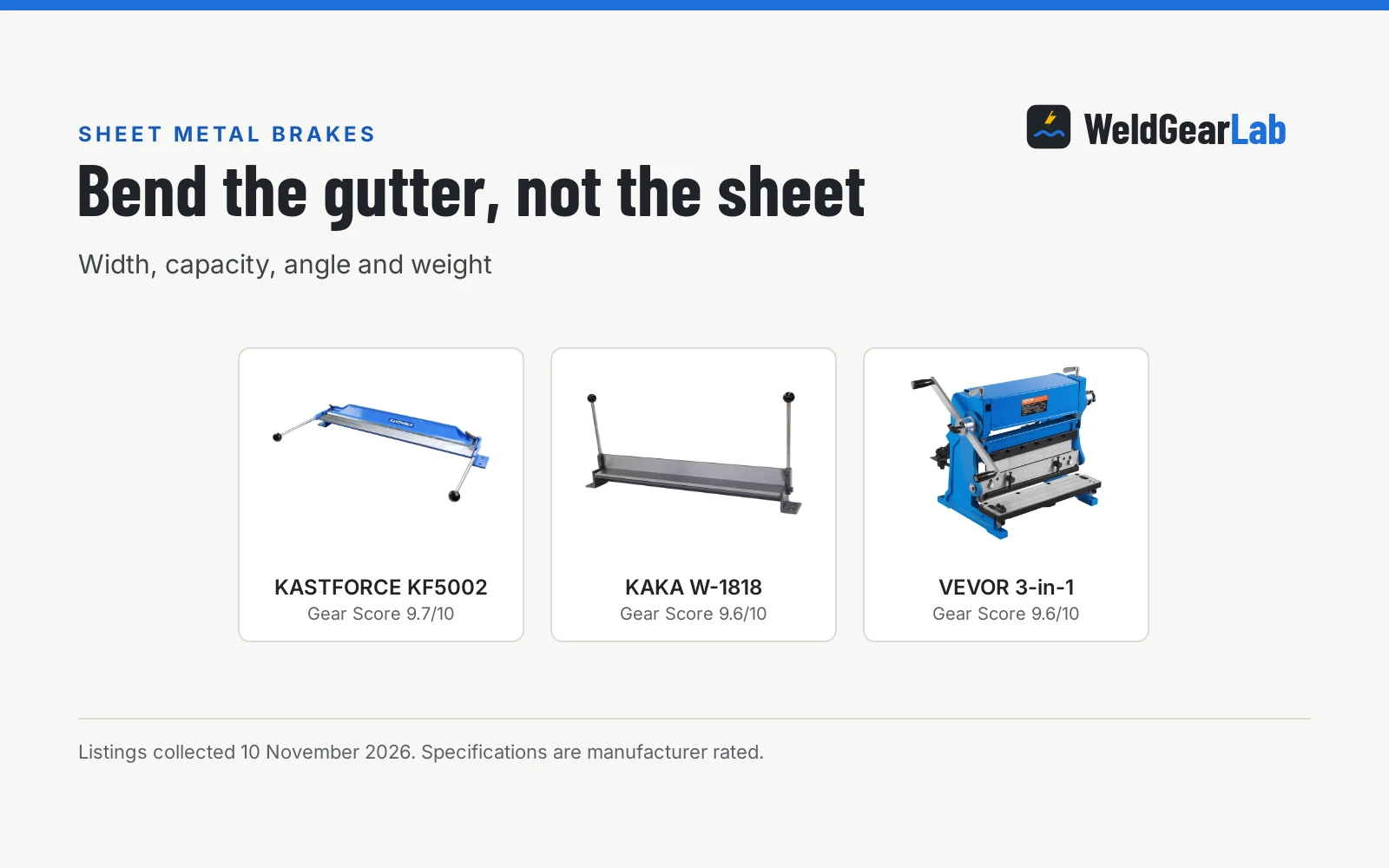
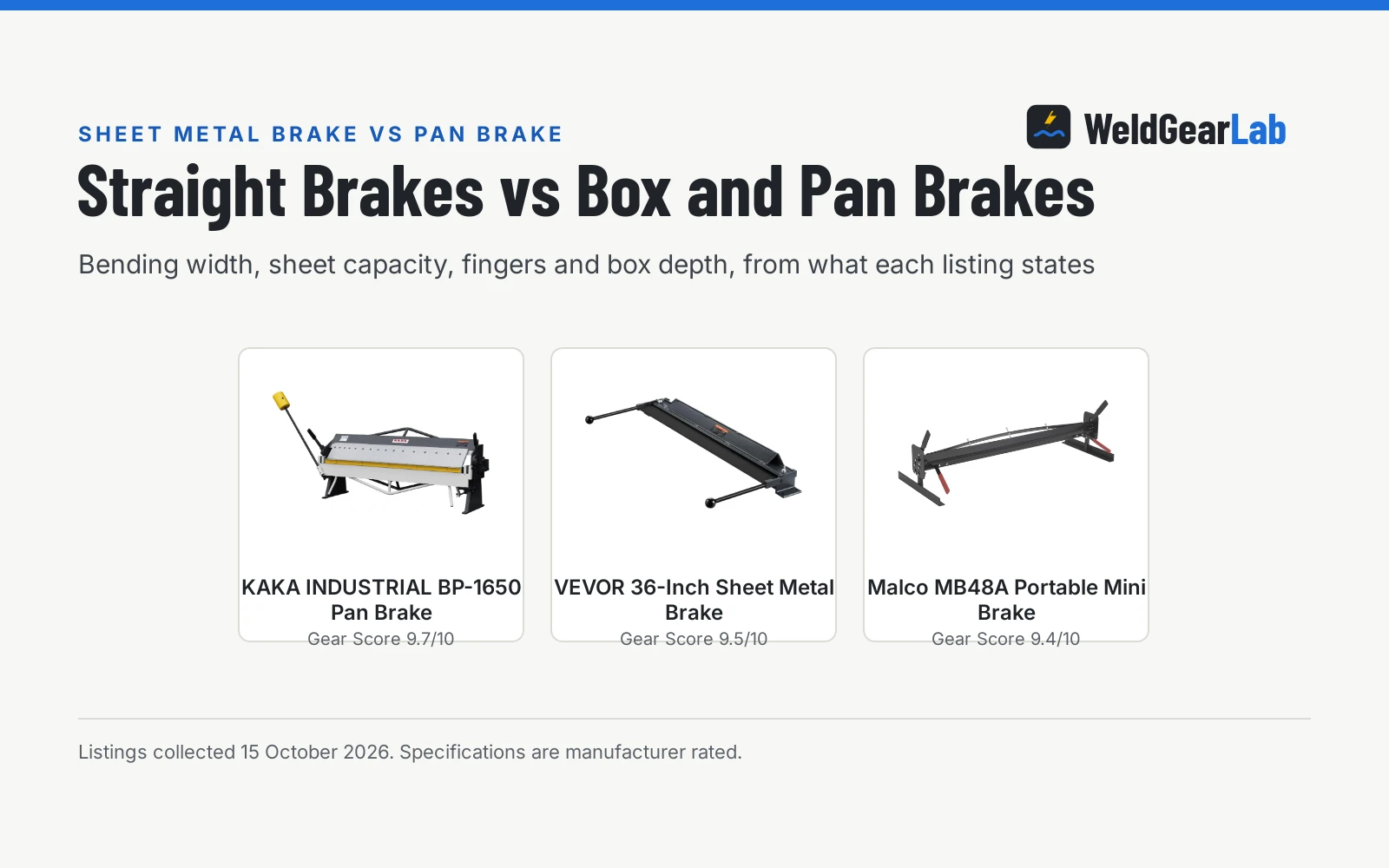
VEVOR 48-inch box and pan brake. The widest here at 48 inches, or 1220 millimeters, rated for 20-gauge low carbon steel and 14-gauge aluminum. The listing states a 0.31-inch thick blade, a reinforced rib design and two power handles, and the brake weighs 61.7 pounds. The bullets state a 0 to 135 degree bending range while the title says 0 to 130 degrees; the bullets win on that detail.
KASTFORCE KF5002 28-inch brake. A 28-inch, or 730-millimeter, brake rated for 1.2 millimeters (18 gauge) mild steel and 1.5 millimeters (16 gauge) aluminum, with a 0 to 135 degree bending range. The listing states a heavy-duty steel frame and names furnace ductwork, shutters and auto body projects as uses. It weighs 44 pounds.
Kbiykuy 18-inch hand seamer. The seamer of the group: an 18-inch folding tool with 3/8-inch and 1-inch fold depths and sight holes for alignment. The listing states a 16-gauge low-carbon steel body with a powder coat and an orange finish, and the tool weighs 1.96 pounds. The listing offers 12, 18 and 24 inch lengths; this is the 18-inch version per the title, though the spec table says 12IN.
Van Mark Mark II trim brake. A 10’6″ contractor brake for long trim and siding work, weighing 312 pounds with two handles. The listing is thin on specs but states a manufacturer’s 1-year limited warranty, which none of the other three state. The size suits full-length runs that neither the 48-inch brake nor the seamer can cover in one bend.
Measure before you buy
Check the width of the widest part you bend, not just the stock you buy. A 48-inch brake handles most duct panels, but full sheets and long trim need more. Check the gauge too: the VEVOR is rated for 20-gauge steel and the KASTFORCE for 18-gauge. If the work is mostly short hems on installed duct, skip the brake entirely and put the money toward a good seamer.
Sharp edges and springback. Freshly bent sheet has a knife edge: wear leather gloves when handling cut stock, and deburr edges that hands will touch. Clamp the brake to the bench before bending; a 61.7-pound brake can walk under a hard pull. Keep fingers out of the blade path and wear safety glasses when cutting or grinding near the work. See the OSHA welding overview and our Safety Disclaimer.
FAQ for welders
Can a hand seamer replace a brake?
Only for short hems. A seamer folds edges in 18-inch bites on the Kbiykuy here, while a brake bends the full width of a panel in one pass. For long straight bends, the brake is the right tool.
What gauge can these brakes bend?
Per the listings, the VEVOR handles 20-gauge low carbon steel and 14-gauge aluminum, and the KASTFORCE handles 1.2-millimeter (18 gauge) mild steel and 1.5-millimeter (16 gauge) aluminum. The seamer states no bending capacity, only that its own body is 16-gauge steel.
Do I need the 48-inch brake or is 28 inches enough?
It depends on the widest part you bend. The KASTFORCE covers 28 inches, which handles most small duct fittings and boxes; the VEVOR covers 48 inches for full panels. Measure the work, not the shop.
Why do the listings disagree on the VEVOR’s bending angle?
The title says 0 to 130 degrees and the bullets say 0 to 135 degrees. When a listing contradicts itself, trust the bullets over the title, and confirm with the seller before you buy if the angle matters to the work.
Is the Van Mark worth it with so few specs listed?
It depends on the work. The listing states a 10’6″ size, a 312-pound weight and a 1-year limited warranty, but little else. It suits long trim runs; for general shop bending, the VEVOR and KASTFORCE listings state far more of what you need to decide.
Related: best hand seamer for ductwork, best hand seamer for sheet metal, sheet metal brake vs pan brake, and slip roll vs sheet metal brake.