Sheet Metal Brake vs Pan Brake: Which One Should You Buy?
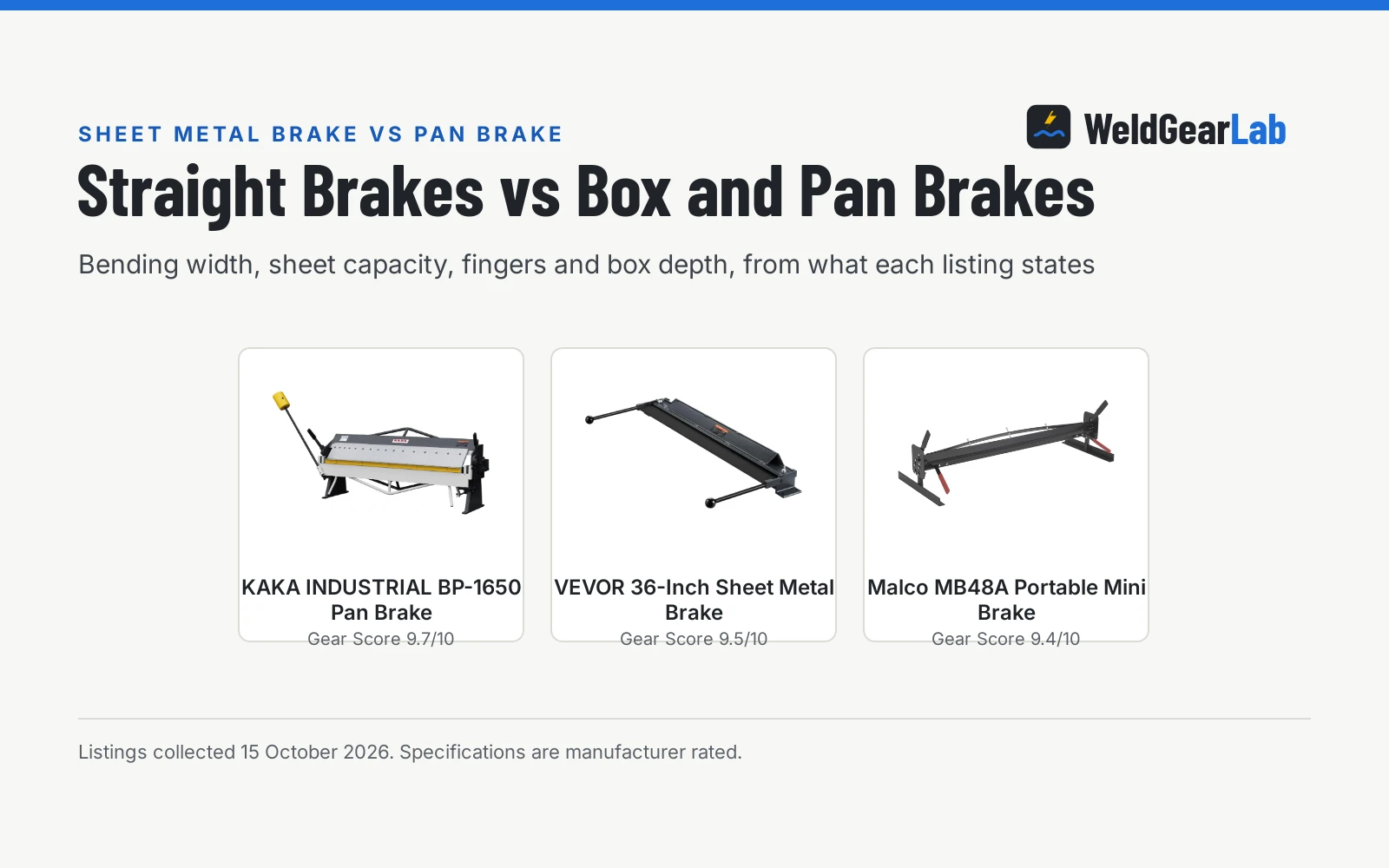
Straight sheet metal brakes and pan brakes compare on sheet capacity, removable fingers, box depth, frame weight and practical shop metal fabrication uses.

On this page
Top picks at a glance
As an Amazon Associate I earn from qualifying purchases.
- 1
 Box and Pan Brake, 50 in 16 Gauge9.7/10View on Amazon
- 2
 VEVOR Sheet Metal Brake, 36-Inch9.5/10View on Amazon
- 3
 Malco MB48A 48" Portable Mini Brake9.4/10View on Amazon
Verdict. In this sheet metal brake vs pan brake comparison, choose a pan brake if your work requires forming three-dimensional pans, boxes, or enclosures with upright flanges that need removable fingers for clearance, as represented by the KAKA INDUSTRIAL BP-1650 Pan Brake. Choose a straight sheet metal brake if your work consists of continuous, unbroken bends along panels, flashing, or ductwork, with the VEVOR 36-Inch Sheet Metal Brake bending 20-gauge low-carbon steel and the Malco MB48A Portable Mini Brake bending up to 22-gauge steel, against the KAKA INDUSTRIAL BP-1650 Pan Brake at 16 gauge.
You are laying out a sheet metal project on the fab table, whether forming clean flanges for an enclosure or bending a long run of drip edge flashing. Deciding between a sheet metal brake vs pan brake comes down to the geometry of your bends and whether your work requires clearance for standing flanges. A straight sheet metal brake handles continuous, unbroken folds along an entire sheet, while a pan brake uses removable fingers to form three-dimensional boxes without crushing previously bent sides. This comparison puts the two designs head-to-head using the three brakes below as concrete examples.
WeldGearLab gets a commission on purchases made through links on this page, and your price stays the same. Read our affiliate disclosure.
The featured brakes
| # | Product | Gear Score | Buy |
|---|---|---|---|
| 1 | Box and Pan Brake, 50 in 16 Gauge | 9.7/10 | Buy on Amazon |
| 2 | VEVOR Sheet Metal Brake, 36-Inch | 9.5/10 | Buy on Amazon |
| 3 | Malco MB48A 48" Portable Mini Brake | 9.4/10 | Buy on Amazon |

Box and Pan Brake, 50 in 16 Gauge
A heavy-duty 50-inch box and pan brake rated for 16-gauge mild steel, featuring 16 removable fingers, 4-inch box depth, counterweight and stop rod.
Pros
- 16 removable fingers in 6, 6 and 4 piece groups support box and pan bending up to 4 inches deep
- 50-inch bending width with 16-gauge (1.5 mm) mild steel capacity
- Features 5/8-inch beam adjustment, 1-1/4-inch beam lift, counterweight and stop rod for repeat bends
- Fully welded steel frame with 2 extended handles built for stationary shop fabrication
Cons
- Weighs 451 pounds net (561 pounds gross) and requires a freight delivery appointment
- Residential delivery strongly recommends liftgate service because standard trucks lack loading docks
- No warranty term is stated in the listing
- Large 64 by 20 inch footprint requires dedicated floor space in the shop

VEVOR Sheet Metal Brake, 36-Inch
A 36-inch bench-mountable sheet metal brake with a 0.31-inch thick Q235 steel blade, rated for 20-gauge low-carbon steel and 14-gauge aluminum.
Pros
- Bends up to 20-gauge low-carbon steel and 14-gauge aluminum across a 36-inch width
- Constructed from Q235 steel with a 0.31-inch thick blade and reinforced ribs
- Integrated press plate secures sheet metal without requiring separate loose clamping fixtures
- Weighs 53 pounds with screw-mounted holes for benchtop mounting
Cons
- No warranty term is stated in the listing
- Title states a 0-130 degree angle while bullets state a 0-135 degree range
Malco MB48A 48" Portable Mini Brake
A 48-inch portable mini brake weighing 58 pounds, designed for bending up to 22-gauge steel on HVAC ductwork, roofing and jobsite fabrication.
Pros
- 48-inch bending width handles full panels, trim and duct components
- Bends up to 22-gauge steel for HVAC, roofing and sheet metal work
- Weighs 58 pounds with compact 52 by 12 by 10 inch dimensions for jobsite transport
- Designed for forming flashing, ductwork components and custom sheet pieces on site
Cons
- Bending capacity is limited to 22-gauge steel, thinner than 20-gauge or 16-gauge alternatives
- Listing leaves the bending angle range and degree adjustment unstated
Other welders and gear to compare
 VEVOR Box and Pan BrakeCheck price on Amazon
 KF5006 Box and Pan Brake Sheet Metal Folder Bending BrakeCheck price on Amazon
 KAKA INDUSTRIAL Metal BrakeCheck price on Amazon
 KAKA INDUSTRIAL Sheet Metal BrakeCheck price on Amazon
 VEVOR Sheet Metal BrakeCheck price on Amazon
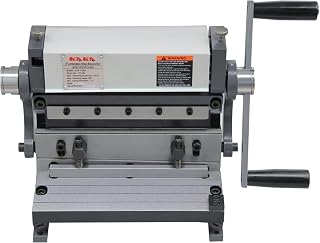
 KAKA INDUSTRIAL 3-IN-1/12 Sheet Metal BrakeCheck price on Amazon
Side by side
| KAKA INDUSTRIAL BP-1650 Pan Brake | VEVOR 36-Inch Sheet Metal Brake | Malco MB48A Portable Mini Brake | |
|---|---|---|---|
| Gear Score | 64 | 54 | 51 |
| Brake side | Pan brake (box and pan) | Sheet metal brake (straight) | Sheet metal brake (straight) |
| Bending width | 50 in | 36 in (910 mm) | 48 in |
| Mild steel capacity | 16 gauge (1.5 mm) | 20 gauge | 22 gauge |
| Fingers | 16 removable fingers | Integrated press plate (no fingers) | Continuous blade (no fingers) |
| Max box depth | 4 in (100 mm) | Not applicable (straight brake) | Not applicable (straight brake) |
| Bending angle | 0-135 degrees | 0-135 degrees | Not stated |
| Weight | 451 lb (shipping 561 lb) | 53 lb | 58 lb |
| Mounting type | Floor standing with welded frame | Bench mount screw holes | Portable jobsite mini brake |
| Warranty | No term stated | No term stated | Limited (no term stated) |
Ratings in this table are the makers’ own claims taken from each product page (15 October 2026). None of the listings states a CSA, UL or ETL safety listing.
Sheet metal brake vs pan brake: core design differences
The fundamental distinction between a sheet metal brake and a pan brake lies in the upper clamping blade. A standard sheet metal brake, often called a straight brake or leaf brake, uses a single continuous upper clamping beam or blade. When you clamp a sheet and swing the apron, it creates one unbroken bend across the entire length of the blade. The Malco MB48A example uses a continuous 48-inch blade, and the VEVOR example uses an integrated press plate across its 36-inch width. This construction gives rigid, even clamping pressure for straight panels, roofing trim, and ductwork, but the solid clamping bar prevents you from bending four-sided boxes because opposing upright flanges would collide with the beam.
A pan brake, also known as a box and pan brake or finger brake, replaces the continuous upper beam with individual, removable steel fingers of varying widths. The KAKA INDUSTRIAL BP-1650 Pan Brake includes 16 removable fingers arranged in groups of 6, 6 and 4 pieces. By removing individual fingers, you create open clearance gaps between remaining fingers. When you bend the third and fourth sides of a box, the previously bent side flanges rise up into those open clearance pockets without being crushed by the clamping blade. The KAKA INDUSTRIAL BP-1650 Pan Brake lists a 4-inch max box depth, allowing deep four-sided enclosures that a straight brake cannot produce.
Bending width and sheet capacity
Bending capacity and width determine the gauge of metal and size of panels you can form. The KAKA INDUSTRIAL BP-1650 Pan Brake provides a 50-inch working width and rates its mild steel capacity at 16 gauge (1.5 mm). That allows forming heavy brackets, chassis panels, and machinery covers from 16-gauge sheet stock.
The straight sheet metal brake examples in this comparison are rated for lighter metal gauges. The VEVOR example lists a 36-inch maximum bending width and handles up to 20-gauge low-carbon steel as well as 14-gauge aluminum. The Malco MB48A example delivers a 48-inch bending width and rates its steel capacity at 22 gauge. If your work demands forming 16-gauge mild steel, the KAKA INDUSTRIAL BP-1650 Pan Brake provides the highest thickness rating among these three listings. For lighter HVAC ductwork and roofing flashing in 22-gauge steel, the Malco example offers 48 inches of span.
Bending angle and setup adjustments
Accurate sheet metal work requires matching the bend angle and workpiece clearance. The KAKA INDUSTRIAL BP-1650 Pan Brake lists a 0-135 degree bending range, along with a 5/8-inch beam adjustment and a 1-1/4-inch beam lift to accommodate varying material thicknesses and clamping pressure. It also includes a stop rod for repeat bends and a counterweight to assist the operator when swinging the apron.
The straight brake listings are less clear on adjustments. The VEVOR listing presents a contradiction: its title claims a 0-130 degree adjustable angle, while its feature bullets advertise a 0-135 degree flexible range. This comparison follows the 0-135 degree figure from the bullets. It features 2 power handles and bench-mounting holes, but does not list a beam adjustment or stop rod. The Malco MB48A listing leaves its bending angle range entirely unstated, providing no degree adjustment specifications.
Weight, frame build and portability
Portability marks one of the sharpest practical differences among these specific models. The KAKA INDUSTRIAL BP-1650 Pan Brake is a stationary, floor-standing shop machine built with a fully welded steel frame. The listing states a net weight of 451 pounds and a gross shipping weight of 561 pounds in a 66 by 23 by 33 inch packing crate. It requires freight carrier delivery with a scheduled phone appointment, signature on arrival, and a recommended liftgate service for residential addresses.
In contrast, the straight sheet metal brake examples are benchtop or portable tools. The VEVOR example weighs 53 pounds and measures 42.13 by 17.72 by 5.71 inches, featuring screw-mounted holes to bolt directly to a fab bench. The Malco MB48A example weighs 58 pounds with dimensions of 52 by 12 by 10 inches, designed specifically as a portable mini brake for field use on jobsite roofing and HVAC installations.
What is in the box
The KAKA INDUSTRIAL BP-1650 Pan Brake ships with the main machine body, 16 removable finger segments, 2 extended operating handles, a counterweight, and a stop rod. The VEVOR listing specifies 2 power handles and the integrated press plate assembly. The Malco MB48A listing specifies only the portable mini brake unit itself.
Warranty terms
None of the three listings provides a clear, long-term written warranty. The Malco MB48A specification table describes its manufacturer warranty as limited, but provides no duration or coverage term. Neither the VEVOR listing nor the KAKA INDUSTRIAL BP-1650 Pan Brake listing states any warranty term or duration. As a result, all three listings receive zero points for warranty coverage under our scoring criteria.
Choose a pan brake if
- You need to form four-sided boxes, pans, trays, or enclosures with upright flanges.
- Your work requires removable upper fingers to create clearance for previously bent sides.
- You need the capacity to bend 16-gauge mild steel, as provided by the KAKA INDUSTRIAL BP-1650 Pan Brake.
- You have shop floor space and freight access for a heavy stationary machine like the 451-pound KAKA INDUSTRIAL BP-1650 Pan Brake.
Choose a sheet metal brake if
- Your projects consist of continuous, full-width straight bends like flashing, roofing trim, or ductwork.
- You do not need to bend three-dimensional boxes with standing perpendicular flanges.
- You want a portable jobsite bender like the 58-pound Malco example or a benchtop unit like the 53-pound VEVOR model.
- Your sheet stock falls within the 20-gauge or 22-gauge ratings of the VEVOR and Malco examples.
Before You Strike an Arc
- Check delivery condition on arrival: freight deliveries like the KAKA INDUSTRIAL BP-1650 Pan Brake shipment require a scheduled phone appointment and signature, so inspect the crate for shipping damage before signing carrier paperwork.
- Verify power requirements: although the VEVOR specification table lists an AC power source, all three brakes are manual mechanical benders that require no electrical connection or power outlet.
- Anchor benchtop benders securely: bolt benchtop units like the VEVOR example firmly to a sturdy fab bench using the screw mounting holes before pulling the bending handles.
- Check finger alignment before clamping: ensure removable fingers on a pan brake are locked square and aligned flush along the bed before making a bend.
- Verify flange clearance: check that upright flanges on three-dimensional workpieces fit cleanly into the open finger gaps before pulling the bending leaf.
FAQ for welders
Can you bend a box on a straight sheet metal brake?
A straight sheet metal brake cannot form a standard four-sided box with upright flanges. Its solid, continuous upper clamping beam collides with previously bent side flanges when attempting the opposing folds. A pan brake eliminates this interference by using removable fingers that leave open clearance pockets for the upright flanges to rise into.
What gauge steel can these brakes bend?
Capacity varies across the individual listings. The KAKA INDUSTRIAL BP-1650 Pan Brake is rated to bend up to 16-gauge (1.5 mm) mild steel. Among the straight brake examples, the VEVOR example is rated for 20-gauge low-carbon steel and 14-gauge aluminum, while the Malco MB48A example is rated for 22-gauge steel.
Why does a pan brake have removable fingers?
Removable fingers allow you to configure the upper clamping blade to match the specific width of your workpiece. By removing fingers to create open pockets, previously folded side flanges can rise into the gaps without being crushed when forming the remaining sides of a pan or box. The KAKA INDUSTRIAL BP-1650 Pan Brake provides 16 fingers in three size groupings to create custom widths.
Is a pan brake portable enough for field work?
Portability depends on the size and frame build of the machine. Heavy shop units like the 451-pound KAKA INDUSTRIAL BP-1650 Pan Brake are stationary machines built for a dedicated shop floor. If your work requires carrying a brake to jobsites for roofing or HVAC trim, compact mini brakes like the 58-pound Malco straight brake example are designed for transport.
Can these sheet metal brakes bend aluminum?
The VEVOR example explicitly lists a capacity for 14-gauge aluminum alongside its 20-gauge steel rating. The Malco MB48A Portable Mini Brake and KAKA INDUSTRIAL BP-1650 Pan Brake listings state their capacities for steel (22 gauge and 16 gauge, respectively) without specifying an aluminum gauge rating. Always verify the manufacturer’s sheet thickness rating for non-ferrous metals before bending.
Related: best sheet metal nibbler, how to use a shrinker stretcher, TIG welding settings for sheet metal, and the metal fab tools hub.
Scoring, line by line
All three brakes are scored on performance, build, value, safety listing and warranty, with the weights published on the How We Pick page.
| Product | Gear Score | Perf. /35 | Build /25 | Value /25 | Safety /10 | Warranty /5 |
|---|---|---|---|---|---|---|
| KAKA INDUSTRIAL BP-1650 Pan Brake | 9.7 | 33 | 24 | 21 | n/a | 0 |
| VEVOR 36-Inch Sheet Metal Brake | 9.5 | 27 | 20 | 19 | n/a | 0 |
| Malco MB48A Portable Mini Brake | 9.4 | 26 | 19 | 18 | n/a | 0 |
The lowest score we show is 9.2 and the highest is 9.8; every point total is spread proportionally across that span, so extra points mean a higher figure. Unpowered items with no stated safety features skip the safety line, and their score comes from the 90 points that are left.