How to Flux Core Weld Sheet Metal Without Burning Through
Flux core welds thin sheet metal when the wire stays small, the heat stays low and the beads stay short, and this guide walks through the setup step by step.

On this page
Top picks at a glance
As an Amazon Associate I earn from qualifying purchases.
- 1
 Sunstac 140A 3 in 1 MIG Welder 110V with IGBT InverterView on Amazon
- 2
 YESWELDER 135A MIG WelderView on Amazon
- 3
 LOTOS Apex MIG180 180A 6-in-1 Synergic Multi-Process WelderView on Amazon
- 4
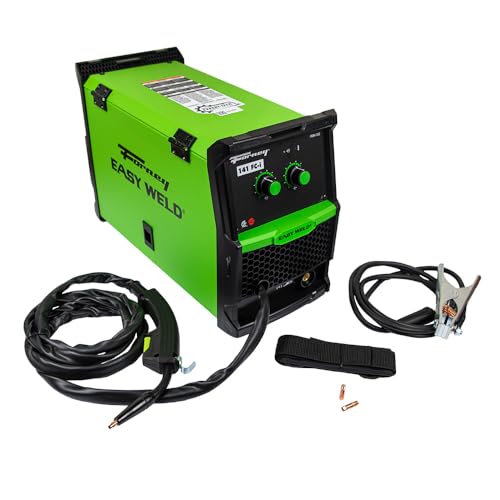 Forney Easy Weld 262 141 FC-i Flux Core Gasless Wire WelderView on Amazon
- 5
 Forney Easy Weld 200 100 FC-i Flux Core Gasless Wire FeedView on Amazon
- 6
 Blue Demon E71TGS X .030” X 2 LB X 2 Pack MIG/GMAW GaslessView on Amazon
A door skin with a rust hole, a floor pan that needs a patch, a thin bracket that cracked at the bend. Sheet metal jobs like these ask for a small bead and a light hand, because the metal has little mass to soak up heat and a long bead will warp it or burn straight through. This guide shows how to flux core weld sheet metal: which wire to load, how to set the machine, and how to tack and stitch a joint.
Other welders and gear to compare
 Sunstac 140A 3 in 1 MIG Welder 110V with IGBT InverterCheck price on Amazon
 YESWELDER 135A MIG WelderCheck price on Amazon
 LOTOS Apex MIG180 180A 6-in-1 Synergic Multi-Process WelderCheck price on Amazon
 Forney Easy Weld 262 141 FC-i Flux Core Gasless Wire WelderCheck price on Amazon
 Forney Easy Weld 200 100 FC-i Flux Core Gasless Wire FeedCheck price on Amazon
 Blue Demon E71TGS X .030” X 2 LB X 2 Pack MIG/GMAW GaslessCheck price on Amazon
This guide links to our product roundups, where WeldGearLab gets a commission on purchases made through links on this page, and your price stays the same. Read our affiliate disclosure.
How to flux core weld sheet metal, step by step
Flux core welding on sheet metal is a matter of heat control. The wire carries its own shielding in the flux, so there is no gas to set up, but the arc runs hot and the metal is thin, so each bead has to stay short and the joint has to fit tight.
- Clean the joint. Grind paint, rust and mill scale off the weld area, then wipe it clean. Paint and rust cause porosity and a rough bead.
- Fit the panels tight. Clamp the panels so the gap stays small along the whole joint. A wide gap needs more filler and more heat, and that is what burns through thin sheet.
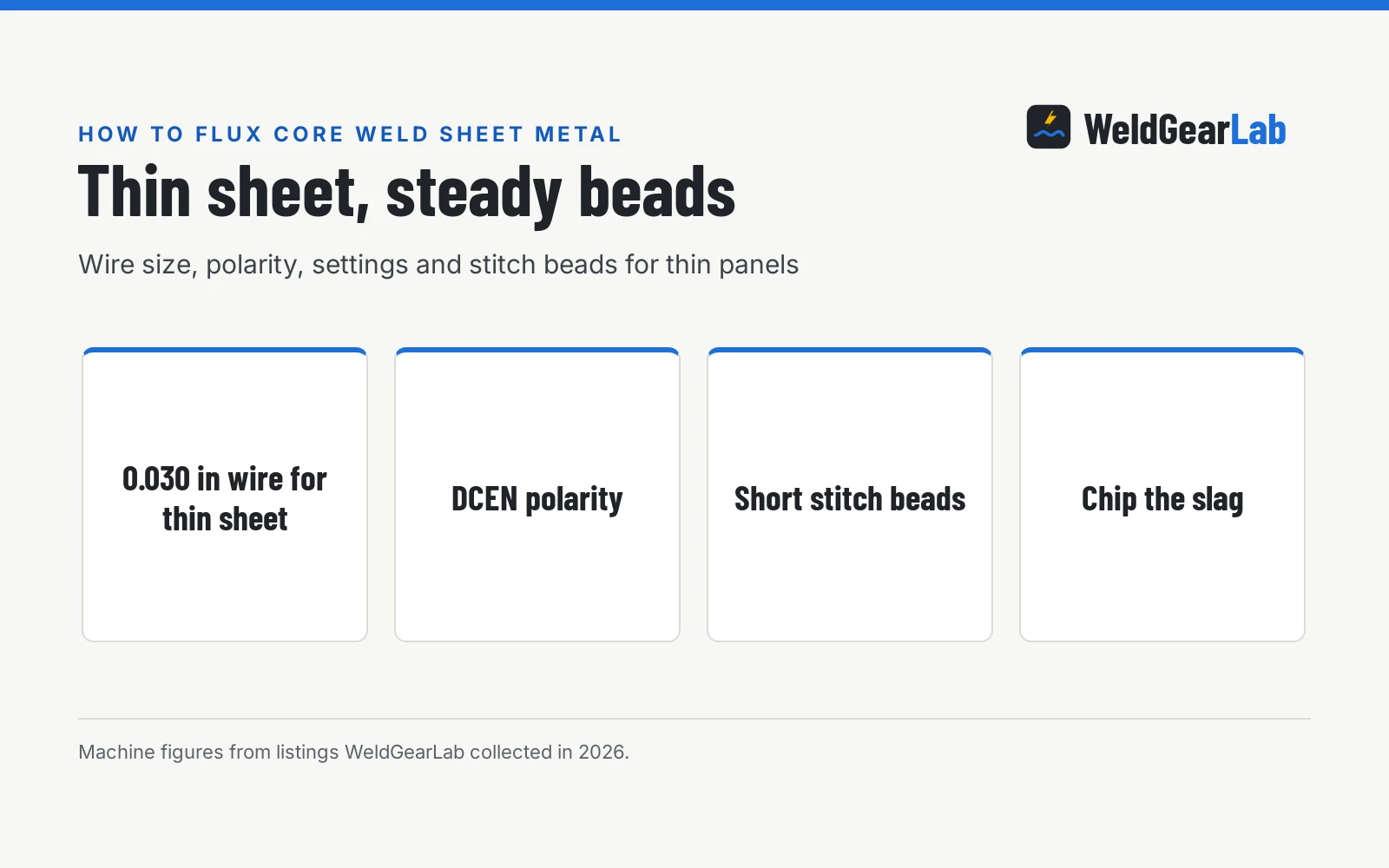
- Set the polarity. Self shielded flux core wire runs on DCEN, electrode negative. Check the wire label and the machine manual, and swap the polarity lead if the machine ran gas MIG before.
- Load 0.030 in flux core wire. The smaller wire suits thin sheet. The DURATECH 125A (on Amazon) lists 0.030 and 0.035 in flux core wire. See the best .030 flux core wire guide and the flux core welding wire sizes guide.
- Set the machine low. Start at the low end of the voltage and wire speed range, run a bead on scrap of the same thickness, and raise the setting until the bead wets into each side.
- Tack, then stitch. Place small tacks along the joint, then weld between the tacks with short stitch beads. Let each stitch cool before the next, and move around the panel so heat does not build in one spot.
- Drag the gun. Keep a steady stickout and travel speed, and drag the gun along the joint so the flux covers the puddle. A long arc adds spatter and a rough bead.
- Chip the slag and brush the bead. Flux core leaves a slag crust on the bead. Chip it off and brush the bead clean before the next pass or before paint.
Wire size and settings for thin sheet
Wire size sets how much heat the arc puts into the sheet. A 0.030 in wire melts at a lower setting than a 0.035 in wire, which is why the smaller wire is the usual pick for sheet metal, auto body panels and thin brackets. A 0.035 in wire suits thicker plate, where the extra filler and heat help the bead tie in. The flux core welding settings chart lists starting points by wire diameter, and the YESWELDER FLUX-135 lists a ±3V micro-adjustment for fine tuning the arc on thin panels.
Which machines suit sheet metal
A 120V flux core machine is enough for sheet metal, because the job needs low heat, not high output. The Lincoln Electric Weld-Pak 90i FC runs on 120V input, with a 20 to 120 Amp range and a 30% duty cycle at 90 Amp, and the maker lists it at 15.0 pounds. The DURATECH 125A is a 120V flux core welder rated at 125 Amp, and the maker lists mild steel up to a 3/16 inch plate, CSA certification and a 2 year warranty. The YESWELDER FLUX-135 runs on 110V with a 135A output and handles mild steel up to 3/32 inch (2.5 mm) thick. The BESTMIG MIG145 runs on 110/220V with a 145A output and handles mild steel up to 3 mm thick, and it also runs gas MIG, stick and lift TIG. See the best flux core welder guide and the best welder for beginners guide, plus the welders hub.
Flux core wire sizes side by side
| Flux core, 0.030 in wire | Flux core, 0.035 in wire | Gas MIG, solid wire | |
|---|---|---|---|
| Shielding | Flux inside the wire | Flux inside the wire | Gas from a cylinder |
| Typical polarity | DCEN (electrode negative) | DCEN (electrode negative) | DCEP (electrode positive) |
| Thin sheet | Suited to thin panels | Runs hotter, easier burn through | Cleaner small beads |
| Wind and outdoor work | Tolerates a breeze | Tolerates a breeze | Gas blows away, needs shelter |
| Spatter and cleanup | Slag to chip, more spatter | Slag to chip, more spatter | No slag, less spatter |
| Gear beyond the welder | Flux core wire | Flux core wire | Solid wire, cylinder, regulator, gas hose |
| Fumes | More smoke | More smoke | Less smoke |
Polarity is general practice for common wires; always follow the polarity printed on the wire label and in the machine manual.
Problems on thin sheet and how to fix them
Burn through comes from too much heat, too long a bead or too wide a gap: turn the setting down, shorten the bead, tighten the fit, and let the metal cool between stitches. Warping comes from heat building in one spot, so tack along the joint, stitch in short runs and move around the panel. Spatter shows on visible work, so keep a steady stickout and travel speed; see the guide on why a MIG welder spatters so much. Slag trapped in the bead comes from welding over a crust that was not chipped off, so chip and brush each bead before the next pass. Porosity comes from paint, rust or damp wire, so clean the joint and keep the wire dry. The flux core welding problems guide covers each of these in more depth.
Flux core or gas MIG for sheet metal
Gas MIG gives a cleaner bead with no slag on thin sheet, and it is the usual pick for auto body panels and visible work. Flux core needs no cylinder, tolerates wind and is more forgiving of dirty steel than gas MIG, and suits outdoor repair and farm work. See the flux core vs MIG comparison and the MIG welder for auto body repair guide.
Safety with flux core on thin metal
Flux core smoke and slag. Flux core makes more smoke and fumes than gas MIG, and hot slag can flick off when chipped. Weld with good ventilation or outdoors with the head out of the plume, wear safety glasses under the helmet when chipping, and clear dry grass and anything flammable from the area. See the OSHA welding overview and the Safety Disclaimer.
FAQ for welders
Can flux core weld sheet metal?
Yes. Load 0.030 in flux core wire, set the polarity to DCEN, keep the setting low, and weld in short stitch beads with cooling time between them.
What wire size suits thin sheet metal?
A 0.030 in flux core wire is the usual pick, because it melts at a lower setting and puts less heat into the panel. A 0.035 in wire runs hotter and suits thicker plate.
Why does flux core burn through sheet metal?
Burn through comes from too much heat for the thickness, a bead that runs too long, or a gap that needs too much filler. Lower the setting, shorten the bead and close the gap.
Does flux core welding sheet metal need gas?
No. Self shielded flux core wire carries its own shielding in the flux, so there is no cylinder, hose or regulator to set up.
How to stop sheet metal from warping while welding?
Tack along the joint before welding, stitch in short runs, let each run cool, and move around the panel so heat does not build in one spot.
Related: flux core welding settings chart, best .030 flux core wire, how to choose a MIG welder, and the MIG welders hub. Also see the flux core welding problems and fixes.