Best Circular Saw Blade for Sheet Metal (2026): 5 Picks
Five circular saw blades for sheet metal, compared on diameter, tooth count, max RPM, thickness capacity and arbor fit.

On this page
Top picks at a glance
As an Amazon Associate I earn from qualifying purchases.
- 1
 Best OverallFOXBC 7-1/4 in 48T Metal Blade9.7/10View on Amazon
- 2
 Best for Ferrous SheetBRSCHNITT 6-1/2 in 48T TCT Blade9.6/10View on Amazon
- 3
 Best for AluminumEcho Corner 6-1/2 in 60T Aluminum Blade9.6/10View on Amazon
- 4
 Most TeethDEWALT DW3329 7-1/4 in 68T Blade9.6/10View on Amazon
Cutting sheet metal with a circular saw comes down to the blade. The listings here state the figures that decide the cut: tooth count, diameter, max RPM, thickness capacity and arbor size. This guide compares blades for the best circular saw blade for sheet metal, scored on those stated figures.
WeldGearLab gets a commission on purchases made through links on this page, and your price stays the same. Read our affiliate disclosure.
Quick picks
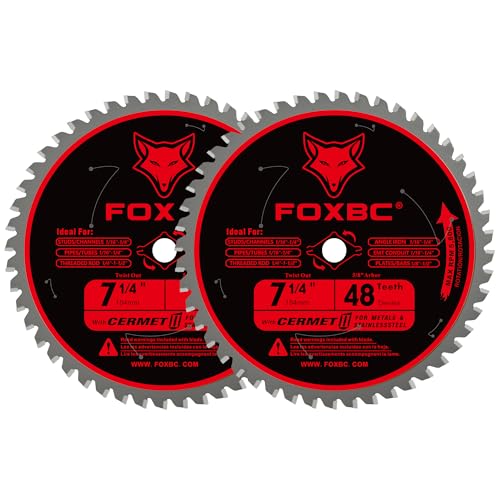
- Best Overall FOXBC 7-1/4 in 48T Metal Blade: A 7-1/4 inch blade with 48 ceramic carbide teeth, stated thickness capacities for studs, plates and rods, and a 2-pack. Check price on Amazon
- Best for Ferrous Sheet BRSCHNITT 6-1/2 in 48T TCT Blade: A 6-1/2 inch TCT blade with 48 teeth that cuts ferrous and non-ferrous metals within 50 mm thickness. Check price on Amazon
- Best for Aluminum Echo Corner 6-1/2 in 60T Aluminum Blade: A 6-1/2 inch TCG blade with 60 teeth and a 9,500 max RPM for aluminum, copper, brass and bronze. Check price on Amazon
- Most Teeth DEWALT DW3329 7-1/4 in 68T Blade: A 7-1/4 inch blade with 68 precision sharpened teeth and a coating that prevents rust. Check price on Amazon
The machines
FOXBC 7 1/4 inch Metal Circular Saw Blade 48
A 7-1/4 inch, 48-tooth ceramic carbide blade sold as a 2-pack, with stated thickness capacities for studs, plates, bars and rods.
Pros
- 48 ceramic carbide teeth with a stated 5,800 max RPM
- Stated thickness capacities for studs, tubing, plates, bars and rods
- Sold as a 2-pack, so the box holds a spare blade
- Laser cut stabilizer vents trap noise and vibration
Cons
- Plates and bars top out at 1/2 inch thick
- Studs and tubing walls top out at 1/4 inch thick
- Rods top out at 1-1/2 inch in diameter
- No recommended RPM is stated, only the 5,800 max RPM
6-1/2" Metal Cutting Circular Saw Blade
A 6-1/2 inch, 48-tooth TCT blade for ferrous and non-ferrous metals within 50 mm thickness, with a stated recommended RPM of 3,000.
Pros
- 48 tungsten carbide tipped teeth on a steel matrix
- Cuts ferrous and non-ferrous metals within 50 mm thickness
- States a recommended RPM of 3,000 and a max RPM of 5,000
- Suits circular saws and miter saws
Cons
- A 6-1/2 inch blade is smaller than the 7-1/4 inch blades here
- Single blade in the box, no spare
- Never for wood cutting, per the maker warning
- Arbor is stated as 4/5 to 5/8 inch, so check your saw's arbor fit
6-1/2" Aluminum Cutting Circular Saw Blade
A 6-1/2 inch, 60-tooth TCG blade for aluminum and other non-ferrous metals, with a stated max RPM of 9,500.
Pros
- 60 teeth with a TCG grind for a clean, smooth edge
- Stated max RPM of 9,500, the highest here
- Stated for aluminum, copper, brass, bronze and other non-ferrous metals
- Also stated for polycarbonate, plastics, MDF and plywood
Cons
- Stated for non-ferrous metals, not for steel
- A 6-1/2 inch blade is smaller than the 7-1/4 inch blades here
- Single blade in the box, no spare
- No thickness capacity is stated
DEWALT Circular Saw Blade, 7 1/4 Inch, 68 Tooth
A 7-1/4 inch, 68-tooth metal cutting blade with precision sharpened teeth and a coating that prevents rust.
Pros
- 68 teeth, the most here, with precision sharpened teeth
- Stated for fast, smooth cuts and longer life
- Blade coating prevents rust and reduces friction
- Thicker body stated for durability in heavy-duty applications
Cons
- No max RPM is stated
- No arbor size is stated
- No thickness capacity is stated
- No warranty term is stated
DEWALT Circular Saw Blade, 7 1/4 Inch, 16 Tooth
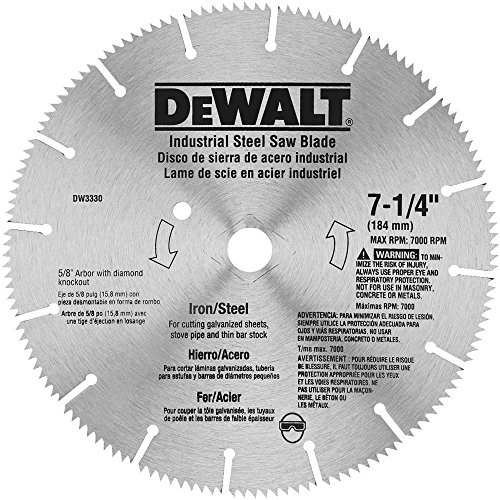
A 7-1/4 inch, 16-tooth metal cutting blade stated for steel and iron.
Pros
- 16 teeth on a 7-1/4 inch blade stated for steel and iron
- Stated part number DW3330, a named DEWALT model
- 7-1/4 inch diameter, the same size as the FOXBC and DW3329 here
- A coarse 16-tooth count for steel and iron work
Cons
- No max RPM is stated
- No arbor size is stated
- No thickness capacity is stated
- No warranty term is stated
Other welders and gear to compare
 KURSTOL Metal Circular Saw BladeCheck price on Amazon
 8" CIRCULAR SAW BLADE METAL CUTTING 42TCheck price on Amazon
 Metal Cutting Mini Circular Saw Blade 4-1/2"Check price on Amazon
 14 Inch 72T Metal Circular Saw BladeCheck price on Amazon
 6-1/2 Inch Metal Cutting Circular Saw BladeCheck price on Amazon
Spec sheet comparison
| Model | Gear Score | Diameter | Teeth | Max RPM | Arbor | Pack |
|---|---|---|---|---|---|---|
| FOXBC 7-1/4 in 48T Metal Blade | 9.7/10 | 7-1/4 in | 48 | 5800 | 5/8 in | 2 |
| BRSCHNITT 6-1/2 in 48T TCT Blade | 9.6/10 | 6-1/2 in | 48 | 5000 | 4/5-5/8 in | 1 |
| Echo Corner 6-1/2 in 60T Aluminum Blade | 9.6/10 | 6-1/2 in | 60 | 9500 | 5/8 in | 1 |
| DEWALT DW3329 7-1/4 in 68T Blade | 9.6/10 | 7-1/4 in | 68 | Not stated | Not stated | 1 |
| DEWALT DW3330 7-1/4 in 16T Blade | 9.4/10 | 7-1/4 in | 16 | Not stated | Not stated | 1 |
These numbers are the manufacturer’s ratings exactly as each listing gives them, recorded on 20 November 2026.
How to pick the best circular saw blade for sheet metal
Tooth count and tooth grind
Tooth counts here run from 16 on the DEWALT DW3330 to 68 on the DEWALT DW3329. The BRSCHNITT and the FOXBC both have 48 teeth, and the Echo has 60. The Echo uses a TCG grind, which the maker says produces very little chip out and tearout when cutting brittle materials. The BRSCHNITT uses tungsten carbide tipped teeth, and the FOXBC uses ceramic carbide teeth. The DW3329 states precision sharpened teeth for fast, smooth cuts, while the DW3330 states 16 teeth for steel and iron. No listing here states which tooth count suits a given sheet gauge, so use the stated thickness capacities as your guide.
Diameter and arbor
Two blades here are 6-1/2 inch and three are 7-1/4 inch, so check the diameter against your saw before you order. The Echo and the FOXBC state a 5/8 inch arbor, and the BRSCHNITT states an arbor of 4/5 to 5/8 inch. The two DEWALT listings state no arbor size, so the arbor is a question to settle before you buy. A blade that does not match the saw arbor will not mount, whatever its tooth count.
Thickness capacity
Only two listings here state how thick they cut. The BRSCHNITT states cutting ferrous and non-ferrous metals within 50 mm thickness. The FOXBC states plates and bars from 1/8 inch to 1/2 inch thick, studs and tubing walls from 1/16 inch to 1/4 inch thick, and rods from 1/4 inch to 1-1/2 inch in diameter. The Echo and the two DEWALT listings state no thickness capacity.
Ferrous or non-ferrous
The metal you cut decides the blade. The BRSCHNITT states cutting for ferrous and non-ferrous metals, and the maker warns never to use it on wood. The Echo is stated for aluminum, copper, brass, bronze and other non-ferrous metals, with no ferrous cutting stated. The FOXBC is stated for steel studs, channel, angle iron, EMT conduit and all-thread, in steel and stainless steel. The DEWALT DW3330 is stated for steel and iron, while the DW3329 is stated only as a metal cutting blade.
Max RPM
Max RPM figures here run from 5,000 on the BRSCHNITT to 9,500 on the Echo, with the FOXBC at 5,800. The BRSCHNITT also states a recommended RPM of 3,000, the only recommended figure here. The two DEWALT listings state no max RPM. Never spin a blade past its stated max RPM, and match the blade to a saw that runs within the stated figure.
Use as directed. Wear eye and face protection, clamp the work before you cut, keep the blade guard in place, and keep gloves away from rotating parts. Check the diameter and arbor against your saw before you mount the blade, and never spin a blade past its stated max RPM. See the OSHA machine guarding page and our Safety Disclaimer.
Before You Strike an Arc
- Check the arbor: the Echo and the FOXBC use a 5/8 inch arbor, the BRSCHNITT states 4/5 to 5/8 inch, and the two DEWALT listings state no arbor size.
- Check the diameter against your saw: two blades here are 6-1/2 inch and three are 7-1/4 inch.
- Match the blade to the metal: the Echo is stated for aluminum and non-ferrous metals, the BRSCHNITT for ferrous and non-ferrous metals within 50 mm, and the FOXBC for steel studs, channel, angle iron, conduit and all-thread.
- Check the max RPM: 9,500 on the Echo, 5,800 on the FOXBC and 5,000 on the BRSCHNITT, with a recommended 3,000 on the BRSCHNITT.
- Note the BRSCHNITT warning: never use its blade on wood.
FAQ for welders
What tooth count is best for sheet metal?
Tooth counts here run from 16 to 68. The 48-tooth BRSCHNITT and FOXBC are stated for general metal cutting, the 60-tooth Echo suits aluminum and non-ferrous sheet, and the 68-tooth DEWALT DW3329 states precision sharpened teeth for smooth cuts. The 16-tooth DW3330 is the coarsest here and is stated for steel and iron.
Can I use a metal cutting blade on a regular circular saw?
Yes, if the diameter and arbor match your saw. Two blades here are 6-1/2 inch and three are 7-1/4 inch, and the stated arbors are 5/8 inch on the Echo and the FOXBC and 4/5 to 5/8 inch on the BRSCHNITT. The two DEWALT listings state no arbor size, so check the arbor before you order.
What is the difference between TCT and ceramic carbide teeth?
The BRSCHNITT uses tungsten carbide tipped teeth, and the FOXBC uses ceramic carbide teeth. The FOXBC maker states its ceramic and metallic teeth give high heat tolerance and increased hardness for wear. The BRSCHNITT maker states its tungsten carbide teeth give wear resistance and heat resistance. Neither listing states a hardness figure, so compare the two on their stated thickness capacities instead.
How thick can these blades cut?
The BRSCHNITT states cutting within 50 mm thickness. The FOXBC states plates and bars from 1/8 inch to 1/2 inch thick, studs and tubing walls from 1/16 inch to 1/4 inch thick, and rods from 1/4 inch to 1-1/2 inch in diameter. The Echo and the two DEWALT listings state no thickness capacity.
Do I need a different blade for aluminum and steel?
Yes, on this page. The Echo is stated for aluminum, copper, brass and bronze and other non-ferrous metals, with no ferrous cutting stated. The BRSCHNITT cuts ferrous and non-ferrous metals, and the FOXBC is stated for steel and stainless steel. Use the blade whose stated metals match the sheet you are cutting.
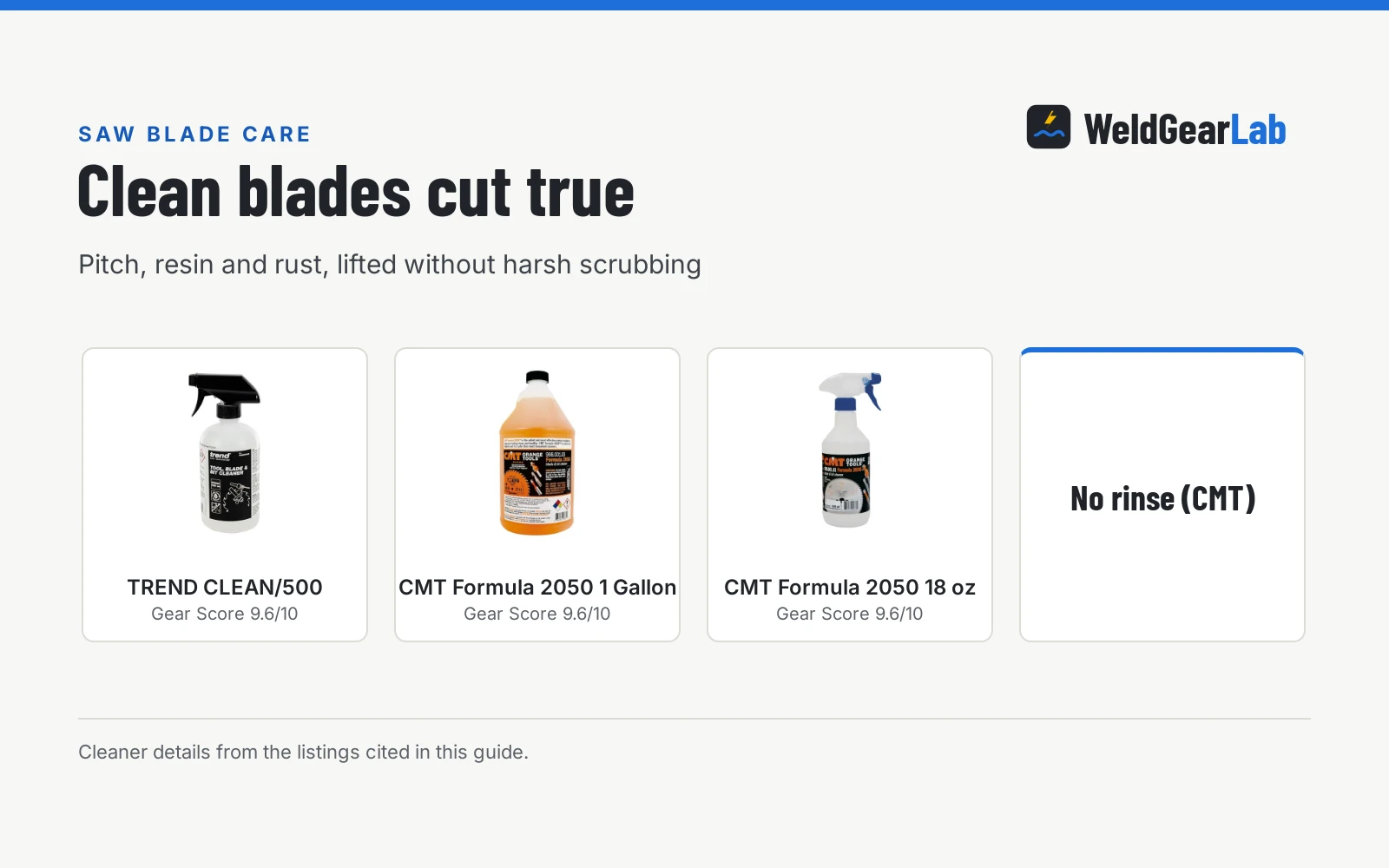
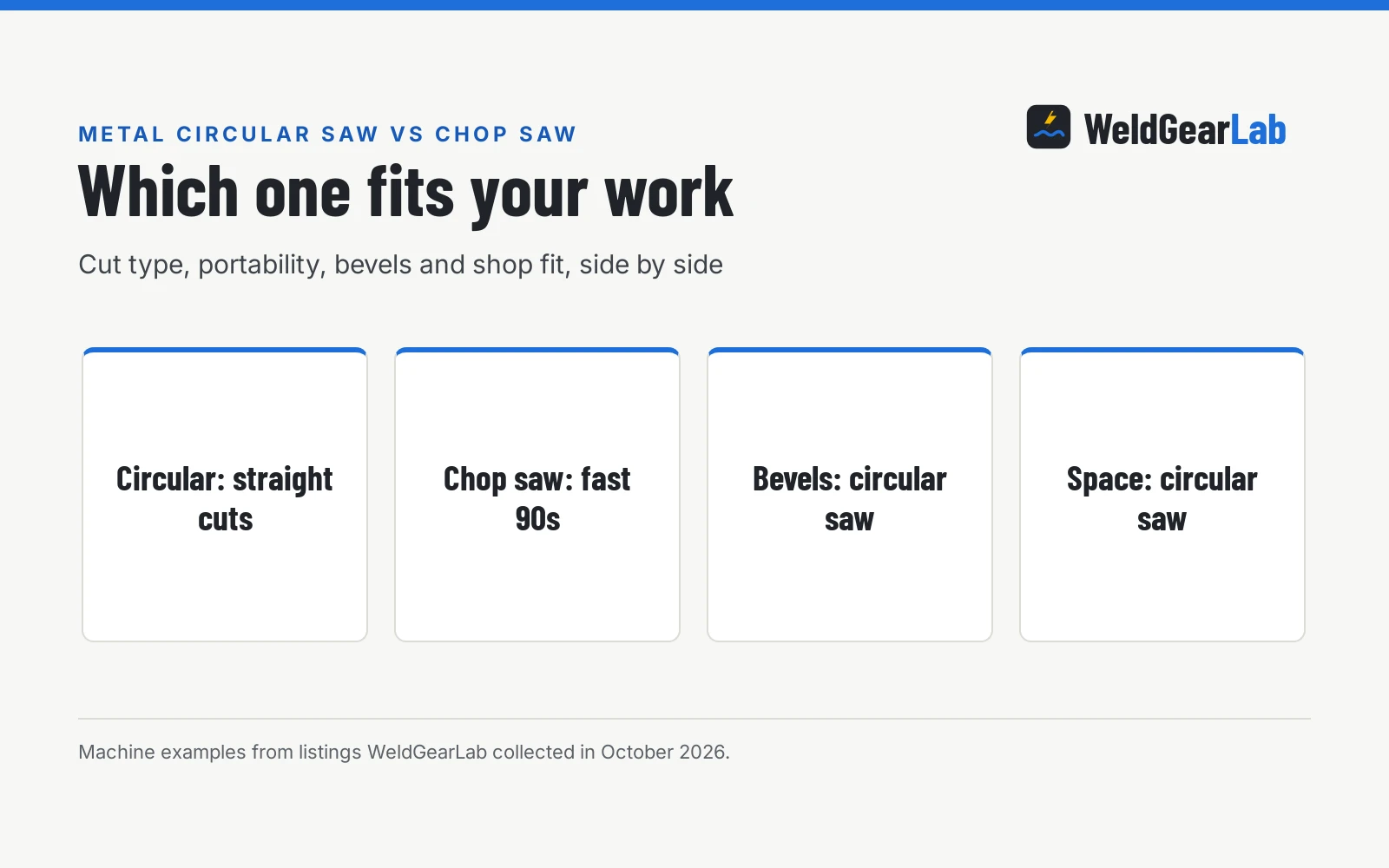
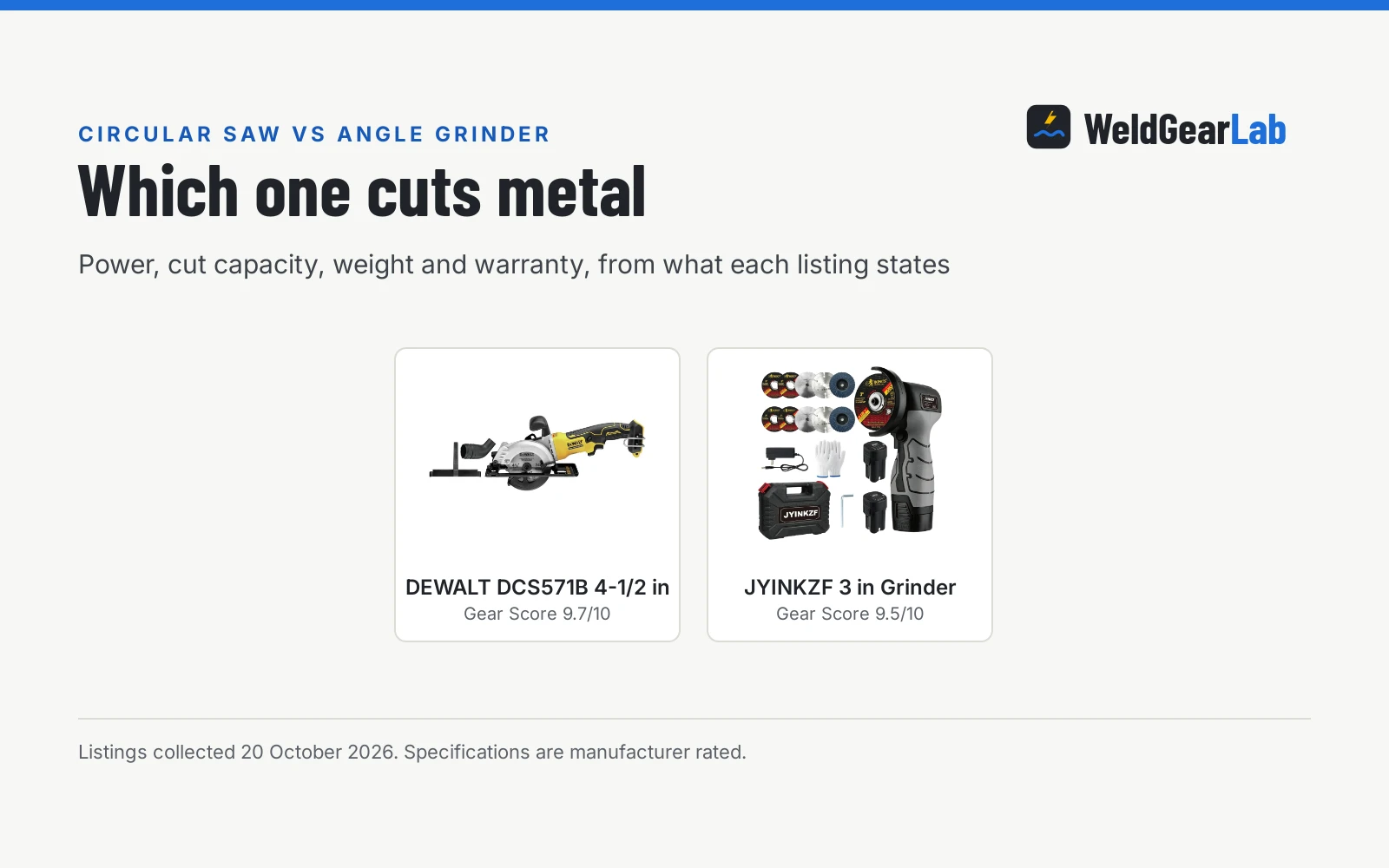
Related: metal cutting saw types, metal circular saw vs chop saw, circular saw vs angle grinder for metal, best chop saw blade for steel, best chop saw blade for aluminum, how to clean circular saw blades, best sheet metal tools, and the metalworking machines hub. Also see our metal saws hub. Also see our best cut off wheels for angle grinder. Also see our heavy duty adjustable saw horses. Also see our compact circular saw vs cut off tool. Also see our metal saw tpi. Also see our wheel thin cut abrasives.
Scoring, line by line
Each blade is scored out of 10 on performance, build, value, safety listing and warranty, with the weights published on our How We Pick page. No blade here states a safety certification or a warranty term, so every blade here scores zero on those two criteria; the ranking comes from the other three.
| Product | Gear Score | Perf. /35 | Build /25 | Value /25 | Safety /10 | Warranty /5 |
|---|---|---|---|---|---|---|
| FOXBC 7-1/4 in 48T Metal Blade | 9.7 | 32 | 22 | 22 | n/a | 0 |
| BRSCHNITT 6-1/2 in 48T TCT Blade | 9.6 | 30 | 21 | 21 | n/a | 0 |
| Echo Corner 6-1/2 in 60T Aluminum Blade | 9.6 | 29 | 21 | 20 | n/a | 0 |
| DEWALT DW3329 7-1/4 in 68T Blade | 9.6 | 27 | 21 | 20 | n/a | 0 |
| DEWALT DW3330 7-1/4 in 16T Blade | 9.4 | 23 | 19 | 19 | n/a | 0 |
Displayed scores fall between 9.2 and 9.8: the weighted point total is mapped onto that band in a straight line, so earning more points always lifts the score. Safety is only scored for powered machines or when a listing names safety features; otherwise it drops out and the score is worked from the other 90 points.