Metal Circular Saw vs Chop Saw: Which One Should You Buy?
A metal circular saw cuts straight lines and bevels freehand while a chop saw makes fast square crosscuts at the bench; how they differ and which one fits your shop.

On this page
Top picks at a glance
As an Amazon Associate I earn from qualifying purchases.
- 1
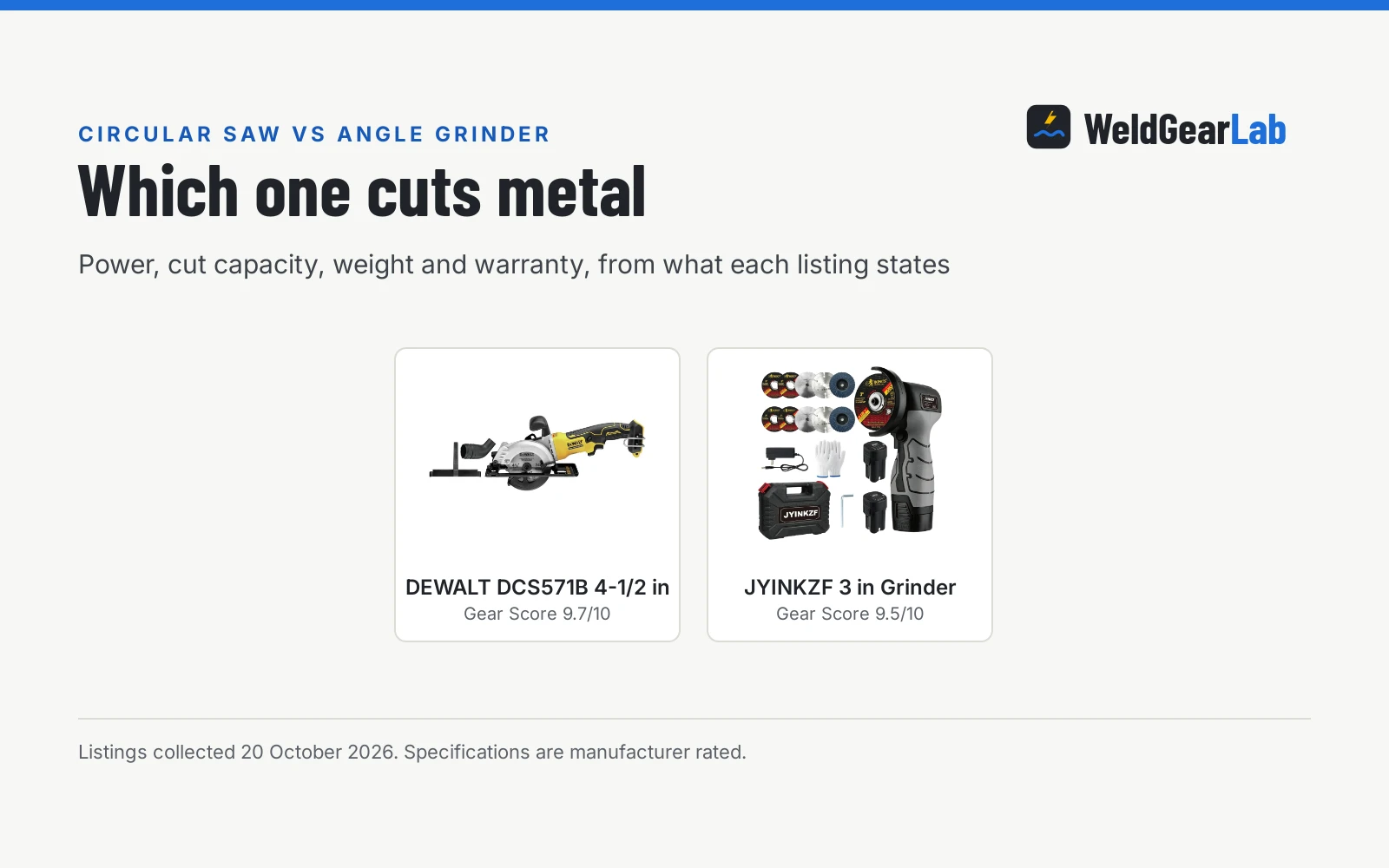
 DEWALT ATOMIC 20V MAX* Circular Saw9.7/10View on Amazon
- 2
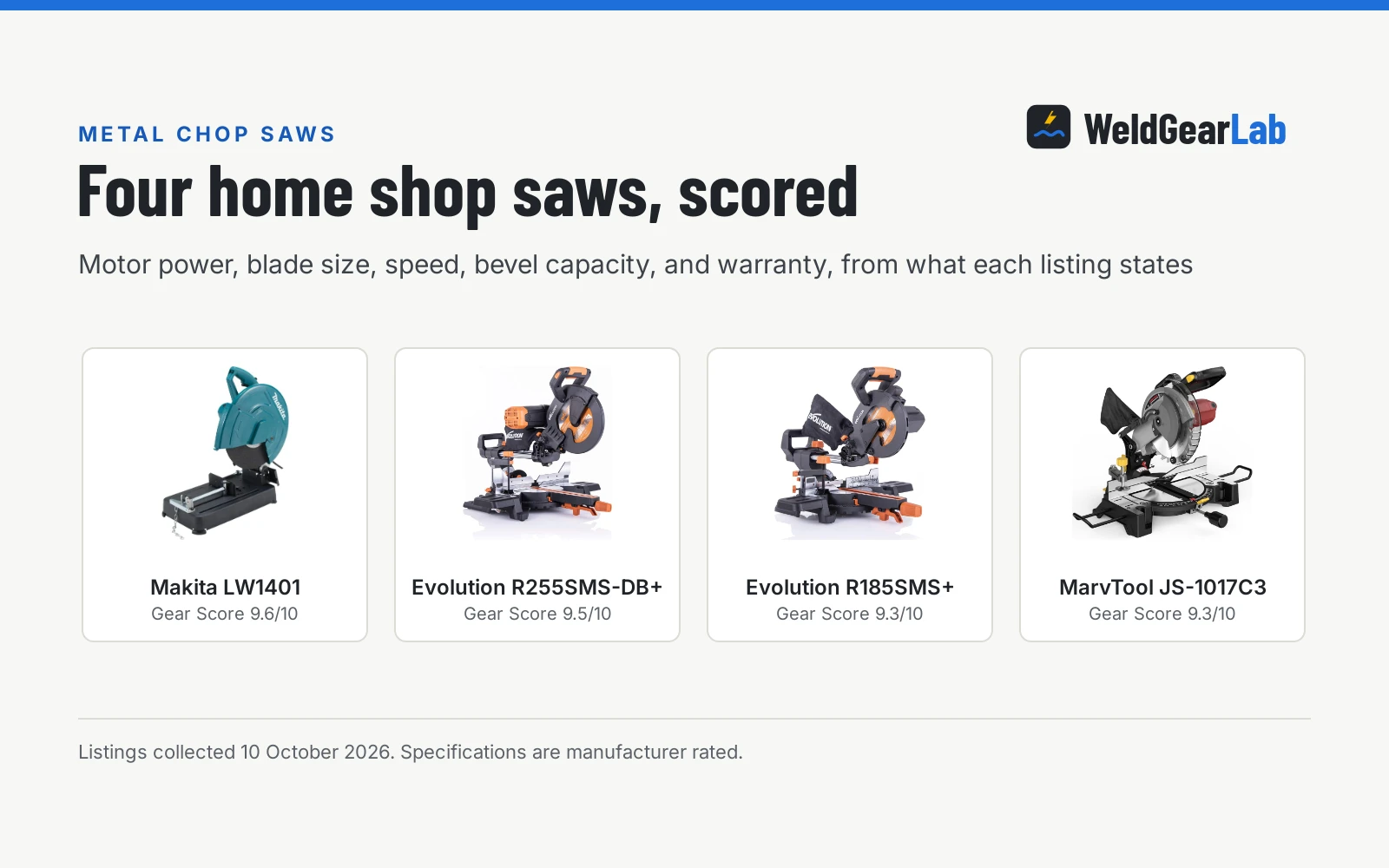
 Evolution S15CPS 15" Heavy-Duty Metal Cutting Chop Saw9.7/10View on Amazon
- 3
 Cordless Angle Grinder 3"9.5/10View on Amazon
- 4
 Milwaukee ElectricView on Amazon
- 5
 APLMAN 6 Inch Cut off Saw Metal Cutting Chop Saw Miter SawView on Amazon
A stack of angle iron on the bench and a saw that only cuts straight: that is the moment the metal circular saw vs chop saw question comes up. The short answer is that a metal circular saw is a hand guided saw for straight cuts and bevels anywhere the work sits, while a chop saw is a fixed pivot saw for fast square crosscuts at the bench. This guide compares them for home, farm and small shop work, and shows what to check on the listing before you buy either one.
Other welders and gear to compare
 Milwaukee ElectricCheck price on Amazon
 APLMAN 6 Inch Cut off Saw Metal Cutting Chop Saw Miter SawCheck price on Amazon
This guide links to our product roundups, where WeldGearLab gets a commission on purchases made through links on this page, and your price stays the same. Read our affiliate disclosure.
The difference in one paragraph
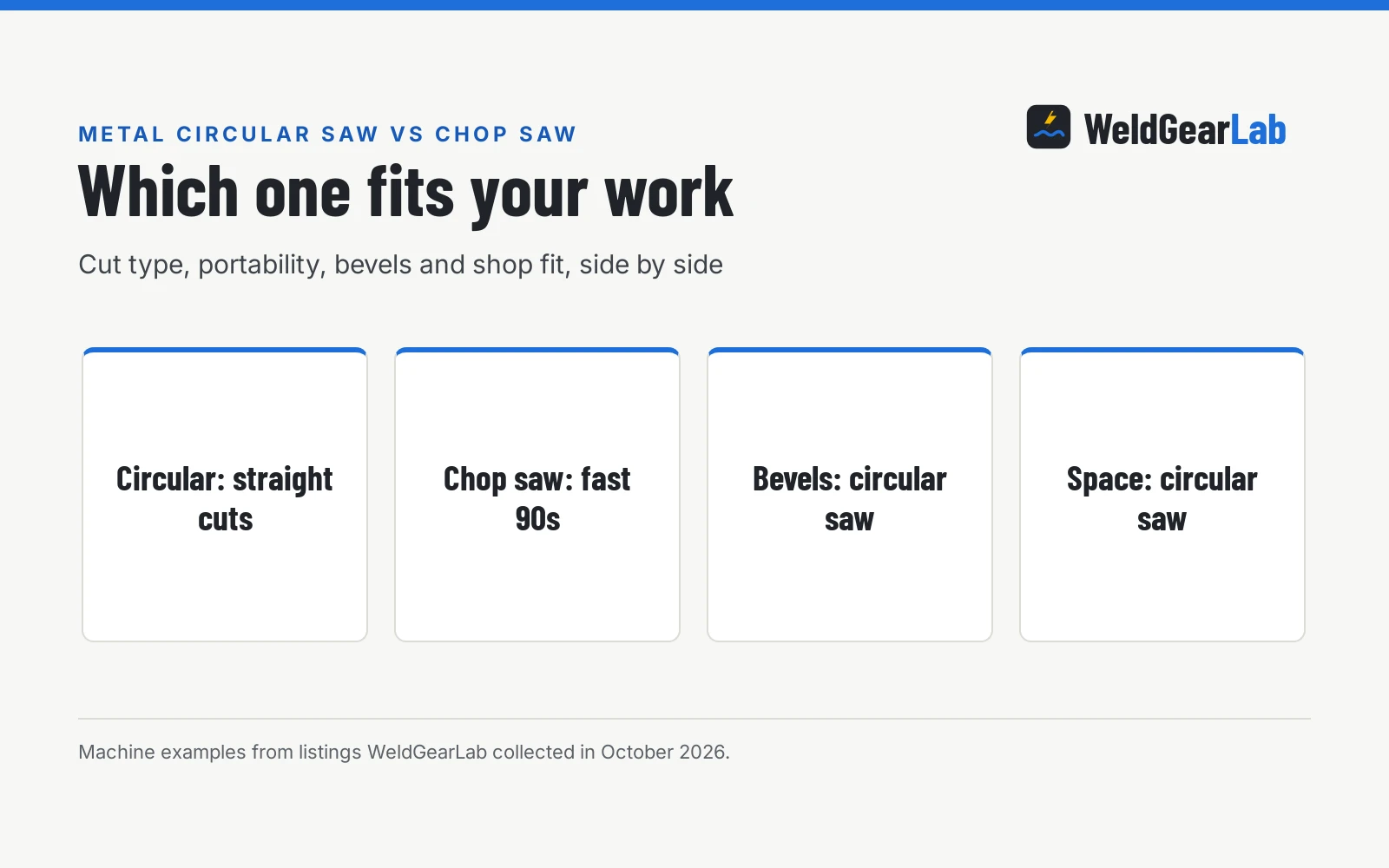
A metal circular saw is held in the hands and pushed along the cut line, so it goes to the work, cuts long straight lines and tilts for bevels. A chop saw is bolted to a bench with the blade on a pivot arm, so the work comes to it and the arm drops for square crosscuts. That one difference in how the tool meets the metal decides where each one belongs in the shop.
Side by side
| Metal circular saw | Chop saw | What the listings show | |
|---|---|---|---|
| Cut motion | Hand guided across the work | Fixed pivot arm lowers the blade | The Evolution S185CCSL is hand guided |
| Blade | 7 1/4 in toothed blade, dry cut | Larger abrasive or toothed blade | Evolution 40 tooth TCT |
| Portability | Carried to the work | Bench mounted, work carried to it | The listed saw weighs 11.4 lbs |
| Bevels | 0 to 45 degrees stated on the listed saw | Square crosscuts; most cut at a fixed angle | Paddle levers on the Evolution |
| Best for | Long straight cuts, sheet and roofing | Repetitive crosscuts on stock | Roofing and framing per the listing |
| Edges for welding | Spark-free dry cut stated on the listed saw | Abrasive discs usually need more grinding | Virtually no heat or burrs stated |
| Shop space | Stores on a shelf | Needs a permanent bench spot | No bench needed for the circular saw |
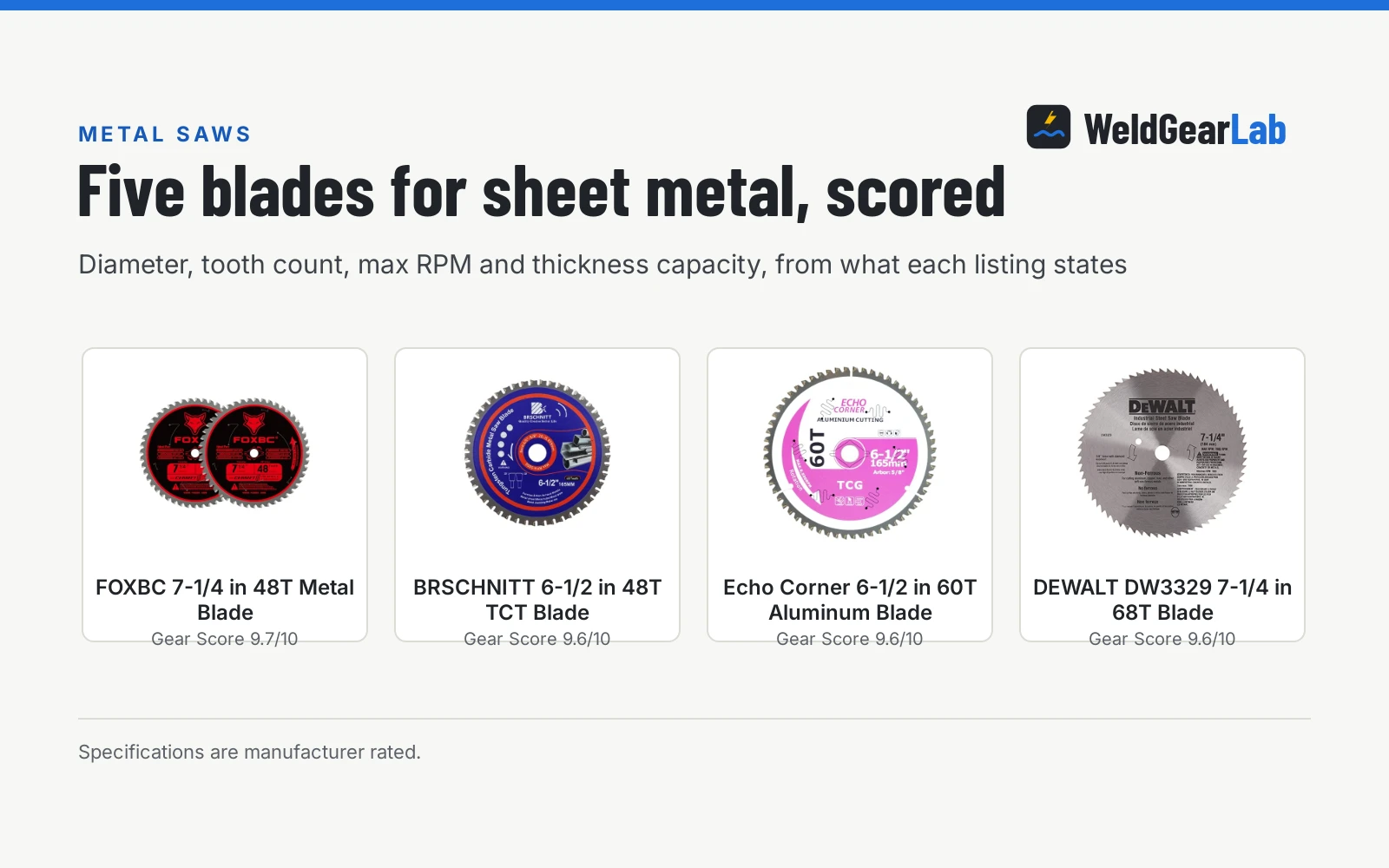
Blade size and tooth count are per the listing below; the listed circular saw runs a 7 1/4 in blade. A chop saw typically uses a larger disc, abrasive or toothed, chosen for the cut.
The metal circular saw vs chop saw decision
Buy the chop saw when most of your cutting is the same square crosscut repeated all day: angle iron, tube and bar stock for racks, gates and frames. Buy the metal circular saw when the work cannot come to a bench: long cuts on sheet, bevels for fit-up, or metal roofing and framing where the listing says it shines. If you weld what you cut, the spark-free dry cut the Evolution states leaves edges ready for the torch or the welder with less grinding.
When a chop saw is the better choice
- Repetitive crosscuts. Drop the arm and cut the same length again and again; nothing hand guided is as fast at this.
- Square ends for fit-up. The fixed pivot holds the blade square, which is what butt joints want.
- Short stock. Small pieces that are hard to guide by hand sit safely under the chop saw clamp.
When a metal circular saw is the better choice
- Long straight cuts. Sheet and plate too big for a bench saw get cut where they lie.
- Bevels and angles. The listed saw adjusts from 0 to 45 degrees; most chop saws cut square only.
- No bench, no problem. Farm and field work where the metal cannot be carried to a saw.
- Cleaner edges for welding. The dry-cut blade the listing states leaves edges with virtually no burrs, so they need less grinding before the weld.
Gear example from the listing
The listing gives one real example, the Evolution S185CCSL, a complete 7.25 in metal cutting circular saw: a 15 amp motor running 3700 rpm on 1800 watts and 120 volts, a 40-tooth TCT blade included, bevel adjustment from 0 to 45 degrees, up to 2-1/2 in of cutting depth, and a stated 11.4 lbs in the bullets (the spec table says 13.1 pounds). The maker states dry-cut, spark-free cuts with virtually no heat or burrs, and a 3 year manufacturer warranty. One caution: the spec table lists “[POSSIBLY] UL” under specification met, which is not a stated certification, so we score safety as not stated.
What to check on the listing
Read the blade line first: diameter, tooth count and material tell you what the saw is meant to cut. The Evolution listing states a 7.25 in 40-tooth TCT blade for dry cuts in mild steel. Then check power and weight the same way: 15 amps, 3700 rpm and 11.4 lbs on the Evolution, and note any contradiction, like the Evolution spec table weight of 13.1 pounds against the bullets. A listing that states its warranty, like the 3 year term here, tells you the maker stands behind the tool.
Cutting safety. Cutting metal throws sharp chips and hot edges, and dry-cut saws are loud at the bench. Wear safety glasses and hearing protection, clamp the work before the blade touches it, and keep flammables clear of the spark stream on an abrasive saw. Unplug the saw before a blade change, and let the blade reach full speed before it meets the metal. See the OSHA welding overview for more.
FAQ for welders
Can a metal circular saw replace a chop saw?
For straight cuts and bevels, often yes: a metal circular saw goes where the work is and cuts angles most chop saws cannot. For fast, repeatable square crosscuts at the bench, the chop saw is the quicker tool. Many small shops keep both.
What blade does the listed Evolution saw ship with?
The listing states a 7.25 in 40-tooth TCT blade included, with dry-cut, spark-free cuts stated for mild steel. Replacement blades are a separate purchase.
Which one suits a shop with no bench space?
The metal circular saw: it is hand guided and carries to the work, while a chop saw needs a bench and the work carried to it.
Do I need a different blade for steel?
Use a blade the listing states for metal: the Evolution 40 tooth TCT blade, stated for metal cutting. A wood blade is not a substitute.
Related: best chop saw blade for aluminum, abrasive chop saw vs cold saw, best chop saw blade for steel, best cordless angle grinder for fence repairs, bolt cutters vs hacksaw for metal, and the metal fab tools hub.