Best Metal Chop Saw for Home Shop: 5 Saws Scored for Fabrication (2026)
Five metal chop saws for a home shop, compared on blade size, motor power, no-load speed, bevel capacity, and the warranty each listing states.
 By WeldGearLab Editorial
Updated October 10, 2026
By WeldGearLab Editorial
Updated October 10, 2026
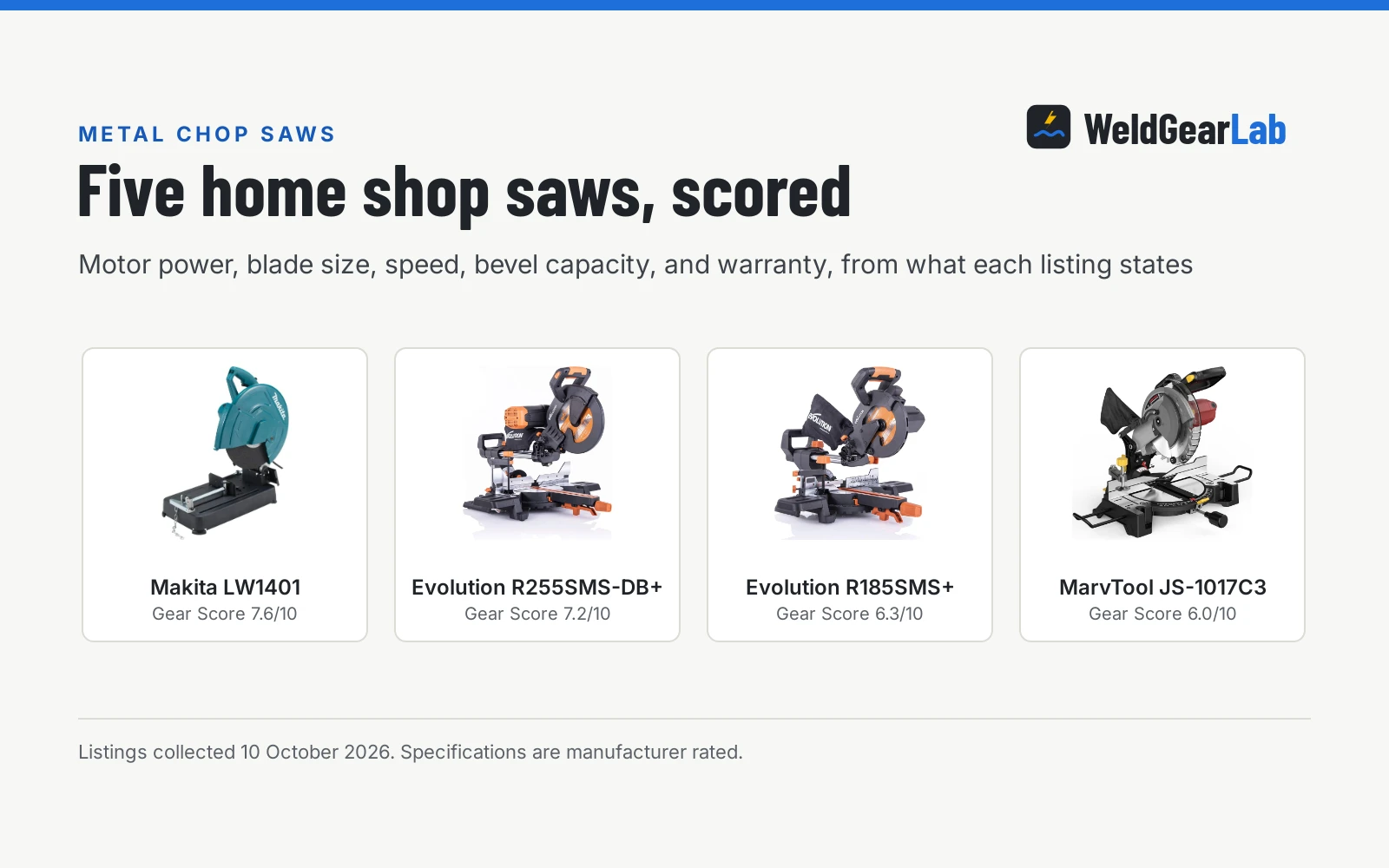
A metal chop saw gives a home workshop the speed and clamping leverage needed to make square, repeatable cuts in steel tubing, angle iron, and solid bar. Choosing the best metal chop saw for home shop fabrication depends on matching your cutting volume to the right drive type, blade format, and vise design. This guide compares five home shop saws based on what each listing states: motor power, blade size, no-load speed, cutting angles, and warranty coverage.
As an Amazon Associate I earn from qualifying purchases. WeldGearLab earns a commission when you buy through links on this page, at no extra cost to you. Read our affiliate disclosure.
Quick picks
- Best Overall Makita LW1401: A dedicated 14-inch abrasive cut-off saw with a 15-amp motor, 3800 rpm, adjustable spark guard, 37-pound steel build, and a 1-year warranty. Check price on Amazon
- Best Multi-Material Evolution R255SMS-DB+: A 10-inch sliding miter saw with 2600 rpm geared speed for mild steel, 44.8-pound weight, dual bevel capability, and a 3-year warranty. Check price on Amazon
- Most Portable Power Saw MarvTool JS-1017C3: A 20.5-pound compact 10-inch saw with a 15-amp motor, 5000 rpm, extension tables, vise clamp, and a 2-year warranty. Check price on Amazon
- Best Manual Backup CRAFTSMAN CMHT20138: A 12-inch high-tension hand hacksaw rated up to 225 lbs frame tension with 4.375-inch cutting depth and a lifetime warranty. Check price on Amazon
Compare the picks
| Model | Gear Score | Blade size | Motor power | No-load speed | Cutting angle | Weight | Warranty |
|---|---|---|---|---|---|---|---|
| Makita LW1401 | 7.6/10 | 14 in | 15 A, 1800 W | 3800 rpm | 45 degrees | 37 lb | 1-year limited |
| Evolution R255SMS-DB+ | 7.2/10 | 10 in | 1800 W | 2600 rpm | 50 degrees | 44.8 lb | 3 years |
| Evolution R185SMS+ | 6.3/10 | 7-1/4 in | 8.3 A, 1200 W | 3700 rpm | 45 degrees | 0.27 g (listing error) | 3 years |
| MarvTool JS-1017C3 | 6.0/10 | 10 in | 15 A | 5000 rpm | 45 degrees | 20.5 lb | 2 years |
| CRAFTSMAN CMHT20138 | 5.1/10 | 12 in | Manual (hand saw) | Manual | 90 degrees | Not stated | Lifetime |
Specifications are manufacturer rated, as published on each listing and collected 10 October 2026.
The picks
| Award | Product | Gear Score About the Gear ScoreThe Gear Score runs from 0 to 10 and weighs performance (35%), build (25%), value (25%), safety (10%, where it applies) and warranty (5%), using only what the manufacturer and the listing publish. How we pick › | |
|---|---|---|---|
 Makita LW1401 Cut-Off Saw, 14"
|
7.6/10 | Check price on Amazon | |
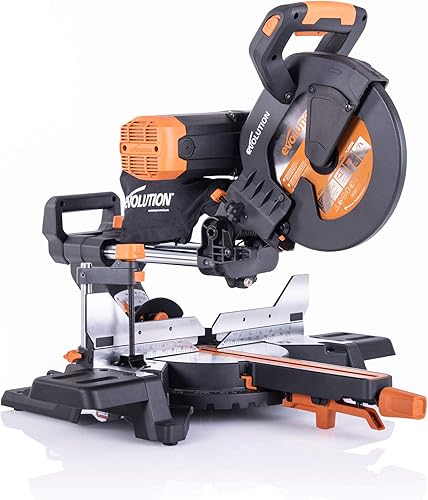 Evolution Power Tools R255SMS-DB+ 10-Inch Dual
|
7.2/10 | Check price on Amazon | |
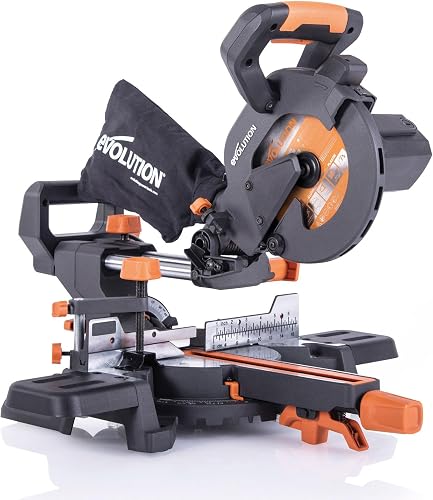 Evolution Power Tools R185SMS+ Sliding Miter Saw
|
6.3/10 | Check price on Amazon | |
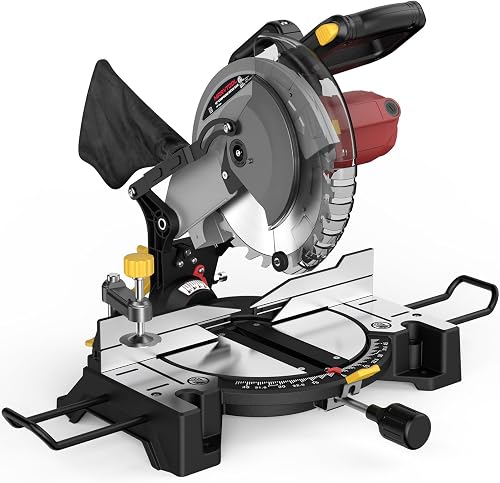 10-inch Compound Miter Saw, 5000RPM, 15 Amp
|
6.0/10 | Check price on Amazon | |
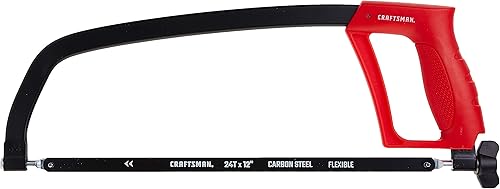 CRAFTSMAN Hand Saw, 12-Inch Hacksaw (CMHT20138)
|
5.1/10 | Check price on Amazon |
Makita LW1401 Cut-Off Saw, 14"
A dedicated 14-inch abrasive cut-off saw with a 15-amp motor, 3800 rpm, adjustable spark guard, and a 1-year limited warranty.
Pros
- Dedicated 14-inch abrasive cut-off saw with a 15-amp motor and 3800 rpm
- Adjustable spark guard designed to divert hot metal sparks
- Tool-less vice adjustment and fence adjusting up to 45 degrees across 3 locations
- Includes 14 x 1 x 7/64 inch abrasive cut-off wheel and socket wrench
Cons
- Weighs 37 pounds, making it heavier to carry between job sites
- Abrasive wheel generates sparks and leaves burrs that require grinding
- No electrical safety certification like UL or ETL stated in the listing
- 1-year limited warranty is shorter than the multi-year coverage on competing saws
Evolution Power Tools R255SMS-DB+ 10-Inch Dual
A 10-inch sliding miter saw with multi-material TCT cutting for mild steel, dual 45-degree bevel, and a 3-year warranty.
Pros
- Multi-material TCT blade cuts mild steel with virtually no sparks and leaves cool cuts
- Dual bevel from 45 to 45 degrees left and right plus 50 to 50 degree miter
- Geared 2600 rpm motor with 1800 watts for controlled metal cutting
- 3-year manufacturer warranty stated in the listing
Cons
- Heavy tool at 44.8 pounds, limiting bench portability
- Spec table contains errors, stating 7-1/4 inch size and rectangular blade shape
- No electrical safety certification like UL or ETL stated in the listing
- Multi-material blade requires replacement when worn rather than cheap abrasive discs
Evolution Power Tools R185SMS+ Sliding Miter Saw
A 7-1/4 inch sliding miter saw with multi-material cutting, 45-degree bevel, 50-degree miter, and a 3-year limited warranty.
Pros
- Multi-material TCT cutting for mild steel, wood, and plastic without coolant
- Compound cutting with 45-degree left bevel and 50 to 50 degree miter
- Includes TCT blade and dust bag
- 3-year limited manufacturer warranty stated in the listing
Cons
- Listing bullets mistakenly describe the larger EVOSAW380 chop saw and 14-inch blade
- Spec table lists contradictory power figures of 8.3A and 1200 watts against bullet claims of 15A
- Spec table contains an item weight of 0.27 g and blade length of 4 inches
- No electrical safety certification like UL or ETL stated in the listing
10-inch Compound Miter Saw, 5000RPM, 15 Amp
A lightweight 20.5-pound 10-inch compound miter saw with a 15-amp motor, 5000 rpm, extension tables, and a 2-year warranty.
Pros
- Lightweight design weighing 20.5 pounds for easy benchtop repositioning
- 15-amp motor delivering 5000 rpm no-load speed
- Comes with 36T blade, 2 extension tables, vise clamp, and dust bag
- 2-year warranty with 24/7 customer support stated in the listing
Cons
- High speed of 5000 rpm and soft metal rating are unsuited for structural steel cutting
- Spec table wattage is incorrectly listed as 1900 watt-hours
- Spec table lists included components as Bare Tool, conflicting with the bullets
- No electrical safety certification like UL or ETL stated in the listing
CRAFTSMAN Hand Saw, 12-Inch Hacksaw (CMHT20138)
A 12-inch high-tension manual hacksaw designed for frame tension up to 225 lbs, 4.375-inch cutting depth, and a lifetime warranty.
Pros
- Solid metal frame designed for blade tension up to 225 lbs
- Adjustable 90-degree and 180-degree blade angles for standard and flush cuts
- Provides 4.375-inch cutting depth with a 12-inch blade
- Lifetime warranty stated in the specification table
Cons
- Manual hand saw requiring physical effort rather than a powered motor
- Cutting speed is much slower than powered metal chop saws
- Spec table lists 6 teeth, which is coarse for clean thin metal cuts
- Does not provide a built-in vise clamp or base for benchtop stability
How we scored them
Each saw is scored out of 100 on performance, build, value, safety listing and warranty, with the weights published on our How We Pick page. Chop saws in this sample carry no stated electrical safety listing, so every saw here scores zero on that criterion; the ranking comes from the other four.
| Product | Gear Score | Perf. /35 | Build /25 | Value /25 | Safety /10 | Warranty /5 |
|---|---|---|---|---|---|---|
| Makita LW1401 | 7.6 | 30 | 21 | 21 | 0 | 3 |
| Evolution R255SMS-DB+ | 7.2 | 28 | 20 | 20 | 0 | 4 |
| Evolution R185SMS+ | 6.3 | 23 | 18 | 19 | 0 | 3 |
| MarvTool JS-1017C3 | 6.0 | 22 | 16 | 19 | 0 | 3 |
| CRAFTSMAN CMHT20138 | 5.1 | 12 | 18 | 18 | 0 | 4 |
Buying guide: best metal chop saw for home shop
Abrasive cut-off vs cold cut saws
Abrasive chop saws like the 14-inch Makita LW1401 turn a resin-bonded wheel at 3800 rpm to shear through steel tubing and structural profiles. They accept affordable replacement wheels, but generate intense spark streams and leave burred edges. Cold cut and multi-material saws use tungsten carbide tipped blades at lower speeds like 2600 rpm to cut mild steel with minimal heat and no burrs, though carbide blades require careful handling.
Motor power and cutting speed
Chop saw motors in this group draw 8.3 to 15 amps on 120 volts, producing rated power between 1200 and 1800 watts. Operating speed must match the cutting method. Abrasive saws run at 3800 rpm for efficient cutting through steel, whereas multi-material carbide blades run slower at 2600 rpm to avoid overheating tooth tips. High no-load speeds like 5000 rpm suit wood and soft metals rather than structural steel.
Blade diameter and cutting capacity
Blade sizes range from 7-1/4 inches to 14 inches among powered models, alongside a 12-inch manual hacksaw. A 14-inch abrasive wheel delivers the greatest vertical capacity for large steel sections. Sliding miter models like the 7-1/4 inch saw compensate for smaller blade diameters with slide mechanisms that cross cut wider flat stock.
Miter and bevel adjustments
Straight 90-degree cuts handle most fabrication jobs, but angle cuts are essential for corner joints and trusses. Dedicated abrasive chop saws use an adjustable fence that angles stock up to 45 degrees in up to 3 locations. Compound sliding saws pivot the blade itself, offering miter ranges up to 50 degrees and bevel tilts up to 45 degrees for compound angle fabrication.
Vise clamping and spark management
Metal cutting generates heavy rotational forces that can twist unsecured stock. A sturdy vise clamp is necessary to prevent dangerous blade binding. Abrasive chop saws also feature adjustable spark guards to divert hot grit away from the user and surrounding equipment, while manual saws rely on rigid frame tension to keep cuts straight.
Use as directed. Always wear appropriate personal protective equipment including eye protection, a face shield, and hearing protection when operating a metal chop saw. Secure workpieces firmly in the vise before cutting, keep sparks directed away from flammable materials, and never exceed stated tool capacities. Before welding cut pieces, prepare the edges properly by reading our guide on how to bevel metal for welding.
Frequently Asked Questions
Do I need a metal chop saw for a home shop?
A metal chop saw provides quick, square cuts in steel tubing, angle, and flat bar that take much longer with a hand hacksaw. The integrated vise holds stock firmly during the cut, improving both speed and joint alignment for welding. For hobbyists building frames or carts, it reduces prep time significantly.
What is the difference between an abrasive chop saw and a cold cut saw?
An abrasive chop saw uses a composite wheel spinning at high speeds like 3800 rpm to grind through metal, producing sparks and hot edges with burrs. A cold cut saw uses a carbide-tipped steel blade running at lower speeds like 2600 rpm to slice metal cleanly without heavy heat or flying sparks. Cold cut blades leave ready-to-weld cuts but cost more to replace than abrasive discs.
Can I cut aluminum on a steel chop saw?
Standard abrasive cut-off wheels should not be used on aluminum because soft aluminum loading can clog the abrasive matrix and risk wheel failure. Multi-material saws with dedicated carbide-tipped blades can cut soft metals safely when the manufacturer rates the blade for non-ferrous material. Always check the listing surface recommendations before cutting non-ferrous metals.
What blade size is best for a home shop chop saw?
A 14-inch blade is standard for dedicated abrasive metal chop saws, offering deep clearance for thick box tubing and wide angle iron. Smaller 10-inch and 7-1/4 inch blades appear on compound miter designs that handle smaller cross sections while adding bevel and miter flexibility. Choose the blade size that matches the largest stock dimension you plan to fabricate.
Why do some listings show different wattage and power ratings?
Online listings occasionally confuse electrical specifications across product variants or between marketing bullets and spec tables. For example, some listings show watt-hours instead of watts, or mix up motor amps between different saw lines. Always check both the title and specification table, and verify breaker requirements before setting up your saw.
Related: best chop saw for metal cutting, small chop saw for metal, cold saw for metal, and the metal fab tools hub. Also see our best cold cut saw. Also see our what is cold saw. Also see our best cut off wheel for steel. Also see our best cut off wheels for metal. Also see our best angle grinder for welding prep. Also see our best angle grinder for cutting metal. Also see our plasma cutter vs angle grinder for cutting steel.
About the author
WeldGearLab Editorial is the editorial team behind WeldGearLab. We research product listings, specifications, safety listings and warranty terms, score every pick with the published Gear Score method, and correct errors when readers report them. We do not run our own shop trials; see How We Pick for exactly how picks are made.