Bead Roller vs English Wheel: Which One Should You Buy?
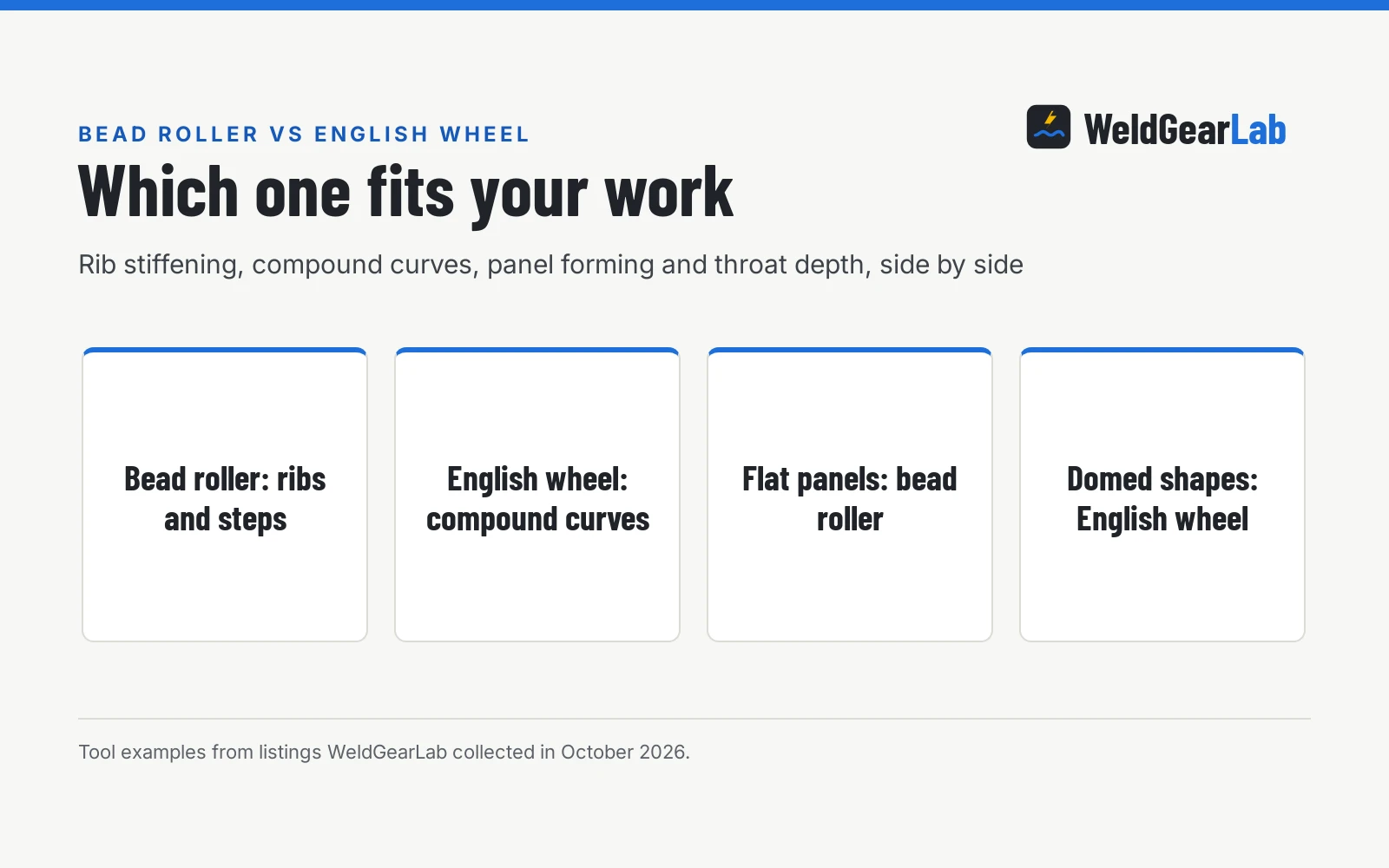
A bead roller forms stiffening ribs, steps, and flanges in flat sheet metal, while an English wheel stretches and smooths panels into compound curves and domed shapes.

On this page
Top picks at a glance
As an Amazon Associate I earn from qualifying purchases.
- 1
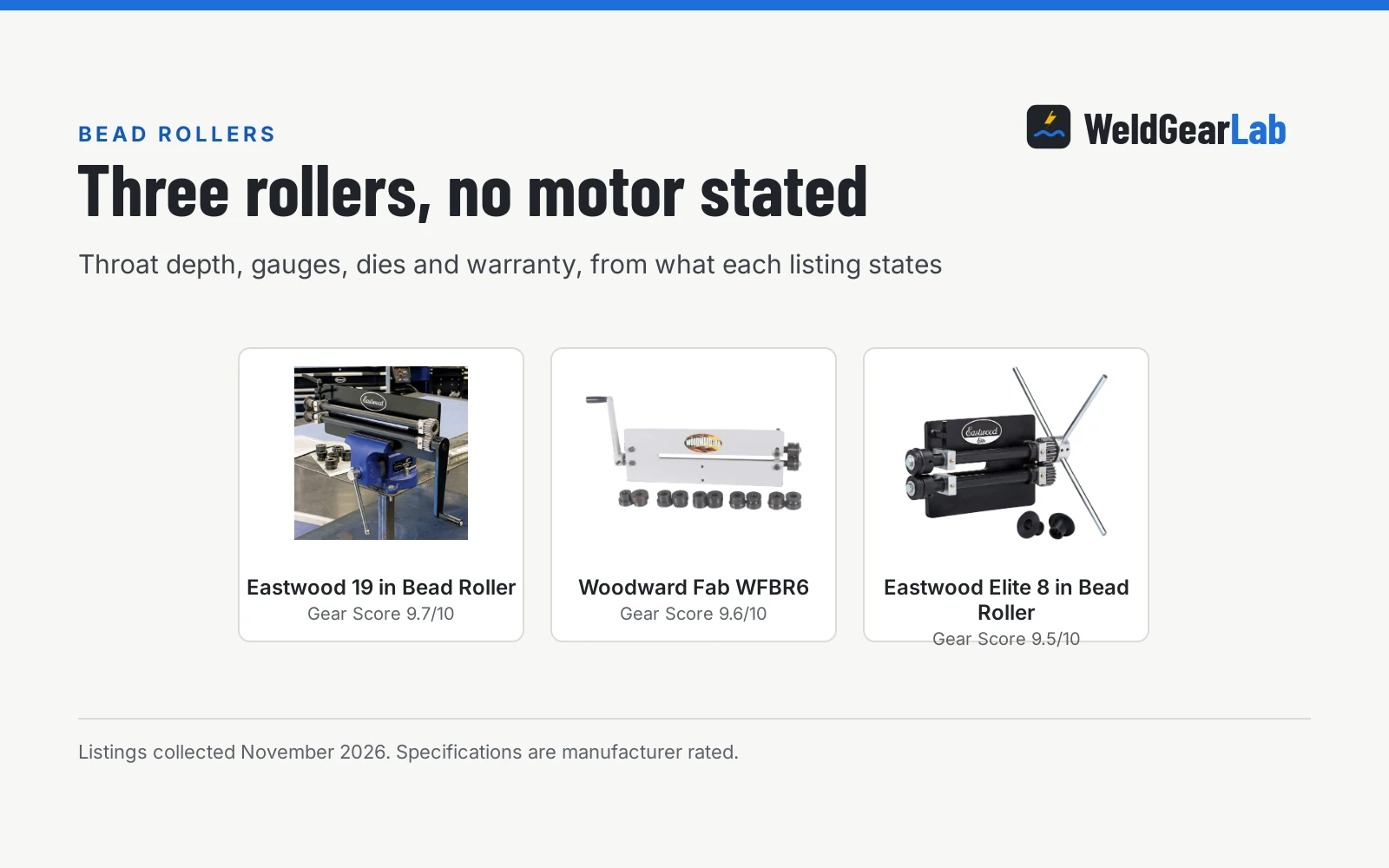
 Eastwood Metal Fabrication Bead Roller with Dies9.7/10View on Amazon
- 2
 3M Silver Cut-Off Wheel9.7/10View on Amazon
- 3
 WFBR6 18 in. Bead Roller Kit Brand: Woodward Fab9.6/10View on Amazon
- 4
 Eastwood Elite 8In Heavy Duty Bead Roller Durable Design 22MmView on Amazon
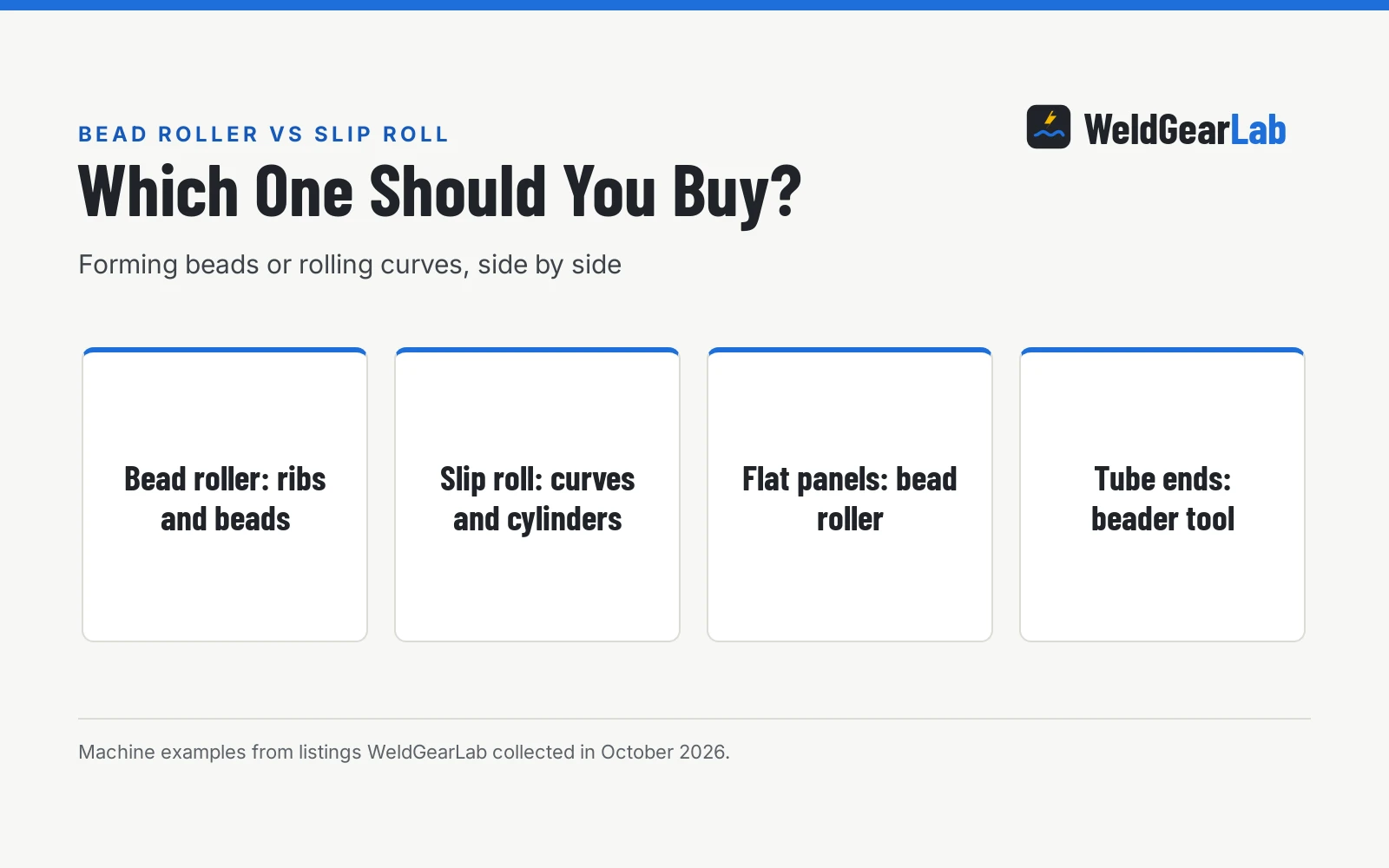
When shaping sheet metal for a patch panel, floor pan, or body repair on your workbench, choosing between a bead roller vs english wheel comes down to whether you need structural stiffness or smooth compound curves. A bead roller forms distinct ribs, steps, and flanges to stiffen flat panels without stretching the surrounding sheet, while an English wheel stretches and thins the metal between rolling dies to shape domed crowns and curved contours. If your goal is stiffening floor pans or running clean bead lines, buy a bead roller; if you are shaping curved fenders or smoothing hammered curves, buy an English wheel.
Other welders and gear to compare
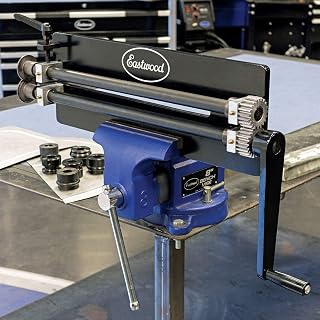 Eastwood Metal Fabrication Bead Roller with DiesCheck price on Amazon
 Eastwood Elite 8In Heavy Duty Bead Roller Durable Design 22MmCheck price on Amazon
This guide links to our product roundups, where WeldGearLab gets a commission on purchases made through links on this page, and your price stays the same. Read our affiliate disclosure.
Bead roller vs english wheel: the difference in one paragraph
A bead roller uses driven roll dies to press rigid grooves, steps, and decorative profiles into sheet metal, keeping the panel mostly flat while adding mechanical stiffness along the rolled path. In contrast, an English wheel uses an upper flat wheel and an interchangeable lower curved anvil wheel to apply concentrated rolling pressure, stretching the metal locally to raise crowns and form compound curves. A bead roller adds structural strength by bending profiles into the panel; an English wheel stretches the sheet to turn flat metal into spherical or contoured shapes.
Side by side
| Bead Roller | English Wheel | Shop Takeaway | |
|---|---|---|---|
| Primary shaping action | Forms stiffening ribs, steps, and flanges | Stretches and wheels compound curved crowns | Bead roller adds ribs; wheel contours curves |
| Metal movement | Bends sheet into profiles without surface stretching | Locally stretches and thins sheet between wheels | Roller bends locally; wheel stretches surface |
| Common projects | Floor pans, firewalls, inner fenders, tubing beads | Fenders, motorcycle fuel tanks, cowl scoops, patch panels | Roller for structural panels; wheel for outer skins |
| Tooling and dies | Upper and lower rotary forming dies | Upper rolling wheel and lower radius anvil wheels | Roller swaps die profiles; wheel swaps anvil radii |
| Drive type | Manual hand crank or electric motor drive | Manual pushing and pulling by hand | Roller can be motorized; wheel is purely manual |
| Structural effect | Adds rigidity and eliminates panel oil-canning | Shapes curved contours and removes hammer dents | Roller stiffens flat sheet; wheel shapes crowns |
| Operation method | Feeds sheet through rotating dies along marked lines | Passes sheet back and forth through wheel contact patch | Roller tracks lines; wheel blends smooth areas |
| Learning curve | Quick to learn for straight ribs and edge steps | Requires practice to control crown shape and wheeling pressure | Roller is easier to learn for beginners |
| Frame throat depth | Deep throat options available for reaching panel centers | Deep throat C-frame clearance for swinging large panels | Both require rigid frames to prevent die spreading |
Forming capacity depends heavily on frame stiffness and throat depth. Always check the metal thickness limits for your specific tool, as working sheet beyond rated capacity causes frame flex, uneven beads, and erratic tracking.
When a bead roller is the better choice
- Floor pans and firewalls. Pressing strengthening beads into large flat sheet prevents oil-canning and structural vibration without adding extra steel tubing or heavy angle.
- Stepped flanges and lap joints. Offset dies let you roll recessed edges for flush patch panel fit-up and clean seam welding.
- Tubing and intercooler pipes. Dedicated tubing rollers press retaining beads around cut pipe ends so silicone couplers stay seated under boost pressure.
- Repeatable stiffening channels. Following scribed lines through paired rotary dies produces identical stiffening channels across matching floor sections.
If you are setting up your shop for panel fabrication, our guide on how to use a bead roller explains die alignment, crank handling, and tracking techniques. For cutting your blank panels before rolling, pair your forming setup with a tool from our best sheet metal nibbler guide.
When an English wheel is the better choice
- Compound curves and domed panels. An English wheel creates complex contoured shapes that curve across multiple directions at once, such as fuel tanks and wheel arches.
- Smoothing hammer and dolly marks. After rough-shaping sheet metal over a shot bag with a mallet, wheeling smooths out lumps, ripples, and surface puckers without gouging the metal.
- Custom fenders and body skins. Rolling the panel back and forth through the wheel contact patch stretches the steel or aluminum cleanly without leaving tool seam marks.
- Gradual surface stretching. Rather than pressing a sharp rib, wheeling distributes stretch smoothly across a wide radius, keeping panel curvature flowing naturally.
How to evaluate throat depth and metal capacity
Sheet metal forming tools are rated by throat depth, shaft diameter, and metal gauge limits. When reviewing maker specifications, look for these key details:
- Throat depth and panel reach. Throat depth dictates how far into a panel you can roll. For example, Eastwood lists an 8-inch throat bench model for smaller patches, alongside a 19-inch throat industrial model that can reach the center of a 38-inch panel. Deeper throats allow larger floor pans but require rigid frames to prevent the upper and lower dies from spreading apart under load.
- Material thickness limits. Forming capacities vary by metal alloy. For its 19-inch and 8-inch bead rollers, Eastwood specifies maximum working thickness of 18 gauge for mild steel, 16 gauge for aluminum, and 20 gauge for stainless steel. Attempting to roll heavier plate flexes the frame and ruins tracking.
- Shaft diameter and frame weight. Stiff shafts maintain parallel die contact. Eastwood lists each model separately: its Elite 8-inch heavy-duty bead roller uses a 22mm shaft and weighs 28.7 pounds, its 19-inch industrial bead roller weighs 50 pounds, and its 19-inch bead roller with power drive system pairs 22mm shafts with a 1/6hp 120v motor and weighs 68.5 pounds. Lighter frames flex easily when forming stiff sheet.
- Tubing bead rollers for pipe ends. For intake plumbing rather than flat panels, dedicated tubing beaders from makers like QWORK, TXRXIZ, and HiwowSport fit 5/8-inch tubing and larger pipes, accommodating 3-inch, 3.5-inch, and 4-inch lines. BESTOOL provides a 1/4-inch drive adapter on its 5/8-inch tubing tool for steady rotary operation.
For bending clean straight angles rather than rolled beads or compound crowns, see our sheet metal brake vs pan brake comparison.
Die profiles and anvil wheel selection
The tooling installed on each machine dictates the profiles you can form. Bead rollers use matched upper and lower steel dies that interlock to press distinct geometry into the sheet. Eastwood includes a 3/8-inch bead die set and an offset die set with its bench and industrial models, while optional roll sets include step dies, hem dies, and shearing dies for edge trimming.
An English wheel operates on a different principle, using a flat upper rolling wheel paired with an interchangeable lower anvil wheel. The lower anvils are machined with distinct crown radii. A flatter anvil wheel spreads rolling pressure over a broad area for gentle crowns and smoothing, while a tighter radius anvil concentrates pressure to stretch metal rapidly into deep domes. Selecting the right lower anvil radius controls how quickly the crown rises with each pass.
Can you use both tools on the same project?
Yes, and in serious auto body and metal shaping shops, they work together as complementary tools rather than rivals. A fabricator often starts on an English wheel to raise a compound curve into a door skin or quarter panel, then switches to a bead roller to add stiffening beads, step flanges, or clearance recesses around edges. For floor pans, trunk floors, or flat firewall panels, a bead roller handles the entire job by itself.
Pinch points and sheet metal safety. Both bead rollers and English wheels exert high mechanical leverage between rotating dies and wheels, creating severe pinch points. Keep fingers and loose clothing clear of moving rollers during operation. Metal edges on sheared sheet can produce deep lacerations; wear sturdy work gloves and eye protection when handling large blanks. Fasten benchtop units firmly in a heavy vise or floor stand before applying forming force. For shop safety guidelines, see our welding safety gear checklist for beginners.
FAQ for welders
Can a bead roller stretch sheet metal like an English wheel?
A bead roller displaces metal into defined profiles like beads, ribs, and steps, but it does not stretch sheet across a broad surface to make smooth compound crowns. Rolling a bead will locally pull nearby metal slightly, which can cause panel warping if the frame flexes or if the die pressure is too high. If you need spherical curves, domed panels, or compound contours, an English wheel is required.
Can an English wheel make strengthening ribs?
No. An English wheel uses smooth rolling dies designed to stretch and blend sheet metal without leaving sharp creases or groove lines. It cannot press a defined bead, stepped edge, or structural channel into a panel. For structural ribbing on floor pans and firewalls, a bead roller is the proper tool.
Which tool should a beginner buy to start?
For most home garage fabricators, a bead roller is the more practical initial purchase. It lets you build floor pans, trunk panels, firewalls, and patch panels that bolt or weld directly into vehicle projects with minimal metal shaping experience. An English wheel requires significantly more hammer, dolly, and wheeling practice before producing clean, usable compound curves.
Do I need a motorized bead roller or is a manual crank enough?
A manual hand crank is sufficient for smaller panels, patch repairs, and short beads, but turning the crank while steering a large panel along a marked line can be challenging for a solo fabricator. Motorized systems with variable speed foot pedals allow you to guide the sheet with both hands. If you work alone on wide panels, adding a motor drive or foot control makes guiding lines much easier.
What sheet metal thickness can these tools shape?
Capacity depends on frame design and throat depth. Benchtop manual bead rollers typically handle mild steel up to 18 gauge and aluminum up to 16 gauge, as listed by Eastwood for its heavy-duty units. English wheels handle similar sheet gauges for automotive bodywork, but attempting thicker plate on either tool causes frame flex, die misalignment, and uneven tracking.
Related: how to use a bead roller, how to use a shrinker stretcher, slip roll vs sheet metal brake, and the metal fab tools hub. Also see our guide on how to MIG weld thin sheet metal without burning through.