Parts Washer Portable: How to Choose and Use One
Portable parts washers in bench-top, rolling cart and bucket-top forms, compared by tank size, pump flow, weight and solvent limits for cleaning shop parts.

On this page
Top picks at a glance
As an Amazon Associate I earn from qualifying purchases.
- 1
 Jack Boss 3.5 Gallon Capacity Portable Steel Cabinet Parts9.6/10View on Amazon
- 2
 VEVOR Parts Washer 5-Gallon9.5/10View on Amazon
- 33.5 Gallon Capacity Portable Steel Cabinet Parts Washer with9.5/10View on Amazon
Greasy gears, bearings and carburetor parts pile up fast on the bench, and scrubbing them in a coffee can wastes solvent and time. A parts washer portable setup puts a small tank, an electric pump and a brush or nozzle in one unit you can carry or roll to the job, so dirty parts get washed in recirculating fluid instead of by hand. This guide explains the three portable forms, the tank and pump figures that matter, and the solvent limits the makers state.
This guide links to our product roundups, where WeldGearLab gets a commission on purchases made through links on this page, and your price stays the same. Read our affiliate disclosure.
What a parts washer portable setup does
A portable parts washer is a tank of cleaning fluid with a small electric pump. The pump pushes fluid through a flexible nozzle or a flow-through brush, you scrub the part in the stream, and the fluid drains back into the tank to be used again. Bench-top cabinets sit on the workbench, rolling carts move on casters, and bucket-top basins sit on a standard bucket. The bench-top and rolling cart examples run on 110V power, and the JEGS cart (on Amazon) is stated as 110/120V.
The work basin is where the part sits. On the 3.5 gallon bench-top cabinets the makers state a basin of 18 inches wide by 13.5 inches deep and 9 inches high, sized for small parts such as wheel bearings, gears and carburetors. A removable shelf or tray lets small hardware sit in the fluid while you brush larger pieces in the stream.
Side by side
| Bench-top cabinet | Rolling cart | Bucket top | |
|---|---|---|---|
| Tank or reservoir | 3.5 gallon reservoir | 20 gallon tank, 12 gallon working capacity | Fits most standard 5 gallon buckets |
| Pump output | 30 to 325 gallons per hour by model | 317 to 325 gallons per hour by model | 1 gallon per minute |
| Weight | 15.0 to 16.8 pounds by model | 68 to 80.0 pounds by model | 4.3 pounds |
| Mobility | Carried to the bench | Caster wheels, two locking on one model | Carried with the bucket |
| Lid | Hinged lid, fusible link on stated models | Lidded tub, fusible link on one model | Open basin, no lid stated |
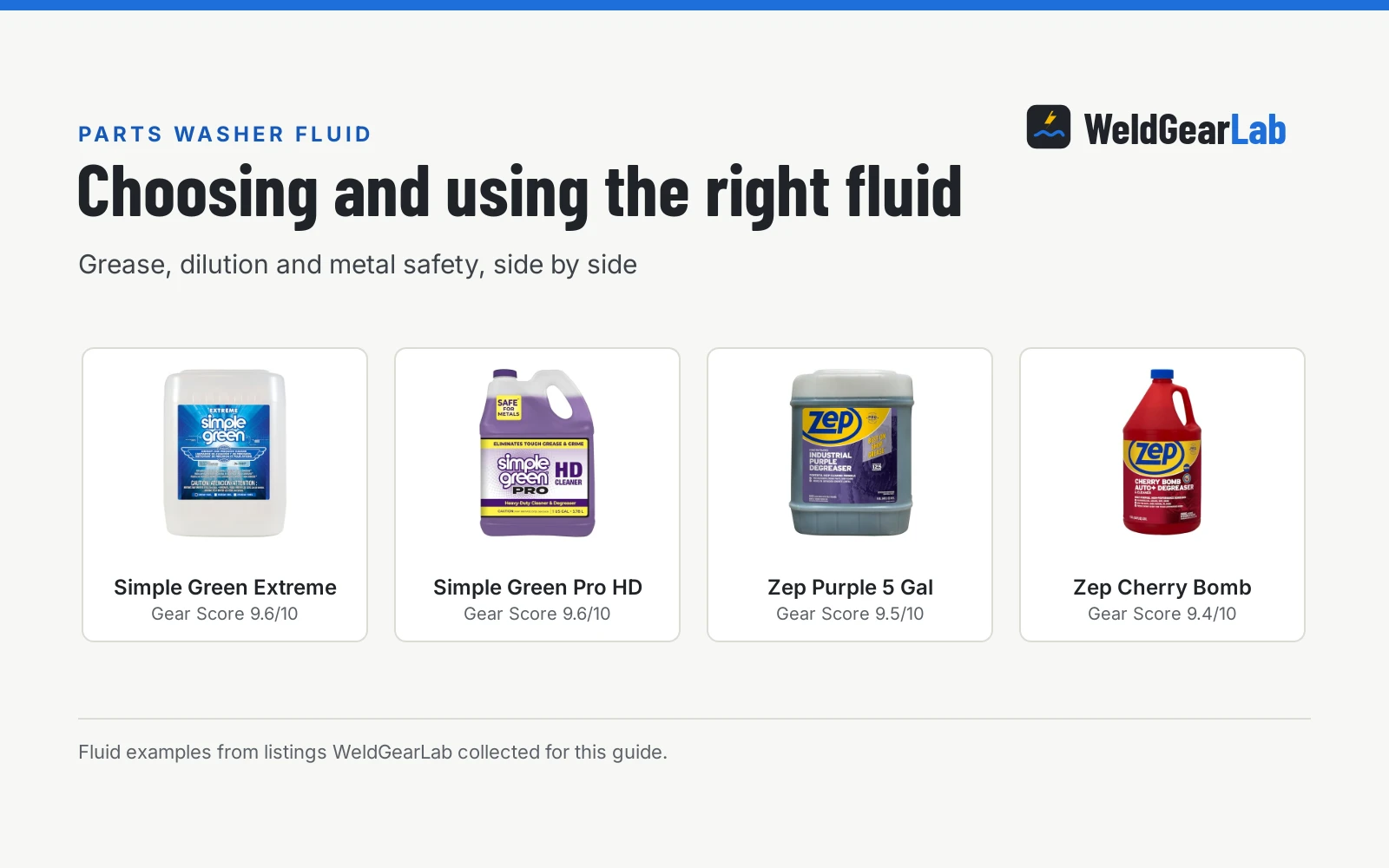
Pump figures are maker ratings for the examples named in the text. Match the fluid to the washer: the maker of the LuckyNote cart states it is designed specifically for water-based cleaning solutions, while the makers of two bench-top cabinets state their washers are not for use with flammable or combustible solvents such as mineral spirits.
Bench-top cabinets for small parts
- Small reservoir, bench footprint. The bench-top examples state a 3.5 gallon fluid reservoir in a steel cabinet that sits on the bench.
- Light enough to move. Stated weights run 15.0 pounds for the AVGVLIJ washer (on Amazon) and 16.8 pounds for the BIG RED Torin washer, so one person can carry the empty unit to a shelf.
- Pump flow varies by model. The Generic cabinet recycles liquid at 1/2 gallon per minute, the AVGVLIJ pump is rated at approximately 30 gallons per hour, and the BIG RED Torin pump is stated at 325 gallons per hour.
- Fusible link lid. The bench-top examples state a hinged lid with a fusible link that closes when not in use and in the event of a flash fire.
For bench work, gloves matter as much as the tank. Our parts washer gloves guide covers chemical-resistant options.
Rolling carts for bigger work
- More fluid, more room. The rolling examples state a 20 gallon tank with a 12 gallon solvent or working capacity, against 3.5 gallons in the bench-top cabinets.
- Cart pump figures. The JEGS cart pump output is stated at 317 gallons per hour and the LuckyNote and HIROHRTV carts at 325 gallons per hour.
- Rolls to the job. The LuckyNote cart states four caster wheels with two locking, and the HIROHRTV rolling (on Amazon) model states four swivel casters with handles at both ends.
- Heavier to move empty. Stated weights run 68 pounds for the LuckyNote and HIROHRTV carts and 80.0 pounds for the JEGS cart, so plan on rolling rather than carrying.
Our parts washer on wheels guide covers portable cleaning stations in more depth.
Bucket-top washers
The lightest form is a basin that fits on top of most standard 5 gallon plastic buckets. The JEGS bucket-top washer states a one gallon-per-minute submersible pump, a flow-through cleaning brush and a 47 inch hose, at a stated weight of 4.3 pounds. It suits small items and jobs away from the bench, where a full cabinet will not fit. Fluid height matters here: the maker states a minimum fluid height requirement for the pump, so keep the bucket filled to the level the maker specifies.
Solvent choice and lid safety
Read the solvent limit before you fill the tank. Two bench-top makers state their washers are not for use with flammable or combustible solvents such as mineral spirits. The LuckyNote cart is stated as designed specifically for water-based cleaning solutions, with a fusible link that automatically closes the lid in case of fire. Bench-top lids with a fusible link are stated to close when not in use, and one maker states the lid closes automatically in the event of a flash fire. Keep the lid closed when the washer is not in use, keep flammable material away from the tank, and follow the fluid maker label for handling and disposal.
How to use one step by step
- Set the washer on a stable bench or floor, close to an outlet, with the lid open and the tray in place.
- Fill the tank with a fluid the washer maker allows, up to the level the maker states, and check the pump intake sits in the fluid.
- Put the part in the basin, switch the pump on, and scrub with the brush or nozzle while fluid runs over the part.
- Let cleaned parts drain on the shelf or tray so fluid runs back into the tank.
- Switch off, close the lid, and wipe up drips before you move the unit.
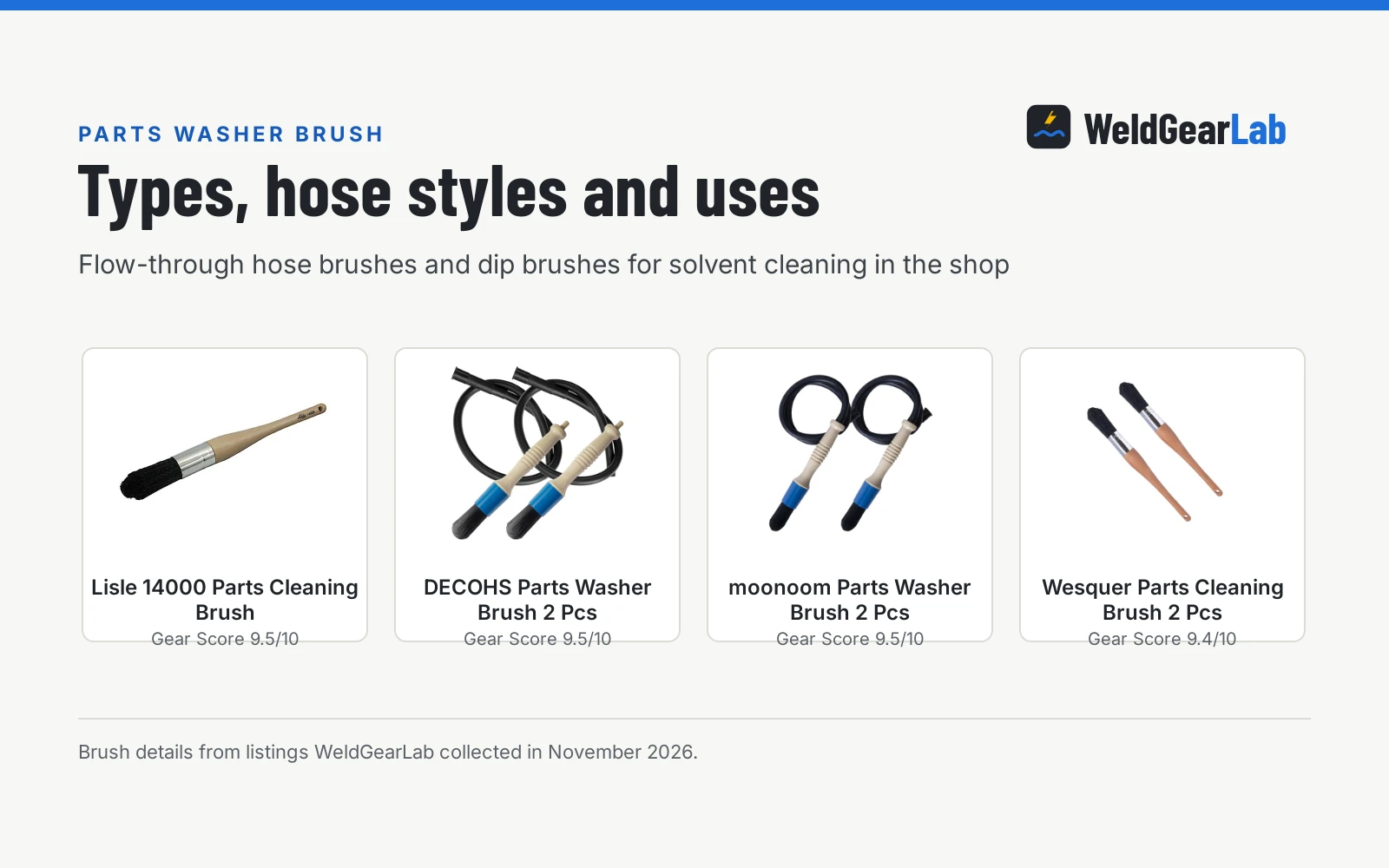
Brushes, baskets and hookups wear out first. Our parts washer accessories guide covers replacements, and how to use a parts washer walks through setup in detail.
FAQ for welders
What size portable parts washer do I need?
Match the basin to your largest part. Bench-top cabinets state a 3.5 gallon reservoir with an 18 by 13.5 by 9 inch basin for small parts like bearings, gears and carburetors. Rolling carts state a 20 gallon tank with 12 gallon working capacity for larger pieces.
Can I use mineral spirits in a portable parts washer?
Only if the washer maker allows it. The makers of two bench-top cabinets state their washers are not for use with flammable or combustible solvents such as mineral spirits, and the LuckyNote cart is stated as designed specifically for water-based cleaning solutions. Follow the limit stated for your unit.
What does a fusible link lid do?
The makers state the hinged lid carries a fusible link that closes the lid when not in use and automatically in the event of a flash fire. It is a fire safety feature on the bench-top examples that state it and on the LuckyNote cart.
How much pump flow do I need?
Stated outputs run from 1/2 gallon per minute on one bench-top cabinet to 325 gallons per hour on the rolling carts and one bench-top model. More flow rinses loosened grime off faster, but basin size and solvent choice matter more for small parts.
Are portable parts washers heavy?
Bench-top examples state 15.0 to 16.8 pounds and the bucket-top basin states 4.3 pounds, all empty. Rolling carts state 68 to 80.0 pounds empty and are meant to roll on casters rather than be carried.
Related: how to use a parts washer, parts washer on wheels, parts washer gloves, and the metal fab tools hub.