Parts of a Chop Saw: Names and Replacement Guide
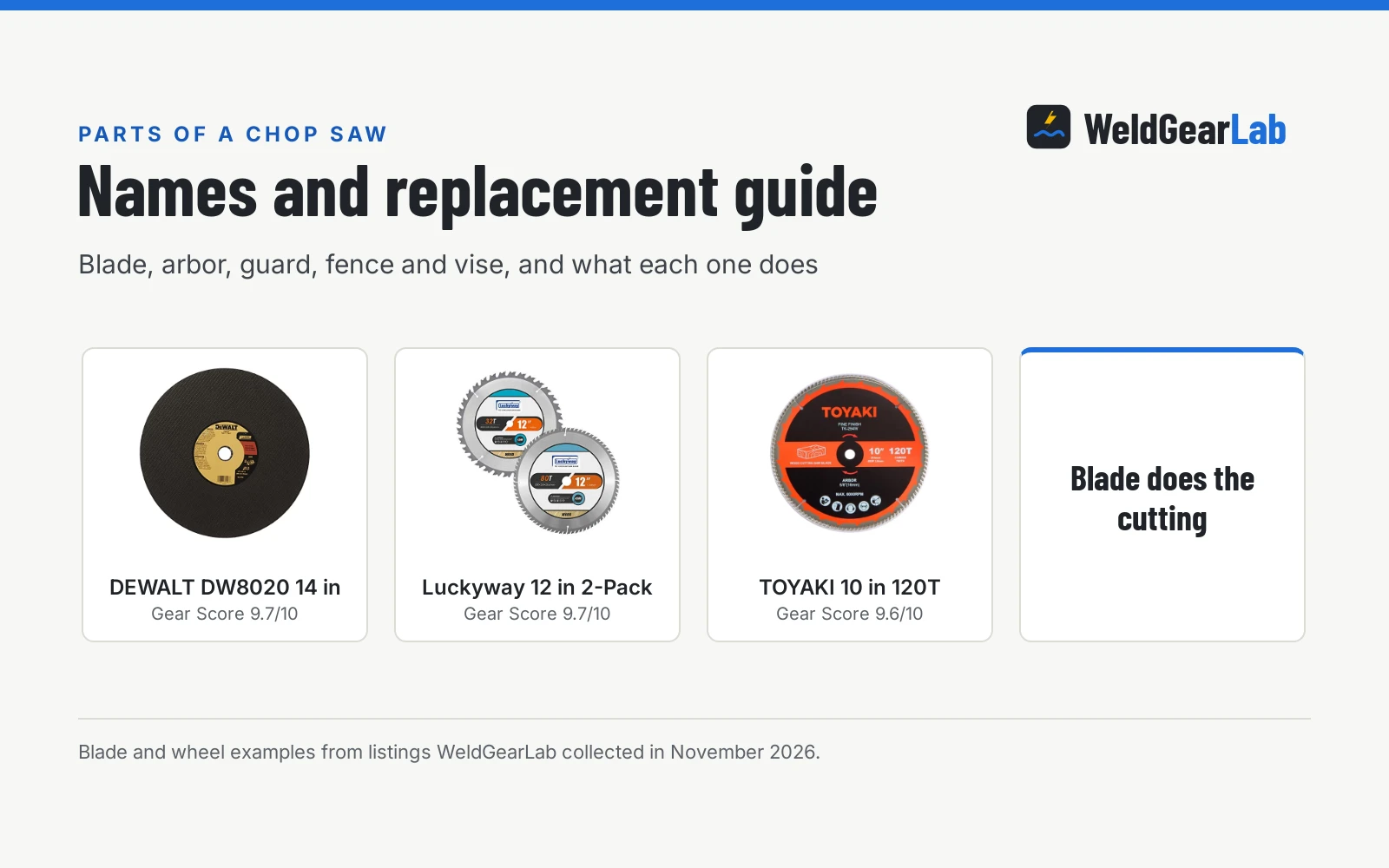
A chop saw is a small set of parts doing one job, and knowing the blade, arbor, guard, fence and vise by name makes replacement and setup faster.

On this page
Top picks at a glance
As an Amazon Associate I earn from qualifying purchases.
- 1
 DEWALT DW8020 Metal Port Saw Cut-Off Wheel9.7/10View on Amazon
- 2
 Luckyway 12 Inch Miter Saw Blades 32T&80T with 19.7/10View on Amazon
- 3
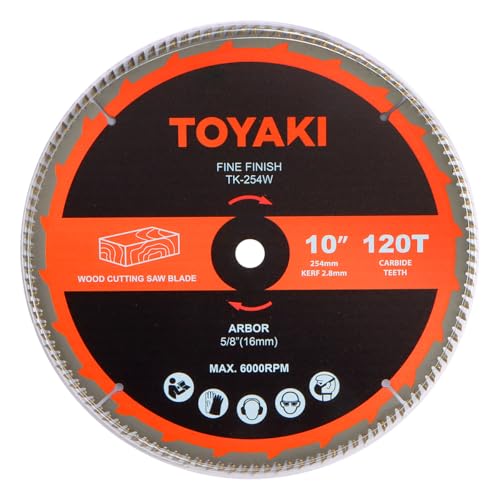 TOYAKI 10-Inch Miter Saw Blade9.6/10View on Amazon
A chop saw looks simple from across the shop: a motor, an arm, a blade and a base. Knowing the parts of a chop saw by name changes how fast a repair goes, because the part that wears out is usually the part that does the cutting, and the part that sets the fit is usually the one that gets ordered wrong. This guide names the main parts, says what each does, and shows which blade or wheel fits which saw, so a replacement order matches the saw on the bench.
This guide links to our product roundups, where WeldGearLab gets a commission on purchases made through links on this page, and your price stays the same. Read our affiliate disclosure.
| # | Product | Gear Score | Buy |
|---|---|---|---|
| 1 | DEWALT DW8020 Metal Port Saw Cut-Off Wheel | 9.7/10 | Buy on Amazon |
| 2 | Luckyway 12 Inch Miter Saw Blades 32T&80T with 1 | 9.7/10 | Buy on Amazon |
| 3 | TOYAKI 10-Inch Miter Saw Blade | 9.6/10 | Buy on Amazon |
DEWALT DW8020 Metal Port Saw Cut-Off Wheel
A 14 inch abrasive cut-off wheel with aluminum oxide grain for metal chop saws.
Pros
- 14 inch diameter for a chop saw that takes a 14 inch wheel
- Aluminum oxide grain the maker lists for long life and high material removal
- Two full sheets of thicker fiberglass for high speed use
- High grain concentration for aggressive cutting and smoother running
Cons
- 14 inch size only fits saws that take a 14 inch wheel
- One wheel in the box, so there is no spare
- Abrasive grain, so the wheel wears as it cuts and the diameter shrinks
- Made for metal cutting, not for fine finish woodwork
Luckyway 12 Inch Miter Saw Blades 32T&80T with 1
A 2-pack of 12 inch miter saw blades, 32T general purpose and 80T fine finish, with tungsten carbide teeth for wood cutting.
Pros
- Two blades in the box: a 32T general purpose blade and an 80T fine finish blade
- Tungsten carbide teeth, stated for wear and heat resistance
- 12 inch diameter with a 1 inch arbor, sized for 12 inch miter saws
- Lists fit for DeWalt, Makita, Skil and Metabo 12 inch miter saws
Cons
- Made for wood, not a metal cutting blade
- No warranty term is stated
- 12 inch size only fits saws that take a 12 inch blade
- Sold as a 2-pack, so there is no single blade option
TOYAKI 10-Inch Miter Saw Blade
A 10 inch, 120 tooth fine finish blade for wood and soft materials, with a 5/8 inch arbor.
Pros
- 120 teeth for a fine finish cut
- Standard 5/8 inch arbor the maker lists for most common saw models
- Maker lists high-grade steel construction
- Engineered teeth pattern the maker lists for clean cuts with less vibration
Cons
- Made for wood and soft materials, not for metal
- No warranty term is stated
- 10 inch size only fits saws that take a 10 inch blade
- One blade in the box
Parts of a Chop Saw: What Each Part Does
A chop saw is a small set of parts doing one job. The blade or wheel spins, the arm carries it down into the work, and the base holds everything square.
- Blade or wheel. The disc that does the cutting. The toothed blades in this guide list wood cutting, and the abrasive wheel lists metal cutting.
- Arbor. The shaft, flanges and nut that hold the blade on the saw. The arbor hole in the blade must match the saw.
- Blade guard. The cover over the blade that moves out of the way as the arm drops.
- Fence. The flat face the work rests against. It keeps the work square to the blade.
- Vise or clamp. Holds the work still while the blade drops, so the cut stays straight and the work stays put.
- Pivot arm. The arm that carries the motor and blade down into the cut and back up again.
- Motor. Drives the blade at the speed the saw runs at.
- Base and table. The flat bed the work sits on.
- Trigger switch. Starts the motor.
- Dust bag or port. Catches chips on saws that have one.
Blade or Wheel: Which One Your Saw Takes
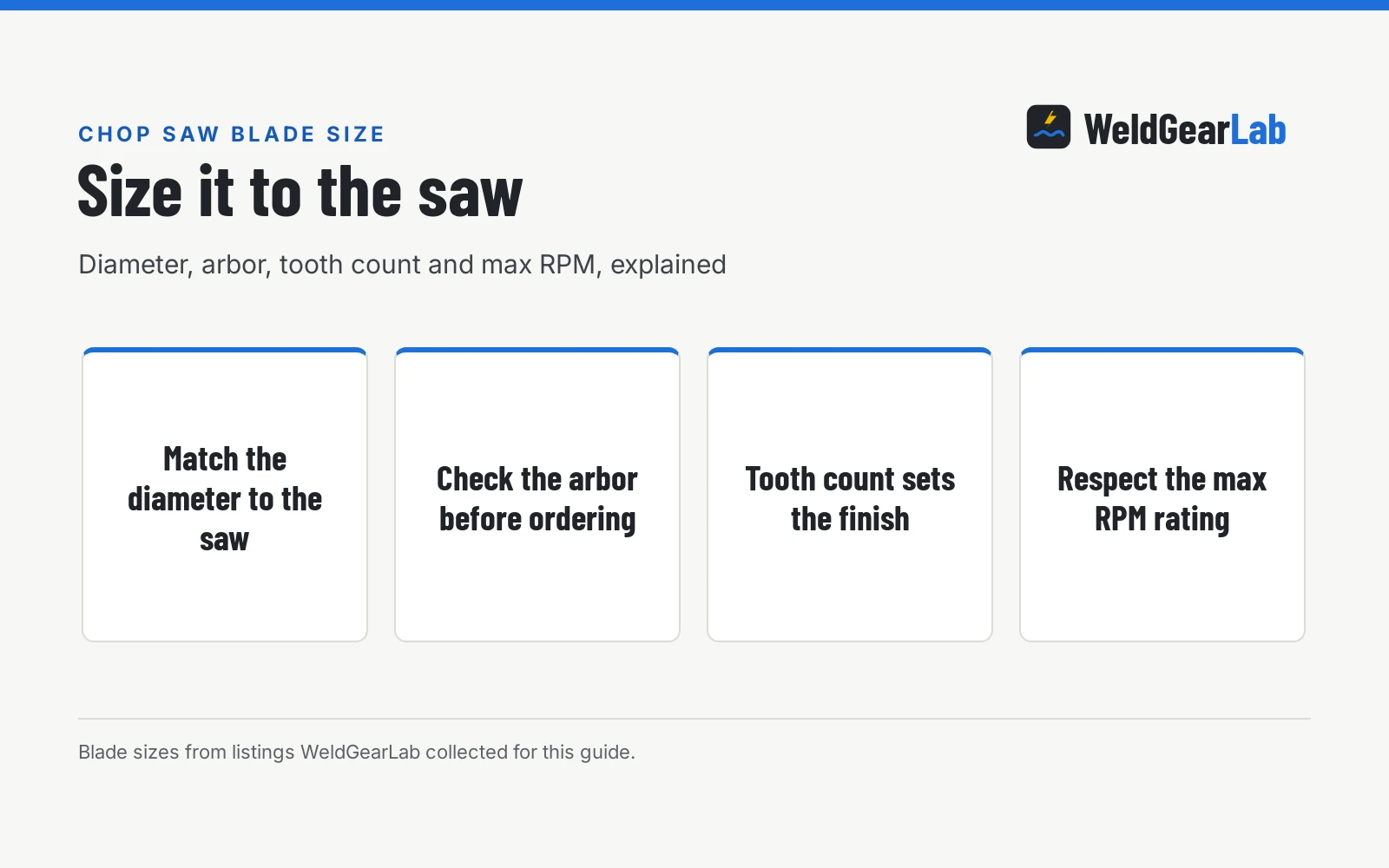
Toothed blades and abrasive wheels are different parts for different material. A toothed blade has teeth counted per blade: the Luckyway pack lists 32 teeth on one blade and 80 teeth on the other, and the TOYAKI lists 120 teeth. More teeth means a finer finish on wood. An abrasive wheel has no teeth at all. The DEWALT wheel lists aluminum oxide grain and fiberglass backing, and it cuts metal by grinding through it. Match the type to the material the listing states: the wood blades here list wood, and the wheel lists metal. See the cut off wheel vs cold saw guide for the wider choice.
The Arbor and the Fit
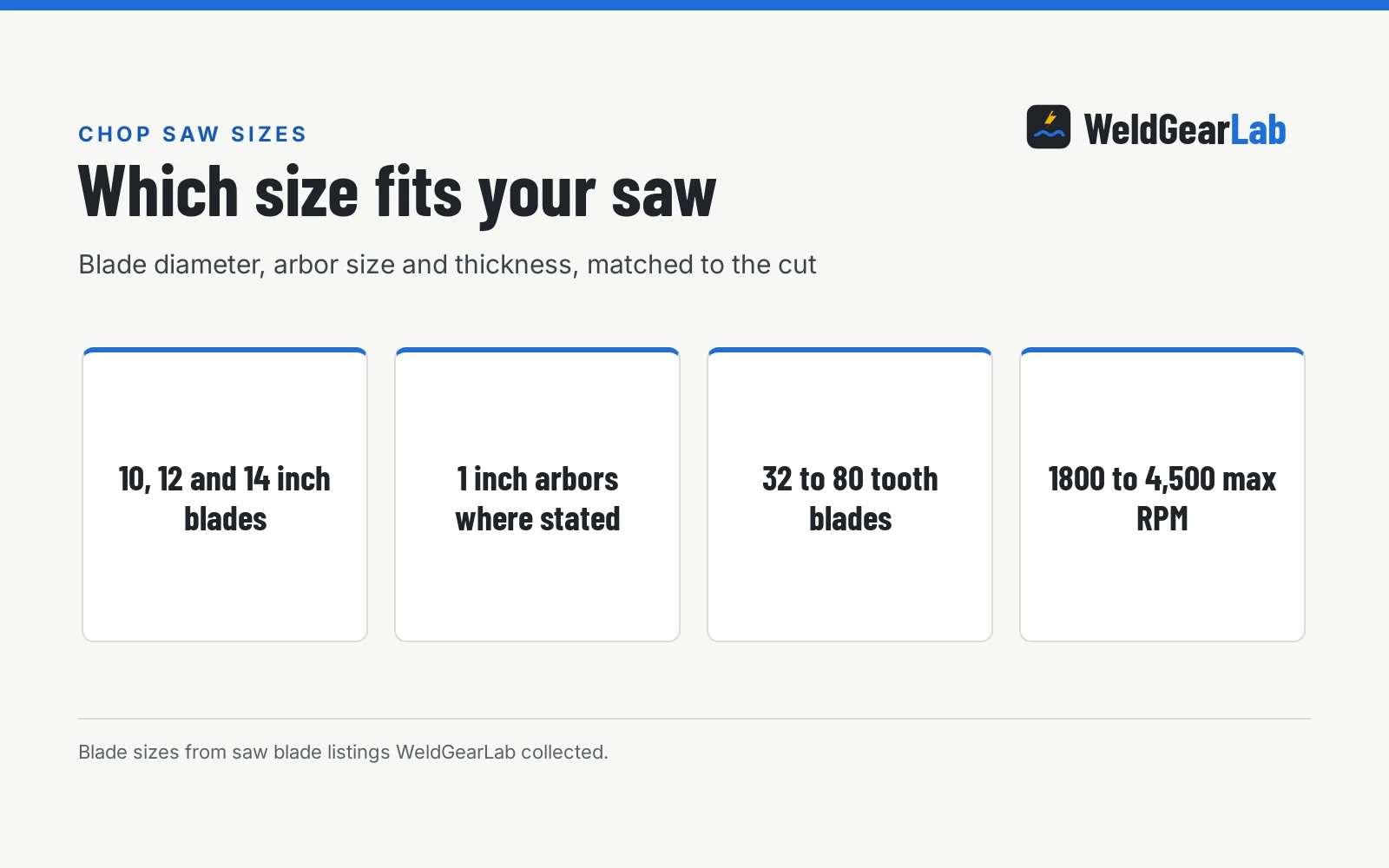
The arbor is the fit to check first when ordering. The Luckyway blades (on Amazon) list a 1 inch arbor, and the DEWALT wheel lists a 1 inch arbor too. The TOYAKI lists a 5/8 inch arbor. A blade fits when the hole in the blade matches the arbor on the saw, so check the size the saw states before ordering. Diameter works the same way: the three picks here list 12 inch, 10 inch and 14 inch sizes. The chop saw blade size guide and chop saw sizes guide cover both measurements in more detail.
Side by Side
| DEWALT DW8020 14 in | Luckyway 12 in 2-Pack | TOYAKI 10 in 120T | |
|---|---|---|---|
| Diameter | 14 in | 12 in | 10 in |
| Teeth or grain | Aluminum oxide grain | 32T and 80T, tungsten carbide | 120T, fine finish |
| Arbor | 1 in | 1 in (25.4 mm) | 5/8 in (16 mm) |
| Thickness | 1/8 in | 0.1 in | 0.1 in |
| Cuts | Metal | Wood | Wood and soft materials |
| Pack | 1 wheel | 2 blades | 1 blade |
| Weight | 2.0 lb | Not stated | 1.54 lb |
| Max speed | Not stated | 4,500 RPM | Not stated |
Tooth count and grain decide the finish and the material, and diameter and arbor decide the fit. Check both before ordering, and keep the speed in mind: the Luckyway lists a 4,500 max RPM.
The Gear: Blades and a Cut-Off Wheel for Your Saw
The three picks below cover the two cutting jobs in this guide: toothed blades for wood and an abrasive wheel for metal.
How to Check a Part Before You Order
Order with the saw beside you. These checks catch most wrong orders:
- Diameter. Match the blade diameter to the size the saw takes. The picks here list 12 inch, 10 inch and 14 inch sizes.
- Arbor. Match the hole to the saw arbor: 1 inch on the Luckyway blades and the DEWALT wheel, 5/8 inch on the TOYAKI.
- Teeth or grain. The Luckyway lists 32 teeth for general purpose work and 80 teeth for fine finish, the TOYAKI lists 120 teeth for fine finish, and the DEWALT lists aluminum oxide grain for metal.
- Kerf. The Luckyway lists a 0.106 inch kerf. A wider kerf removes more material with each cut.
- Pack count. The Luckyway comes as a 2-pack, so there is a spare blade in the box. The TOYAKI and the DEWALT wheel come as single items.
- Guard and clamping. Keep the guard in place, clamp the work before the cut, wear eye and face protection, and keep gloves away from rotating parts. See the grinding wheel safety guide and the OSHA machine guarding page.
FAQ for welders
What is the difference between a chop saw blade and a cut-off wheel?
A toothed blade cuts with teeth, and a cut-off wheel cuts with abrasive grain. The Luckyway pack and the TOYAKI are toothed blades, with 32, 80 and 120 teeth between them, and both list wood cutting. The DEWALT wheel lists aluminum oxide grain for metal. In this guide, the toothed blades are the wood picks and the wheel is the metal pick.
What size blade does a chop saw take?
It takes the size the saw states, so check the saw before ordering. The picks in this guide list 10 inch, 12 inch and 14 inch sizes. A blade that is too large will not fit the guard, and a blade that is too small will not reach through the work.
What arbor size does a chop saw need?
Check the size the saw states, or measure the arbor the old blade came off. The Luckyway blades and the DEWALT wheel list a 1 inch arbor, and the TOYAKI lists a 5/8 inch arbor. A blade fits when the hole matches the arbor.
When should a chop saw blade or wheel be replaced?
Replace a toothed blade when teeth are chipped or missing, or when cuts slow down and burn the wood. Replace an abrasive wheel when it wears thin, wobbles, or shows cracks in the fiberglass. A worn wheel or a dull blade also puts more load on the motor.
Can a wood miter saw blade cut metal?
No. Wood blades list wood cutting, and the Luckyway and TOYAKI blades both list wood and soft materials. The metal cutting pick in this guide is an abrasive cut-off wheel: the DEWALT wheel lists aluminum oxide grain for metal.
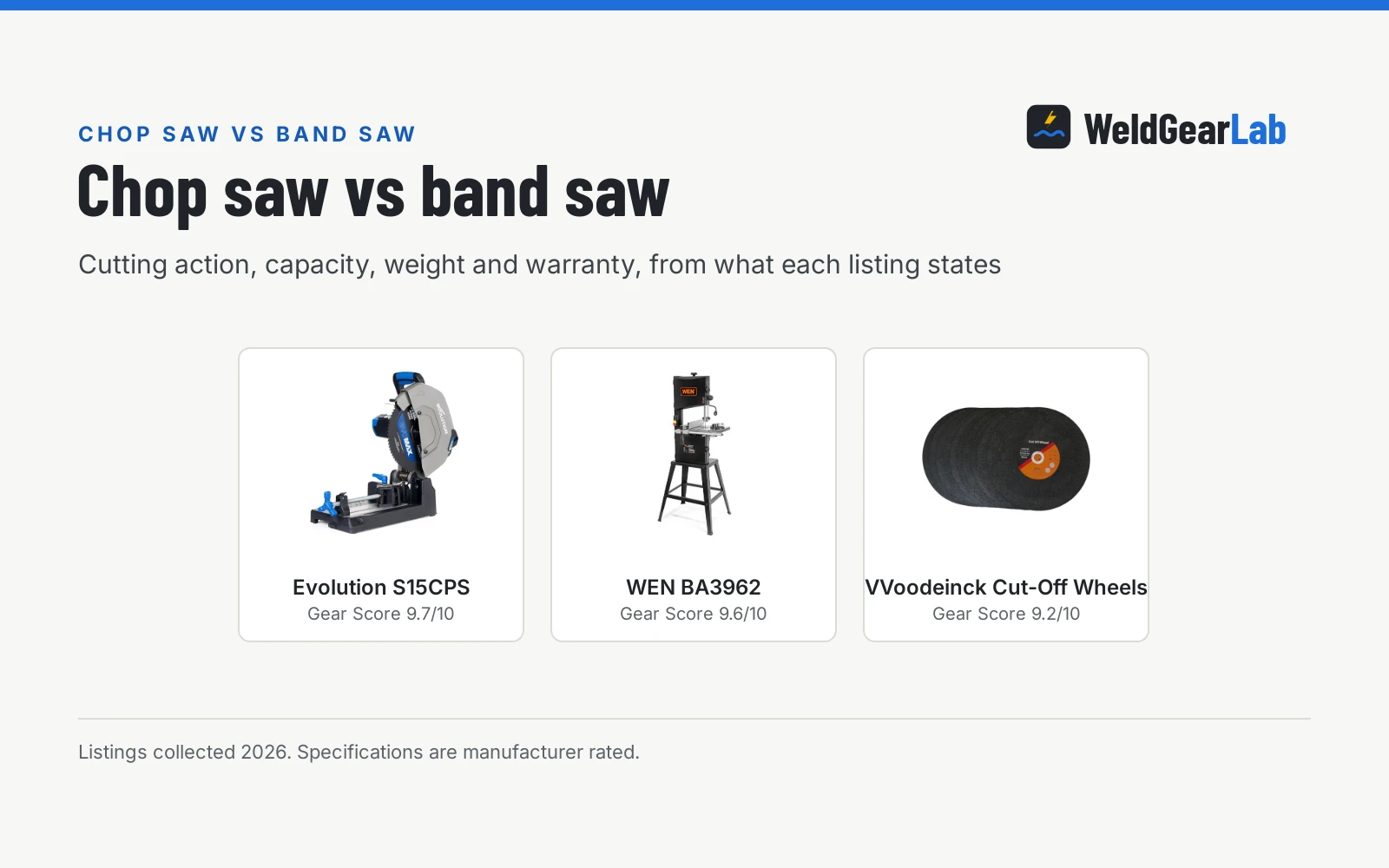
Related: how to change a chop saw blade, types of chop saws, metal cutting saw types, chop saw vs band saw for metal, and the metal fab tools hub.