Chop Saw Blade Size: Choosing the Right One
Chop saw blade size covers diameter, arbor, tooth count and max RPM, and this guide shows how to match each one to the saw and the metal being cut.

On this page
Top picks at a glance
As an Amazon Associate I earn from qualifying purchases.
- 1
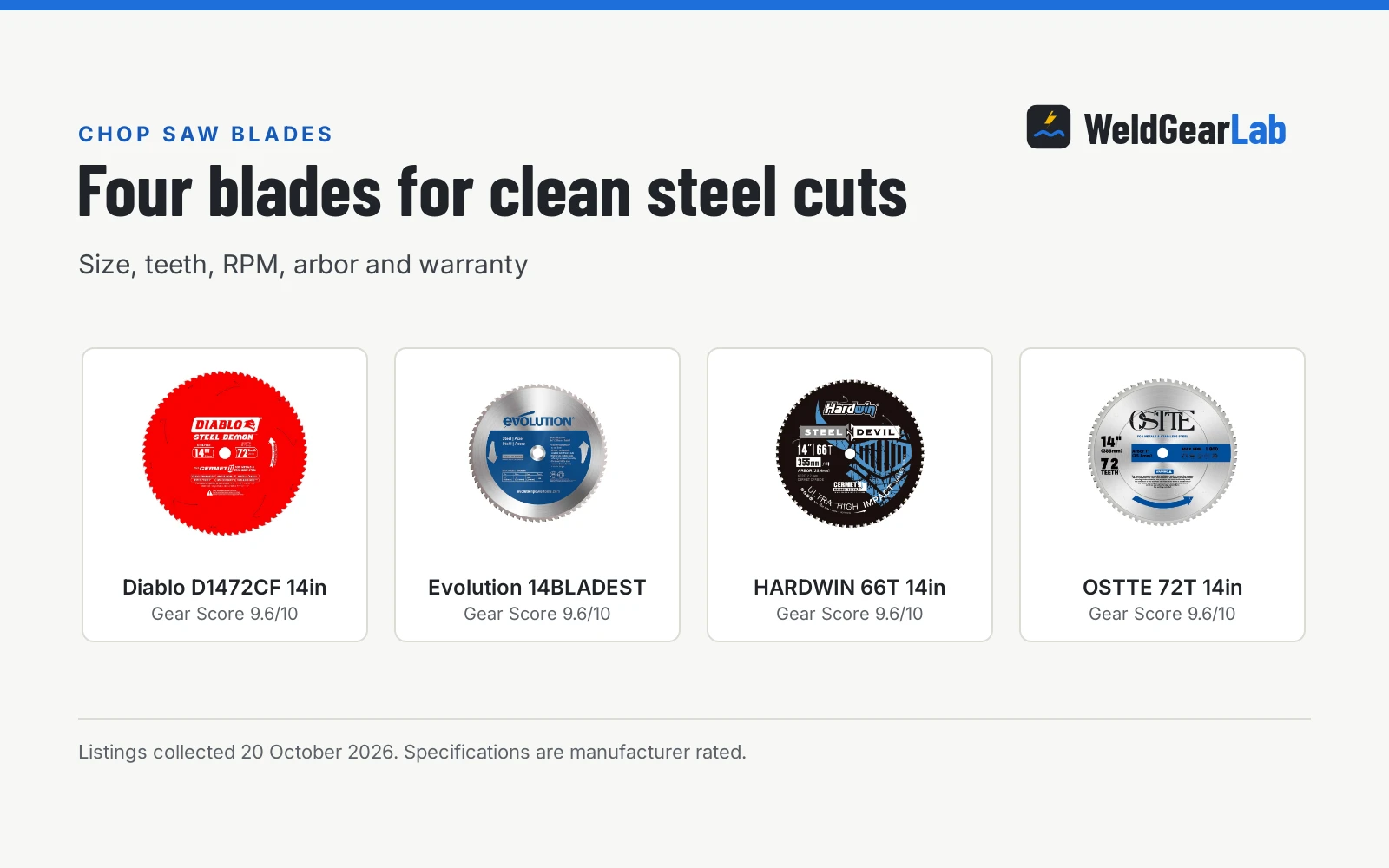
 14-Inch 72-Tooth Cold Cut Metal Saw Blade9.6/10View on Amazon
- 2
 DEWALT DW8500 14-Inch by 1-Inch Diamond Edge Chop Saw Blade9.4/10View on Amazon
- 3
 Diablo Steel Demon Cermet II Saw Blade for Medium Metal9.6/10View on Amazon
A chop saw blade that does not match the saw wastes metal, wanders off the line, and wears out fast. Chop saw blade size is the set of measurements that decides whether a blade fits the saw and suits the cut: diameter, arbor, tooth count, and max RPM. Get those measurements right and the blade mounts clean, spins true, and cuts the metal it was made for.
This guide links to our product roundups, where WeldGearLab gets a commission on purchases made through links on this page, and your price stays the same. Read our affiliate disclosure.
Chop saw blade size in one paragraph
Chop saw blade size starts with diameter. A 14 inch blade fits a 14 inch saw, a 12 inch blade fits a 12 inch saw, and a 10 inch blade fits a 10 inch saw. Diameter sets how deep the blade reaches and how wide a piece it can cross, while the arbor sets whether the blade mounts on the saw at all. Tooth count shapes the finish: a 32 tooth blade cuts fast and leaves a rougher edge, while an 80 tooth blade cuts slower and leaves a smoother edge. Max RPM is a ceiling, not a target: a blade rated at 1800 max RPM belongs on a saw that spins no faster than that rating, and a wheel rated at 4400 max RPM belongs on a saw that stays under that limit.
Side by side
| Blade size | Arbor | Tooth count | Blade type |
|---|---|---|---|
| 12 inch | 1 inch | 32 tooth | Carbide tipped |
| 12 inch | 1 inch | 80 tooth | Carbide tipped |
| 10 inch | 5/8 inch | Not stated | Abrasive cut-off wheel |
| 14 inch | 1 inch | 72 tooth | Cermet carbide |
| 14 inch | 1 inch | Not stated | Abrasive cut-off wheel |
The table lines up the common diameters with the arbor, tooth count, and blade type the makers state. Where the maker states no figure, the table says so plainly.
When a larger blade is the better choice
- Wide stock and pipe. A 14 inch blade reaches further across wide flat bar and pipe than a 12 inch blade, so the cut finishes without stopping short.
- Chop saws built for 14 inch wheels. Abrasive wheels and cermet blades in 14 inch suit the common chop saw size, and the makers state 1 inch arbors across the 14 inch range.
- Steel studs and tubing. A 72 tooth cermet blade suits studs and tubing, cutting clean with little rework after the cut.
See the best metal chop saw for home shop guide for saws that take these blades.
When a smaller blade is the better choice
- Finer finish. An 80 tooth blade on a 12 inch saw leaves a smoother edge than a 32 tooth blade, which suits visible cuts and thin stock.
- Smaller saws. A 10 inch blade fits a 10 inch saw, and the 10 inch cut-off blade in this guide suits steel, angle iron, and sheet metal.
How to tell what a saw accepts
- Match the diameter. A 14 inch saw takes a 14 inch blade, a 12 inch saw takes a 12 inch blade, and a 10 inch saw takes a 10 inch blade. A blade of the wrong diameter will not mount right or will not clear the guard.
- Match the arbor. The makers state 1 inch arbors on the 12 inch and 14 inch blades in this guide, so check that the saw spindle matches the blade arbor before ordering.
- Respect the max RPM. A blade rated at 1800 max RPM must never spin faster than 1800, and a wheel rated at 4400 max RPM must never spin faster than 4400.
- Pick the tooth count for the finish. A 32 tooth blade cuts fast, a 72 tooth blade suits steel studs and tubing, and an 80 tooth blade leaves the smoothest edge.
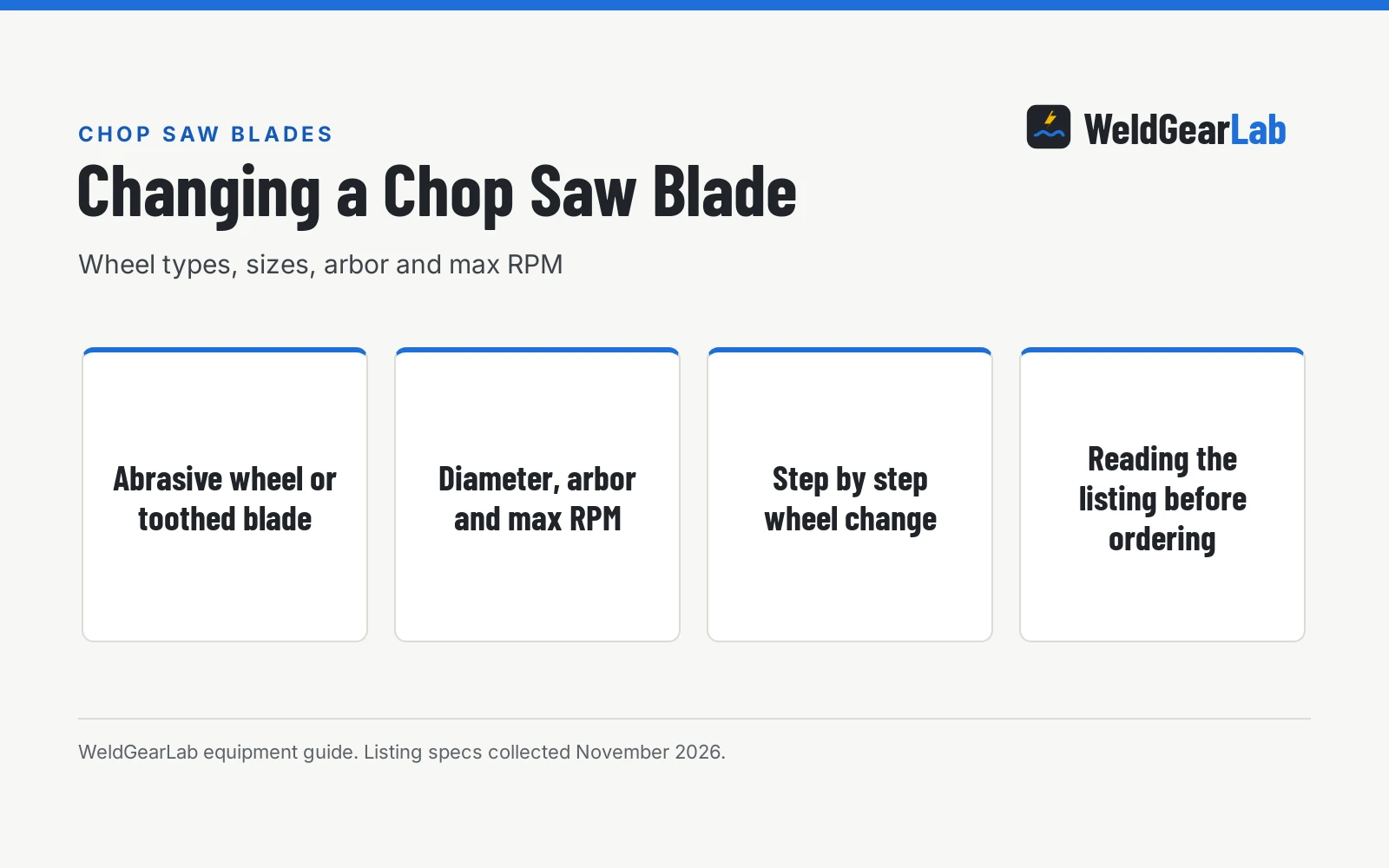
See how to change a chop saw blade and chop saw sizes for the swap and the full diameter chart.
Blade thickness and tooth count
Thickness and tooth count work together. A thin cut-off wheel slices fast and leaves a narrow kerf, which suits quick cuts in thin stock. A thicker wheel lasts longer and resists flex on heavy stock. On toothed blades, fewer teeth cut faster and clear chips well, while more teeth leave a smoother edge and suit thin material. Match the wheel or the tooth count to the metal and the finish the job needs.
Can one blade cut every metal?
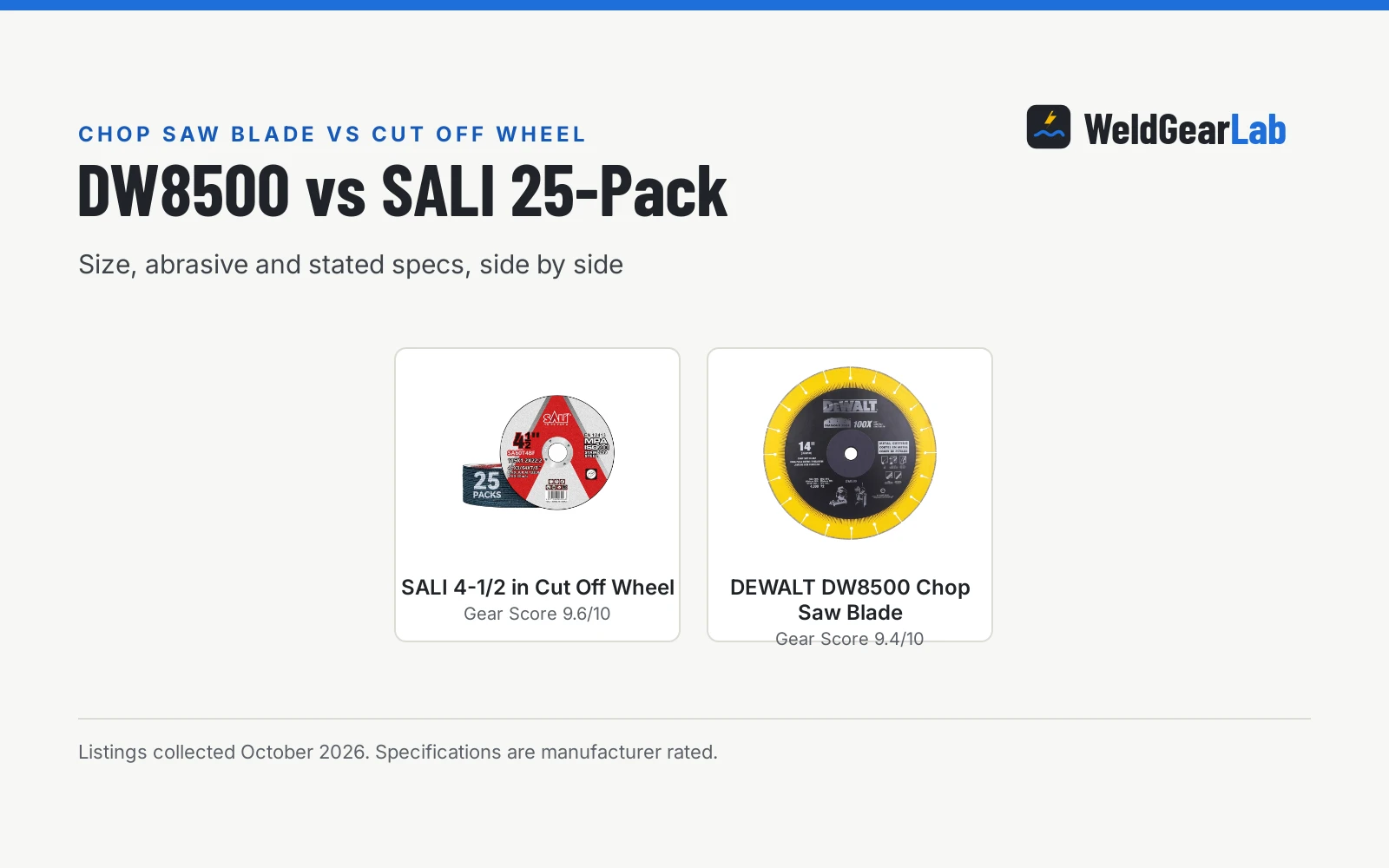
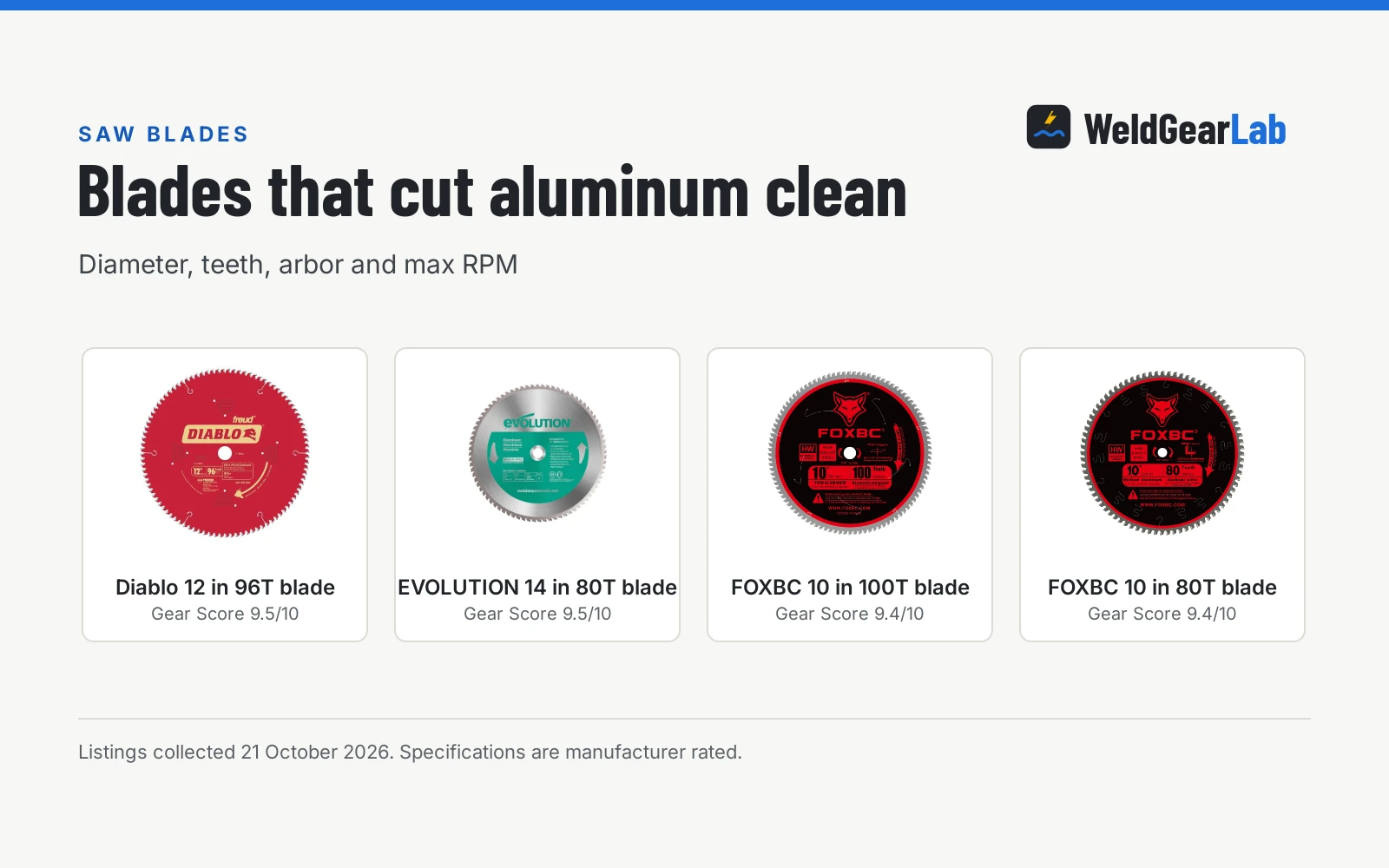
No. Abrasive cut-off wheels suit steel, stainless steel, and alloy stock, and the makers list them for construction, fabrication, and auto repair. Cermet carbide blades suit steel studs, angle iron, pipe, and tubing. Carbide tipped blades in 12 inch suit wood, plywood, and melamine, not metal. Pick the blade for the metal on the bench: a blade made for wood will not cut steel clean, and a wheel made for steel will not suit wood. See the chop saw blade for steel and chop saw blade for aluminum guides, and chop saw blade vs cut off wheel for the difference between toothed blades and abrasive wheels.
Chop saw safety. Clamp the work before the cut, keep guards in place, and wear eye and face protection. Never wear gloves near a spinning blade, and keep hands clear of the cut line. Check the wheel for cracks before mounting it, and never spin a blade past the max RPM the maker states. OSHA machine guarding rules cover guards and safe use on saws like these. Work with ventilation and keep flammable material clear of sparks. See the metal fab tools guides for more on shop setup.
FAQ for welders
Which chop saw blade size fits the saw?
Match the blade diameter to the saw: a 14 inch saw takes a 14 inch blade, a 12 inch saw takes a 12 inch blade, and a 10 inch saw takes a 10 inch blade. Check the arbor too, since the makers state 1 inch arbors on the 12 inch and 14 inch blades in this guide. When the diameter and the arbor match, the blade mounts clean and spins true.
Can a smaller blade fit a chop saw?
A smaller blade may mount if the arbor matches, but it will not reach as far across the work and may not clear the guard the way the saw was made to run. The saw was built around a set diameter, so fit the diameter the saw states.
What does tooth count change on a chop saw blade?
Tooth count sets the balance between speed and finish. A 32 tooth blade cuts fast and leaves a rougher edge, and an 80 tooth blade cuts slower and leaves a smoother edge.
What arbor size does a chop saw blade need?
The arbor must match the saw spindle. The makers state 1 inch arbors on the 12 inch and 14 inch blades in this guide, so a 1 inch spindle takes those blades. Check the saw label and the blade label before ordering.
How long does a chop saw blade last?
Life depends on the metal, the pressure on the cut, and how often the blade runs. Abrasive wheels wear down with each cut and need a change when they no longer reach through the work. Toothed blades last until the teeth dull or chip, and forcing a dull blade through a cut wears it faster.
Related: chop saw sizes, how to change a chop saw blade, types of chop saws, and the metal fab tools hub.