Coal Forge for Beginners: Gear and Setup
A coal forge heats steel in a coal fire so it moves under the hammer, and setting it up means placing it outdoors, building the fire, and managing the air.

On this page
Top picks at a glance
As an Amazon Associate I earn from qualifying purchases.
- 1
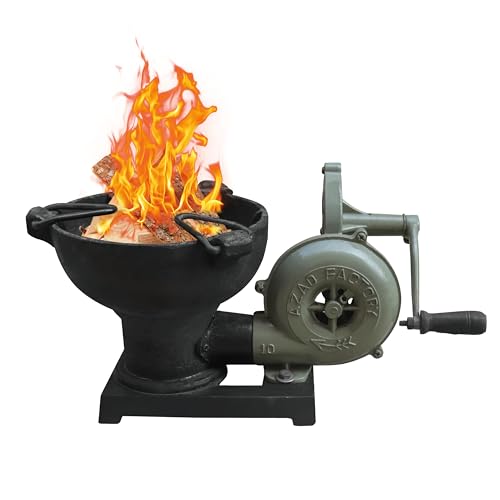 Simond Store Blacksmith's Forge with Hand Blower for Knife9.5/10View on Amazon
- 2
 Portable Propane Forge9.7/10View on Amazon
- 3
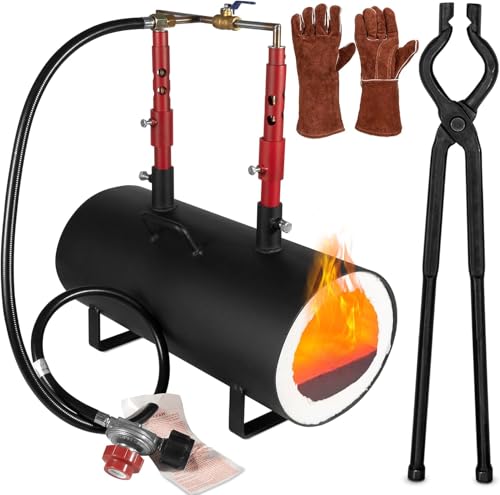 2 Burner Propane Blacksmith Forge Kit9.6/10View on Amazon
A cold bar, a pile of coal and a forge that needs building up before any hammering starts. A coal forge for beginners is a coal-fired forge for heating steel until it moves under the hammer, and setting it up means placing it in the open air, building a coal fire, managing the air blast, and keeping tongs, hammer and anvil within reach. This guide walks through each job in order, with the gear figures taken from the forge and tong listings the makers publish.
This guide links to our product roundups, where WeldGearLab gets a commission on purchases made through links on this page, and your price stays the same. Read our affiliate disclosure.
Coal forge for beginners: how it works
A coal forge burns coal in a fire pot, and air blown through the fire raises the heat until steel glows and softens for the hammer. The smith heats the steel in the fire, pulls it out with tongs, and shapes it on the anvil. The propane forge listings in this guide show what propane forges list for heat: the Nelyrho and ATkrou propane (on Amazon) forges list a heat rating of 2600°F, with double doors and a stainless steel body. That rating belongs to those propane listings; no heat rating is stated for a coal forge, and a coal forge reaches forging heat by feeding air to the fire, with the skill in managing that air.
Side by side
| ATkrou propane forge | V-SEK tongs set | Yoursme hammer | |
|---|---|---|---|
| Heat rating | 2600°F | Not stated | Not stated |
| Burners | 4 | Not stated | Not stated |
| Length | 28.7 in | 15.35 to 16.93 in | 14 in handle |
| Stock it holds | Long rods | Flat stock up to 1 1/2 in | Not stated |
| Doors | Double doors | Not stated | Not stated |
The table above shows the gear the makers list for forging. Propane forges list heat ratings and burner counts, tong sets list lengths and stock sizes, and the hammer lists head weight and handle length. A coal forge setup needs the same spread of gear: a forge, tongs that fit the stock, a hammer, and an anvil.
Place the forge
Place a coal forge outdoors or with strong ventilation, on level ground clear of anything flammable. Coal smoke and carbon monoxide build up indoors, so the open air is part of the setup, not an extra. Keep a fire extinguisher close, fit a CO alarm where the shop is enclosed, and never leave a lit forge. Give the forge room for the anvil beside it and a clear path to carry hot steel from fire to anvil.
Build the fire
Build the coal fire in the fire pot and bring it up with air before putting steel in. A small, hot heart of fire beats a wide, smoky pile, so add coal around the edges and let the air draw the heat into the middle. Raise the air blast to bring the fire up to heat once it catches, then put the steel in.
Gear: tongs and hammer
Tongs keep hands away from the fire, and the listings show how long they run. The V-SEK tong (on Amazon) set lists tongs from 15.35 to 16.93 inches long, the Runant set lists handles from 14.76 to 16.55 inches long, and the Hihitomorrow kit (on Amazon) lists wolf jaw tongs of 15 inches in length. Pick tongs by the stock. In the V-SEK set, V-bit tongs hold flat stock up to 1 1/2 inch and 1/4 inch thick, blade tongs hold flat stock from 1/8 inch to 3/8 inch thick, and flat tongs suit 1/4 inch flat stock. In the Yoursme 5-piece set, blade tongs hold flat stock up to 1 3/4 inch wide, and bolt tongs fit 1/2 inch round stock. Square jaw tongs fit 1/2 inch square stock in both sets. The Yoursme hammer kit lists a hammer with 2.2 lbs head weight, 0.44 lbs handle weight and a 14 inch wood handle. See the types of blacksmith hammers guide and the best blacksmith hammers guide for hammer shapes.
Heat the steel
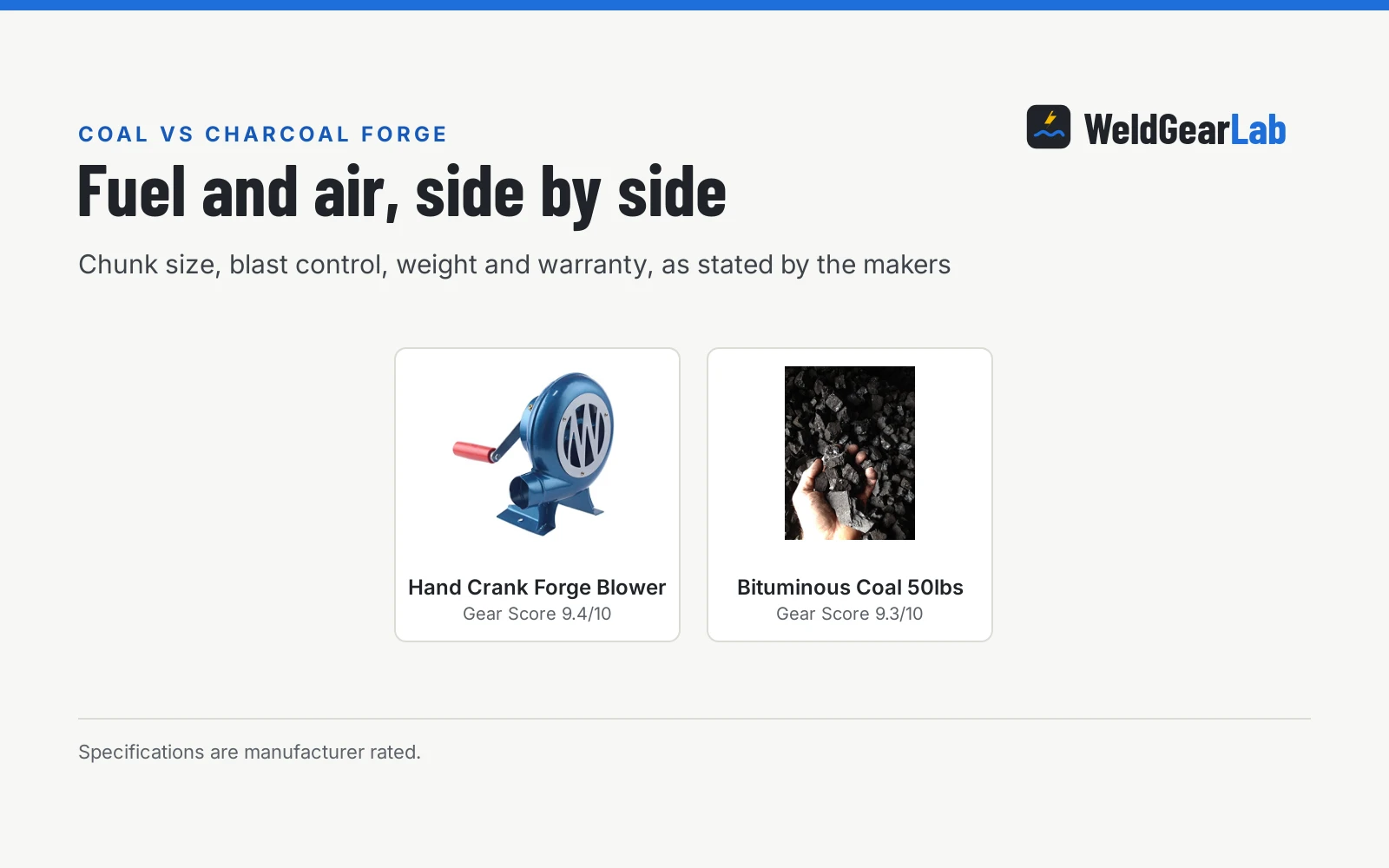
Put the steel into the heart of the fire and watch the color change as it heats. Feed air to raise the heat, and ease off when the steel reaches the color the work needs. The Nelyrho propane forges list a burner nozzle pressure range of 0-30 PSI, which shows how a gas forge controls heat with pressure; a coal forge controls heat with the air blast instead. Give the fire air, but do not leave it roaring unattended. Pull the steel out with tongs that grip it firm, and carry it straight to the anvil.
Hammer on the anvil
Hammer while the steel is hot, and return it to the fire when it stiffens. Work the steel in heats, turning it with the tongs between blows, and let the hammer do the work rather than forcing the steel cold. The PHAHOUNE set lists 13 tongs, 1 hammer and 4 pieces of 1095 high carbon steel billets, which shows the shape of a starter kit: tongs for the stock, a hammer for the work, and steel to practice on. See the best anvil for blacksmithing guide for an anvil to match the forge. Stop hammering when the steel cools and stiffens, and reheat it.
Shut down and clean up
Let the fire burn down and cool before leaving the shop, and never leave a lit forge. For a coal forge, spread the coals out so they cool, and check that no hot coal sits against anything flammable. Put the tongs, hammer and steel away once cool, and sweep the floor clear of coal dust and scale.
Forge safety. Work outdoors or with strong ventilation, fit a CO alarm, keep a fire extinguisher close, and never leave a lit forge. Wear eye and face protection and leather gloves, move hot steel with tongs, and keep the quench bucket and the anvil clear of clutter. Hot steel looks the same as cold steel, so mark hot pieces and keep hands clear until they cool.
FAQ for welders
What does a beginner need to start a coal forge?
A forge, coal, an air supply, tongs, a hammer and an anvil. Tongs keep hands from the fire, and the V-SEK set lists tongs from 15.35 to 16.93 inches long. The hammer kit lists a hammer with 2.2 lbs head weight and a 14 inch handle.
How hot does a forge get?
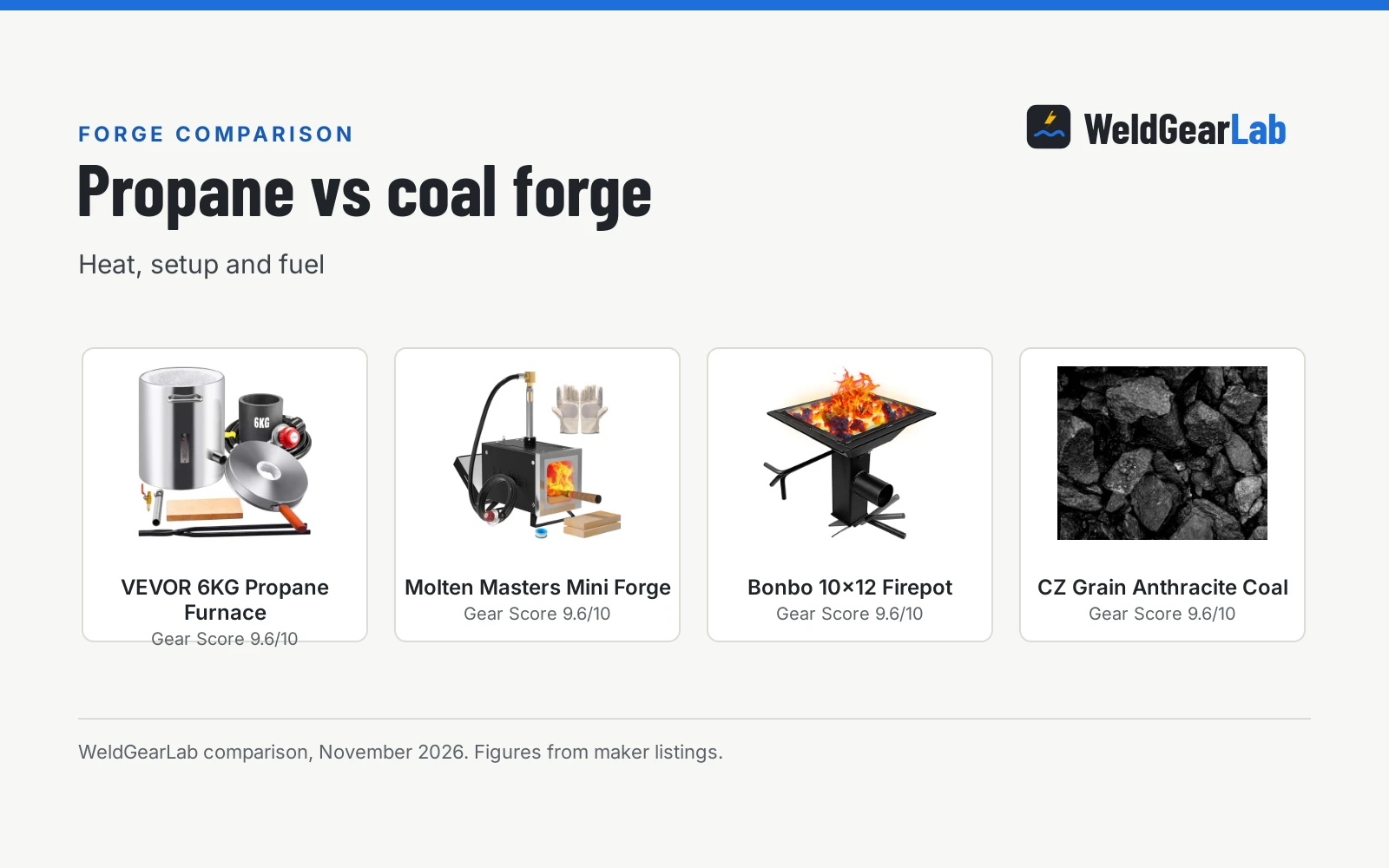
Hot enough to soften steel for the hammer, and the heat is managed with air. The 2600°F figure in this guide is the heat rating the propane forge listings carry, not a rating for a coal forge. A coal forge reaches forging heat by feeding air to the fire, and the smith eases off the air when the steel reaches the color the work needs.
What tongs should a beginner buy?
Tongs that fit the stock on the bench. In the V-SEK set, V-bit tongs hold flat stock up to 1 1/2 inch and 1/4 inch thick, blade tongs hold flat stock from 1/8 inch to 3/8 inch thick, flat tongs suit 1/4 inch flat stock, and square jaw tongs fit 1/2 inch square stock. A set with wolf jaw, V-bit, flat, blade and square jaw tongs covers the common stock shapes.
What hammer weight suits a beginner?
It depends on the work, and the listings give a starting point. The Yoursme hammer kit lists a hammer with 2.2 lbs head weight, 0.44 lbs handle weight and a 14 inch wood handle. Pick a hammer that can be swung through a full session without tiring the arm, and see the types of blacksmith hammers guide for shapes.
Coal or propane forge for a beginner?
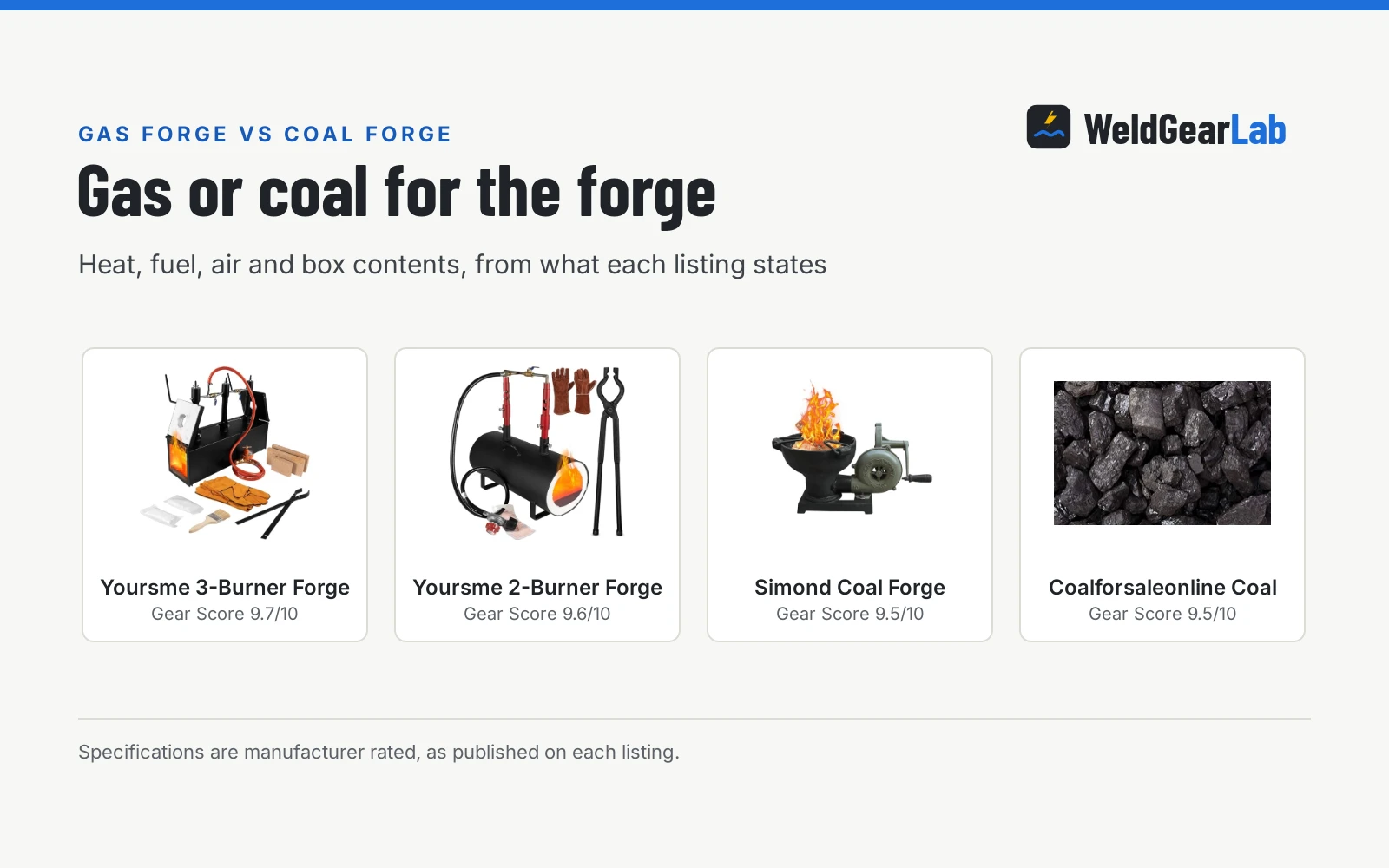
It depends on the shop and the work. The propane forges listed here offer double doors, stainless steel bodies and heat ratings of 2600°F, with 1-burner and 4-burner models. A coal forge needs fire management and open air, while a propane forge lights with a valve. See the propane vs coal forge guide and the gas forge vs coal forge guide for the full comparison.
Related: propane vs coal forge, gas forge vs coal forge, electric vs propane forge, best anvil for blacksmithing, and the metal fab tools hub.