Angle Grinder Types: Which One to Buy
Angle grinder types split by power source, disc size, switch and guard. Corded, cordless and pneumatic compared, with the figures that show what each type does.

On this page
Top picks at a glance
As an Amazon Associate I earn from qualifying purchases.
- 1
 DEWALT Angle Grinder Tool9.7/10View on Amazon
- 2
 DCA Cordless Angle Grinder 4-1/2 inch9.7/10View on Amazon
- 3
 DEWALT Angle Grinder Tool9.7/10View on Amazon
A rusted bolt needs cutting and a weld bead needs smoothing. Angle grinder types decide which tool does that work well: the power source, the disc size, the switch and the guard all change what the grinder can do and where it can do it.
This guide links to our product roundups, where WeldGearLab gets a commission on purchases made through links on this page, and your price stays the same. Read our affiliate disclosure.
Angle grinder types in one paragraph
An angle grinder is a handheld power tool with a disc set at a right angle to the body, and the types split by power source, by disc size and by switch. Corded grinders plug into mains power, cordless grinders run on a battery pack, and pneumatic grinders run on compressed air from a shop compressor. Small grinders take small discs for tight spots, while larger grinders take larger discs for heavy cutting and grinding. The switch, paddle, slide or trigger, decides how the tool starts and stops, and the guard keeps sparks and fragments away from the user.
Side by side
| Corded | Cordless | Pneumatic | |
|---|---|---|---|
| Power source | Mains power through a cord | Rechargeable battery pack | Compressed air from a compressor |
| Run time | Runs while plugged in | Runs until the battery is spent | Runs while the compressor supplies air |
| Portability | Tied to an outlet | Goes anywhere, no cord | Tied to an air hose |
| Weight | Motor and cord weight, no battery | Battery pack adds weight | Light head, hose adds drag |
| Upkeep | No battery to charge or replace | Batteries charge and wear over time | Needs clean, dry air |
| Where it fits | Bench and shop work | Field and site work | Shops with air already plumbed |
Power source is the first choice because it decides where the grinder can work and how long it can run.
Corded angle grinders
A corded angle grinder plugs into mains power and runs while it stays plugged in, which suits bench work and long grinding sessions where the tool rarely moves. The DEWALT DWE43116 (on Amazon) names a 13 Amp motor, a 9,000 RPM speed and a weight of 5.7 lbs, with a trigger switch, a side handle and a dust ejection system in the box. The cord limits reach from an outlet and needs keeping clear of the disc. For the corded and cordless split, see the corded vs cordless angle grinder comparison.
Cordless angle grinders
A cordless angle grinder runs on a rechargeable battery pack, so it goes where no outlet reaches: fence lines, trailers in a field and roofs. The trade is run time, since the pack runs down and needs charging, and weight, since the pack adds to the body. The discs, guards and switches work the same as on a corded grinder, so the choice is about power, not about what the tool can cut. The best cordless angle grinder guide covers battery models for the home garage and the job site.
Pneumatic angle grinders
A pneumatic angle grinder runs on compressed air from a shop compressor, through a hose to the tool. The air motor keeps the body light, and the tool runs as long as the compressor supplies air, which suits production grinding in a shop where air is already plumbed. The trade is the hose behind the tool and the compressor, which must be running before the work starts. See the air vs electric angle grinder comparison for the full split.
Size, switch and guard
Disc size decides the depth of cut. The DEWALT DWE43116 takes discs from 4-1/2 to 5 in, the common small size for grinding, cutting and weld cleanup. Larger grinders take larger discs and cut deeper, but they weigh more and need two hands to hold them steady. The sizes of angle grinders guide walks through the range.
The switch decides how the tool starts and stops. A trigger switch, like the one on the DEWALT DWE43116, starts the tool when squeezed. A paddle switch runs while held and stops when released, and a slide switch stays on until slid back. The paddle switch vs slide switch angle grinder guide compares the two common styles.
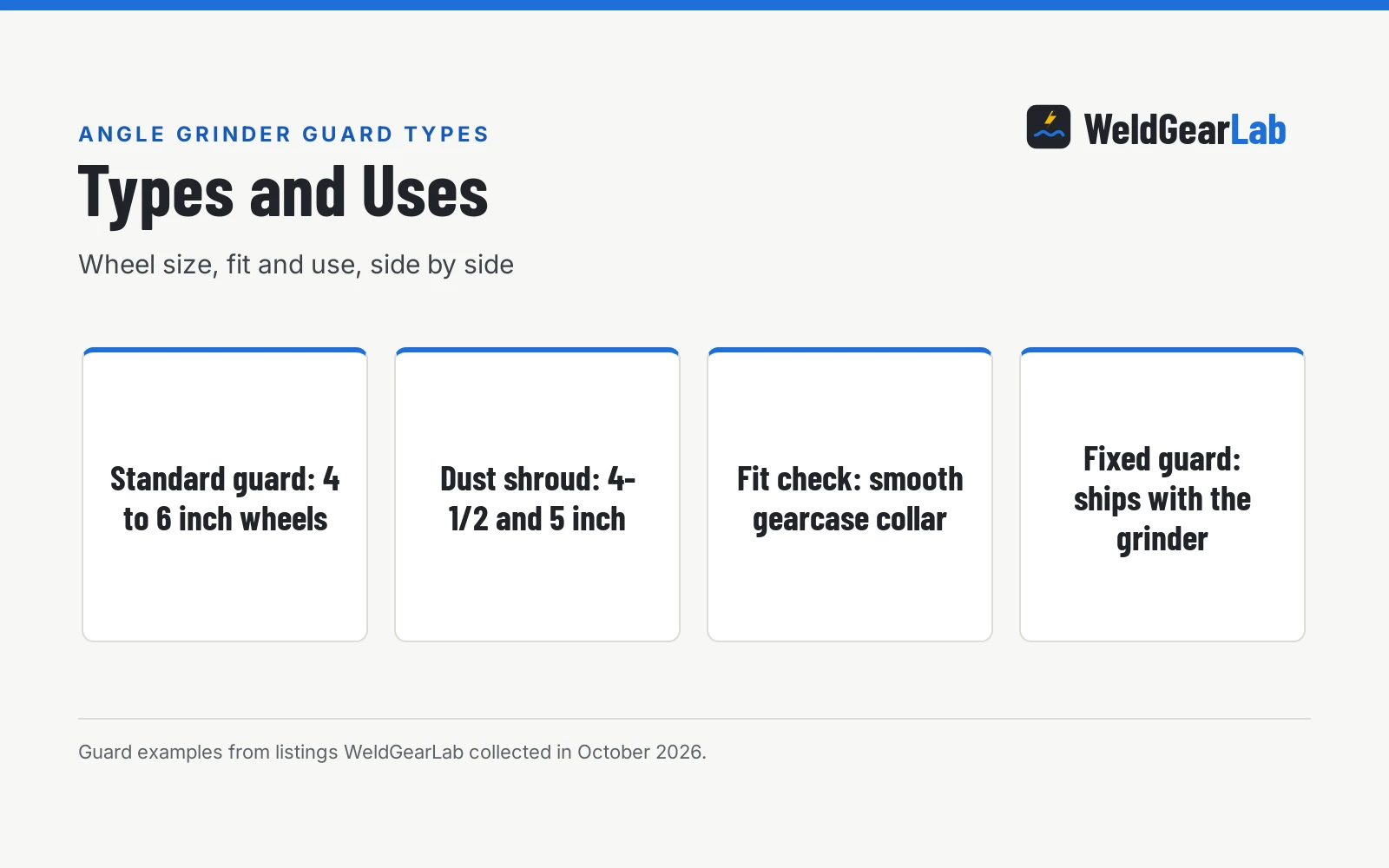
The guard sits over the disc and throws sparks and fragments away from the user. The DEWALT box names Type 27 guards in 4.5, 5 and 6 in sizes. Keep the guard in place, fitted to the disc size, and check that it sits tight before switching on. The angle grinder guard types guide covers the guard styles.
Reading the figures on a grinder
The figures name what the tool can do and what it takes. Amps name the motor draw: the DEWALT DWE43116 names a 13 Amp motor. RPM names the rated speed: the same grinder gives 9,000 RPM. Weight names what the hand carries: 5.7 lbs here. Disc size names what the tool takes: 4-1/2 to 5 in here. The maker also states a 3 year limited warranty, which names how long the tool is covered.
What the maker does not state matters too: no stated warranty term means no stated cover, and no stated guard size means checking fit before ordering. The DEWALT box names a side handle, inner and outer flanges, and the Type 27 guards, and what comes in the box decides what else needs buying.
Which type fits your work
Match the power source to where the work happens: a shop bench with an outlet nearby suits a corded grinder, a fence line or a trailer in a field suits a cordless grinder, and a shop with air already plumbed suits a pneumatic grinder. Match the disc size to the cut: the 4-1/2 to 5 in size covers weld cleanup, cutting small stock and smoothing edges, while larger discs suit deeper cuts. Start with the best angle grinder guide to compare models, and the angle grinder uses guide for the jobs each type handles.
Grinder safety. Cutting and grinding throw sparks, chips and dust, so wear eye and face protection and keep the guard in place. Clamp the work before cutting, keep gloves away from rotating parts, and keep the cord and the air hose clear of the disc. Work with ventilation and clear flammable material from the area.
FAQ for welders
What are the main types of angle grinder?
Corded, cordless and pneumatic, split by power source: mains power, a battery pack, or compressed air. Size and switch are separate choices on top of the power source.
What size angle grinder fits the job?
It depends on the cut. The DEWALT DWE43116 takes discs from 4-1/2 to 5 in, which covers weld cleanup, cutting small stock and smoothing edges. Larger discs suit deeper cuts, but the tool weighs more and needs two hands.
Are cordless angle grinders as strong as corded ones?
A cordless grinder can match a corded one on short cuts, but a spent pack stops the work until it charges. For long sessions at a bench, a corded grinder keeps the same pace.
Does an angle grinder need a guard?
Yes. The guard sits over the disc and throws sparks and fragments away from the user. The DEWALT box names Type 27 guards in 4.5, 5 and 6 in sizes, so fit the guard that matches the disc in use and keep it in place.
What does the Amp figure on a grinder mean?
Amps name the current the motor draws: the DEWALT DWE43116 names a 13 Amp motor, with 9,000 RPM and a weight of 5.7 lbs. Read amps together with disc size and RPM rather than on their own.
Related: angle grinder parts, angle grinder uses, sizes of angle grinders, and the metal fab tools hub.