Sizes of Angle Grinders: Disc Diameter Chart
Disc diameter is the size that defines an angle grinder, and this guide explains the small, mid-size and large classes, arbor fit, guards and how to pick the size for the job.

On this page
Top picks at a glance
As an Amazon Associate I earn from qualifying purchases.
- 1
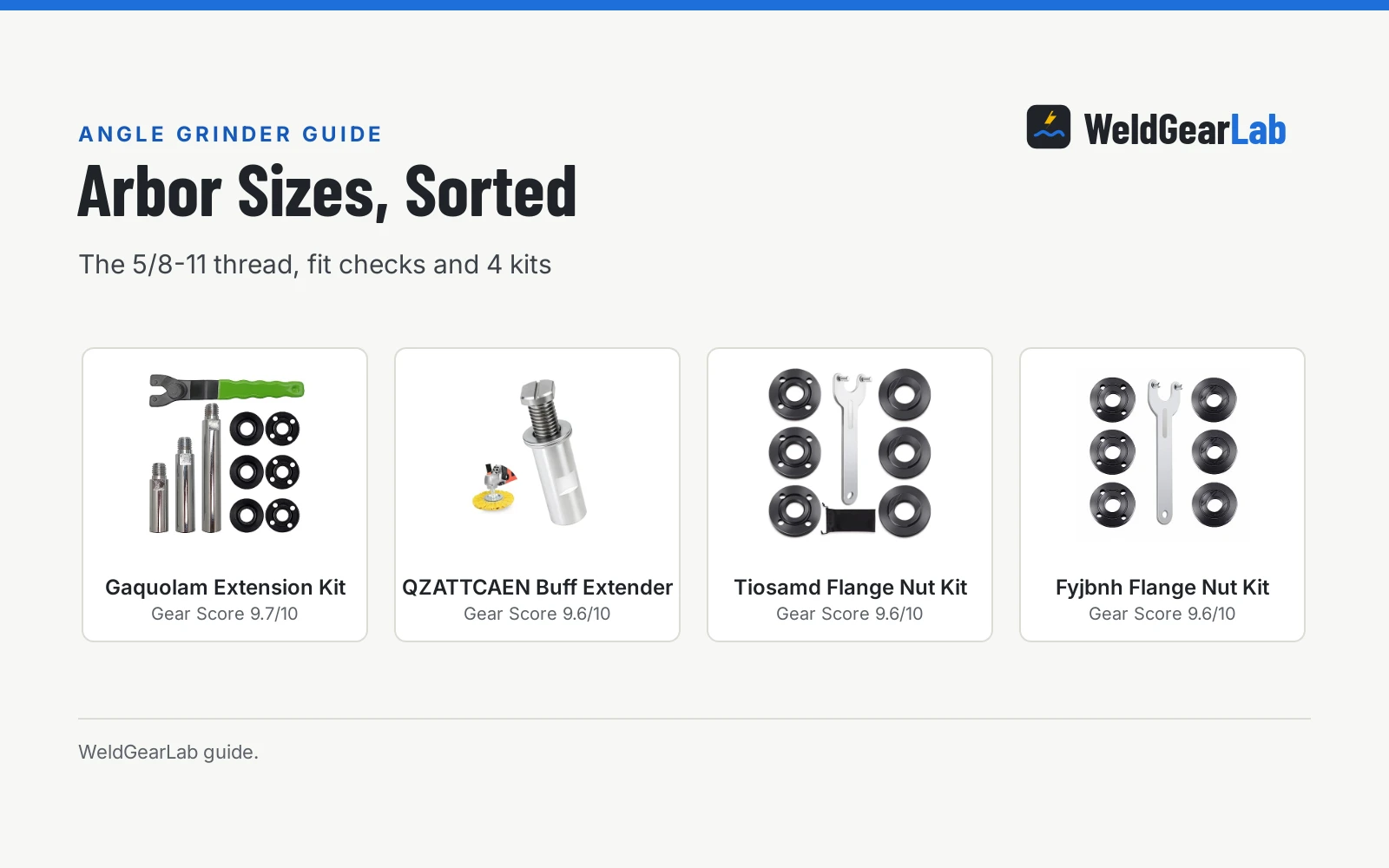
 Gaquolam 5/8"-11 Angle Grinder Extension Shaft Connecting Rod9.7/10View on Amazon
- 2
 QZATTCAEN Airway Buffing Wheel Extension Shaft 2-1/4" L Angle9.6/10View on Amazon
- 3
 7PCS Angle Grinder Nut Angle Grinder Flange Wrench9.6/10View on Amazon
A weld needs cleanup, a bar needs a cut, and the grinder on the bench is either the right size or it is not. Sizes of angle grinders come down to disc diameter: the size of the disc the grinder spins. Small grinders spin small discs, mid-size grinders spin mid-size discs, and large grinders spin large discs, and the disc decides how deep the tool cuts and how much of the work it can reach.
This guide links to our product roundups, where WeldGearLab gets a commission on purchases made through links on this page, and your price stays the same. Read our affiliate disclosure.
Sizes of angle grinders at a glance
| Small grinder | Mid-size grinder | Large grinder | |
|---|---|---|---|
| Disc class | Small discs | Mid-size discs | Large discs |
| Typical work | Light cleanup, small cuts and tight spaces | General shop cutting and grinding | Heavy cutting and large grinding jobs |
| Handling | Light in hand, easy to guide | A steady shop weight, easy to guide with both hands | Heaviest in hand, needs a firm grip with both hands |
| Reach | Shallow cuts | Deeper cuts than a small grinder | Deepest cuts of the classes here |
| Power | Corded or cordless | Corded or cordless | Corded in most shops |
Disc diameter is the size that matters, and the table above sets the classes side by side by the work they fit, since no size figure is stated in this guide. Match the disc to the grinder, the guard to the disc, and the size to the job.
What disc diameter decides
Disc diameter decides how deep the grinder cuts and how far it reaches across the work. A small disc suits shallow cuts and tight corners, where a large disc cannot fit. A large disc reaches deeper and covers more of the work in each pass, which suits heavy cutting and large grinding jobs. The size also sets the guard: each grinder ships with a guard made for its disc size, and the guard must cover the disc.
The arbor matters as much as the diameter. The disc bore must fit the grinder spindle, and the flanges must seat flat against the disc. A disc that does not fit the spindle has no place on the grinder, whatever its diameter. Check the fit before the grinder spins, and check the disc for chips and cracks while it is off the tool.
Small grinders
Small grinders suit light work: cleaning a weld, trimming a small part, cutting a thin bar, and reaching into tight spaces where a larger tool cannot go. They are light in hand and easy to guide, which helps on detail work and on jobs that need a steady hand rather than force. Most small grinders run corded or cordless, and the cordless kind suits short cuts away from an outlet.
The limit is depth and reach. A small disc cuts shallow, so thick material takes more passes and more time. For a shop that mostly cleans welds and trims small parts, the small class covers the work. When the work grows to heavy cutting, step up to a larger class rather than forcing the small disc through it.
Mid-size grinders
The mid-size class is the general shop grinder: cutting bar and sheet, grinding welds flat, and shaping edges. It reaches deeper than a small grinder and still handles with ease, which is why most shops keep a mid-size grinder on the bench. It runs corded or cordless, and the corded kind suits long grinding sessions where a battery would quit early.
Pick the mid-size class when the work mixes cutting and grinding through the day. It is the safe pick for a first grinder, since it covers a wide range of shop work without the weight of the large class.
Large grinders
Large grinders suit heavy work: cutting thick bar, grinding large welds, and working broad surfaces. The large disc reaches deep and removes stock fast, and the tool carries the weight to match. Hold it with both hands, brace the work, and let the disc do the cutting rather than leaning on the tool.
The large class is not the pick for small parts or tight spaces. Its weight and reach fight the user on detail work, and a small disc would serve better there. Keep the large grinder for the heavy jobs it was made for, and keep a smaller class on hand for the rest.
How to pick the size for the job
Start with the work, not the shelf. Look at the material, the depth of the cut, and the space around it. A shallow cut in a tight corner calls for a small disc. A general mix of cutting and grinding calls for the mid-size class. Heavy cutting in open space calls for the large class.
Then check the fit. The disc bore must match the spindle, the guard must match the disc, and the disc type must match the work: a cutting disc for cuts, a grinding disc for stock removal, a flap disc for blending, and a wire wheel for rust and scale. A disc that does not match the work cuts slow and wears fast.
Then check the power. Corded grinders suit long sessions at the bench, where the cord can reach. Cordless grinders suit short cuts away from power, where the cord cannot reach. Match the power source to where the work happens, and keep a spare battery charged when the job runs long.
Grinder safety. Wear eye and face protection, and clamp the work before the disc spins. Keep guards in place, keep gloves away from rotating parts, and check the disc for damage before each use. Clear flammables from the area, and keep an extinguisher close. See OSHA machine guarding guidance for the guard rules that cover grinders, saws and drill presses.
FAQ for welders
What size angle grinder do I need for general shop work?
The mid-size class is the usual pick for general shop work, since it covers cutting, grinding and shaping without the weight of the large class. It reaches deeper than a small grinder and still handles with ease. When the work is mostly light cleanup, the small class does the job, and when the work is mostly heavy cutting, the large class fits better.
Can I fit a larger disc on a small angle grinder?
No. The guard, the spindle and the flanges are made for the disc size the grinder was built around, and a larger disc leaves the guard short and the fit wrong. A disc that overhangs the guard throws sparks and debris past the guard, and the exposed edge runs unguarded. Match the disc to the grinder size, and buy the larger grinder when the work needs a larger disc.
What is the arbor on an angle grinder?
The arbor is the spindle the disc mounts on, and the disc bore must fit it. Flanges seat on each side of the disc and hold it flat while it spins. Check the bore fit before use, since a loose disc wobbles and cuts a ragged line.
Corded or cordless angle grinder?
Corded suits long sessions at the bench, where the cord can reach and the work runs on without a break. Cordless suits short cuts away from power, where the cord cannot reach and the job is done in a few passes. Pick by where the work happens, and keep a spare battery charged for cordless work that runs long.
Do I need a different grinder for cutting and grinding?
No, change the disc instead of the grinder. A cutting disc suits cuts, a grinding disc suits stock removal, a flap disc suits blending, and a wire wheel suits rust and scale. Match the disc to the job, and the same grinder covers cutting and grinding alike.
Related: angle grinder safety, angle grinder uses, best cordless angle grinder for fence repairs, best angle grinder for car restoration, and the metal fab tools hub.