3/32 vs 3/16 Welding Rod: Which One Should You Buy?
Four listings show how 3/32 vs 3/16 welding rod diameter lines up with process, material and stated use, and where two listings leave their own figures unclear.

On this page
Top picks at a glance
As an Amazon Associate I earn from qualifying purchases.
- 1
 ER308L - TIG Stainless Steel Welding Rod9.5/10View on Amazon
- 2
 Forney 31101 E6011 Welding Rod, 3/32-Inch9.4/10View on Amazon
- 3
 Victory Welding Alloys 7018 Welding Rod 3/16"9.4/10View on Amazon
- 4
 Hobart 770456 6011 Stick, 3/32-5lbs9.3/10View on Amazon
Verdict. Pick the smaller diameter side for repair work on dirty or painted steel where a stick rod helps; the Forney example adds fast freezing and minimal surface preparation. Pick the larger diameter side for stainless fabrication or structural work, where the listings state a 3/16 inch rod.
A repair on dirty, rusty or painted steel and a clean stainless joint in a food shop call for different rods, different processes and different habits at the bench. The choice starts with the work in front of you, not with the box on the shelf.
3/32 vs 3/16 welding rod is the comparison in this article, with 4 listings as concrete examples, stick rods on the smaller side and a TIG rod plus a stick rod on the larger side. The listings do not agree on every figure, and two listings disagree with themselves, so the comparison below stays close to what each listing states.
WeldGearLab gets a commission on purchases made through links on this page, and your price stays the same.
The four rods

ER308L - TIG Stainless Steel Welding Rod
A 36 inch TIG stainless rod in 3/16 inch, listed for 19% chromium and 9% nickel austenitic stainless steels, with DCEN parameters and 100% Argon or Argon/Helium shielding gas stated.
Pros
- Listed for 304L, 308L, 321 and 347 stainless steels
- Maximum carbon content of less than 0.03% stated, for corrosion resistant weld deposit and weld zone
- TIG parameters stated: DCEN, with tungsten types and shielding gas named
- Available in 1 Lb, 2 Lb, 5 Lb and 10 Lb packages
Cons
- No warranty term stated in the listing
- No safety certification stated in the listing
- Main image is for reference only; listing directs buyers to a picture for rods per pound
- This listing is for the 3/16 inch size; other diameters require a different size choice
Forney 31101 E6011 Welding Rod, 3/32-Inch
A 3/32-Inch E6011 stick rod in a 1-Pound package, listed for all position welding on dirty, rusty and painted materials, for AC operation with DC+ also listed.
Pros
- All position welding listed, for deep penetration and fast freezing
- Minimal surface preparation listed, for dirty, rusty and painted materials
- Listed for galvanized steel and rusty or oily steel in maintenance or repair applications
- 90 day warranty against manufacturer defects stated
Cons
- Amperage figures disagree: Amperage field states 35-125, Amperage Capacity states 90 A
- Package weight figures disagree: 10 Pound in one field, 1 pounds in Item Weight

Victory Welding Alloys 7018 Welding Rod 3/16"
A 3/16 inch E7018 low-hydrogen stick rod in a 5 pound box, listed for all-position welding of carbon steel, high-tensile steel, low alloy steel and free-machining steels.
Pros
- Low-hydrogen, all-position electrode for carbon, high-tensile, low alloy and free-machining steels
- Steady arc, low spatter and re-striking capabilities listed
- Easily removable slag revealing a finely rippled bead appearance listed
- Charpy impact values at 78 ft-lbs at -20 F, with x-ray quality weld deposit claimed
Cons
- No warranty term stated in the listing
- No safety certification stated in the listing
- No amperage, current type or duty cycle stated in the listing
- No package dimensions stated beyond a 5 pound box

Hobart 770456 6011 Stick, 3/32-5lbs
A 6011 stick electrode listed at 3/32-5lbs, with Item Weight stated as 5.2 pounds, carbon steel listed and few application details in the listing.
Pros
- 6011 stick electrode at 3/32 size, for arc welding
- Carbon steel material stated
- 5 lb package listed, with Item Weight stated as 5.2 pounds
- Country of Origin United States stated
Cons
- No application, amperage or current type stated beyond stick electrode
- No warranty term stated; Warranty Description field states only Basic
- No safety certification stated in the listing
Other welders and gear to compare
 TOOLIOM E6011 Welding Rod Carbon Steel Stick ElectrodesCheck price on Amazon
 E6011 Welding Rod 3/32″Check price on Amazon
 ATLASWELDER 6011 Welding Rod 3/32" 10LBCheck price on Amazon
 6013 welding rod 3/32 6LB Carbon Steel Sticks E6013 WeldingCheck price on Amazon
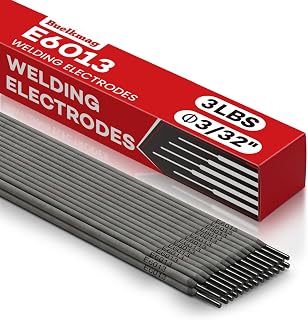 6013 welding rod 3/32 3LB Carbon Steel Sticks E6013 WeldingCheck price on Amazon
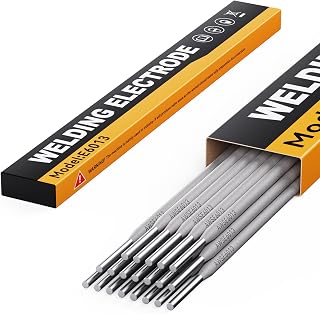 E6013 Welding Rod 3/32'' Sticks: Carbon Steel Welding SticksCheck price on Amazon
3/32 vs 3/16 welding rod side by side
| SÜA ER308L TIG Stainless Rod | Forney 31101 E6011 Rod | STARTECHWELD Victory 7018 Rod | Hobart 770456 6011 Stick | |
|---|---|---|---|---|
| Side | 3/16 welding rod | 3/32 | 3/16 welding rod | 3/32 |
| Process | TIG | Stick | Stick | Stick |
| Diameter | 3/16 inch | 3/32-Inch | 3/16 inch | 3/32 |
| Material | Stainless Steel | Mild Steel | Carbon Steel | Carbon Steel |
| Item weight | 1 pounds | 1 pounds | 5 pounds | 5.2 pounds |
| Warranty | Not stated | 90 day warranty against manufacturer defects | Not stated | Basic, no term stated |
| Stated use | Dairy, food or restaurant equipment, chemical tanks | Dirty, rusty and painted materials | Structural and fabrication steels | Not stated |
All specs here repeat what the maker rates and the listing prints, copied down 28 October 2026. No listing states a CSA, UL or ETL listing, and no listing states a duty cycle.
What separates the two sides
The smaller side is stick only, with two 6011 listings for mild steel and carbon steel. The larger side mixes processes: a TIG stainless rod and a stick rod for structural steel. That process split matters more than diameter alone, because a TIG rod and a stick rod ask for different setups and different shielding. Package size also splits the field, with 1 pound and 5 lb packages on the smaller side and a 1 pound package and a 5 pound box on the larger side.
The smaller side: stick rods
The Forney example lists all position welding, deep penetration and fast freezing on dirty, rusty and painted materials, with minimal surface preparation listed, plus galvanized steel and rusty or oily steel in maintenance or repair applications, and AC operation with DC+ also listed. The Hobart example is far thinner: country of origin and package dimensions in its bullets, and carbon steel, a 3/32 size and a 5 lb package in its spec table, but no application, no amperage and no current type beyond stick welding.
The larger side: stainless TIG and structural stick
The SÜA example is a TIG stainless rod, specific on alloy and parameters: 19% chromium and 9% nickel austenitic stainless steels, grades 304L, 308L, 321 and 347, a maximum carbon content of less than 0.03%, DCEN parameters, tungsten types and 100% Argon or Argon/Helium shielding gas, with dairy, food or restaurant equipment, chemical tanks and cryogenic applications named. The STARTECHWELD example returns to stick welding, with a low-hydrogen E7018 rod for carbon steel, high-tensile steel, low alloy steel and free-machining steels, a quiet steady arc, low spatter and easily removable slag, and structural applications such as I-beams, angles, plates and shipbuilding steels, with a charpy figure of 78 ft-lbs at -20 F.
Diameter and process
Diameter and process move together here, but they are not the same choice. The smaller side pairs a smaller diameter with stick welding in both examples, while the larger side pairs a larger diameter with TIG in one example and stick in the other, so process cannot be read from diameter alone. Material moves with process too: mild steel and carbon steel on the smaller side, stainless steel in the TIG example and carbon steel in the stick example on the larger side.
Where the listings leave figures unclear
The Forney listing is the clearest warning in the article. Its title and Size field state E6011 and 3/32-Inch, while its spec table Type field states E6010 and its Diameter field states 1/8 inch. Its Amperage field states 35-125 while its Amperage Capacity field states 90 A, and its tensile figures state 80,000 PSI in one field and 60,000 in another. Trusting the title and bullets over the spec table, this article uses E6011 and 3/32-Inch and treats the spec table figures as disputed.
The Hobart listing leaves a smaller gap: bullets state package dimensions of 14.5 x 3.25 x 1.75 inches, while its spec table states 14.6 x 3 x 1.6 inches, so the bullets figure is used here. The SÜA listing leaves quantity unclear differently: its bullets state that the main image is for reference only and direct buyers to a picture for rods per pound, since rod count per pound is not stated in words.
How the rods were scored
Gear Score weights performance, build and value most, with safety and warranty where a listing states them. Safety scores 0 here because no listing states a safety certification, and only the Forney example states a concrete warranty term.
| Product | Gear Score | Perf. /35 | Build /25 | Value /25 | Safety /10 | Warranty /5 |
|---|---|---|---|---|---|---|
| SÜA ER308L TIG Stainless Rod | 9.5 | 30 | 21 | 20 | 0 | 0 |
| Forney 31101 E6011 Rod | 9.4 | 27 | 19 | 19 | 0 | 2 |
| STARTECHWELD Victory 7018 Rod | 9.4 | 28 | 21 | 20 | 0 | 0 |
| Hobart 770456 6011 Stick | 9.3 | 21 | 19 | 20 | 0 | 0 |
A pick’s weighted total decides where it lands between a 9.2 floor and a 9.8 ceiling, and a bigger total never produces a smaller number.
Before You Strike an Arc
- Match the rod process to the machine setup: stick rods for stick work, and the SÜA rod to TIG parameters with DCEN stated.
- Check shielding gas where a listing states it: the SÜA listing states 100% Argon or Argon/Helium, while the stick listings state no shielding gas.
- Check surface and fit against what each listing states: the Forney listing states minimal surface preparation for dirty, rusty and painted materials, and the other listings do not state the same claim.
- Check size, package weight and warranty term on arrival, since the Forney and Hobart listings disagree inside themselves on figures to confirm.
FAQ for welders
Which side suits repair work on dirty steel?
The smaller side examples are stick 6011 rods, and the Forney example lists all position welding on dirty, rusty and painted materials with minimal surface preparation listed. The Hobart example states no application, so the Forney listing gives the clearer repair case.
What stainless grades does the SÜA rod list?
The SÜA listing names 304L, 308L, 321 and 347, with 19% chromium and 9% nickel austenitic stainless steels and a maximum carbon content of less than 0.03%. It lists DCEN parameters and 100% Argon or Argon/Helium shielding gas.
What structural work does the STARTECHWELD rod list?
The STARTECHWELD listing names structural and fabrication steels such as I-beams, angles, plates, channels, cast steels, cold rolled steel, process piping steels and shipbuilding steels. It lists a low-hydrogen E7018 electrode with a charpy figure of 78 ft-lbs at -20 F, and states no amperage and no warranty term.
Why do the Forney figures disagree inside its listing?
The Forney title and Size field state E6011 and 3/32-Inch, while the spec table states E6010 and 1/8 inch in its Type and Diameter fields. Amperage, tensile and package weight figures also disagree between fields, so a buyer should confirm the disputed figures with the seller before relying on them.
What should a buyer check before ordering a rod diameter?
Check the Size field, the process, the material and the package weight on the exact listing, since titles and spec tables can disagree. Check whether a warranty term is stated, since only the Forney listing states a concrete term.
Related: best stick welder for farm use, best TIG welder for aluminum, 308 vs 308L welding rod, and welding rods vs MIG wire. Also see the welding consumables category page.