Welding Rods vs Mig Wire: Which One Should You Buy?
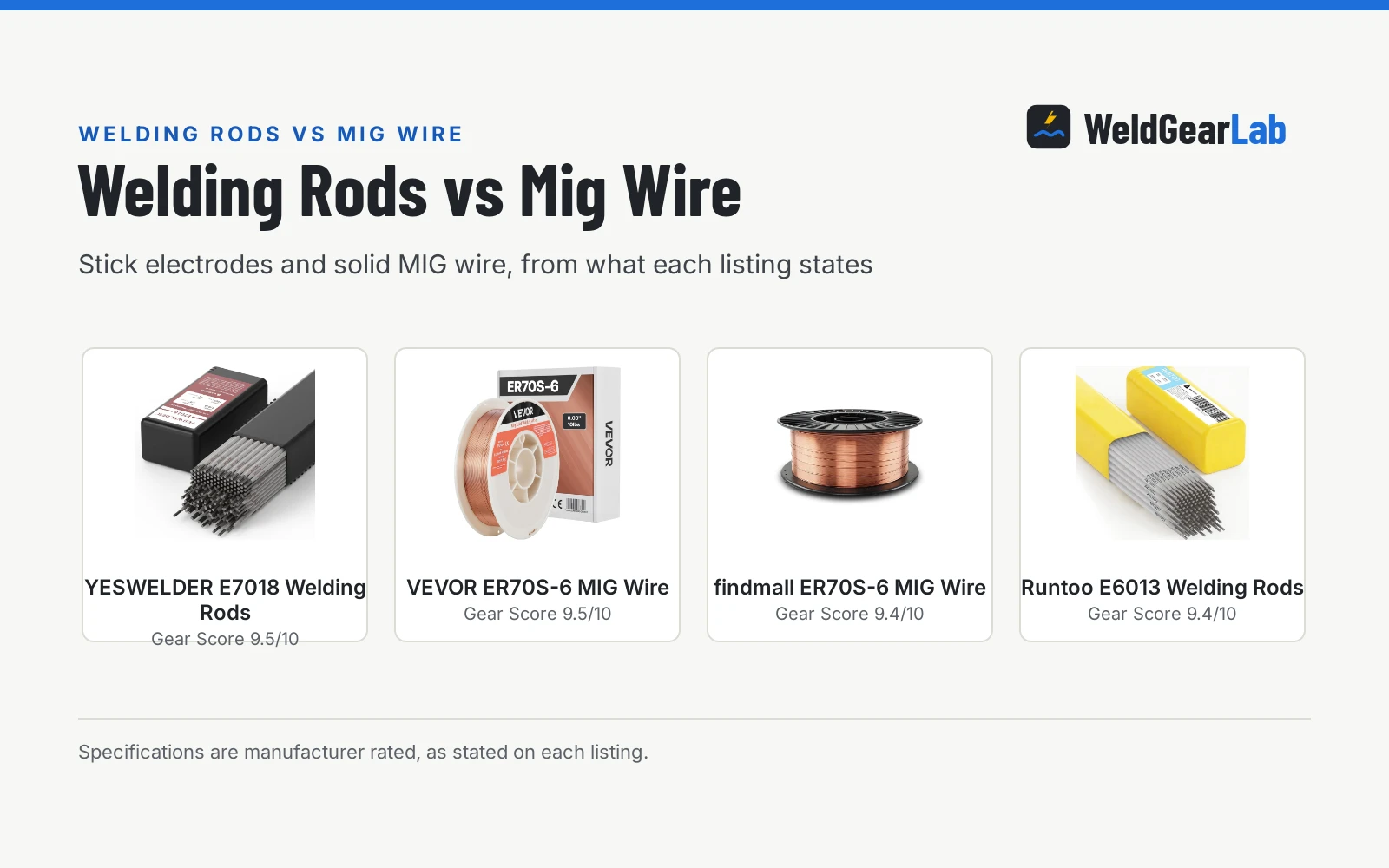
The YESWELDER E7018 rods and the VEVOR and findmall ER70S-6 wires show where stick electrodes and solid MIG wire differ, and where each listing leaves a figure unclear.

On this page
Top picks at a glance
As an Amazon Associate I earn from qualifying purchases.
- 1
 YESWELDER E7018 1/8'' 10LB Welding Rods Stick9.5/10View on Amazon
- 2
 VEVOR Solid MIG Welding Wire9.5/10View on Amazon
- 3
 findmall ER70S-6 Mild Steel 0.035 Inch MIG Welding9.4/10View on Amazon
- 4
 Runtoo E6013 Welding Rod 3/32″9.4/10View on Amazon
Verdict. Pick welding rods vs mig wire by the machine already on the bench and the job in front of it: stick electrodes suit machines without gas, while solid MIG wire suits work with gas on hand. The rod examples here cover general and structural carbon steel, and the wire examples cover mild steel in every position, so the side follows the setup, not the spool.
A cracked bracket on a farm gate and a rusty patch panel on a shop project ask for different consumables, even when the base metal is carbon steel. This comparison puts welding rods vs mig wire side by side through the listings here, with each figure tied to the listing that states it, so the differences stay honest.
WeldGearLab gets a commission on purchases made through links on this page, and your price stays the same. Read our affiliate disclosure.
The listings

YESWELDER E7018 1/8'' 10LB Welding Rods Stick
A low-hydrogen E7018 stick electrode for all-position work on carbon steel, rated 115A to 165A on AC or DC reverse polarity, in a 10LB pack of 14-inch rods.
Pros
- Low-hydrogen E7018 electrode for all-position welding on AC or DC reverse polarity
- Rated 115A to 165A, with a steady arc, low spatter, and high deposition efficiency stated
- Suited to medium grade carbon steels with no preheat, plus low-alloy structurals and steel structures
- 14-inch rods at 1/8 inch diameter, with tack weld work named among the uses
Cons
- Table lists a cutting diameter of 0.13 inches against the 1/8 inch diameter in the title
- No warranty term is stated
- No safety listing is stated

VEVOR Solid MIG Welding Wire
A 0.03-inch ER70S-6 solid MIG wire on a 10 lbs spool, with manganese and silicon deoxidizers and tensile strength of at least 490 MPa stated, for all-position gas-shielded welding.
Pros
- Higher levels of manganese and silicon deoxidizers for strong welds on mild carbon steel
- Smooth wire feeding with low spatter stated, for flat, vertical, corner, and up welding
- Shielding gas named: 100% CO2 or 80% Ar plus 20% CO2
- Tensile strength of at least 490 MPa stated, resisting cracking under heavy loads
Cons
- Shielding gas is required, so gas and a gas setup are part of the job
- No warranty term is stated
- No safety listing is stated
findmall ER70S-6 Mild Steel 0.035 Inch MIG Welding
A 0.035-inch ER70S-6 solid MIG wire on a 33 pound spool for all-position gas welding of carbon steel sheets and plates.
Pros
- 33 pound spool for long runs without changing wire
- High levels of manganese and silicon for good welds even on rusty, dirty steel
- All position gas welding, including T-joint, butt weld, and lap weld work
- Low spatter and no porosity stated, with a good appearance of the weld path
Cons
- Title and bullets say 0.035 inch while the table lists 0.04 inches for diameter
- No gas mix is named, only gas welding in general
- No warranty term is stated
- No safety listing is stated

Runtoo E6013 Welding Rod 3/32″
A 3/32-inch E6013 stick electrode in a 1 pound pack with a storage box, for general purpose arc welding on carbon steel in all positions.
Pros
- All positions on carbon steel: flat, horizontal, vertical, and overhead
- Stable arc with minimal splatter and easy slag removal stated
- Storage box included with the 1 pound pack
- 14-inch rods for general purpose arc welding, automotive repairs, and fabrication work
Cons
- No amperage range is stated
- No warranty term is stated
- No safety listing is stated
Other welders and gear to compare
 Brazing RodsCheck price on Amazon
 E6013 Welding Rods 3/32'' 6LB Carbon Steel SticksCheck price on Amazon
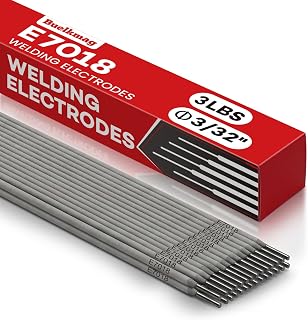 E7018 Welding Rods 3/32'' 3LB Low Hydrogen Carbon SteelCheck price on Amazon
 E6011 Stick Electrodes Welding Rods 3/32" 1/8" 5/32" 10 lb xCheck price on Amazon
 VEVOR Solid MIG Welding WireCheck price on Amazon
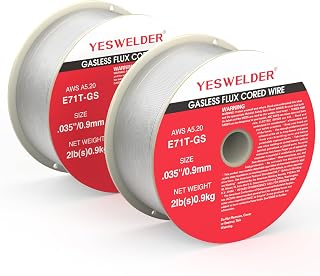 YESWELDER Flux Core Gasless MIG Welding WireCheck price on Amazon
Side by side
| YESWELDER E7018 Welding Rods | VEVOR ER70S-6 MIG Wire | findmall ER70S-6 MIG Wire | Runtoo E6013 Welding Rods | |
|---|---|---|---|---|
| Side | welding rods | mig wire | mig wire | welding rods |
| Diameter | 1/8 inch | 0.03 inch | 0.035 inch | 3/32 inch |
| Pack weight | 10LB (bullets), 10.14 pounds (table) | 10 lbs (title), 10.54 pounds (table) | 33 pounds | 1 pound (bullets), 1.01 pounds (table) |
| Positions | All positions | Flat, vertical, corner, and up | All positions | Flat, horizontal, vertical, and overhead |
| Gas or current | AC or DC reverse polarity | 100% CO2 or 80% Ar plus 20% CO2 | Gas welding, mix not stated | Not stated |
Ratings in this table are the makers’ own claims taken from each product page. No listing here states a safety listing, a duty cycle, or a warranty term, so those points stay unstated in the comparison rather than guessed.
welding rods vs mig wire: what separates the sides
The rod side is a stick electrode: the flux coating is on the rod, and the YESWELDER example runs on AC or DC reverse polarity. The wire side is a solid MIG wire that feeds through a gun, and the VEVOR example states that shielding gas is required. That setup difference is the main split: rods carry their own shielding, wire needs gas from a cylinder.
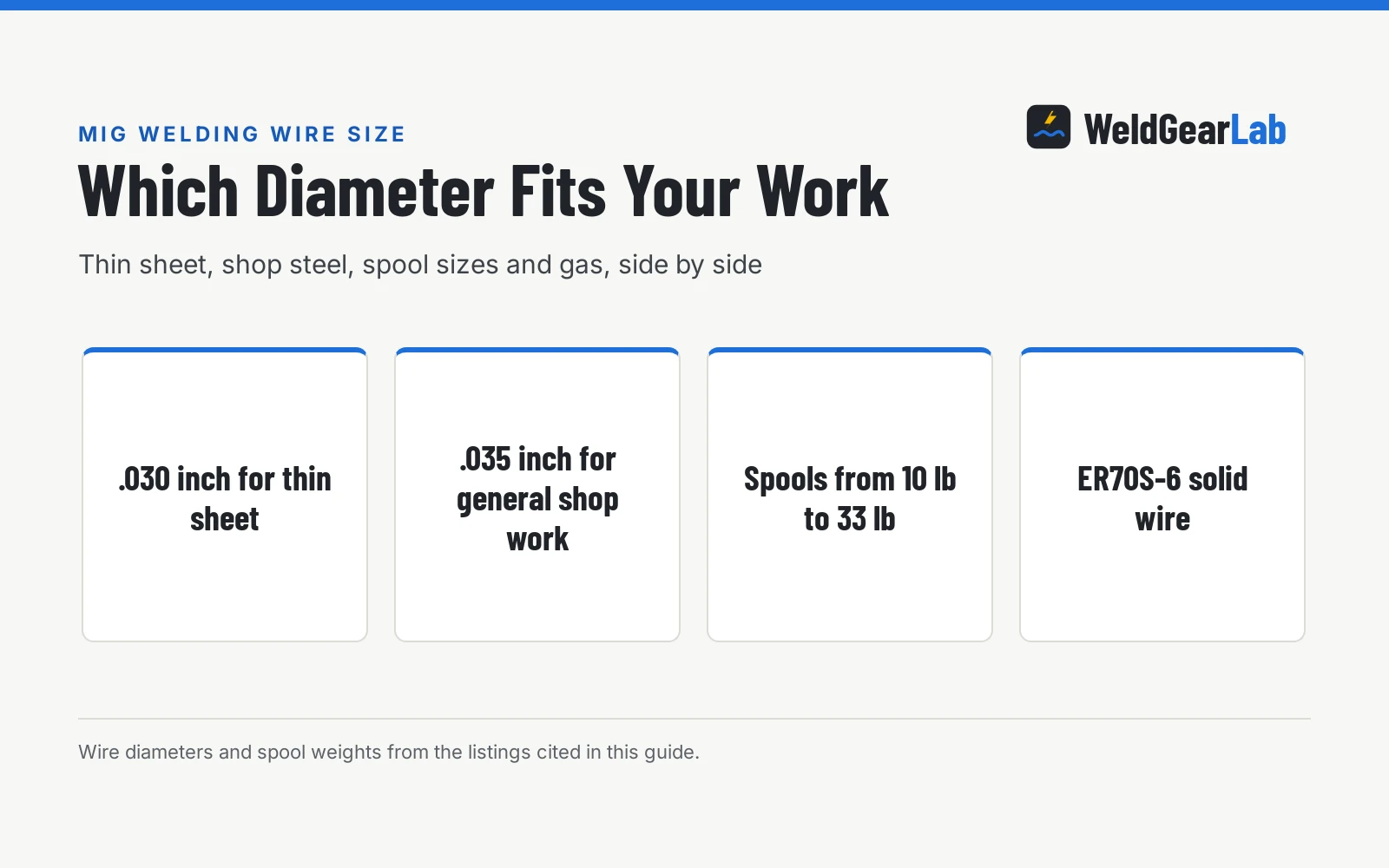
Positions do not split the sides here. Each listing claims all-position work, from flat and horizontal to vertical and overhead on the rod side, and flat, vertical, corner, and up on the VEVOR wire. Diameter and pack weight split them more plainly: the rods run 1/8 inch and 3/32 inch in packs of 10LB and 1 pound, while the wires run 0.03 inch and 0.035 inch on spools of 10 lbs and 33 pounds.
The rod side
YESWELDER E7018 is the structural rod here: a low-hydrogen iron powder electrode for all-position welding, rated 115A to 165A, aimed at medium grade carbon steels with no preheat, low-alloy structurals, and steel structures. Runtoo E6013 is the general purpose rod: a 3/32 inch electrode in a 1 pound pack with a storage box, for carbon steel in flat, horizontal, vertical, and overhead positions, with easy slag removal stated.
Neither rod listing states a warranty term or a safety listing, and each listing disagrees with its own table on weight. Those gaps matter less for a consumable chosen by diameter and electrode type, but they are the reason neither rod scores higher on build or value here.
The wire side
VEVOR ER70S-6 is the detailed wire listing: a 0.03-inch solid wire with higher levels of manganese and silicon deoxidizers, tensile strength of at least 490 MPa stated, and shielding gas named as 100% CO2 or 80% Ar plus 20% CO2. It claims smooth feeding with low spatter and strong welds on mild carbon steel, even on oily or lightly rusted steel.
findmall ER70S-6 is the bulk wire listing: a 0.035-inch wire on a 33 pound spool, also with high levels of manganese and silicon, for all position gas welding of carbon steel sheets and plates, including T-joint, butt weld, and lap weld work. Its listing is thinner on detail: it names no gas mix and no tensile figure, and its table disagrees with its title on diameter.
Where the listings disagree
Weight is the recurring disagreement. YESWELDER says 10LB in the title and bullets and 10.14 pounds in the table. VEVOR says 10 lbs in the title and 10.54 pounds in the table. Runtoo says 1 pound in the title and bullets and 1.01 pounds in the table. In each case this article trusts the title and bullets, and prints the table figure alongside so the gap stays visible.
Diameter is the sharper disagreement, and it sits on the findmall wire: the title and bullets say 0.035 inch, while the table lists 0.04 inches for item diameter, wire diameter, and item thickness. That is a real reason to confirm the spool before buying it for a job sized around 0.035 inch wire. The YESWELDER table also lists a cutting diameter of 0.13 inches against the 1/8 inch diameter in the title, a smaller gap that still earns a note.
Choose welding rods if
- You weld away from a gas cylinder, since the rod carries its own flux.
- Your machine is a stick welder, or runs AC or DC reverse polarity as the YESWELDER listing states.
- Your work is structural carbon steel, low-alloy structurals, or general repair on carbon steel.
- You want a small pack for occasional work, as the Runtoo 1 pound pack offers.
Choose mig wire if
- You weld with shielding gas on hand, as the VEVOR listing requires.
- You want continuous feeding without stopping to change rods.
- Your work is mild steel sheet and plate, including T-joint, butt weld, and lap weld joints.
- You weld through a long run and want a larger spool, as the findmall 33 pound spool offers.
Before You Strike an Arc
- Check the power supply the listing states: the YESWELDER rods run on AC or DC reverse polarity at 115A to 165A, so set the machine to match.
- Check gas before starting wire work: VEVOR names 100% CO2 or 80% Ar plus 20% CO2, while findmall names no mix.
- Check rod and wire diameter against the job: the findmall table disagrees with its title on diameter, so confirm the diameter before buying for a job sized around 0.035 inch wire.
- Check what arrives in the pack: the Runtoo rods come with a storage box.
FAQ for welders
Can welding rods vs mig wire both weld mild steel?
On these listings, yes. The rod examples cover carbon steel and medium grade carbon steels, and the wire examples cover mild carbon steel and mild steel. The choice turns on setup: rods without gas, wire with gas, rather than on the base metal alone.
Does MIG wire always need gas?
In these listings, the wire examples are gas-shielded. VEVOR states shielding gas is required and names 100% CO2 or 80% Ar plus 20% CO2, and findmall describes all position gas welding without naming a mix. Neither wire listing describes a gasless option, so plan on gas for wire work here.
Which rod example suits light repair work?
The Runtoo E6013 example fits that role best on paper: a 3/32 inch general purpose rod in a 1 pound pack with a storage box, for carbon steel in all positions, with a stable arc, minimal splatter, and easy slag removal stated. The YESWELDER E7018 example leans structural, with low-alloy structurals and steel structures named.
Why do the weights differ between the title and the table?
The listings do not say why the figures differ. YESWELDER shows 10LB against 10.14 pounds, VEVOR shows 10 lbs against 10.54 pounds, and Runtoo shows 1 pound against 1.01 pounds. This article trusts the title and bullets and prints the table figure alongside, so the gap stays visible instead of hidden.
Related: flux core vs MIG for outdoor use, 6013 welding rod for farm repairs, MIG wire for thick steel, and the welding consumables hub.
Scoring, line by line
Each listing is scored on performance, build, value, safety listing, and warranty. How we pick explains the weights.
| Product | Gear Score | Perf. /35 | Build /25 | Value /25 | Safety /10 | Warranty /5 |
|---|---|---|---|---|---|---|
| YESWELDER E7018 Welding Rods | 9.5 | 30 | 21 | 21 | 0 | 0 |
| VEVOR ER70S-6 MIG Wire | 9.5 | 30 | 21 | 20 | 0 | 0 |
| findmall ER70S-6 MIG Wire | 9.4 | 28 | 20 | 21 | 0 | 0 |
| Runtoo E6013 Welding Rods | 9.4 | 28 | 20 | 20 | 0 | 0 |
The lowest score we show is 9.2 and the highest is 9.8; every point total is spread proportionally across that span, so extra points mean a higher figure.