Flux Core vs Mig for Outdoor Use: Which One Should You Buy?
Flux core and gas MIG run on the same machines but behave very differently in the wind; this guide covers which process suits outdoor welding, how they differ on prep and cleanup, and which gear fits the job.

On this page
Top picks at a glance
As an Amazon Associate I earn from qualifying purchases.
- 1
 ARCCAPTAIN Flux Core Welding Wire E71T-GS .035" 2LB x 39.5/10View on Amazon
- 2
 INETUB BA71TGS Flux Core Welding Wire .035"View on Amazon
- 3
 YixangDD 2 Pack 030 Flux Core Welding WireView on Amazon
- 4
 4-Pack 0.030" Flux Core Welding WireView on Amazon
- 5
 PGN E71T-11 .030" + .035" Gasless Flux Core Welding Wire 2 lbView on Amazon
- 6
 RUBIK 0.030" Flux Core Gasless Mig Wire-E71T-GS 2Pcs 2-PoundView on Amazon
- 7
 ATLASWELDER Flux Core Welding WireView on Amazon
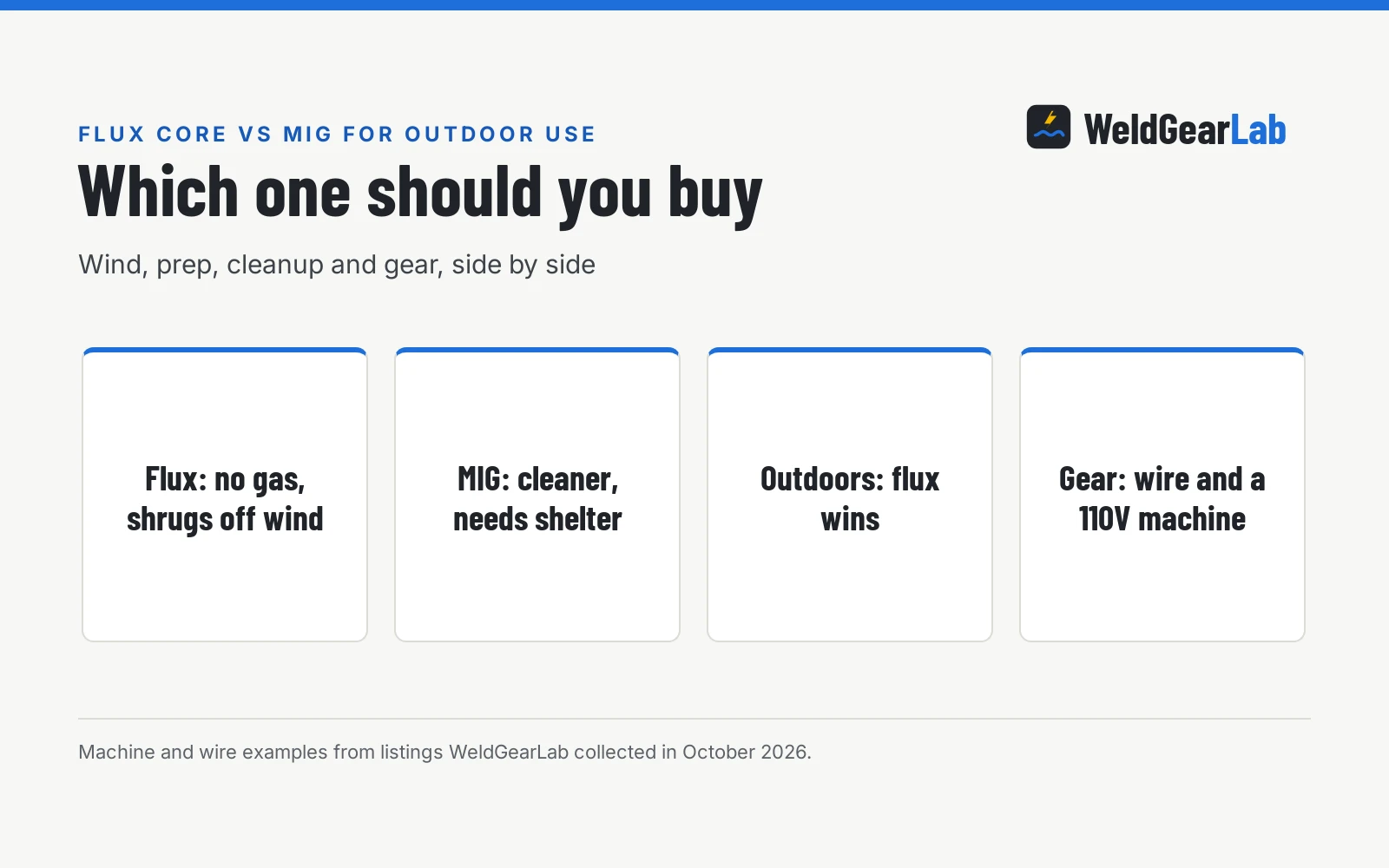
Out past the driveway the wind keeps picking up while you fit a cracked trailer bracket. You drag the welder out of the shop, and the question hits before the first tack: flux core vs mig for outdoor use. The answer is direct. Flux core wire welds fine in a breeze because the shielding is built into the wire, while gas MIG needs shelter because the wind blows the shielding gas off the puddle. This guide walks through wind, metal prep, cleanup and the gear that fits each process, so you pick the right setup before you burn the first inch.
Other welders and gear to compare
 INETUB BA71TGS Flux Core Welding Wire .035"Check price on Amazon
 YixangDD 2 Pack 030 Flux Core Welding WireCheck price on Amazon
 4-Pack 0.030" Flux Core Welding WireCheck price on Amazon
 PGN E71T-11 .030" + .035" Gasless Flux Core Welding Wire 2 lbCheck price on Amazon
 RUBIK 0.030" Flux Core Gasless Mig Wire-E71T-GS 2Pcs 2-PoundCheck price on Amazon
 ATLASWELDER Flux Core Welding WireCheck price on Amazon
This guide links to our product roundups, where WeldGearLab gets a commission on purchases made through links on this page, and your price stays the same. Read our affiliate disclosure.
Flux core vs mig for outdoor use: how to choose
Pick flux core when the job is outside and the air is moving. Pick gas MIG when the job is thin, visible, or happening under a roof. The two processes run on the same class of wire feed welder, and many 110V machines run flux core out of the box. The only real question is whether you want to haul a gas cylinder to the job or let the wire carry its own shielding. For fence posts, gates, trailers and equipment sitting in a field, the answer is almost always flux core.
Side by side
| Flux core (self shielded) | Gas MIG (solid wire) | Outdoor takeaway | |
|---|---|---|---|
| Shielding | Flux inside the wire | Gas from a cylinder | Flux carries its own shielding |
| Gear beyond the welder | Flux core wire | Solid wire, cylinder, regulator, gas hose | Flux travels lighter |
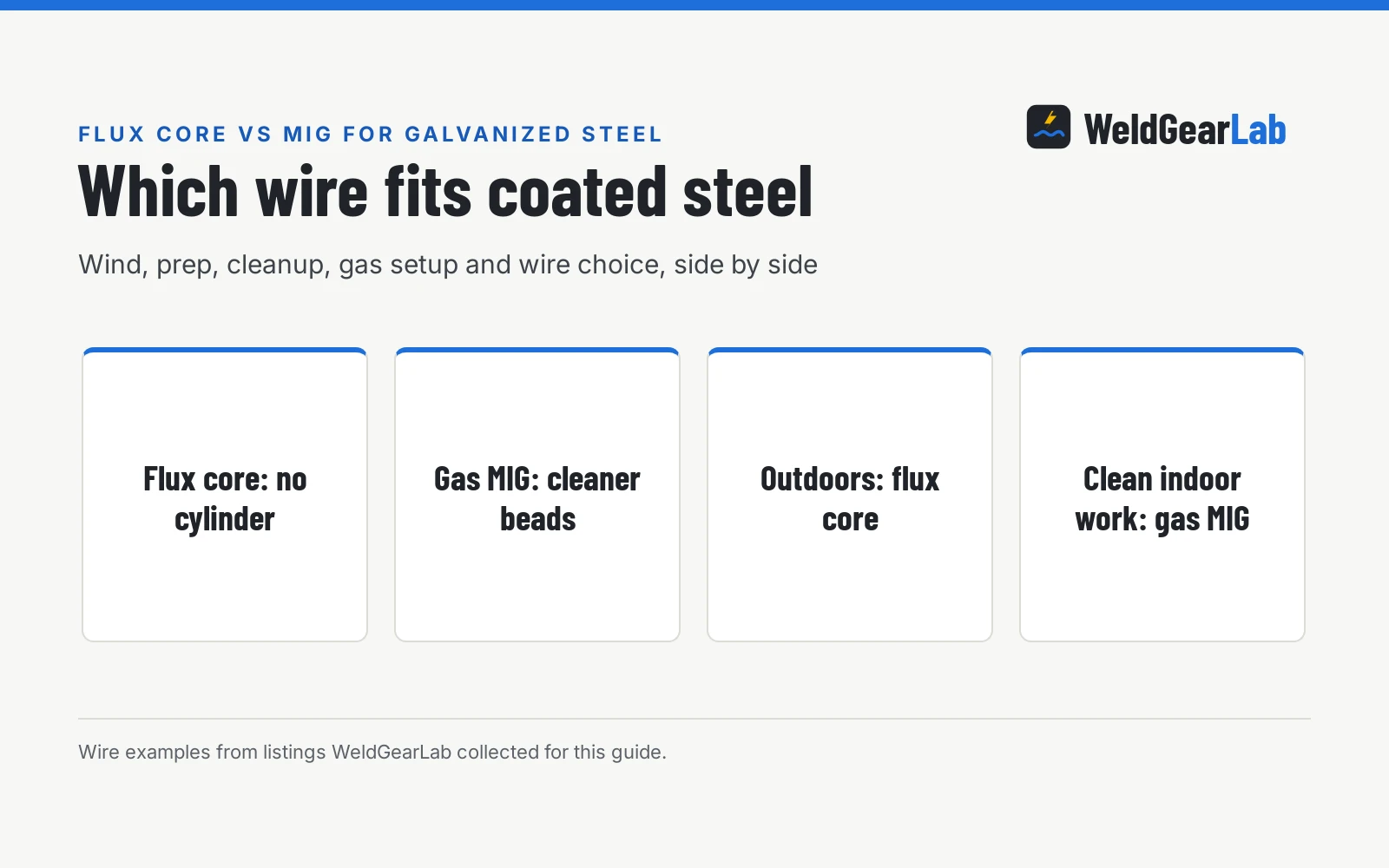
| Wind and weather | Holds its arc in a breeze | Gas drifts off the puddle | Flux wins outside |
| Dirty or rusty steel | More forgiving | Needs cleaner metal | Flux tolerates field prep |
| Spatter and cleanup | Slag to chip, more spatter | No slag, less spatter | MIG is tidier |
| Fumes | More smoke | Less smoke | Ventilate either way |
| Typical polarity | DCEN (electrode negative) | DCEP (electrode positive) | Check the wire label |
Polarity is general practice for common wires; always follow the polarity printed on your wire label and in the machine manual. Most machines that run both have a polarity lead you swap when you change wire.
When flux core wins outside
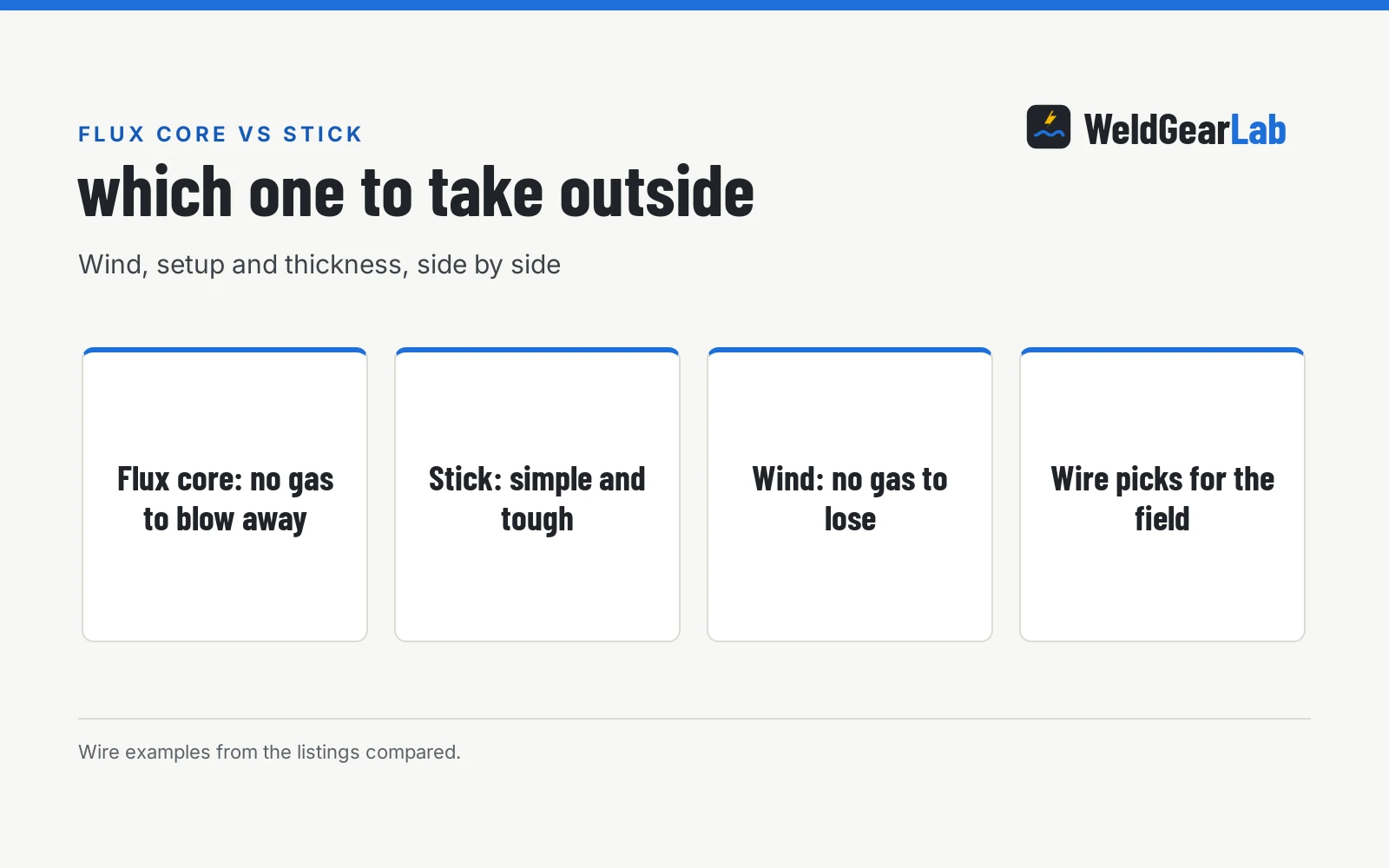
- Wind. A breeze that ruins gas shielding barely affects self shielded flux core. This is the whole argument for the process outdoors.
- Rusty or painted steel. The flux contains deoxidizers that tolerate less than perfect prep, so field repairs on farm equipment go faster.
- No cylinder to haul. You carry the machine, the wire and the leads. Nothing to rent, nothing to refill, nothing to chain upright at the job.
- Small machines on thick stock. Flux core tends to penetrate deeper at a given setting, which helps a 110V unit on heavier steel.
When gas MIG still makes sense
- Thin sheet and auto body. Lower heat and cleaner small beads make thin panels easier, with less burn through.
- Visible work. No slag to chip and less spatter to grind, which matters on furniture and anything people look at closely.
- Indoor shop work. Less smoke than flux core, though you still need ventilation.
- Calm days only. If you can weld under a roof or behind a wind break, gas MIG gives the prettier bead. The moment the wind picks up, switch to flux core.
Gear that fits the job
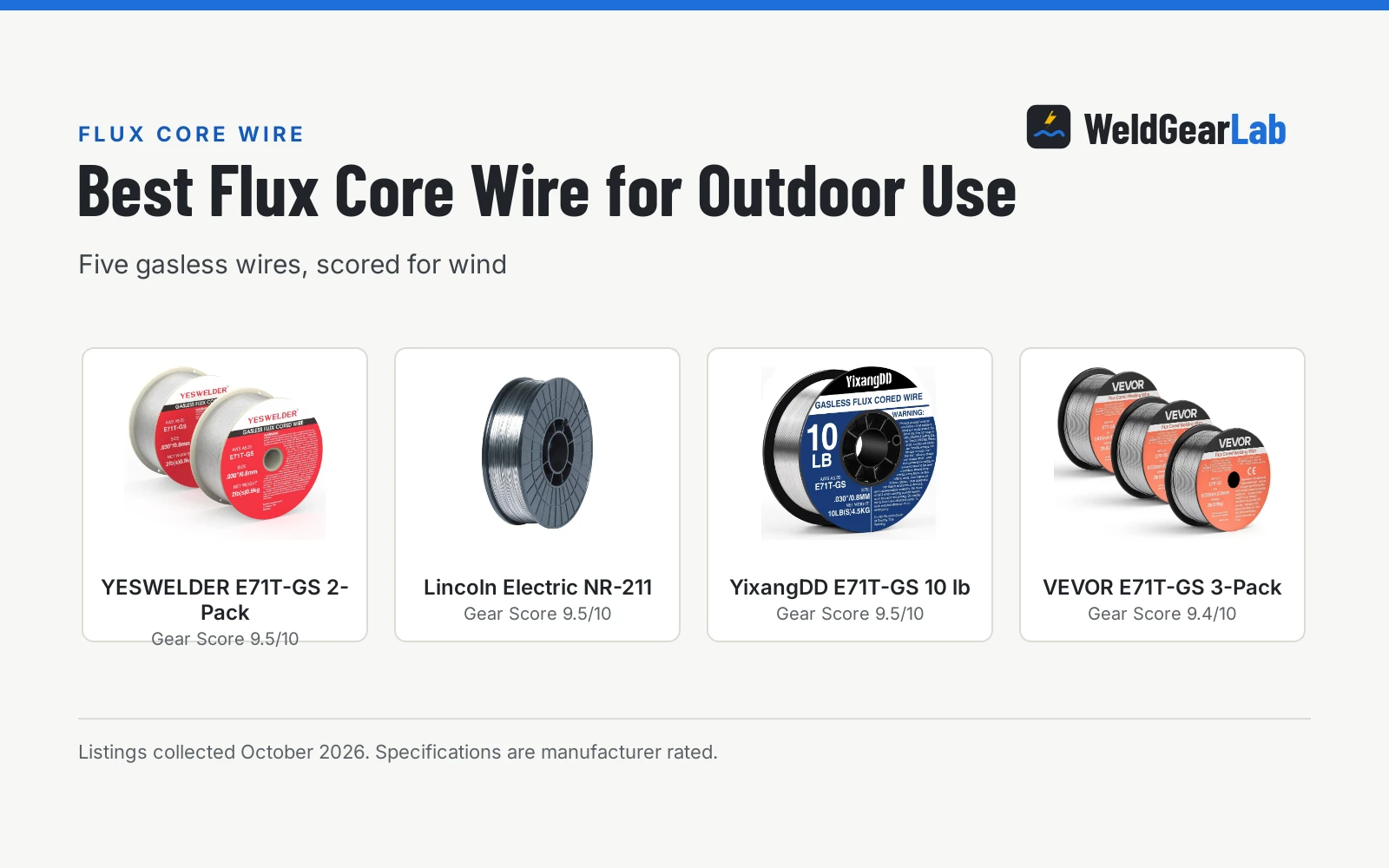
The listings below are ranked by how well they suit outdoor wire feed work. First the machine, then the wires that feed it.
TOOLIOM FLUX-135. A 3-in-1 unit that runs gasless flux core MIG, stick, and Lift TIG from standard 110V, with output up to 135A. The listing states it welds 1/6-inch (4.0mm) mild steel and takes .030 inch and .035 inch flux-core wire, with synergic control and IGBT inverter tech. It weighs 8.7 lbs and carries a handle, and the box includes 1LB of flux core wire and welding gloves. That is the whole outdoor kit in one grab: machine, wire, gloves, no cylinder.
COWHERDING 0.035 inch E71T-GS, 10 lbs (4.5 kg). A self-shielding flux-cored wire the listing states works outdoors and in windy conditions without external gas, and supports all-position welding: flat, vertical, overhead and fillet. The flux includes deoxidizers for lightly rusted or scaled surfaces, with minimal spatter and slag that the maker states removes easily. Ten pounds on an ABS plastic spool is a serious amount of outdoor welding before you reorder.
RUBIK 0.030 inch E71T-GS, two 2-pound spools. Two spools in sealed mylar bags with anti-corrosion paper around them, so the second spool stays fresh while you work through the first. The listing states all positions, single and multi pass welding, and no shielding gas required, and the bullets mention use outdoors on a fairly windy day with little smoke and almost no spatter. The thinner .030 inch wire suits the lighter end of outdoor work, like gates and thin brackets.
WelderElite 0.030 inch E71T-GS, four 2lb spools. A 4-pack totaling 8 pounds, with each spool 2 pounds of gasless wire for use right out of the box. The listing states single or multiple pass welding without shielding gas, suitable indoors and outdoors, on galvanized steel, stainless steel and mild steel. One note from the bullets: welds on stainless steel may rust over time, so keep this wire to carbon steel work.
Safety outside
Flux core makes more smoke than gas MIG, so keep your head out of the plume and let the wind carry it away from you. Hot slag can flick off when you chip it, so wear safety glasses under the helmet. Clear dry grass and anything flammable from the work area before you strike an arc. Check the ground clamp and cable connections before you start, and follow the wire and machine manuals for settings.
FAQ for welders
Can I run flux core wire in my gas MIG welder outside?
Usually, if the machine lists flux core as a supported process. Set the polarity the wire calls for, often electrode negative, and swap the polarity lead if the machine has one. You may need knurled drive rolls, which many machines include.
Why does my MIG weld look bad on a breezy day?
Wind blows the shielding gas off the puddle, so air reaches the molten metal and the weld turns porous and spattery. Moving behind a wind break fixes it, and switching to self shielded flux core wire removes the problem entirely.
What polarity does flux core wire use?
Most common flux core wires, including E71T-GS, run electrode negative. Follow the polarity printed on the wire label and in the machine manual, since some wires differ.
Is flux core wire enough for trailer and gate repairs?
For mild steel repairs on trailers, gates and fence posts, flux core on a 110V machine covers a lot of real farm and home work. For structural or load bearing joints, have a certified welder do or inspect the work.
What should I wear when welding outside?
The same as in the shop: an auto-darkening helmet, flame resistant jacket, gloves, and safety glasses under the helmet when chipping slag. Outside, add sun protection and keep clear of anything flammable.
Related: flux core vs stick for outdoor use, best flux core wire for outdoor use, best MIG wire for home garage, and MIG vs stick for thick steel.