Flux Core vs Mig for Galvanized Steel: Which One Should You Buy?
Flux core and gas MIG suit different galvanized work. How wind, prep, cleanup and gas setup differ, and which wire matches outdoor coated steel and clean indoor work.

On this page
Top picks at a glance
As an Amazon Associate I earn from qualifying purchases.
- 1
 ARCCAPTAIN Flux Core Welding Wire E71T-GS .035" 2LB x 39.5/10View on Amazon
- 2
 TOOLIOM ER70S-6 .030" Mild Steel MIG Welding Wire 2LBView on Amazon
- 3
 HARUKIKU .040" Flux Core Welding WireView on Amazon
- 4
 ATLASWELDER Flux Core Welding WireView on Amazon
- 5
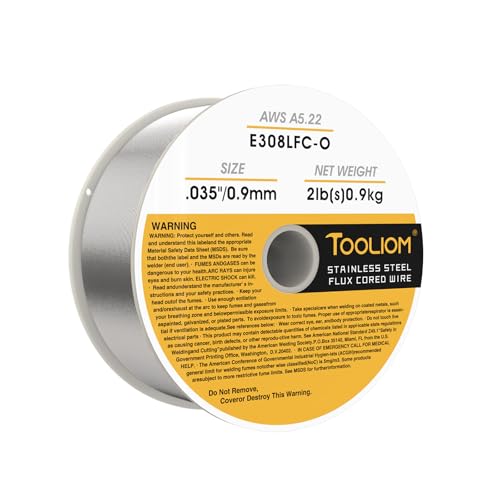 TOOLIOM E308LFC-O .035" Gasless Stainless Steel MIG Wire 2LBView on Amazon
- 6
 Sunstac E71T-GS .030" Gasless Flux Core Welding WireView on Amazon
- 7
 Sunstac E71T-GS .035" Gasless Flux Core Welding WireView on Amazon
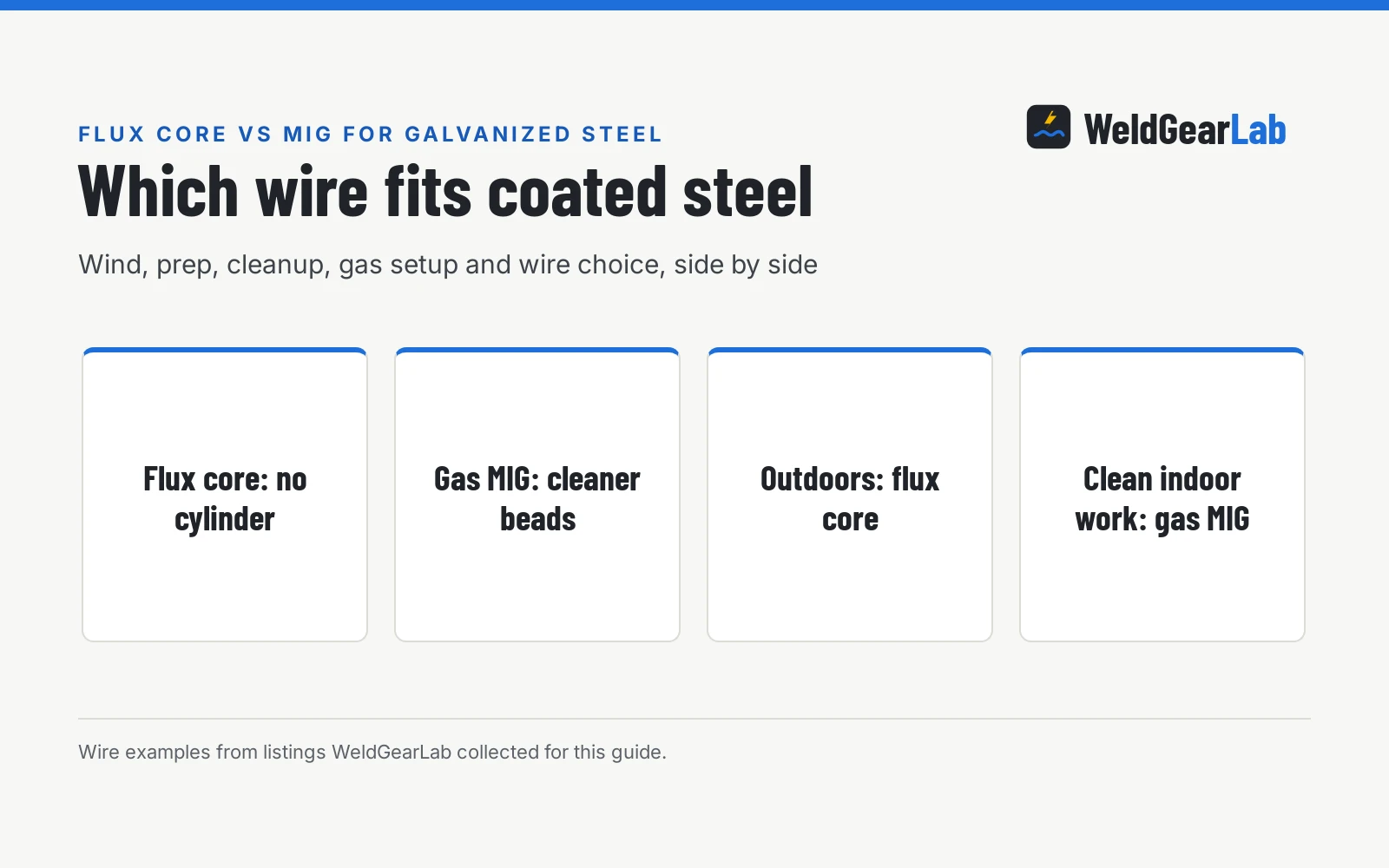
A galvanized gate frame waits on sawhorses, a trailer bracket needs a patch, and a farm repair cannot wait for calm weather or a spotless bench. The coating on the steel, the wind across the yard, and the cleanup after the bead all pull the choice in different directions. This guide answers flux core vs mig for galvanized steel directly: flux core fits outdoor work on dirty steel, while gas MIG fits clean indoor work where a tidy bead matters more. Either process still needs the galvanized coating prepped and ventilation.
Other welders and gear to compare
 TOOLIOM ER70S-6 .030" Mild Steel MIG Welding Wire 2LBCheck price on Amazon
 HARUKIKU .040" Flux Core Welding WireCheck price on Amazon
 ATLASWELDER Flux Core Welding WireCheck price on Amazon
 TOOLIOM E308LFC-O .035" Gasless Stainless Steel MIG Wire 2LBCheck price on Amazon
 Sunstac E71T-GS .030" Gasless Flux Core Welding WireCheck price on Amazon
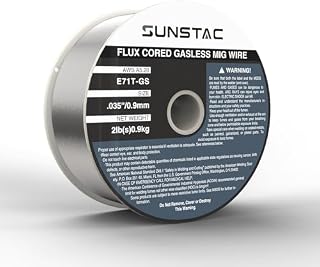 Sunstac E71T-GS .035" Gasless Flux Core Welding WireCheck price on Amazon
This guide links to our product roundups, where WeldGearLab gets a commission on purchases made through links on this page, and your price stays the same. Read our affiliate disclosure.
The difference in one paragraph
Molten steel reacts with oxygen and nitrogen in the air, which makes a porous, weak weld. Gas MIG protects the puddle with shielding gas from a cylinder, fed through the gun around solid wire. Self shielded flux core wire is hollow and filled with flux that burns to make its own shielding gas and leaves a layer of slag on the bead. No cylinder, no hose, no regulator. On galvanized steel, the coating adds smoke and prep questions, and the job often sits outdoors.
Side by side
| Flux core (self shielded) | Gas MIG (solid wire) | On galvanized steel | |
|---|---|---|---|
| Shielding | Flux inside the wire | Gas from a cylinder | Coating adds fume and prep questions for both |
| Gear beyond the welder | Flux core wire | Solid wire, cylinder, regulator, gas hose | Flux core skips the cylinder and the gas hose |
| Wind and outdoor work | Tolerates a breeze | Gas shielding is disturbed by wind, shelter helps | Outdoor work favours flux core; coating prep applies to both |
| Dirty steel (rust, mill scale) | More forgiving | Needs cleaner metal | Flux core tolerates rust and mill scale better |
| Thin sheet and auto body | Harder on thin panels, with slag to chip | Easier, cleaner small beads | Gas MIG suits clean thin panels better |
| Spatter and cleanup | Slag to chip, more spatter | No slag, less spatter | Slag removal is part of flux core cleanup |
| Fumes | More smoke | Less smoke | Ventilation matters more on coated steel |
| Typical polarity | DCEN on the Blue Demon listings; not stated for YESWELDER | Follow the wire label and machine manual | Only the Blue Demon flux listings in this guide state DCEN |
| Gas needed | None | Shielding gas from a cylinder | Solid wire in this guide lists gas mixes |
Polarity is stated as DCEN on the Blue Demon flux listings in this guide. The YESWELDER flux listing and the solid wire listing do not state polarity, so follow the wire label and the machine manual.
When flux core is the better choice
- Outdoor work. Fence posts, gates, trailers and equipment in a field. A breeze that can disturb gas shielding affects self shielded flux core less.
- Rusty or mill scale steel. Flux core tolerates rust and mill scale better than solid wire, as the listings state. That tolerance does not cover the zinc coating: grind the coating back from the joint and ventilate, for either process.
- No cylinder. There is no cylinder to buy, rent, refill or haul, and no gas supply to shelter from wind.
- Multi-pass work. A flux wire made for multi-pass runs suits repairs that need more than a single bead, where the listing states that use.
When gas MIG is the better choice
- Thin sheet and auto body. Cleaner small beads make thin panels easier, and the solid wire listing states automobile body repairs. Heat and burn through still depend on the machine setting and the joint, not on the process alone.
- Looks and cleanup. No slag to chip and less spatter to grind, which matters on visible work and furniture.
- Indoor shop work. Less smoke than flux core, though ventilation still matters, and matters more on coated steel.
- Clean steel. Where the metal can be prepped well and the air stays still, solid wire gives a tidy bead with little cleanup.
Which gas for MIG on steel
For the solid wire in this guide, the listing states two gas options: 100% CO2 or a mixed gas of 80% Ar / 20% CO2. Straight CO2 penetrates well and spatters more, while a mixed gas gives a steadier arc with less spatter on clean steel. Gas choice does not fix dirty or coated metal on its own.
Flux Core vs Mig for Galvanized Steel: The Wire in This Guide
The wire below is listed in ranked order, strongest match for galvanized work first. Every listing is judged on what its own listing states, not on claims from another listing.
Blue Demon E71T-11. This gasless flux core wire states use on carbon and galvanized steel, and states all position welding: flat, horizontal, vertical upwards and overhead. The listing states multi-pass use, easy slag removal, low spatter, and a flux core that acts in place of shielding gas. Silicon and manganese are stated in the wire composition. Size is stated as 0.035, supplied as a 2 LB pack in a 2 Pack. For a galvanized repair outdoors, this listing matches the job most directly: no cylinder, tolerance for rust and mill scale, and a stated galvanized use.
YESWELDER E71T-GS. This self shielded flux core wire needs no external cylinder, and states all position welding including flat, vertical, up and corner welding. The core design states arc stabilization and high feedability, with deoxidizing agents for clean welds through light rust or mill scale, plus low spatter and easy slag removal. Size is stated as .035, weight as 33 lbs. The listing does not state galvanized steel by name, so it ranks below the Blue Demon E71T-11 wire for this guide, but its outdoor and dirty metal strengths still fit field repairs well.
Blue Demon E71T-GS. This gasless flux core wire states all position welding: flat, vertical, horizontal and overhead, with no shielding gas required, and runs on DCEN. The listing states a use for mobile welding and welding in windy conditions, which suits outdoor galvanized work. Size is stated as 0.035, supplied as a 2 LB pack in a 2 Pack. The listing gives less detail than the E71T-11 listing, with no multi-pass statement and no stated galvanized use in its bullets, which is why it ranks below the other flux wires here.
TOOLIOM ER70S-6. This solid MIG wire states smooth feeding, stable arcs, optimal penetration and high deposition rates, with low spatter on clean work. Size is stated as .030, weight as 2LB. Shielding gas is required: the listing states 100% CO2 or a mixed gas of 80% Ar / 20% CO2, and states compatibility with most GMAW machines. Materials stated are carbon steel, iron and stainless steel, with uses across construction, farm work, tanks, truck bodies, automobile body repairs and structural work. Galvanized steel is not stated, and gas shielding needs still air and clean metal, so this wire ranks last for galvanized work here, while staying a strong pick for clean indoor steel.
Galvanized smoke and slag. Flux core makes more smoke and fumes than gas MIG, and hot slag can flick off when chipped. Weld with good ventilation or outdoors with the head out of the plume, wear safety glasses under the helmet when chipping, and clear anything flammable from the area. Secure gas cylinders upright with a chain. See how to weld galvanized steel safely for ventilation, PPE and prep guidance on coated steel.
FAQ for welders
Is flux core better than gas MIG for galvanized steel?
For outdoor galvanized repairs, flux core usually fits better, because it needs no cylinder and tolerates wind and less than perfect prep. For clean indoor galvanized work where the coating can be prepped well and the air stays still, gas MIG gives a cleaner bead with less cleanup.
Can solid MIG wire weld galvanized steel?
Solid wire can weld steel that carries a galvanized coating, but the listing for the solid wire in this guide does not state galvanized steel, and gas shielding needs still air and cleaner metal. Prep the joint well, ventilate the area, and follow the wire label and machine manual.
Do flux core wires need shielding gas?
The flux core wires in this guide need no shielding gas. The flux inside the wire burns to make its own shielding gas, which is why these wires suit mobile jobs and windy conditions. A cylinder, regulator and gas hose stay out of the setup entirely for self shielded flux core wire.
Which wire size suits galvanized repairs in this guide?
The flux core wires in this guide are stated as .035, while the solid wire is stated as .030. Size choice follows the machine, the joint and the wire label, not size alone. Check that the machine setup suits the stated size before starting.
Why is a flux core weld covered in a crust?
That crust is slag from the flux, and it is normal. Chip it off with a chipping hammer and wire brush before the next pass or painting, and wear safety glasses under the helmet while chipping. Slag removal is part of flux core cleanup, while solid wire leaves no slag to chip.
Related: how to weld galvanized steel safely, best .035 flux core welding wire, best MIG welding wire, and flux core vs MIG for stainless steel.