Flux Core vs Stick for Thick Steel: Which One Should You Buy?
Which process should you pick for heavy plate: flux core wire or stick? The short answer, a side-by-side comparison, and three flux core wires to consider.

On this page
Top picks at a glance
As an Amazon Associate I earn from qualifying purchases.
- 1
 Blue Demon 308LFC-O X .045 X 10LB Spool Stainless Steel Flux9.7/10View on Amazon
- 2
 YixangDD 2 Pack 030 Flux Core Welding WireView on Amazon
- 3
 YESWELDER Gasless Flux Core MIG WireView on Amazon
- 4
 Forney 42303 Flux Core Mig WireView on Amazon
- 5
 VEVOR Flux Core MIG Welding WireView on Amazon
- 6
 YESWELDER Flux Core Gasless MIG Welding WireView on Amazon
- 7
 Forney 42300 Flux Core Mig Welding Wire 2-Pound PremiumView on Amazon
Heavy plate waits for no one: a cracked trailer frame, an equipment foot that needs a new plate, a hitch receiver worn thin at the pin. You have a wire feed machine and a stick machine, or room in the shop for one, and the question is practical, not academic. This guide answers flux core vs stick for thick steel: the speed, wind tolerance and cleanup trade-offs, side by side, plus three flux core wires from current listings.
Other welders and gear to compare
 YixangDD 2 Pack 030 Flux Core Welding WireCheck price on Amazon
 YESWELDER Gasless Flux Core MIG WireCheck price on Amazon
 Forney 42303 Flux Core Mig WireCheck price on Amazon
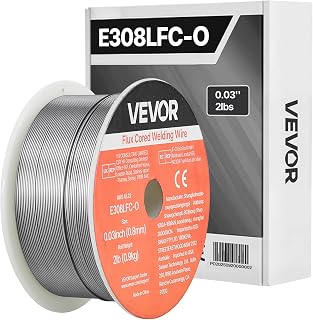 VEVOR Flux Core MIG Welding WireCheck price on Amazon
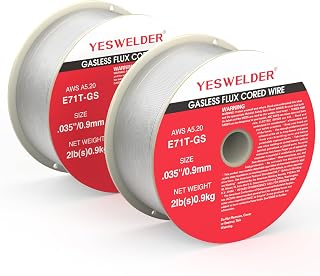 YESWELDER Flux Core Gasless MIG Welding WireCheck price on Amazon
 Forney 42300 Flux Core Mig Welding Wire 2-Pound PremiumCheck price on Amazon
This guide links to our product roundups, where WeldGearLab gets a commission on purchases made through links on this page, and your price stays the same. Read our affiliate disclosure.
Flux core vs stick for thick steel: the short answer
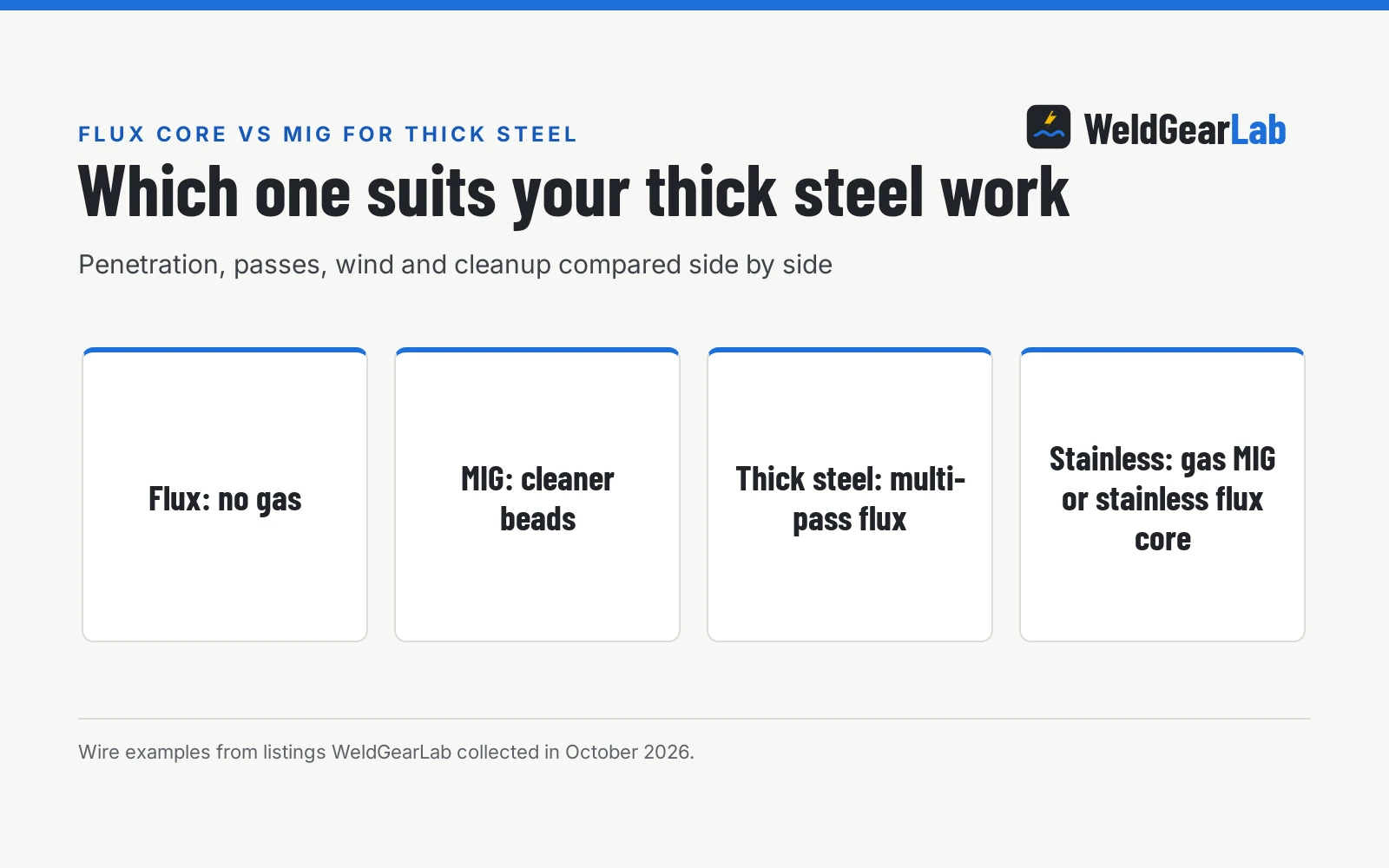
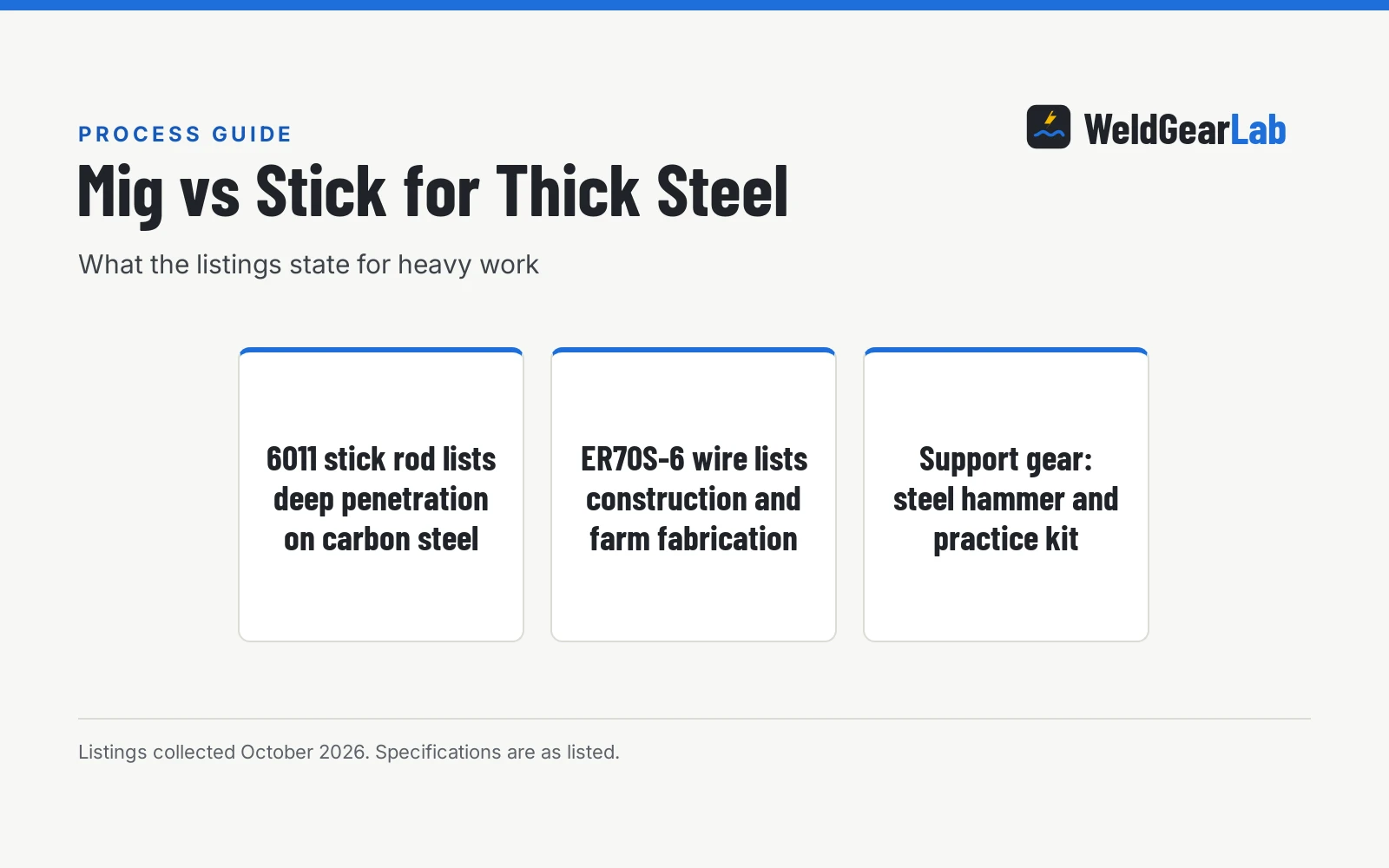
On thick steel the deciding factors are speed, wind tolerance and cleanup. Flux core wire deposits metal without stopping to change rods, and self-shielded wire works outside with no cylinder, hose or regulator. Stick still earns its place on weather-beaten equipment and field repairs, where a gust that ruins gas shielding barely touches it. Both processes need decent fit-up and multiple passes on heavy joints; neither one forgives sloppy prep. For the full process debate, see our flux core welding vs stick welding guide.
Side by side
| Flux core wire | Stick electrode | Worth noting | |
|---|---|---|---|
| Shielding source | Flux inside the wire; dual-shielded wires need a gas cylinder too | Flux coating on the rod | Self-shielded flux core skips the cylinder entirely |
| Wind and outdoor work | Self-shielded wire handles a breeze | Barely notices wind | Stick wins in bad weather |
| Cleanup | Slag to chip off the bead | Slag and often more spatter | Both need cleanup; neither is spatter-free |
| Machine | A wire feed welder that lists flux core | A stick welder | Wire feed suits shops that already own one |
| Learning curve | Easier to start | More practice to strike the arc | Flux core gets you welding sooner |
| Rusty or mill scale steel | More forgiving than gas MIG | Forgiving too | Prep still helps both |
Polarity follows the wire’s listing, not the process name: the Blue Demon listing states DCEP. Check each wire’s listing and the machine’s guide before welding. Our polarity guide for flux core shows where to check on the machine.
When flux core is the better choice
- Heavy joints on a wire feed machine. Continuous wire means no stopping to change rods on long beads.
- Outdoor work without gas. Self-shielded wire skips the cylinder, regulator and hose entirely, which also means nothing to refill.
- Rusty or mill scale steel. The flux chemistry tolerates light rust and mill scale better than gas-shielded wire.
- Farm and field repairs. One machine, one spool and no bottle to haul; see our best flux core welder picks.
When stick is the better choice
- Nasty weather. Wind that ruins gas shielding barely slows a stick arc.
- Remote repairs. A stick welder and a handful of rods pack into a truck bed with no drive parts to damage.
- No wire drive to maintain. Nothing to jam, tangle or wear out in a dusty shop.
- Structural work with established procedures. For code or load-rated joints, check the procedure the job requires before choosing a process.
Three flux core wires from current listings
Three flux core wires from current listings. The listing, not opinion, is the source of every fact below.
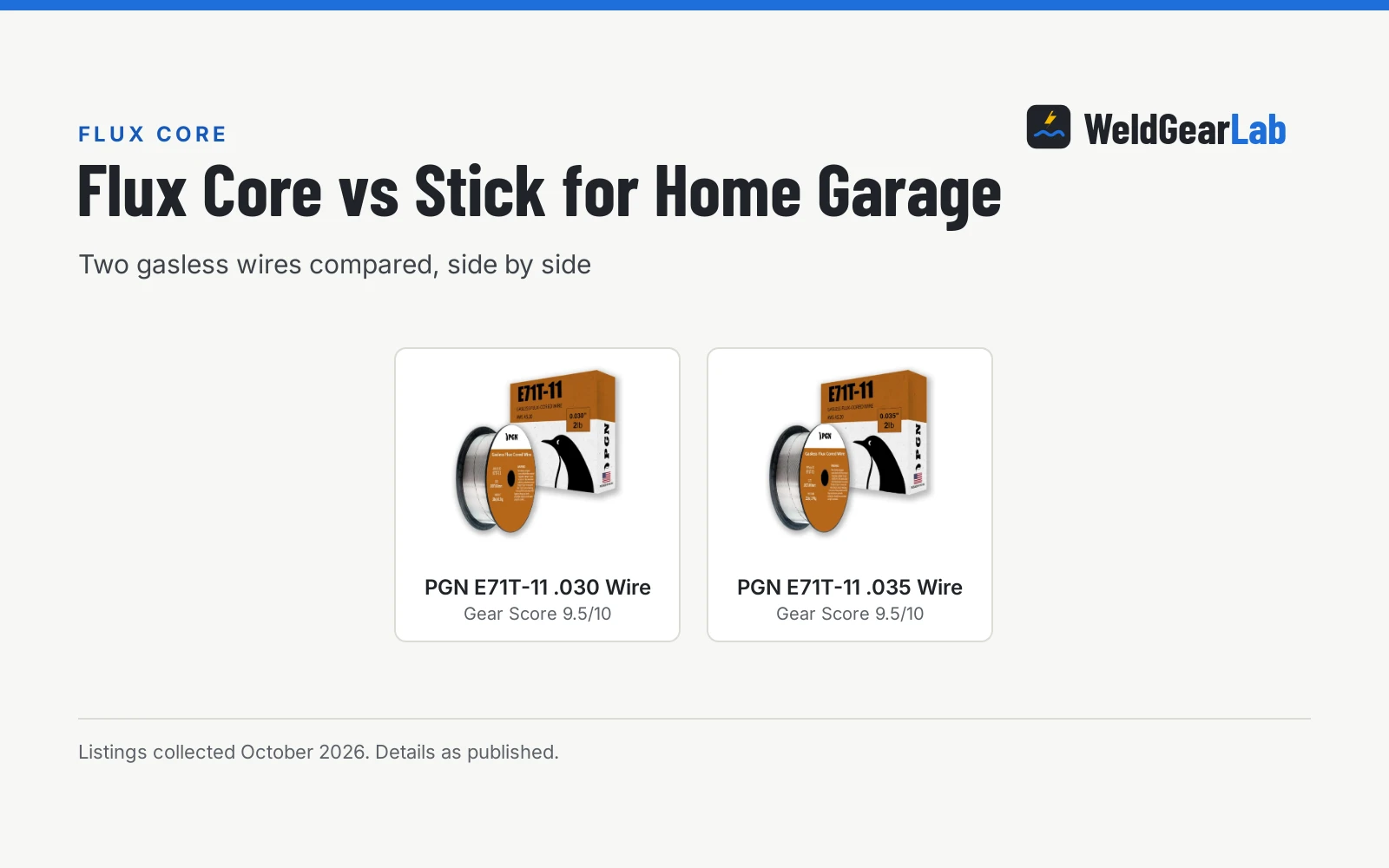
YESWELDER E71T-GS .030 gasless flux core wire
Self-shielded E71T-GS wire in .030 diameter (0.8mm), sold as a 5-pack of 2-lb spools on a strong ABS spool. The listing states low spatter, full slag formation with easy removal, and porosity-free deposits, with welds that stay sound through light rust or mill scale. It lists all-position welding and single or multi-pass use on carbon and low-alloy structural steel, and it needs no external cylinder. One listing contradiction: the spec table lists item weight as 11.16 pounds while the title describes five 2-lb spools; the title and bullets are the safer read.
Blue Demon E71T-1/1M .035 dual-shielded flux core wire
A .035 E71T-1/1M wire on an 11-lb spool, dual shielded, so it needs shielding gas despite the flux core name. The listing states all-position use, low fumes, a stable arc and good slag removal, with typical applications in hulls, storage tanks and structural steel. Power source is listed as DCEP, and the spec table gives 9 x 9 x 3 inches and 11 pounds. No contradiction between the title and bullets here.
NICETECH E308LFC-O .030 stainless flux core wire
A self-shielded stainless wire for 301, 302, 304L, 308 and 308L grades, sold as a 1-lb spool (the spec table lists 1.1 pounds and 4.25 x 4.21 x 2.05 inches). The listing states AWS A5.22 classification, a stable arc and minimal spatter. One contradiction: the title says .030 diameter while the bullets spec line says .035 inch; the title and the rest of the bullets are the safer read. It is the odd one out for thick mild steel: it belongs here as the stainless option for stainless joints, not as a pick for heavy mild-steel work.
Our flux core wire buying guide covers diameter, shielding type and spool size in more depth.
A note on safety
Flux core smoke and slag. Flux core wire produces fumes and slag: the Blue Demon listing states low fumes, and the YESWELDER listing states full slag formation with easy removal. Hot slag can flick off when you chip it. Weld with good ventilation or outdoors with your head out of the plume, wear safety glasses under the helmet when chipping, and clear dry grass and anything flammable from the area. Dual-shielded wire needs a gas cylinder: secure it upright with a chain so it cannot tip over.
FAQ for welders
Is flux core or stick better for thick steel?
Flux core feeds wire continuously, so there are no rod changes on long beads. Stick tolerates wind and field conditions better and needs less equipment around the arc. The choice usually depends on the job site more than the joint itself.
Can a flux core welder handle thick steel?
Yes, with multiple passes. The listings we compared describe single or multi-pass use, which is how heavy plate gets welded with wire in practice. Thick joints take more than one pass no matter which process you pick.
Does flux core wire always need shielding gas?
No. Self-shielded wires like the YESWELDER E71T-GS and the NICETECH E308LFC-O need no cylinder at all. Dual-shielded wire like the Blue Demon E71T-1/1M does need gas, so read the wire’s listing before you buy.
Which wire diameter suits thick steel?
The featured listings are .030 and .035 wire. Match the wire to the machine’s drive rolls and the wire’s own label, and check the machine’s door chart or manual for the pass sequence it recommends.
Can I weld stainless with flux core?
Yes, with the right wire. The NICETECH E308LFC-O listing covers 301, 302, 304L, 308 and 308L grades. Stainless wants cleaner fit-up and tighter prep than mild steel, whatever the process.
Related: flux core welding vs stick welding, flux core vs MIG for thick steel, best flux core wire for farm repairs, and best flux core welder.