What Is Lathe Machine: What It Does and What to Buy
A lathe machine spins the workpiece while a fixed tool cuts it to size. What the main parts do, what work it covers, and how to read size, speed and chuck figures in home shop listings.

On this page
Top picks at a glance
As an Amazon Associate I earn from qualifying purchases.
- 1
 Indexable Lathe Turning Tool 27Pcs Kit 1/2'' 12mm Shank9.7/10View on Amazon
- 2
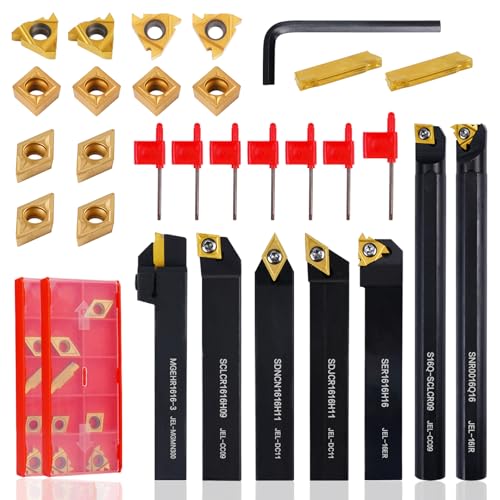 CHAWNIAO Indexable Lathe Turning Tool 21Pcs Kit 5/8"9.6/10View on Amazon
- 3
 ASZLBYM Lathe Grooving Tool Holder Grooving Cut-Off Tool9.6/10View on Amazon
You have a shaft to turn down, a bushing to bore out, or a pin that has to come out round and true, and a drill press will not turn a shaft round and true. That is the job a lathe does. A lathe machine spins the workpiece while a fixed cutting tool shaves it to size, which is how you make round parts: shafts, bushings, spacers, knobs and threaded pieces. This guide explains what is lathe machine in plain shop terms, what the main parts do, and how to read the figures in home shop listings.
This guide links to our product roundups, where WeldGearLab gets a commission on purchases made through links on this page, and your price stays the same. Read our affiliate disclosure.
What is lathe machine and how it works
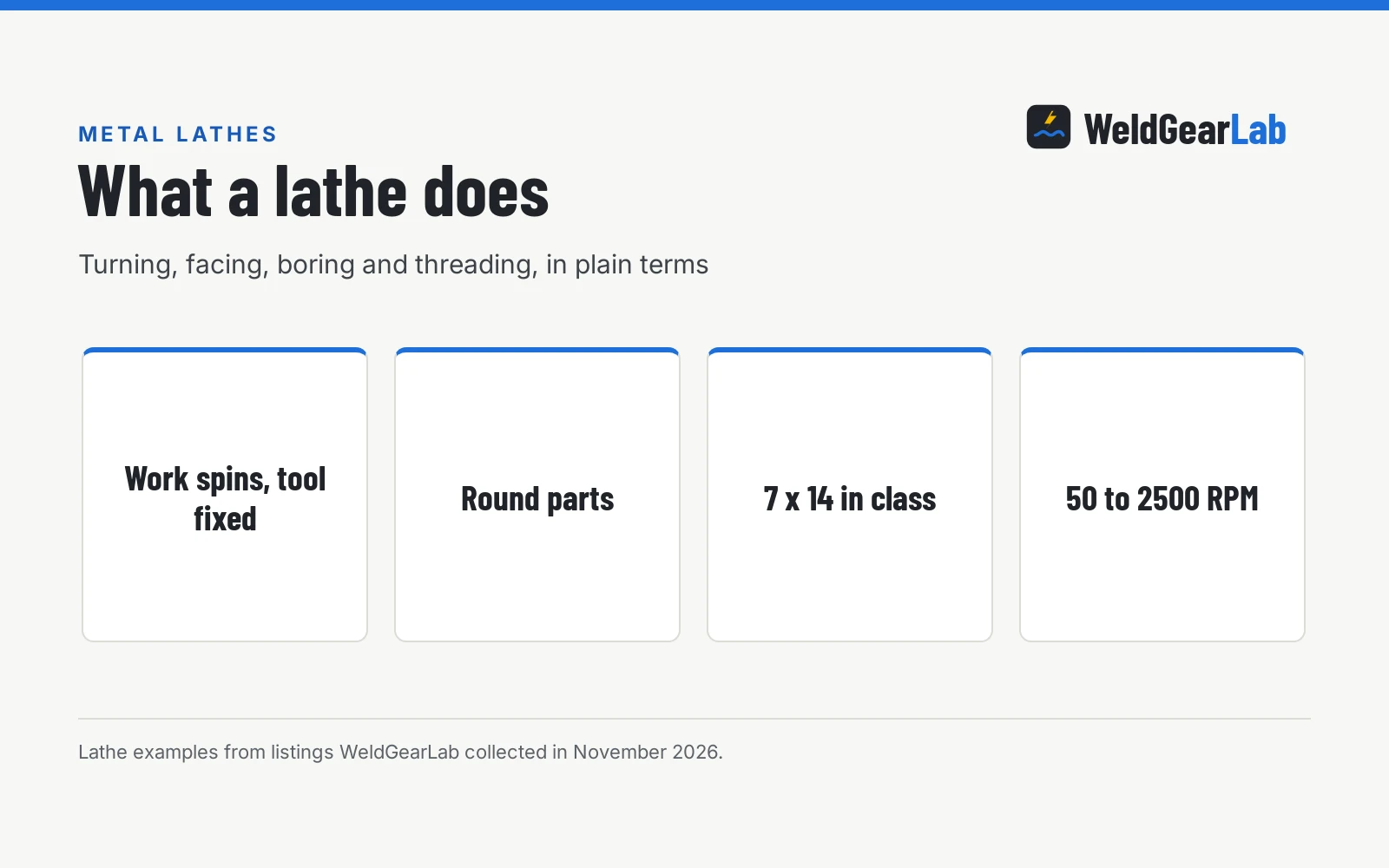
A lathe holds a piece of stock in a rotating chuck or between centers, spins it, and moves a cutting tool along it. The tool does not spin. The work does. Because the part rotates, turned diameters come out round, and a part held true stays concentric from one end to the other.
The cut is controlled three ways. The carriage moves the tool along the length of the part. The cross slide moves it in and out to set diameter. The compound rest feeds at an angle for tapers and chamfers. Feed the tool slowly along a spinning bar and you get turning. Feed it across the end and you get facing. Hold a drill in the tailstock and you get a centered hole. Move the tool inside a bore and you get boring. Sync the carriage to the spindle with the lead screw and the machine cuts threads.
Side by side
| Micro lathe | Mini benchtop lathe | Long benchtop lathe | |
|---|---|---|---|
| Listed size | 150 mm bed length | 7 x 12 in to 8 x 16 in | 8.3 x 29.5 in |
| Motor | 60W | 550W to 1100W | 750W |
| Speed range | 12,000 RPM | 50 to 2500 RPM | 50 to 2500 RPM |
| Chuck | 50 mm 3-jaw | 3.9 in to 4.92 in 3-jaw | Not stated |
| Stock named | Soft metal, wood, acrylic, plastic | Aluminum, steel, brass, wood, plastic | Metal parts and models |
| Threading | Not stated | 18 to 19 kinds, 10 to 52 TPI | 24 kinds of threads |
Sizes and figures above are maker ratings from current listings, collected 19 November 2026. The size names, such as 7 x 14 in, describe swing over the bed and distance between centers in inches, in that order.
Main parts of a lathe
- Bed. The cast base everything rides on. Swing and distance between centers set the largest part the machine can turn.
- Headstock and spindle. The motor drives the spindle, which carries the chuck. Speed is set here, from the panel controls, in one or two ranges.
- Chuck. The clamp that grips the stock. A 3-jaw self-centering chuck closes all jaws together and suits round stock. A 4-jaw chuck adjusts each jaw on its own for square or off-center work.
- Carriage, cross slide and compound. The moving assembly that carries the tool post along the bed, across the work, and at an angle.
- Tool post. Holds the cutting tool at center height. A quick-change post swaps tools without shimming each time.
- Tailstock. Slides on the bed opposite the headstock. It supports long work with a center and holds drills and reamers for center holes.
- Lead screw and threading dial. The lead screw drives the carriage at a fixed rate against spindle rotation for thread cutting, and the threading dial tells you when to engage the half nut.
See our parts of a lathe chuck and types of lathe tools guides for chuck and cutter details.
What a lathe can do
- Turning. Reduce a bar to a set diameter along its length, the basic job for shafts and pins.
- Facing. Square the end of a part and bring it to length.
- Drilling and boring. Drill centered holes from the tailstock, then bore them to an exact inside diameter for bushings and bearings.
- Threading. Cut external and internal screw threads. Listings state how many thread kinds the machine covers, in metric, imperial or both.
- Tapers and chamfers. Angle cuts from the compound rest or an offset tailstock, plus the bevel that breaks a sharp edge.
- Parting off. Cut a finished piece free from the bar with a narrow parting tool.
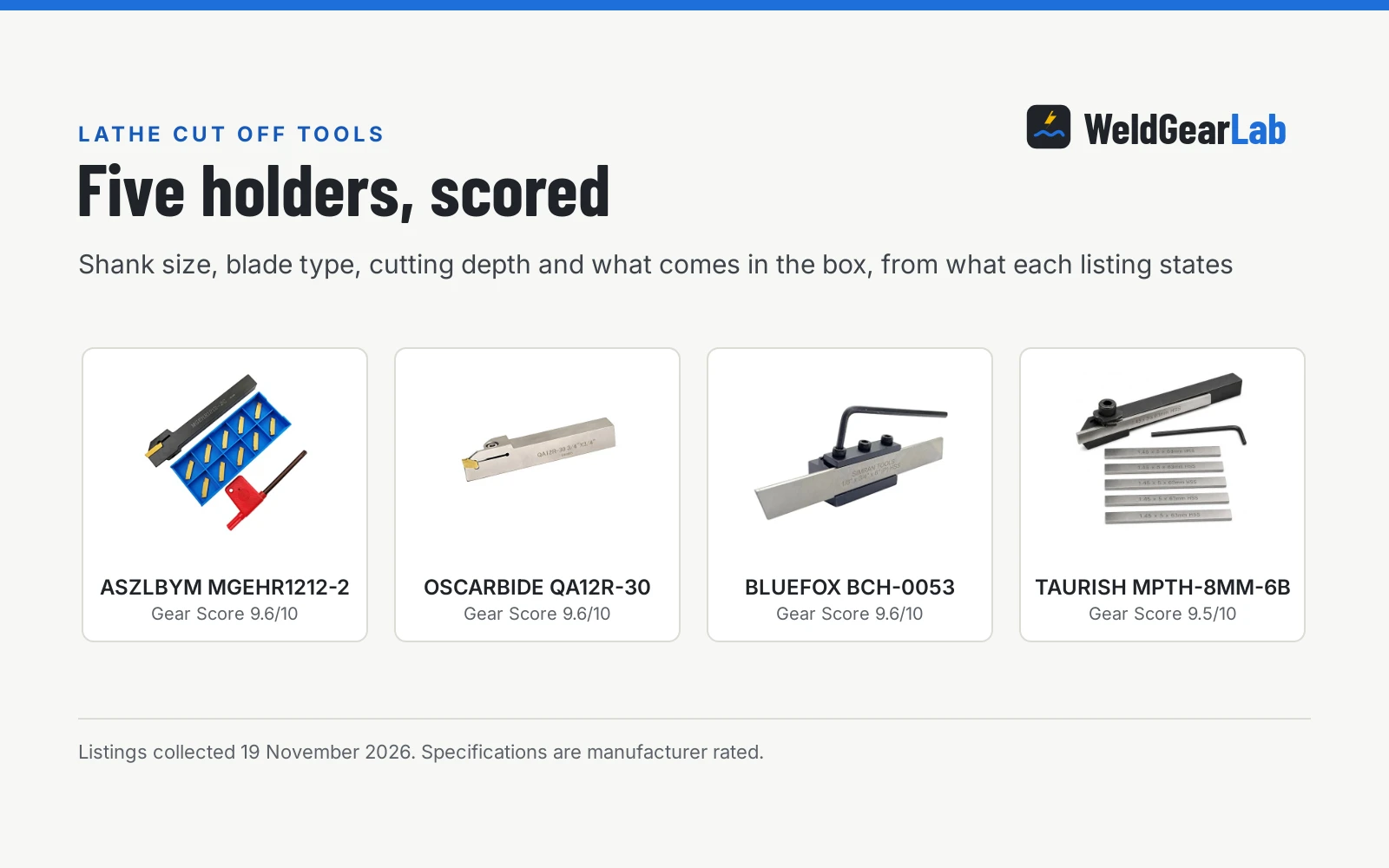
The INTSUPERMAI 8 x 16 in benchtop lathe lists turning, facing, drilling, boring and turning thread. Our best lathe cutting tools guide covers the tooling side.
Sizes you will see in home shop listings
Home shop lathes come in three rough sizes. Micro lathes are the smallest. The ZHRUI mini lathe (on Amazon) with a 60W motor lists a 150 mm bed length and a 150 mm max turning diameter with a riser block, aimed at soft metal, wood, acrylic and plastic. Mini benchtop lathes are the common home shop size. Listings here include 7 x 12 in, 7 x 14 in, 7 x 16 in and 8 x 16 in machines, with swing over bed figures such as 7.09 in and 8.27 in. Larger benchtop lathes stretch the bed. The VEVOR 8.3 x 29.5 in benchtop lathe is the long example in this group.
Read the size name as capacity, not footprint. The first figure is swing, the largest diameter that clears the bed. The second is the length between centers, the longest part you can hold. Our metal lathe for beginners guide walks through picking a first size, and mini lathe vs mini mill covers the round work versus flat work split.
Speed, motor and chuck figures
Spindle speed is stated as a range in RPM, and most benchtop listings here run from 50 RPM or 100 RPM up to 2500 RPM. The WEN 7-by 12-Inch benchtop lathe lists two full variable speed ranges from 100 to 2500 RPM in either direction. The VEVOR 7 x 16 in compact lathe lists 150 to 2500 RPM with forward and reverse. Micro lathes spin far faster on paper: the ZHRUI 60W micro lathe lists 12,000 RPM, and another ZHRUI mini lathe (on Amazon) lists a 20000 RPM motor.
Motor size is stated in watts on most listings here: 550W on several 7 x 14 in machines, 750W on the VEVOR 8.3 x 29.5 in benchtop lathe, 800W on the VEVOR 7 x 16 in compact lathe, and 1100W on the INTSUPERMAI 8 x 16 in benchtop lathe. Chuck size is stated as diameter: 3.9 in on the VEVOR 7 x 16 in compact lathe, 4.92 in on the INTSUPERMAI 8 x 16 in machine, and 50 mm on the ZHRUI micro lathe. Match chuck diameter and spindle bore to the largest stock you plan to grip or pass through the spindle. The VEVOR 8 x 14 in compact lathe, for example, lists a spindle bore of 0.8 in.
Lathe safety. A spinning chuck does not forgive loose clothing, loose hair or gloves near rotating parts. Wear eye and face protection, clamp the work firmly in the chuck, keep guards in place, take the chuck key out before you start the spindle, and stop the spindle before you measure or clear chips. Never reach across a spinning part. See the OSHA machine guarding overview for the general rules on rotating machinery.
FAQ for welders
What is a lathe machine used for?
A lathe makes round parts. It turns, faces, drills, bores and threads stock while the workpiece spins, so the result is round and concentric. Shafts, bushings, spacers, knobs and threaded fittings are the typical home shop jobs.
What does 7 x 14 in mean on a lathe?
The first figure is swing over the bed, the largest diameter that fits over the bed. The second figure is distance between centers, the longest part the machine can hold. Listings here use the same pattern at 7 x 12 in, 7 x 16 in and 8 x 16 in.
Can a metal lathe cut threads?
Yes, when the machine lists thread cutting. The WEN 7-by 12-Inch benchtop lathe lists 18 different screw thread sizes from 12 to 52 TPI, and the VEVOR 7 x 16 in compact lathe lists 19 kinds of threads across metric and imperial systems.
What is the difference between a lathe and a mill?
On a lathe the workpiece spins and the tool stays fixed, which makes round parts. On a mill the cutter spins and the workpiece moves under it, which makes flat surfaces, slots and pockets. Shops that do both kinds of work often run one of each.
What size lathe does a home shop need?
Match swing and center distance to the largest part you plan to make, with room to spare. Mini benchtop listings here run from 7 x 12 in to 8 x 16 in.
Related: metal lathe for beginners, best lathe cutting tools, types of lathe tools, and the lathes and mills hub, under our metalworking machines section. Also see our mini lathe vs mini mill comparison.