How to MIG Weld Thin Sheet Metal without Burning Through
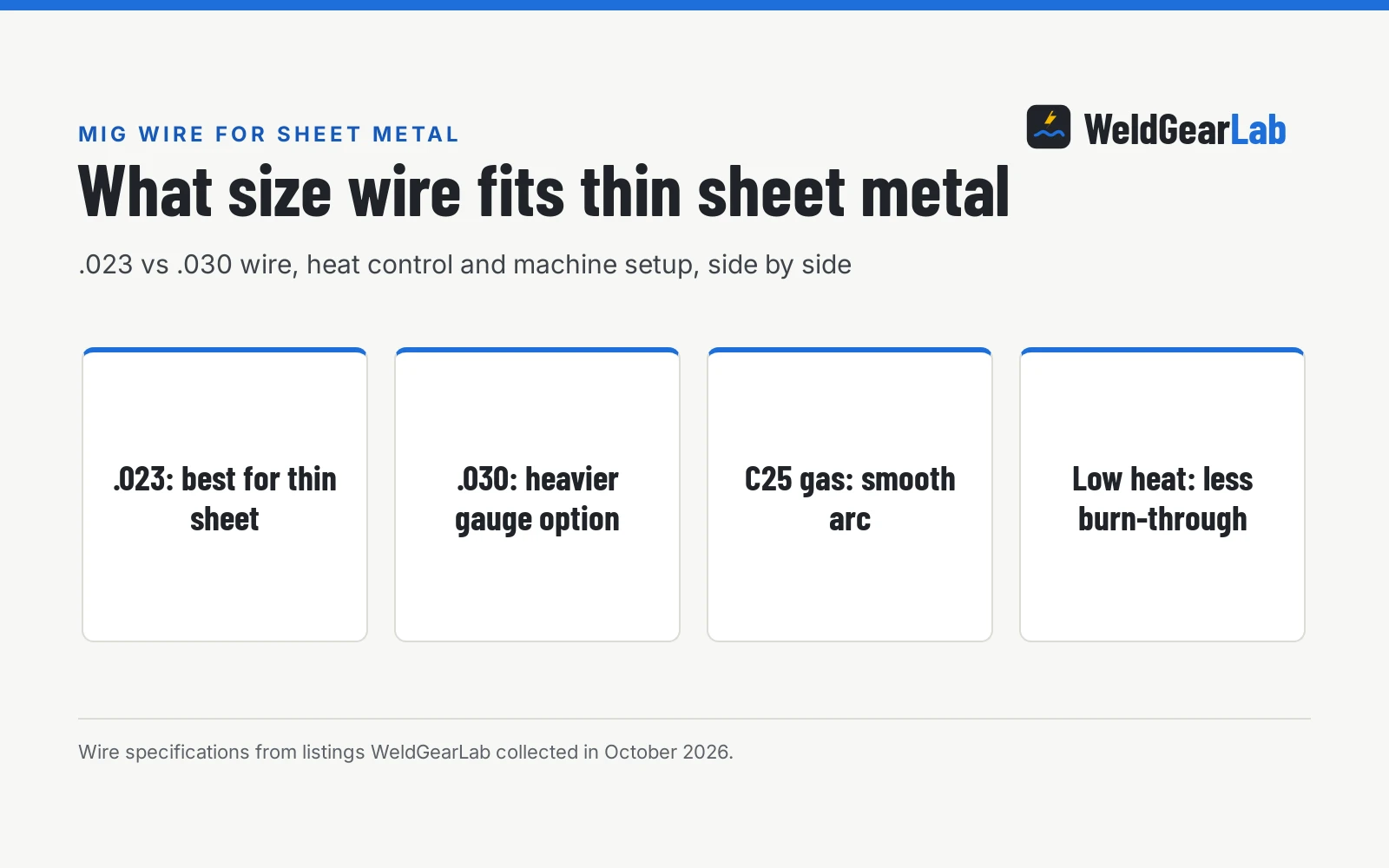
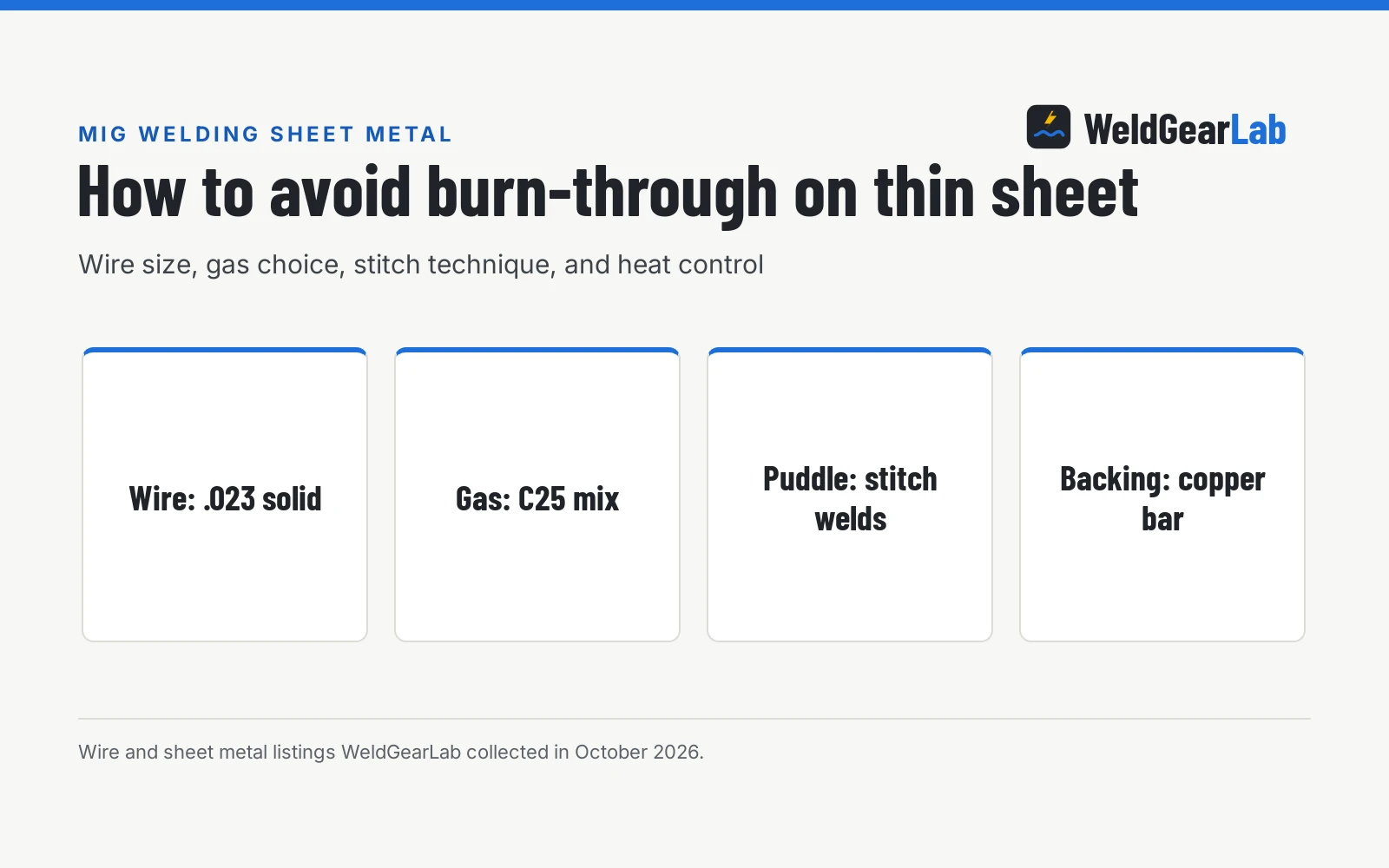
How to MIG weld thin sheet metal without burning through by using small-diameter wire, low heat settings, tight joint fitup, and short stitch welds.

MIG and flux core wire feed welders, the easiest process to learn for steel. Our MIG guides compare rated output, duty cycle, 120V and 240V input, wire sizes and spool support.
How to MIG weld thin sheet metal without burning through by using small-diameter wire, low heat settings, tight joint fitup, and short stitch welds.
For welding thin sheet metal, .023 inch MIG wire provides lower heat input and cleaner puddle control than .030 wire to prevent burn-through on…
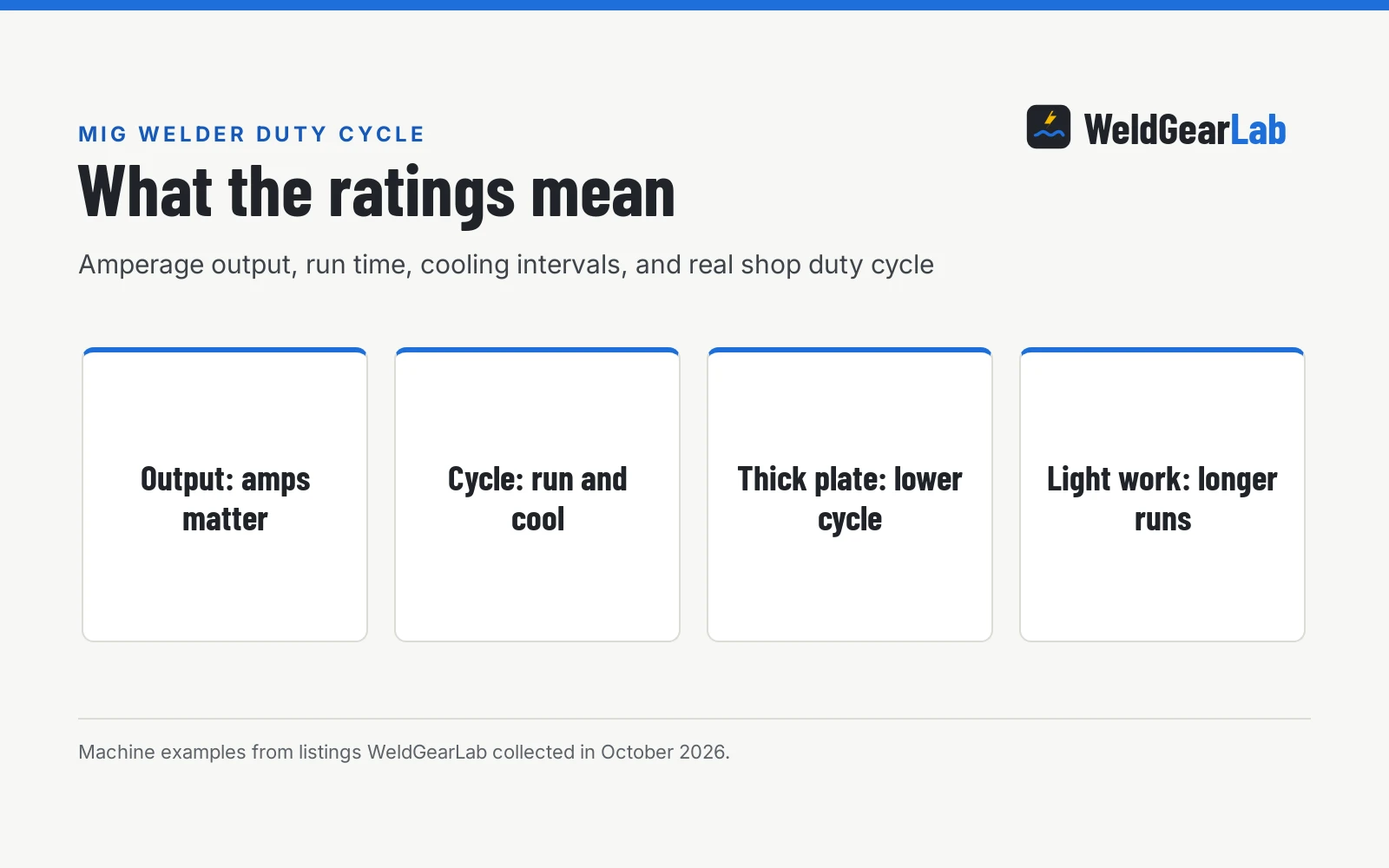
Understanding MIG welder duty cycle helps you match machine output to your welding pace, prevent thermal shutdown, and choose the right power level for…
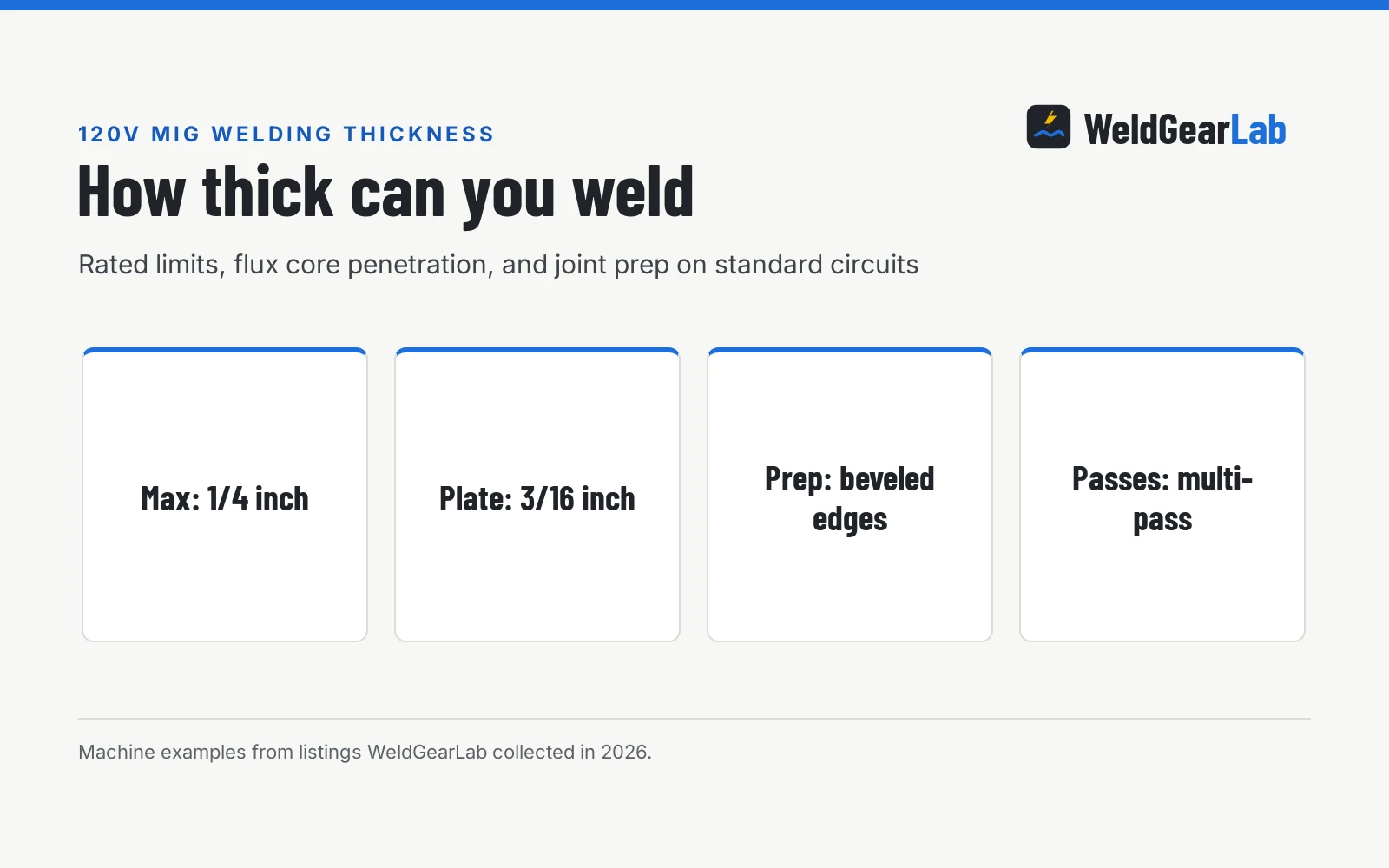
A 120V wire feed welder welds steel from 24-gauge sheet up to 1/4 inch plate depending on amperage output, joint preparation, and wire selection.
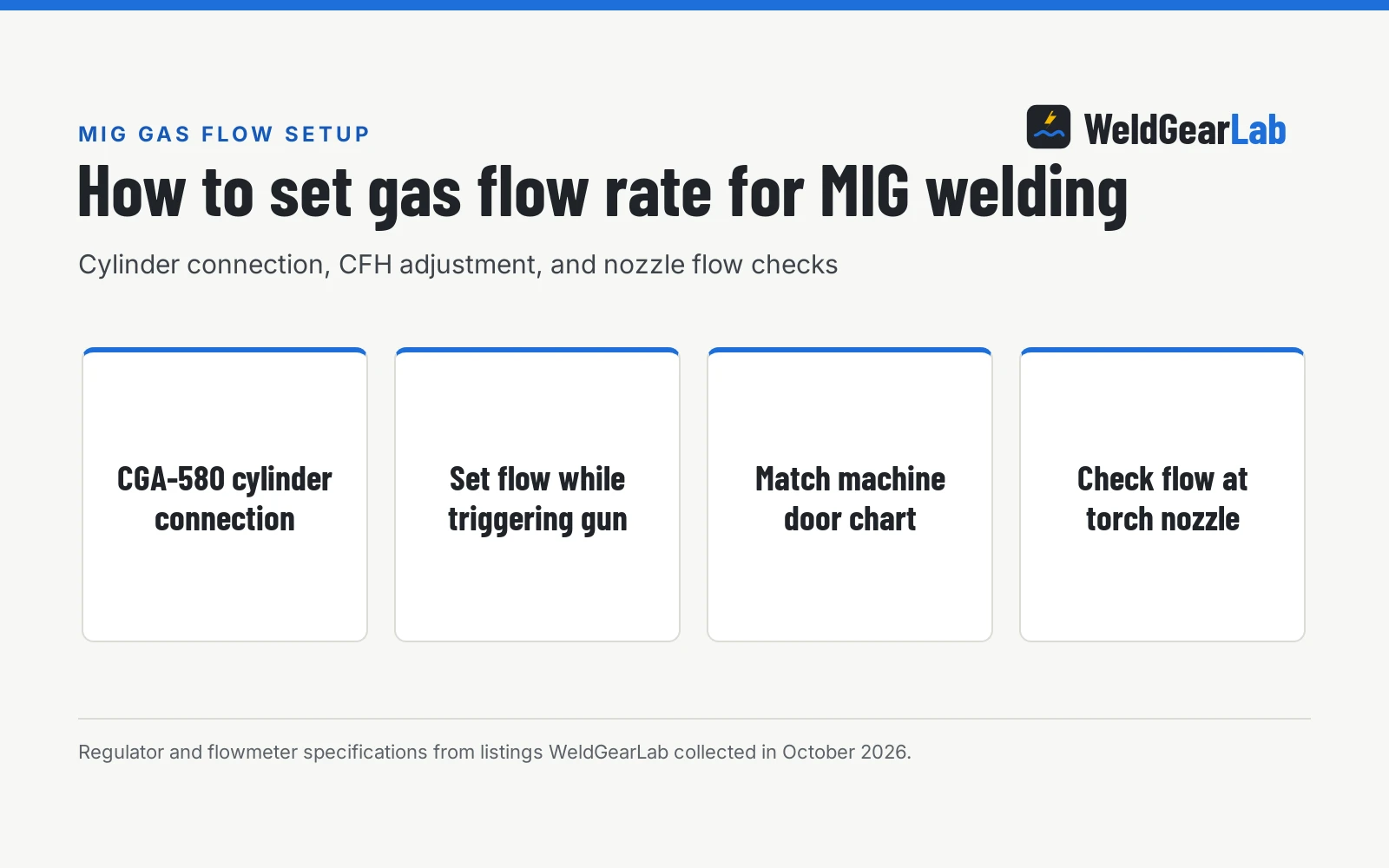
How to set gas flow rate for MIG welding using a cylinder regulator, dial in your CFH setting while purging, and verify shielding gas…
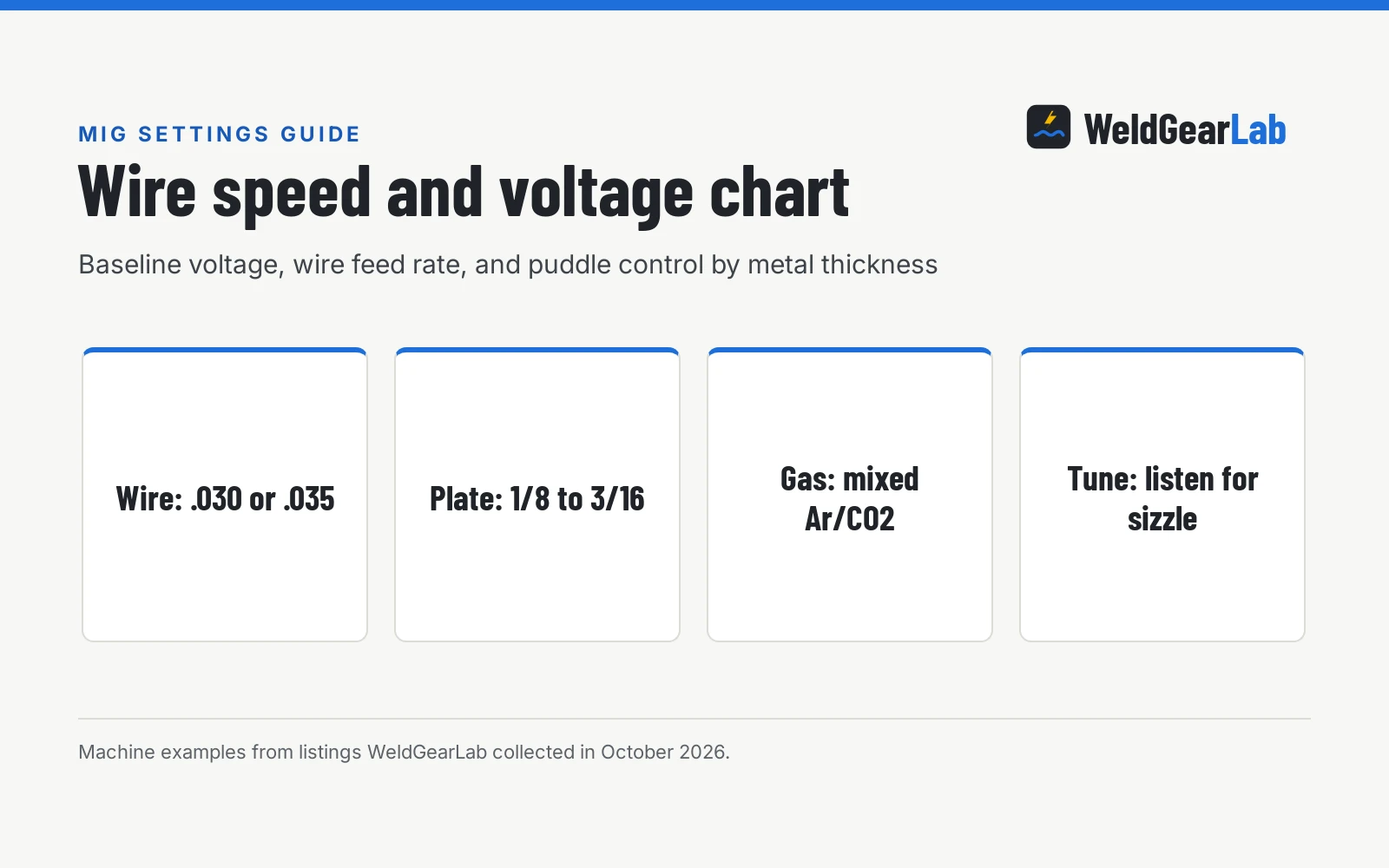
A MIG welder wire speed and voltage chart provides baseline machine settings by metal thickness, showing how wire feed rate and arc voltage balance…
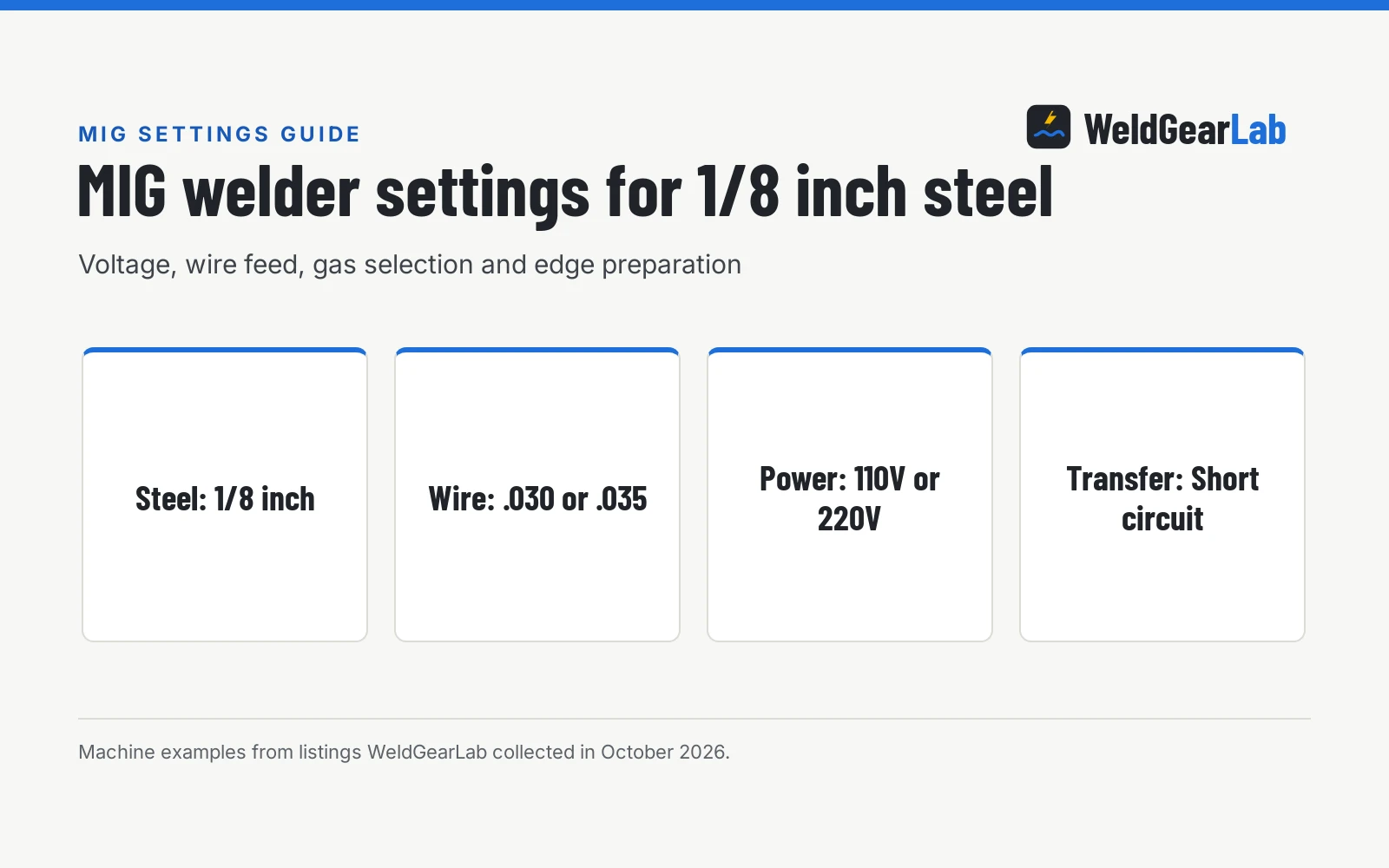
Learn proper MIG welder settings for 1/8 inch steel, covering wire selection, machine voltage, wire feed rate, shielding gas, and joint preparation.
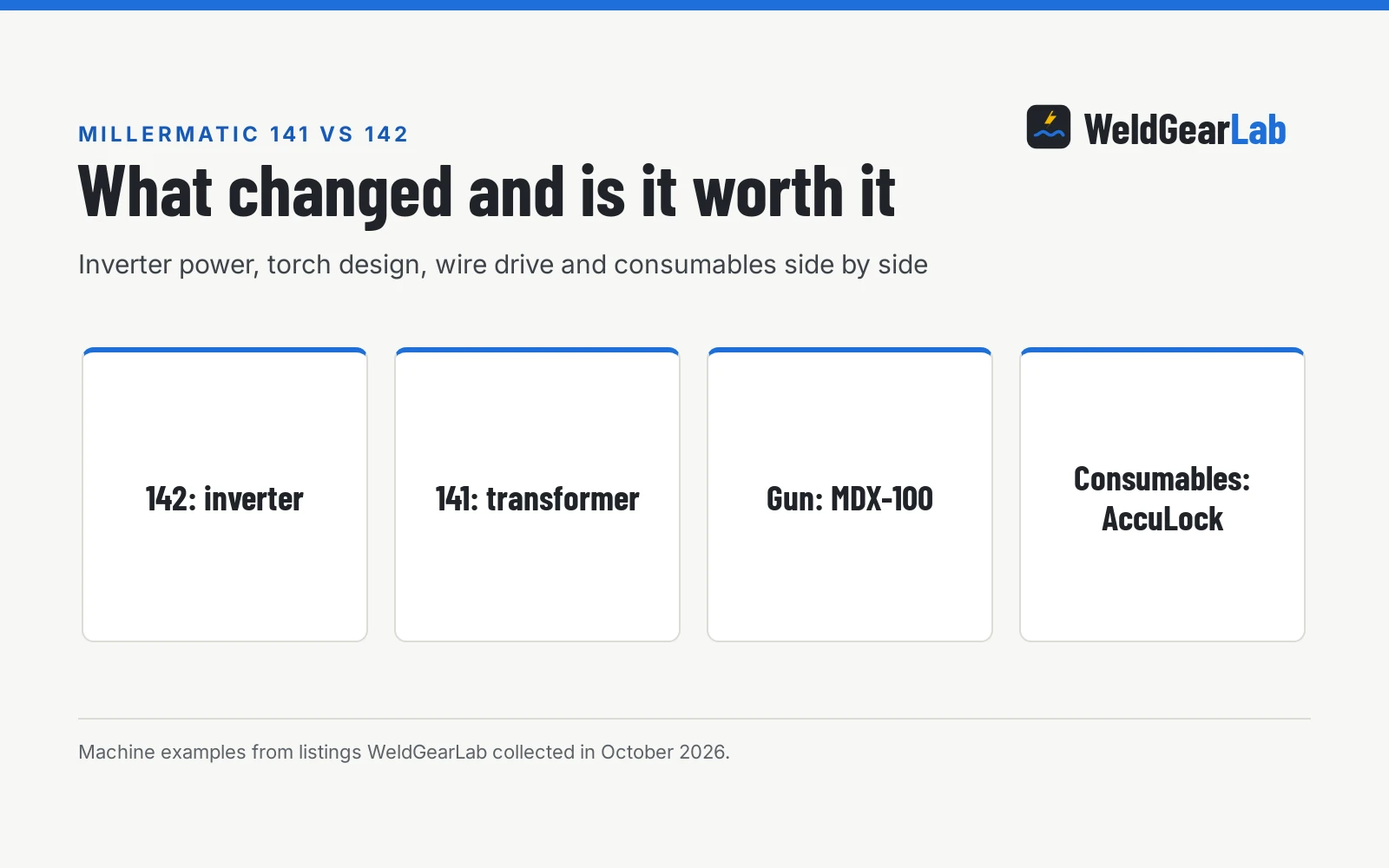
How the Millermatic 141 and Millermatic 142 differ across inverter power, torch hardware, wire feeding, and portability, and whether upgrading makes sense for your…
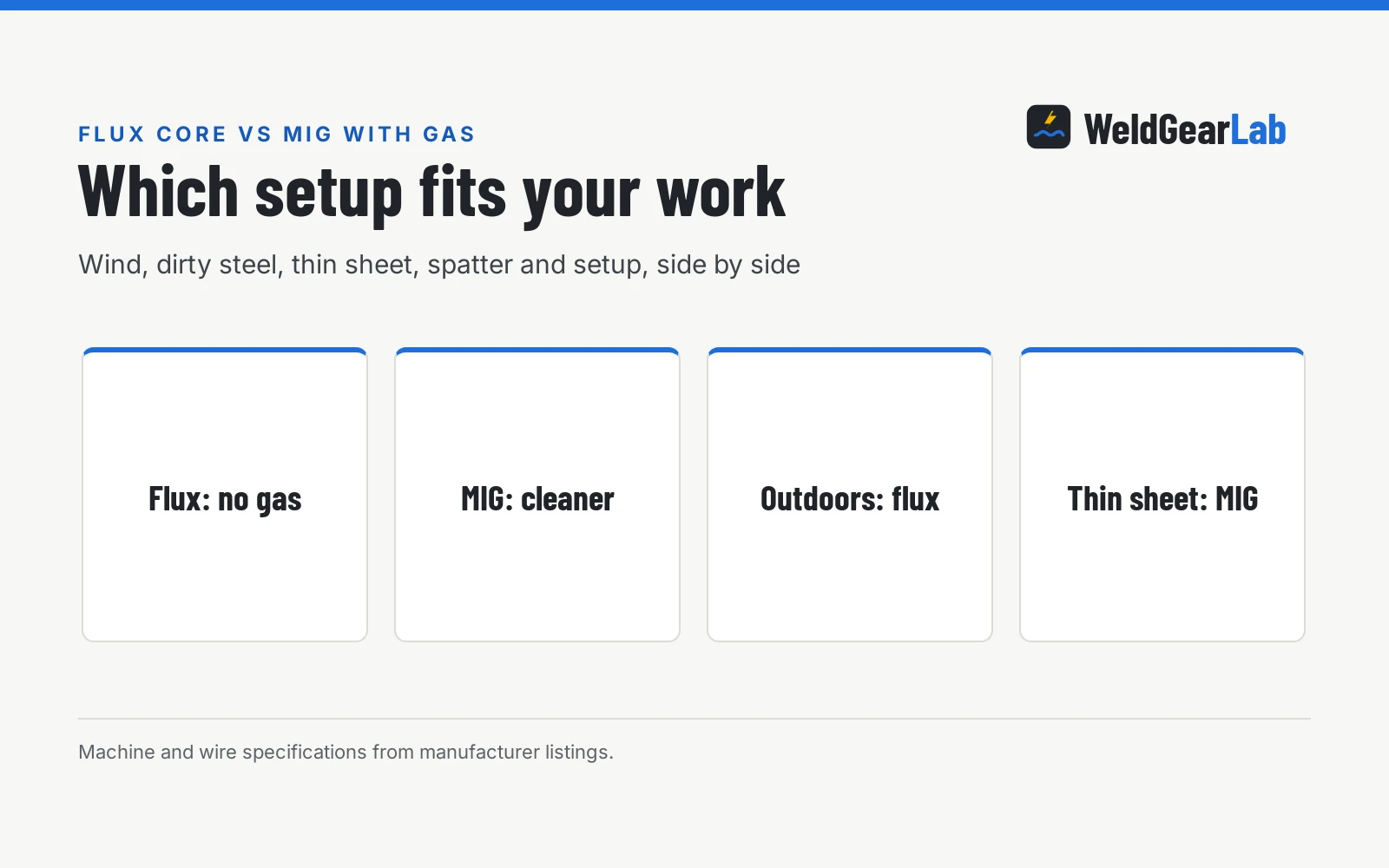
Flux core and MIG with gas run on similar wire feed welders but suit different jobs, from outdoor wind and dirty steel to clean…
Porosity in MIG welds happens when air contaminates the molten puddle, leaving holes caused by shielding gas loss, drafts, dirty base metal, or spatter…