Hobart Handler 140 vs 140EZ: What Changed and Is It Worth It?
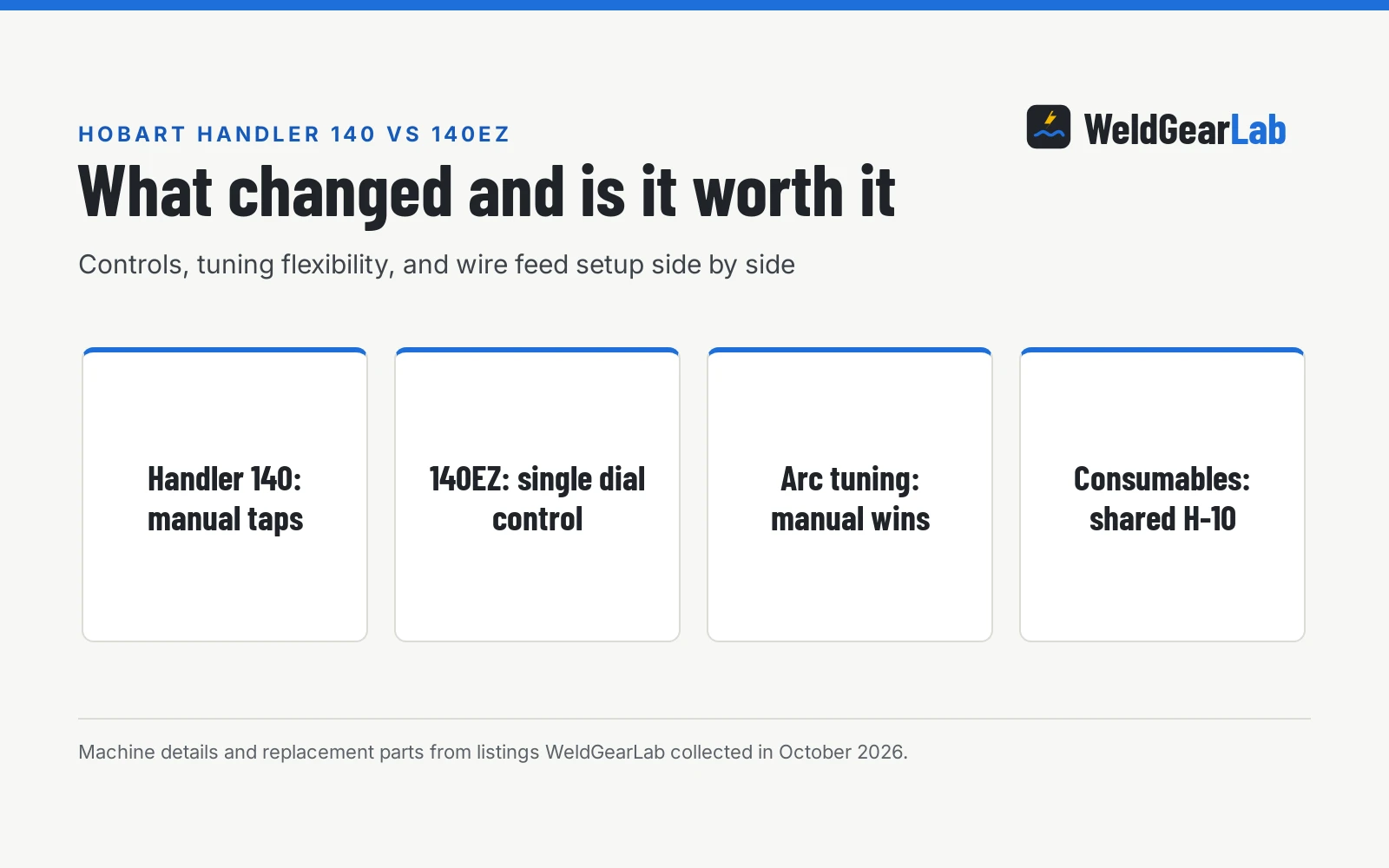
The Hobart Handler 140 and 140EZ compared on controls, wire feed setup, gas capability, and arc tuning to help you pick the right wire…

MIG and flux core wire feed welders, the easiest process to learn for steel. Our MIG guides compare rated output, duty cycle, 120V and 240V input, wire sizes and spool support.
The Hobart Handler 140 and 140EZ compared on controls, wire feed setup, gas capability, and arc tuning to help you pick the right wire…
You can run wire feed without gas by switching to self-shielded flux-core wire, but true MIG welding always requires shielding gas from a cylinder…
Running a MIG welder on a 15 amp circuit depends on the machine's input draw and settings, while thicker steel demands a higher-rated branch…
Learn how to fix MIG wire birdnesting at the drive rolls by releasing tension, clearing the feed path, and balancing spool brake and drive…
MIG wire burns back to the contact tip when wire feed stalls, stickout runs too short, or voltage outpaces wire delivery, but simple setup…
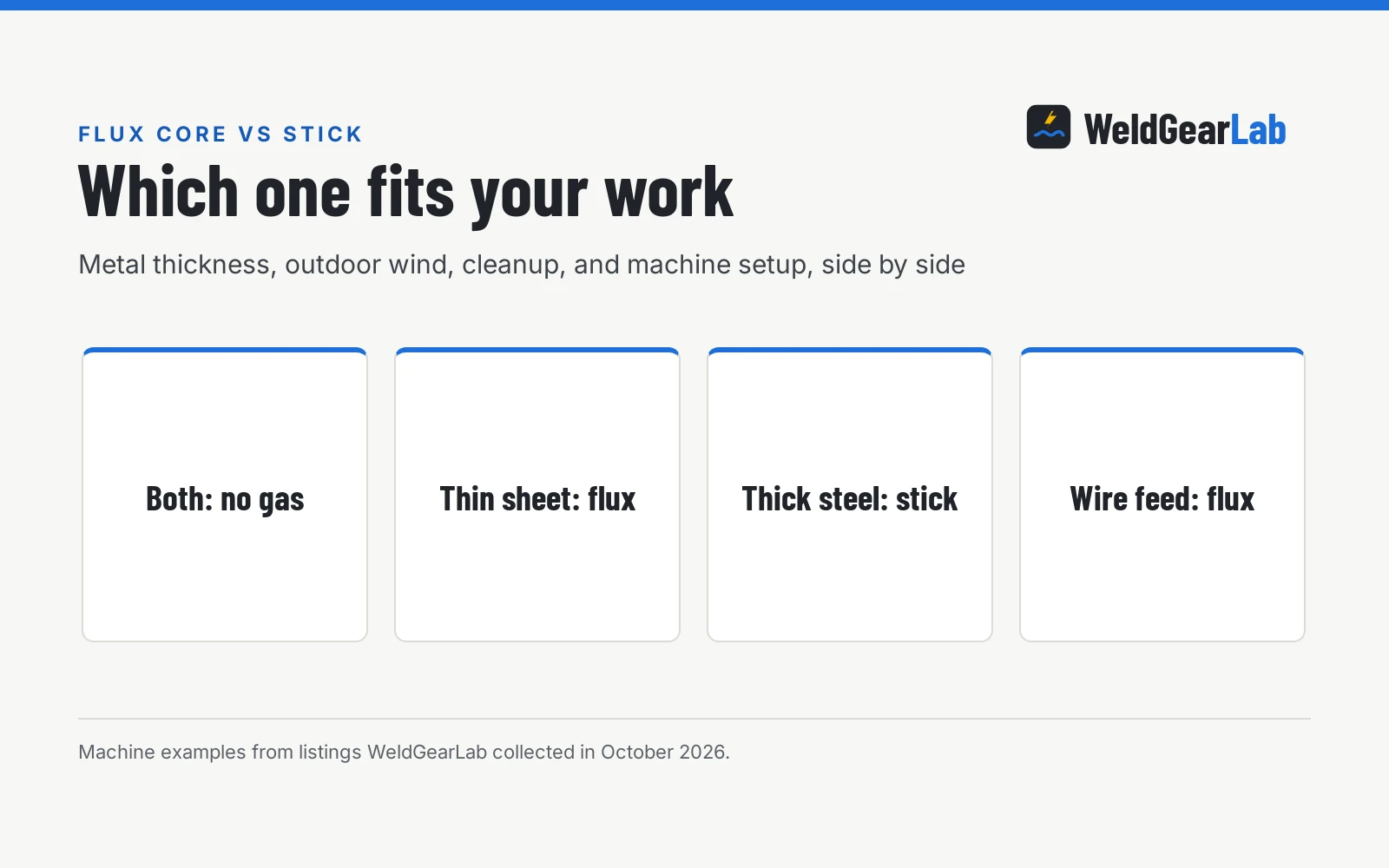
Flux core and stick welding both work outdoors without shielding gas, but they differ on metal thickness, wire feeding, cleanup, and machine setup.
Flux core welding and TIG welding serve different metalworking needs, differing across outdoor wind tolerance, metal thickness, bead appearance, shielding gas, and equipment setup.
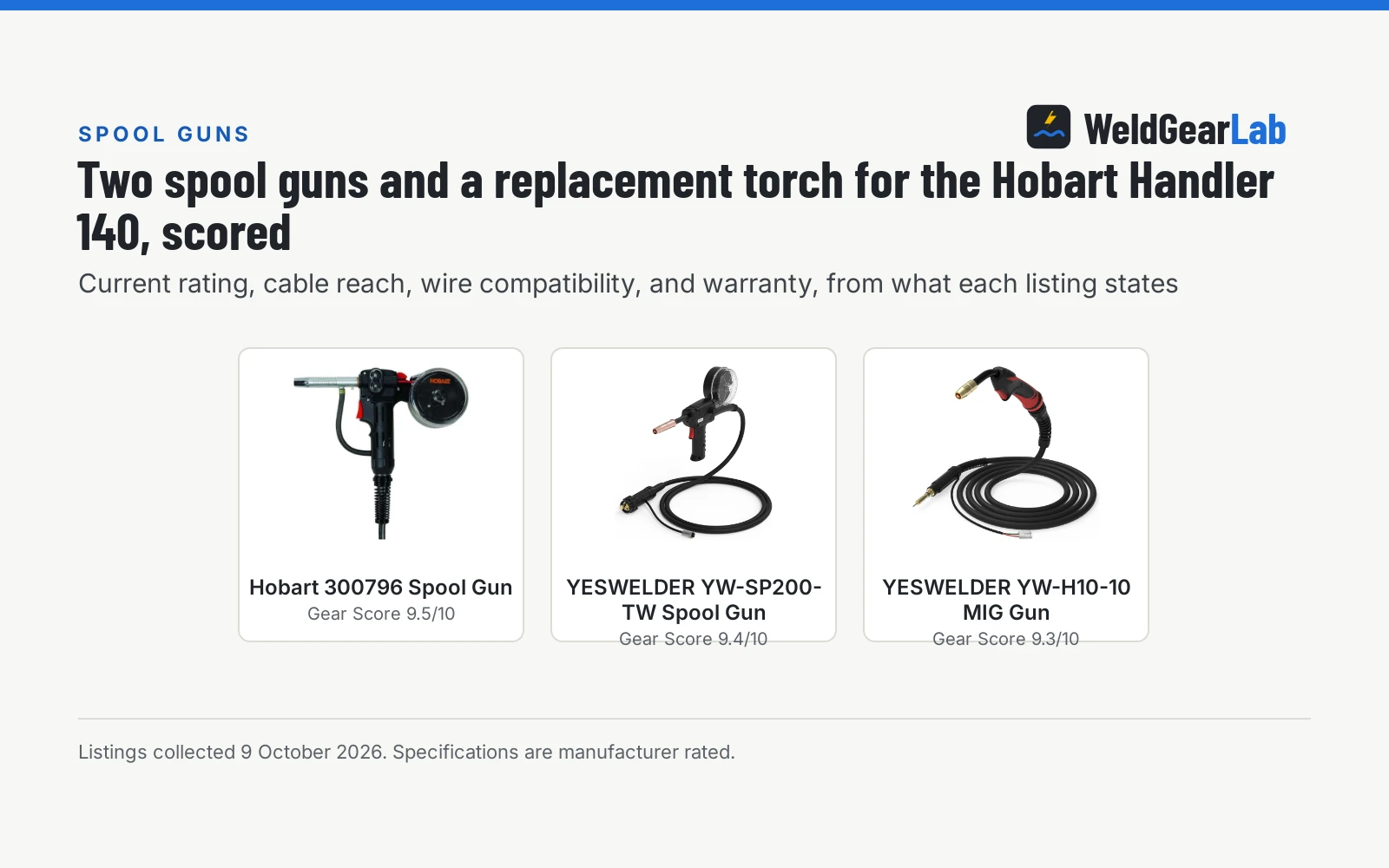
Two spool guns and a direct replacement MIG torch for the Hobart Handler 140, compared on amperage rating, cable reach, wire feeding, connection type,…
Three MIG welders for home hobbyists compared on output amperage, duty cycle, synergic controls, build quality and stated warranty terms.
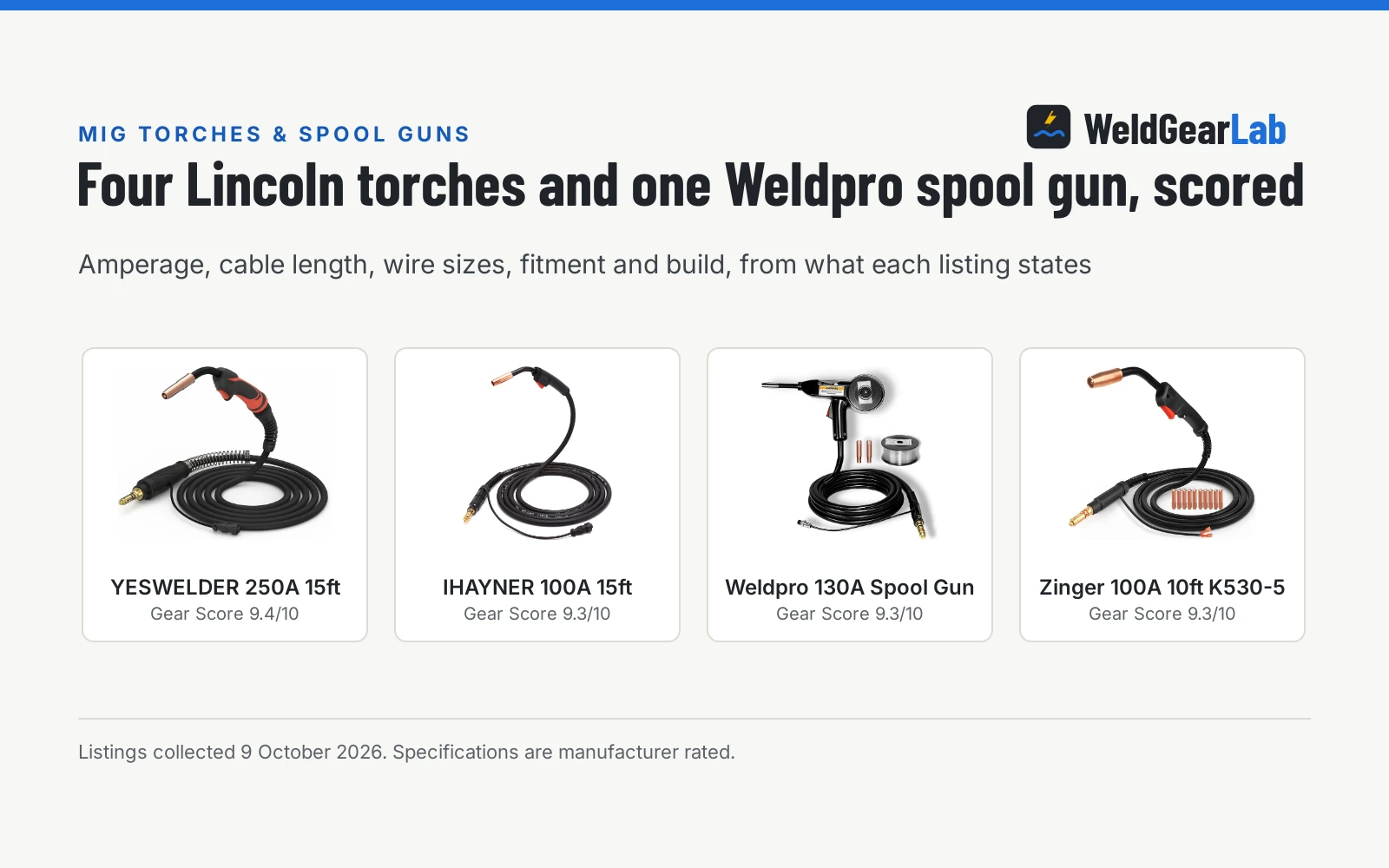
Four Lincoln replacement MIG torches and one Weldpro aluminum spool gun compared on amperage rating, cable length, wire compatibility, machine fitment and stated build.