Magnetic Drill vs Hand Drill: Which One Should You Buy?
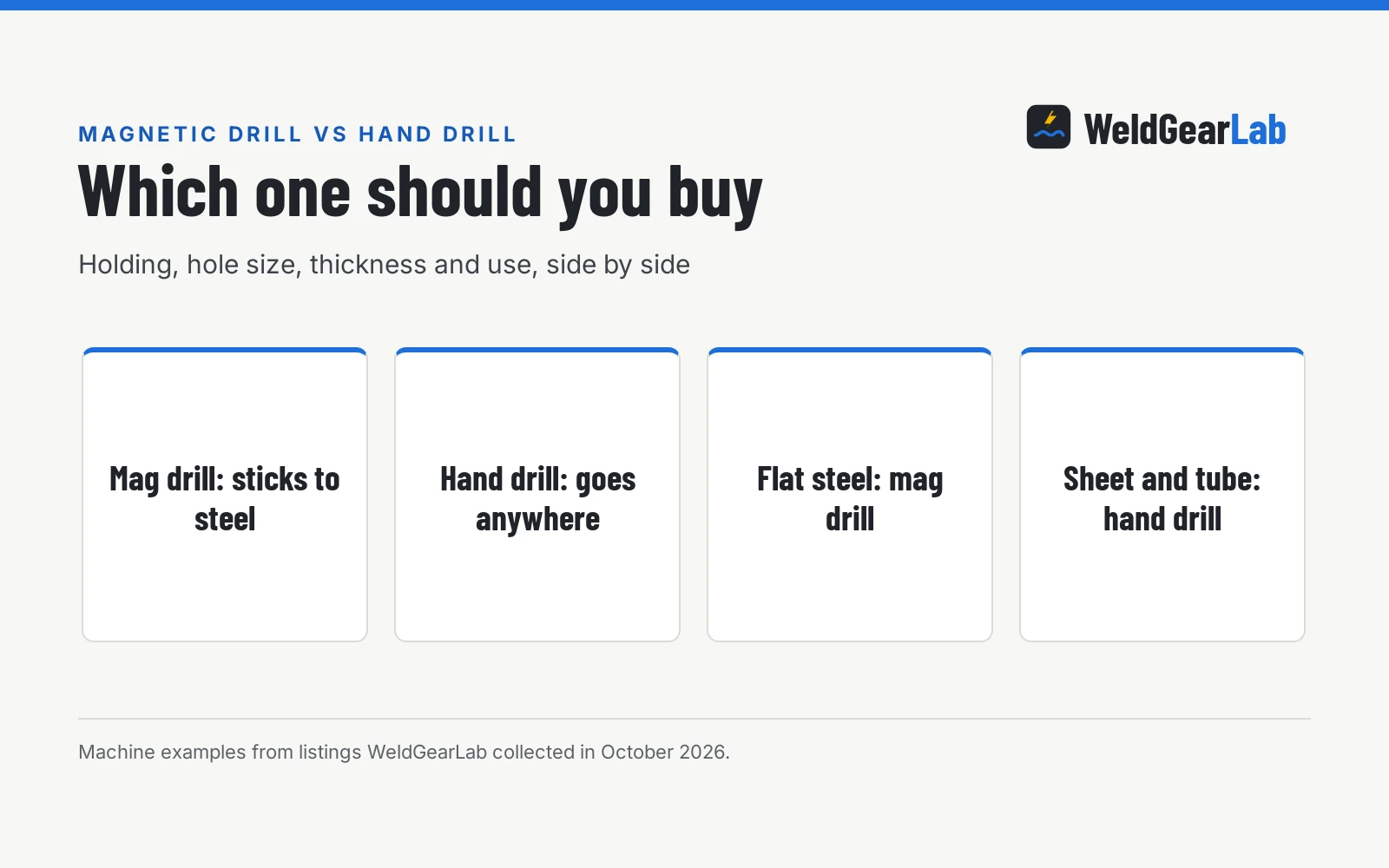
A magnetic drill holds itself to flat steel with an electromagnet while a hand drill goes anywhere, and this guide compares the two for home shop and farm work.

On this page
Top picks at a glance
As an Amazon Associate I earn from qualifying purchases.
- 1
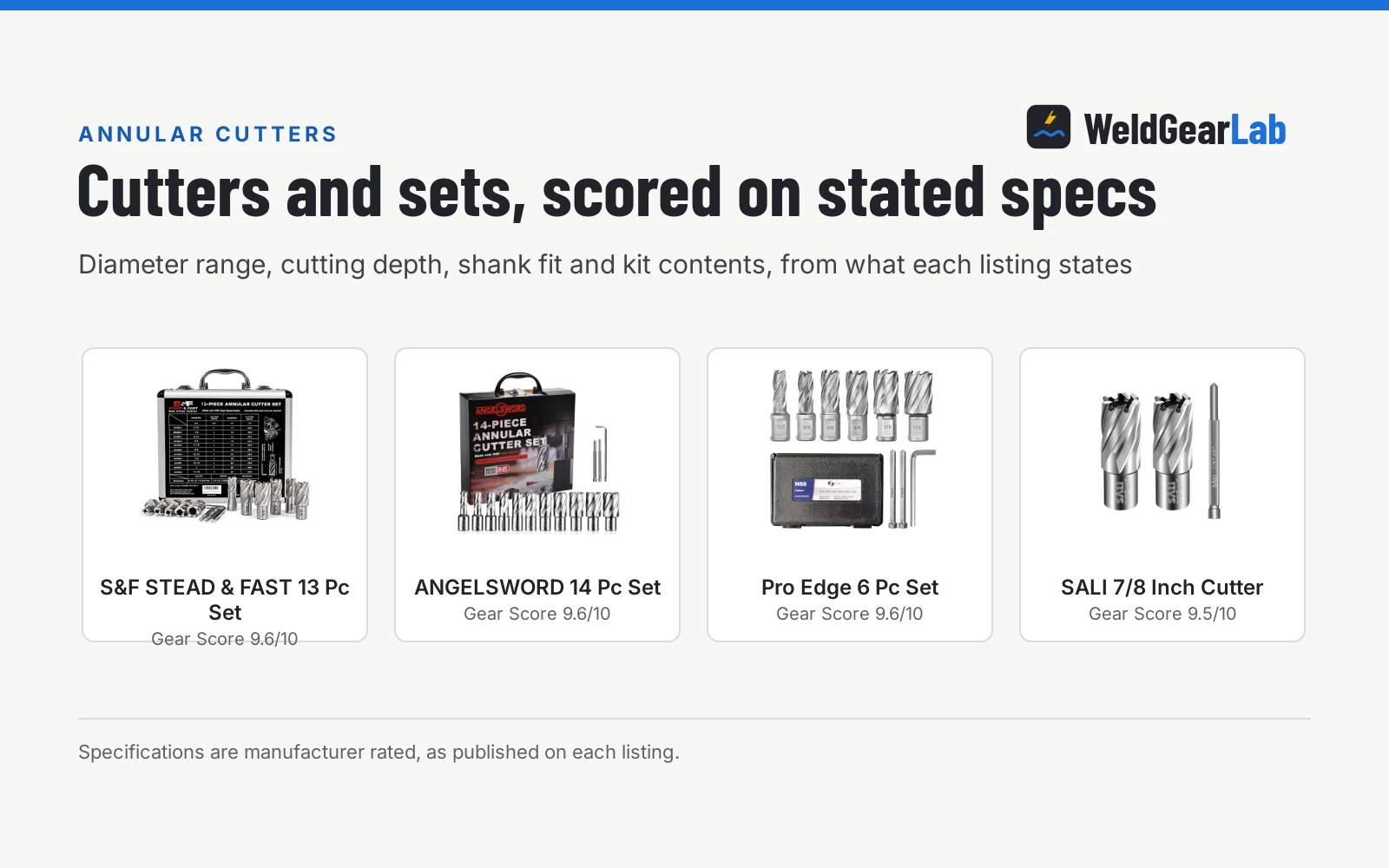
 S&F STEAD & FAST Annular Cutter Set 13 Pcs9.6/10View on Amazon
- 2
 55-Piece Easy Out Screw Extractor Set with Broken Bolt9.5/10View on Amazon
- 3
 VEVOR Magnetic DrillView on Amazon
- 4
 VEVOR Magnetic Drill Press 1400 W 2810 lbf Power Portable MagView on Amazon
- 5
 VEVOR Mag Drill PressView on Amazon
- 6
 Hougen HMD904 115-Volt Magnetic DrillView on Amazon
- 7
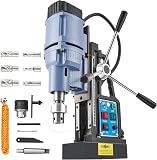 ZELCAN Magnetic Drill Press with 6 Drill BitsView on Amazon
- 8
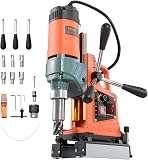 VEVOR Magnetic Drill PressView on Amazon
A magnetic drill wins whenever the work is flat steel you can stick a magnet to, because the electromagnet holds the drill steady and on the hole while you feed it. A hand drill wins for wood, thin sheet, round tube and anything you cannot clamp or magnet to. This guide compares magnetic drill vs hand drill for home shop and farm work, using four magnetic drills from the listings as examples.
Other welders and gear to compare
 VEVOR Magnetic DrillCheck price on Amazon
 VEVOR Magnetic Drill Press 1400 W 2810 lbf Power Portable MagCheck price on Amazon
 VEVOR Mag Drill PressCheck price on Amazon
 Hougen HMD904 115-Volt Magnetic DrillCheck price on Amazon
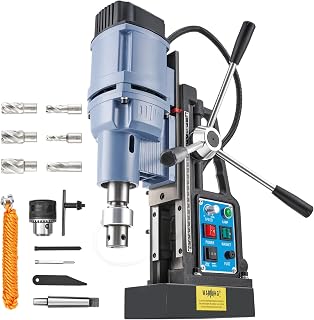 ZELCAN Magnetic Drill Press with 6 Drill BitsCheck price on Amazon
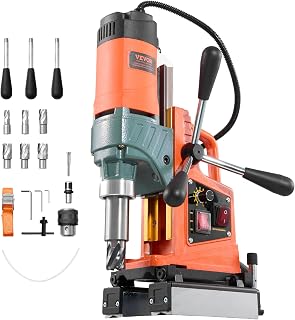 VEVOR Magnetic Drill PressCheck price on Amazon
This guide links to our product roundups, where WeldGearLab gets a commission on purchases made through links on this page, and your price stays the same. Read our affiliate disclosure.
The difference in one paragraph
A magnetic drill is a drill press with an electromagnet for a base. Switch it on and the base clamps to flat ferrous steel, so the drill stays put and feeds straight while you turn the crank. A hand drill is held in your hands and pointed freehand, which means it goes anywhere but depends on your aim and arm for every hole. One is a stationary tool that finds its own footing on steel; the other is a portable tool that borrows yours.
Side by side
| Magnetic drill | Hand drill | Notes | |
|---|---|---|---|
| Holding the work | Electromagnet anchors to flat steel | Your hands and a clamped workpiece | Magnet needs power |
| Steel plate minimum | VEVOR ZT-45H states 0.39 in | No minimum, thin sheet is easier | Below 0.39 in the magnet cannot hold reliably |
| Stated holding force | 2810 to 3125 lbf on the listings here | Not stated in these listings | Needs the minimum thickness to hold |
| Hole capacity | Up to 2 in diameter stated | Limited by the bit and the user | Bit and arbor must match |
| Speed | 450 to 810 RPM on the listings here | Varies by tool | Match speed to the listing |
| Overhead or vertical work | Yes, with a safety rope for inverted and horizontal drilling | Yes, freehand | Rope is required inverted |
| Tool weight | 24.3 to 34.9 lb stated | Not stated in these listings | Handle and cranks aid carrying |
Stated figures come from the four magnetic drill listings in this guide; the hand drill side is general practice. The guide has no product picks beyond these four examples. Always follow the minimum steel thickness and the safety notes in the listing you buy.
When the magnetic drill is the better choice
- Flat steel plate and beams. The magnet needs a flat ferrous surface to bite. The VEVOR ZT-45H states a minimum steel plate thickness of 0.39 in, and says to use a safety rope for inverted and horizontal drilling.
- Straight, accurate holes. The drill feeds on a rail, not on your arm, so holes stay square. The Hougen HMD904 adds a lift detector safety system and an LED pilot light for low light conditions.
- Repetitive holes. Once the magnet is on, the setup repeats. The ZELCAN states stepless speed control and reversible direction for a range of tasks.
- Holes the listing rates at 2 in. The ZELCAN states holes up to 2 in in depth and 2 in in diameter with its 1550W motor, far past what most hand drilling does neatly.
For more on the drill press family, see magnetic drill vs benchtop drill press.
When the hand drill is the better choice
- Wood, plastic and thin sheet. A magnet cannot hold to these, and the magnetic drill listings here all assume steel. A hand drill does not care what the material is.
- Round tube and odd shapes. The electromagnet needs a flat face. Round tube, angle with a narrow face and small parts give it nothing to grip.
- Work away from the steel. Field repairs on wood, siding and equipment need a tool that goes anywhere on a battery, not one that needs 110 or 115 volts and a steel plate.
- Small holes and quick jobs. Setting a magnetic drill takes longer than squeezing a trigger. One or two small holes rarely justify the setup.
The gear: four magnetic drills from the listings
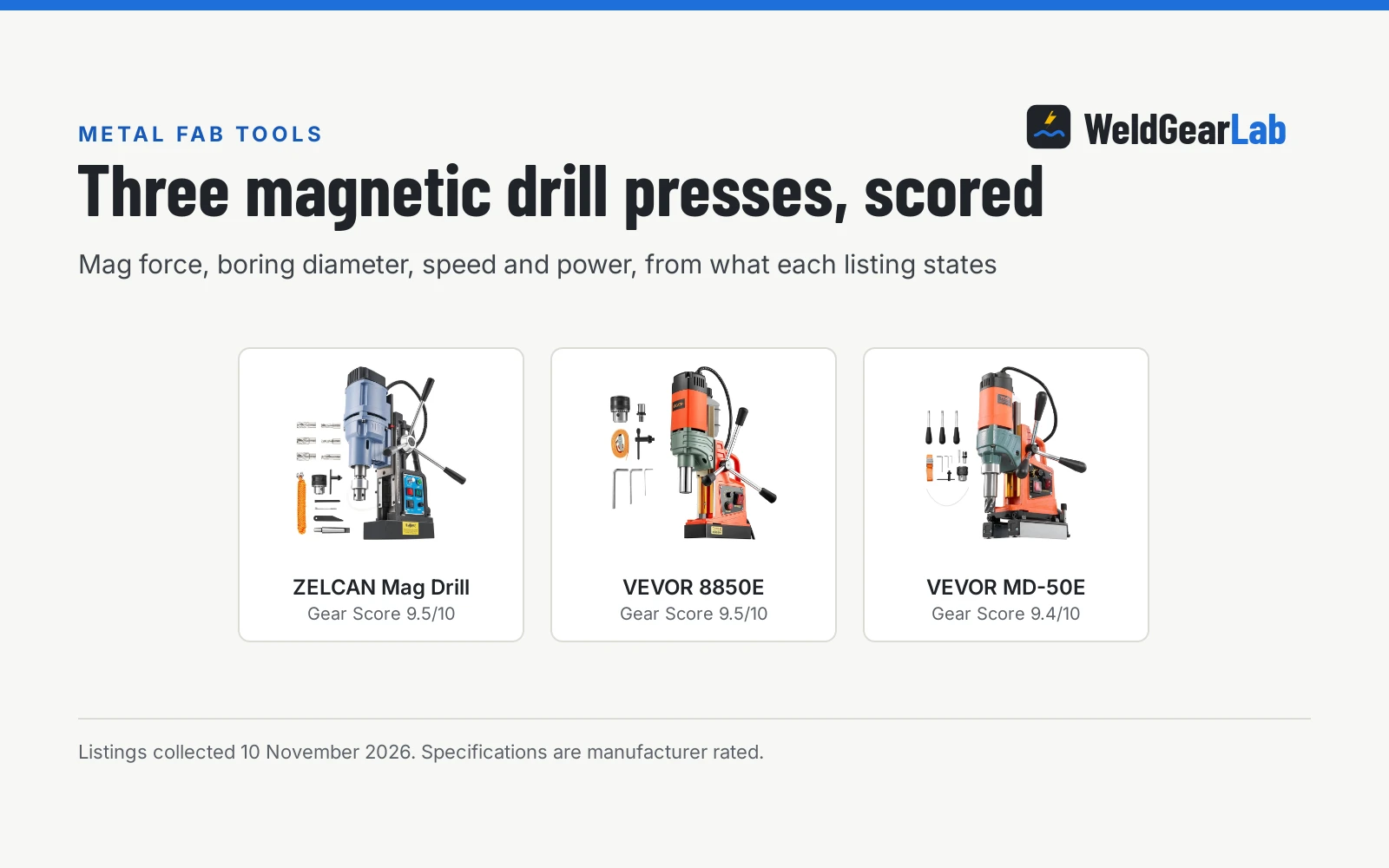
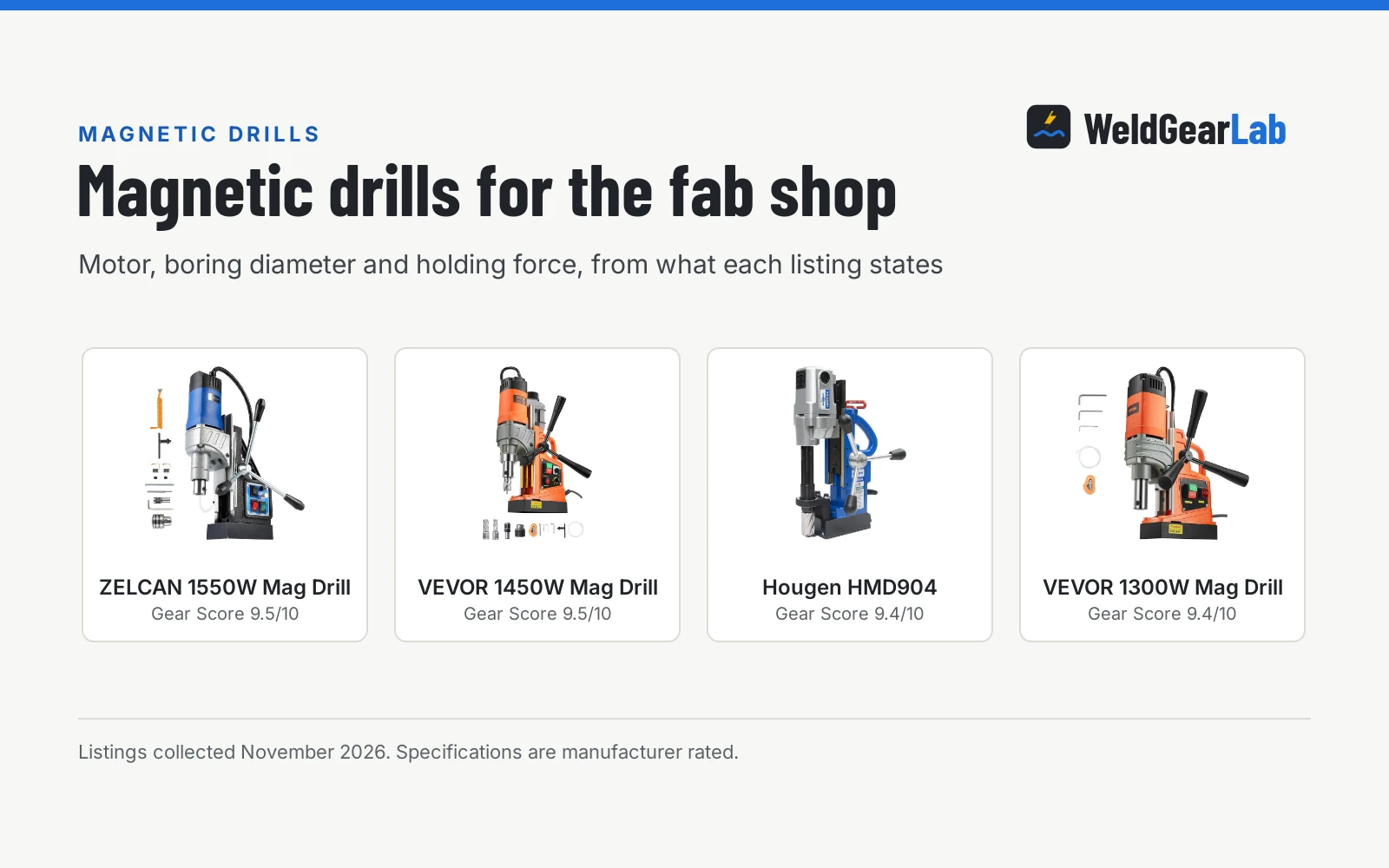
The ZELCAN lists a 1550W copper motor at 650 rpm, holes up to 2 in in diameter and 2 in in depth, a 3125 lbf electromagnet, stepless speed with reversible direction, 6 included drill bits and a 16.9 fl oz coolant tank. Two things to flag: the spec table calls the drill type a hammer drill while the title and bullets say magnetic drill press, and the bullets name Creworks while the brand is ZELCAN, so trust the title and brand over those lines.
The VEVOR ZT-45H lists a 1450W motor, a 1.6 in boring diameter, a 2 in coring depth and 2810 lbf of magnetic force, with 10-speed gears from 0 to 800 RPM, overload protection and a cooling system, at 26.5 lb with 2 coring bits. The spec table disagrees with the bullets on speeds, listing 1 speed and 13741 rpm against the bullets’ 10 speeds and 0 to 800 RPM, so trust the bullets.
The VEVOR 8840 lists a 1300W motor, a 1.57 in boring diameter at 810 RPM, 2922 lbf of magnetic force and a 24.3 lb weight, with a coolant tank, a rope, 3 hand cranks and 3 hex wrenches in the box. It is the lightest of the four here.
The Hougen HMD904 is the 115-volt shop standard shape: 450 RPM, 6 amps, a 1-1/2 in by 2 in capacity, RotaLoc Plus cutters with a slot drive arbor for tool-free changes, a lift detector safety system and an LED pilot light, at 34.9 lb. It is the only one of the four that states a warranty term, two years. The spec table lists the power source as fuel powered, which contradicts the 115-volt title, so trust the title.
Magnetic drill vs hand drill on the job
Think of the magnetic drill as a portable drill press and the hand drill as a portable everything else. If the job is a row of holes in plate, beam or a trailer frame, the magnetic drill does it straighter and faster once it is set. If the job is a fence, a shed, cabinets or anything not made of flat steel, the hand drill is the tool that shows up. Many small shops own both: the magnetic drill lives near the steel rack, and the hand drill lives in the truck. For stationary drilling in the shop, also compare with best drill press for metalworking.
Safety notes. A magnetic drill can let go if the power cuts or the steel is too thin, so respect the minimum thickness the listing states and use the safety rope for inverted and horizontal work. The magnet does not work on stainless steel or cast iron per the ZT-45H listing. Keep the work area clear of flammables, wear eye protection, and unplug the drill before changing cutters.
FAQ for welders
Can a magnetic drill work on thin steel?
Only down to the minimum the listing states. The VEVOR ZT-45H requires a steel plate thickness of at least 0.39 in and says it is not suitable for stainless steel or cast iron. Below that minimum the magnet cannot hold reliably.
What holds a magnetic drill in place?
An electromagnet in the base. The listings here state 2810 to 3125 lbf of holding force, which anchors the drill solidly at any angle while the power is on. If the power cuts, the hold goes with it, which is why a safety rope is specified for inverted and horizontal drilling.
Can I use my twist drill bits in a magnetic drill?
Only if the listing’s chuck or arbor accepts them. The Hougen uses RotaLoc Plus cutters with a slot drive arbor, and the ZELCAN includes 6 drill bits of its own. Check the arbor style and the included components before assuming your bits fit.
Is a magnetic drill better for overhead drilling?
It can be, because the magnet carries the tool’s weight instead of your arms. The ZT-45H listing still requires a safety rope for inverted and horizontal drilling. Never rely on the magnet alone overhead without the rope the listing calls for.
Does a magnetic drill replace a drill press?
For drilling steel on site, it is the portable version of one. In the shop, a benchtop press is steadier for small parts and non-ferrous work. Many buyers use the mag drill for beams and plate and keep a press for the bench.
Related: drill press vs hand drill, magnetic drill vs benchtop drill press, best drill press for metalworking, and best drill bits for steel.