How to Remove Blind Rivets
Drill out the head, match the bit to the rivet size, and punch out the rest: a step-by-step guide to removing blind rivets without damaging the hole.

On this page
Top picks at a glance
As an Amazon Associate I earn from qualifying purchases.
- 1
 Wensilon9.7/10View on Amazon
- 2
 9.7/10View on Amazon
- 3
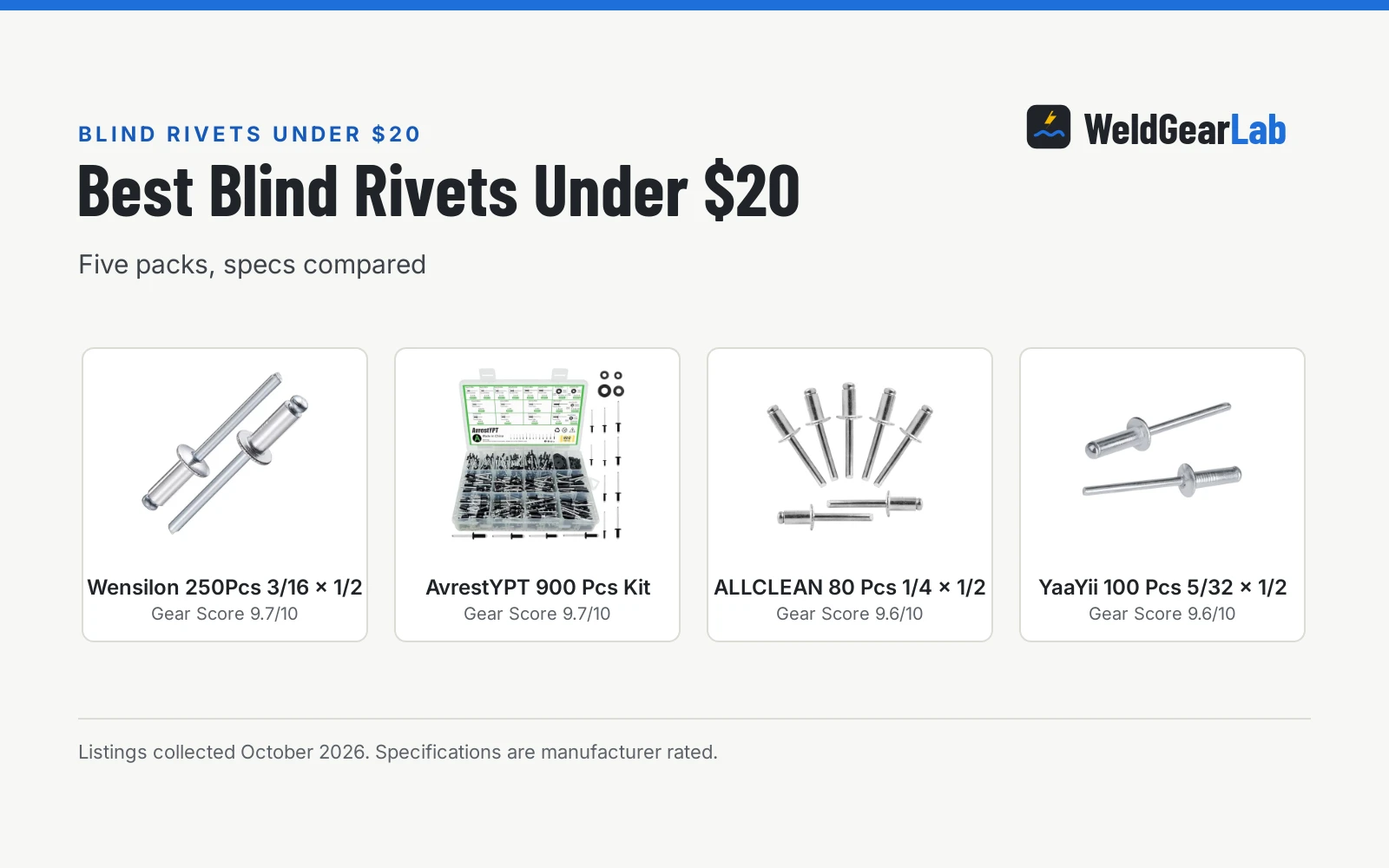
 320Pcs 1/8 Pop Rivets Assortment Kit; Aluminum Blind Rivet9.7/10View on Amazon
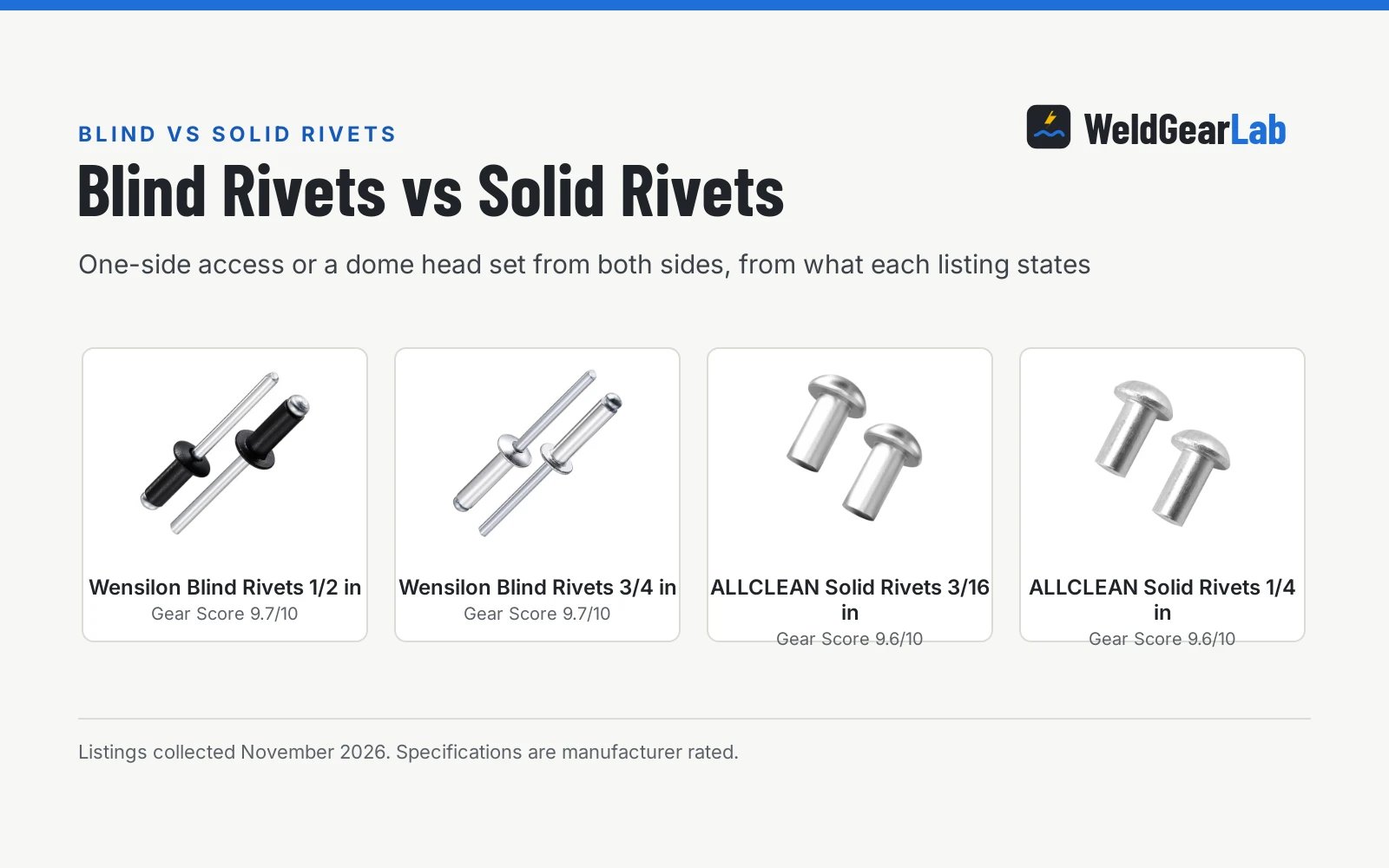
A blind rivet holds from a single side, so you cannot reach the back to push it out. To remove a blind rivet, drill out the head, then punch the shank and mandrel through the hole. This guide shows how to remove blind rivets with a rivet removal tool or a standard drill bit, how to match the bit to the rivet size, and what changes with stainless steel rivets.
This guide links to our product roundups, where WeldGearLab gets a commission on purchases made through links on this page, and your price stays the same. Read our affiliate disclosure.
How to remove blind rivets, step by step
Start by matching the bit to the rivet. Removal tool kits cover rivets of 1/8, 5/32, 3/16, 7/32 and 1/4 in, and include bits sized to match. Pick the bit for the rivet size in front of you, not a larger size, and use the guide where the kit has one.
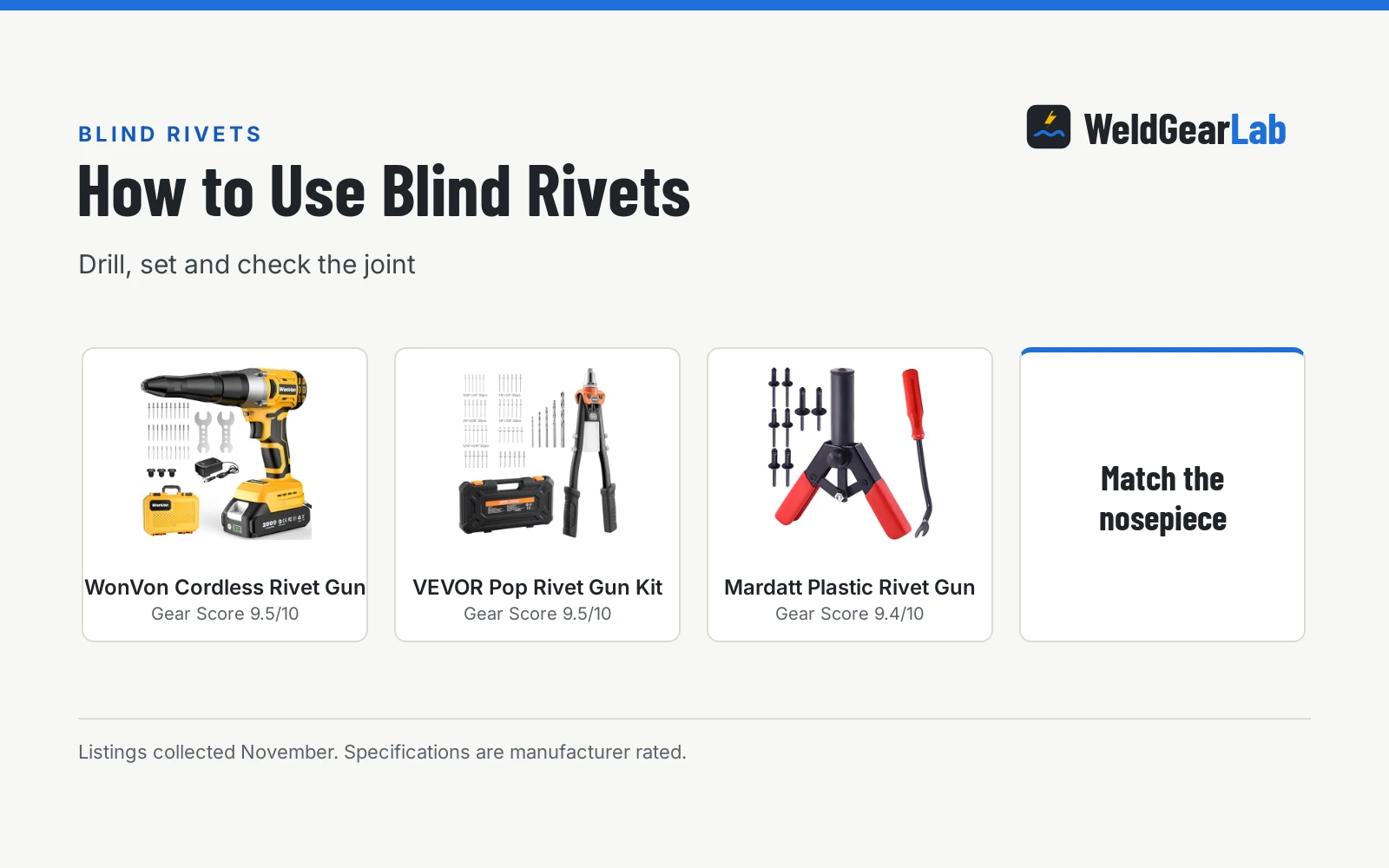
Fit the removal tool to a 1/4 in pneumatic or electric drill, slide the guide and bit into the tool, and adjust the depth so the bit takes only the rivet head. Drill the head away with steady pressure, then stop. Punch the shank and mandrel through the hole and check that the hole kept its size.
Without a removal tool, the same idea works with a standard drill bit matched to the rivet size. A drill bit set such as the BGS 2097 (on Amazon) covers 2.4 to 6.4 mm in 15 pieces, with a 135° split point. Center the bit on the rivet head, drill only the head away, and punch the rest through.
Match the bit to the rivet size
Rivet removal tools state their sizes plainly: 1/8, 5/32, 3/16, 7/32 and 1/4 in cover the common blind rivets in shop and auto body work. The EROSHAK kit includes guides and bits for each of those sizes, the Minova kit includes bits for each of those sizes, and the Aramox kit (on Amazon) covers the same sizes. The SASKATE and JAOCDOEN tools (on Amazon) cover 3/16 in rivets with a bit for a 1/4 in drill.
Metric bits follow the same rule. The BGS set runs from 2.4 to 6.4 mm, with bits of 2.4, 3.2, 4.0, 4.8 and 6.4 mm. Match the bit to the rivet diameter, drill the head only, and use the guide where the kit has one to keep the bit centered so the hole stays round.
Side by side
| Factor | Rivet removal tool | Standard drill bit | What to watch |
|---|---|---|---|
| Rivet sizes | 1/8, 5/32, 3/16, 7/32 and 1/4 in | 2.4 to 6.4 mm in the BGS set | Match the bit to the rivet size |
| How it works | Guide and bit drill out only the head | Bit drills the head away | Set the depth to take the head only |
| Drill it fits | 1/4 in pneumatic or electric drill | Fits a standard drill | Check the chuck size before starting |
| Stainless steel | Minova standard tool states not compatible | High cobalt bits cover 1/8 in stainless | Use a cobalt bit for stainless |
| Hole damage | Guide keeps the bit centered to protect the hole | Easy to wander without a guide | Stop if the bit wanders |
| Kit contents | Guide, bits and storage box | Bits in a box | Keep bits sorted by size |
Sizes are the rivet sizes the tools state. Match the bit to the rivet before drilling, and set the depth to take the head only.
Stainless steel rivets
Stainless steel changes the bit choice. The Minova standard removal tool states it is not compatible with stainless steel rivets. For stainless, use a cobalt bit: the Minova high cobalt bit covers 1/8 in standard and stainless steel rivets. The EROSHAK and Aramox tools accept cobalt and high speed threaded bits, so fit a cobalt bit to a tool that accepts it and drill the head the same way.
After the head is off
With the head drilled away, the shank and mandrel should punch through the hole with light taps from a punch. Check the hole for burrs and clean it before fitting a new rivet. If the head did not drill cleanly, stop and check the bit size and depth before drilling again, since a wandering bit enlarges the hole.
What not to do
Do not drill past the head into the sheet, and do not force a bit that is too large for the rivet. Wear eye protection, clamp the work so it cannot spin, and keep gloves away from rotating parts. Keep the work area clear.
FAQ for welders
What size drill bit removes a 1/4 inch blind rivet?
Use a bit matched to the rivet size. Removal tool kits cover 1/8, 5/32, 3/16, 7/32 and 1/4 in rivets, so pick the 1/4 in guide and bit for a 1/4 in rivet. A larger bit eats into the hole, and a smaller bit leaves the head standing.
Can I remove a blind rivet without a removal tool?
Yes. Use a standard drill bit matched to the rivet size, center it on the head, and drill only the head away. The BGS set covers 2.4 to 6.4 mm in 15 pieces. A guide helps keep the bit centered, but a steady hand and the right bit size do the job.
How do I remove a stainless steel blind rivet?
Use a cobalt bit. The Minova high cobalt bit covers 1/8 in standard and stainless steel rivets, while the Minova standard tool states it is not compatible with stainless steel rivets. Drill the head the same way and punch the rest through.
Will drilling out a rivet damage the hole?
Not if the depth is set to remove only the head. A guide keeps the bit centered and a depth collar stops the bit at the head, which is how these tools protect the hole and the metal around it. Drill past the head and the hole enlarges.
What do I do with the mandrel after the head is off?
Punch the shank and mandrel through the hole and clear the pieces away from the work. Check the hole for burrs before fitting a new rivet. If the mandrel sticks, check that the head is fully drilled before punching again.
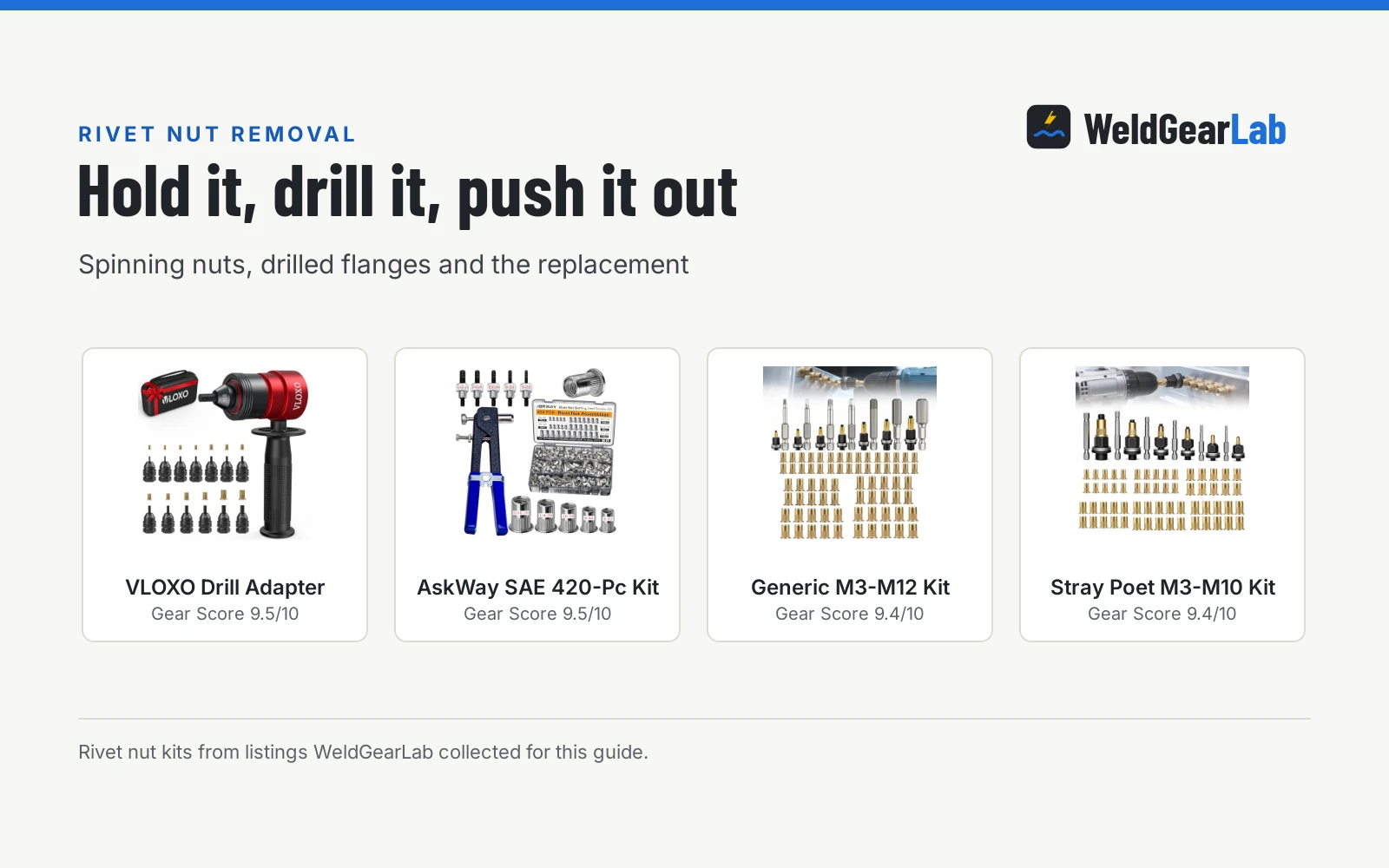
Related: how to remove a rivet nut, blind rivet sizes, best blind rivets for stainless steel, best rivet gun for steel rivets, how to use a center punch, and the metal fab tools hub.