Hole Saw vs Knockout Punch: Which One Should You Buy?
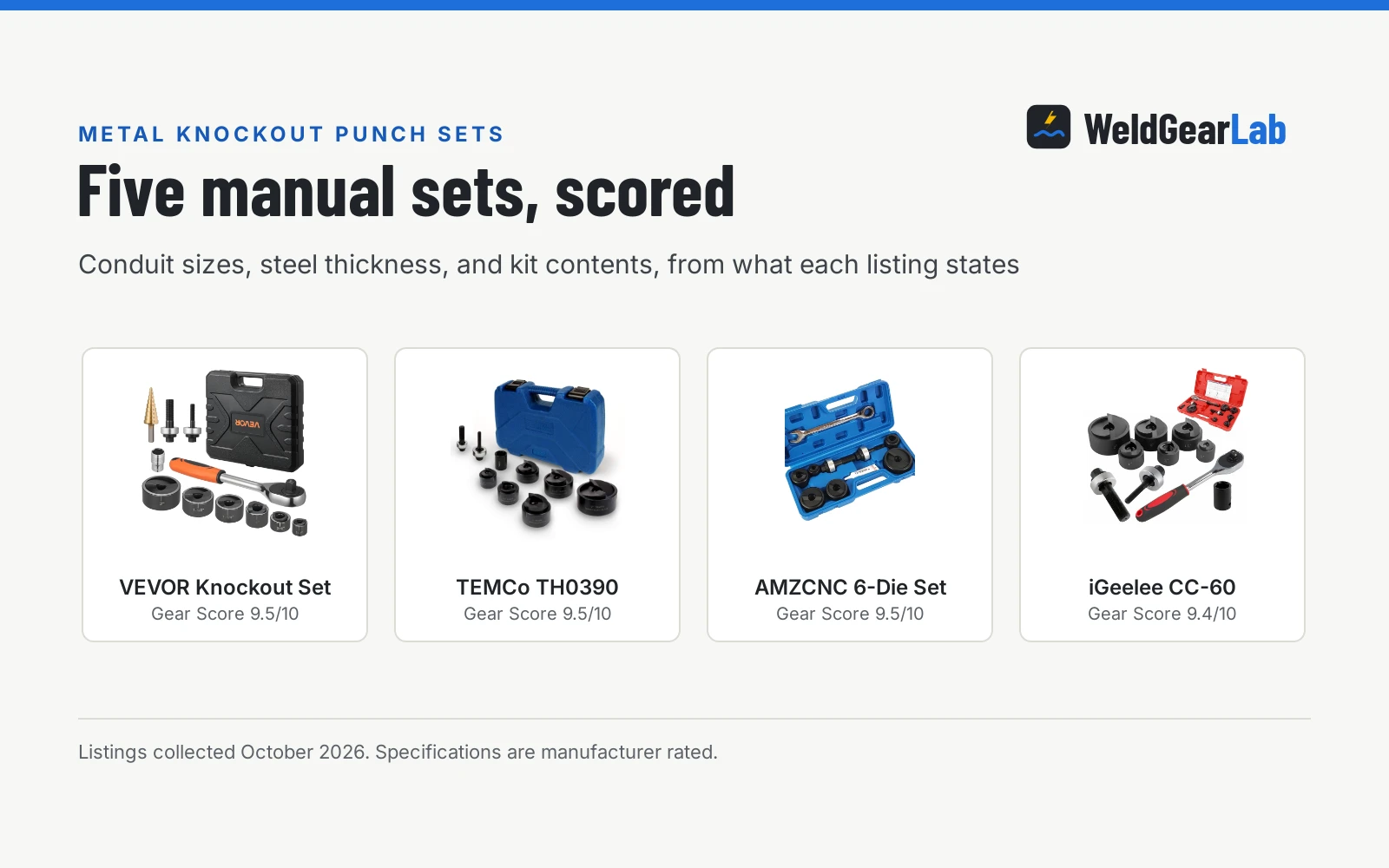
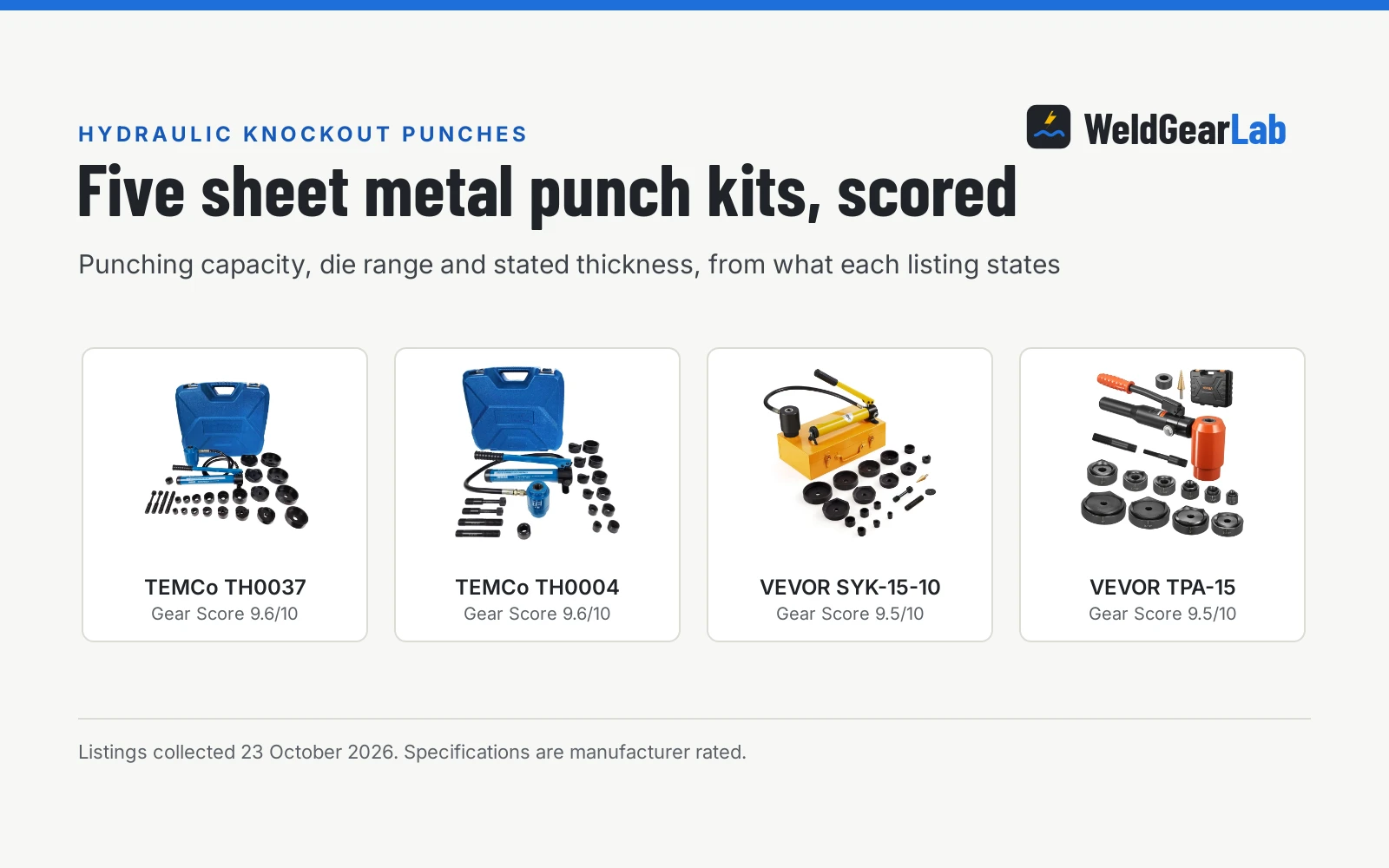
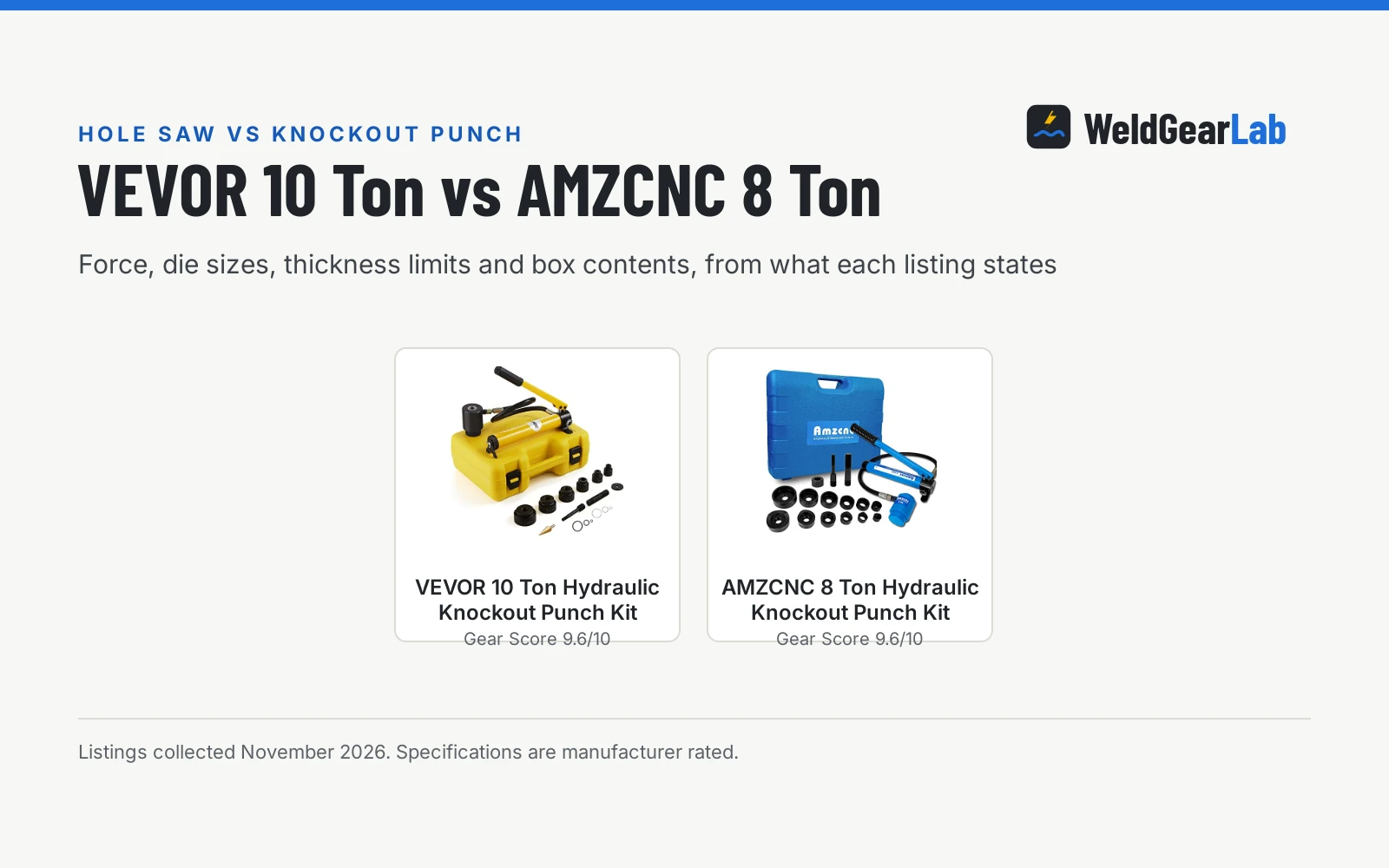
Two hydraulic knockout punch kits show what the punch side states for conduit holes, while the hole saw side has no listing here to compare on the record.

On this page
Top picks at a glance
As an Amazon Associate I earn from qualifying purchases.
- 1
 VEVOR 10 Ton Hydraulic Knockout Punch Kit9.6/10View on Amazon
- 2
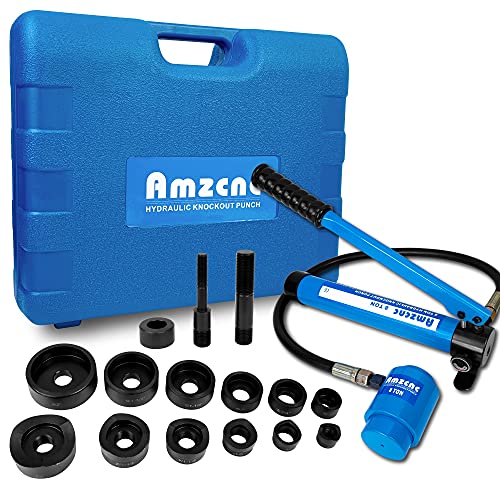 AMZCNC 8 Ton Hydraulic Knockout Punch Kit9.6/10View on Amazon
Verdict. In this hole saw vs knockout punch comparison, the punch side is the one with stated figures, because both listings here are hydraulic knockout punch kits. Pick the VEVOR kit when the higher tonnage figure and the fuller box matter to you. Pick the AMZCNC kit when the thicker stated material limits matter more. A hole saw still fits when the drill is already in hand and there is no punch kit on the job.
An electrical panel needs a clean conduit hole, and the panel is already mounted where a big machine cannot reach it. That is the job behind this hole saw vs knockout punch comparison. A hole saw cuts with a toothed cup on a drill, while a knockout punch shears the slug out with hydraulic force, and the two listings here show what the punch side states on the record.
WeldGearLab gets a commission on purchases made through links on this page, and your price stays the same. Read our affiliate disclosure.
The two kits
VEVOR 10 Ton Hydraulic Knockout Punch Kit
A 10 ton hydraulic knockout punch kit with 6 dies for 1/2 inch to 2 inch conduit fittings, a step drill bit and a carrying case.
Pros
- 10 ton hydraulic force, the higher figure of the two kits here
- 6 dies cover 1/2, 3/4, 1, 1-1/4, 1-1/2 and 2 inch conduit fittings
- Step drill bit, 2 draw studs and a carrying case in the box
- Dies in 40 Cr steel and 45# steel, with laser-engraved alignment marks
Cons
- No warranty term is stated in the listing
- States 0.04 inch for stainless steel while the AMZCNC states 1/16 inch
- States 0.1 inch for soft carbon steel while the AMZCNC states 1/8 inch for steel
AMZCNC 8 Ton Hydraulic Knockout Punch Kit
An 8 ton hydraulic knockout punch kit with 6 dies for 1/2 inch to 2 inch conduit fittings, listed for steel, stainless steel, brass, copper, aluminum, fiberglass and plastic.
Pros
- States 1/8 inch for steel and 1/16 inch for stainless steel, the thicker stated limits of the two kits
- 6 dies cover 1/2, 3/4, 1, 1-1/4, 1-1/2 and 2 inch conduit fittings
- Compatible with GREENLEE and other domestic punch tooling on 3/4-16 threads
- Long plastic handle, listed for grip and effective force transfer
Cons
- No warranty term is stated in the listing
- 8 ton is the lower force figure of the two kits
- No carrying case is named in the listing
- No steel grade for the dies is stated
Hole saw vs knockout punch side by side
| Gear Score | Force | Die sizes | Max steel thickness | Max stainless thickness | Weight | |
|---|---|---|---|---|---|---|
| VEVOR 10 Ton Hydraulic Knockout Punch Kit | 9.6/10 | 10 ton | 1/2 to 2 inch, 6 dies | 0.1 inch (10 gauge) | 0.04 inch (20 gauge) | 19.0 pounds |
| AMZCNC 8 Ton Hydraulic Knockout Punch Kit | 9.6/10 | 8 ton | 1/2 to 2 inch, 6 dies | 1/8 inch (10 gauge) | 1/16 inch | 19.36 pounds |
These numbers are the manufacturer’s ratings exactly as each listing gives them, recorded on 13 November 2026. Both listings in this comparison are knockout punch kits, so the table compares the two punch kits on stated figures. No hole saw listing is included here, so the hole saw side below is the method, not a named product, and no hole saw figure is stated.
How each one cuts
A hole saw mounts on a drill and cuts a round hole as the cup spins, with a pilot bit holding the center. The drill does the work, so the method needs no hydraulic pump. A knockout punch works the other way: drill a pilot hole, pass the draw stud through, thread on the die, and let the hydraulic pump pull the die through the metal. The slug drops out as a clean disc, and the die size sets the hole size.
The VEVOR kit states the pilot step plainly: a step drill bit comes in the box, and the pump has an on/off knob for quick pressure release after the hole is punched. The AMZCNC kit describes the same sequence with a drill bit and a driving bolt, plus a long plastic handle for grip and force transfer. Neither listing states a cycle time or a hole count, so there is no stated speed figure to compare.
Hole sizes and thickness
Both kits cover the same conduit fitting sizes, with 6 dies for 1/2, 3/4, 1, 1-1/4, 1-1/2 and 2 inch. That shared range is the one clean head-to-head figure in this comparison, and it means either kit fits the same panel work on size alone.
Thickness is where the listings part ways. The VEVOR states 0.1 inch for soft carbon steel plate at 10 gauge and 0.04 inch for stainless steel plate at 20 gauge. The AMZCNC states 1/8 inch for steel at 10 gauge and 1/16 inch for stainless steel. Both listings claim 10 gauge for steel, yet they state different inch figures for it, so treat the gauge label with care and read the inch figure on the listing you buy.
The AMZCNC also names the metals it punches: steel, stainless steel, brass, copper, aluminum in soft alloys only, fiberglass and plastic. The VEVOR names aluminum, brass, stainless steel, fiberglass and plastic, plus iron. The hole saw side has no listing here, so no stated thickness or size figure backs any claim about it.
What is in the box
The VEVOR box is the fuller of the two on the record. It holds the hydraulic punch, 6 knockout punches and dies, a step drill bit, a carrying case, 2 draw studs, a piston shaft, a spacer, sealing rings and a user manual. The carrying case matters on a job where the kit rides in a truck, and the step drill bit means the pilot hole needs no separate purchase from the same box.
The AMZCNC listing names no carrying case and no step drill bit. It describes a drill bit and a driving bolt in use, and it states compatibility with GREENLEE and other domestic punch tooling on 3/4-16 threads, which is a real plus when a shop already owns dies on that thread. The listing does not name the rest of the box contents, so the count of parts stays unclear.
Weight and build
The two kits weigh nearly the same on the record. The VEVOR spec table lists 19.0 pounds, with dimensions of 16.5 inches x 12.4 inches x 6.1 inches. The AMZCNC spec table lists 19.36 pounds, with dimensions of 15.75 inches x 10.51 inches x 5.28 inches. Neither is a pocket tool, and the VEVOR rides in its carrying case.
Build is where the VEVOR listing says more. Its dies are 40 Cr steel and 45# steel, with laser-engraved alignment marks for positioning, and the handle ends in an anti-skid plastic grip. The AMZCNC listing states no steel grade for its dies, and names only a long plastic handle. Neither listing states a safety listing such as CSA, UL or ETL, and neither states a warranty term, so both score nothing on safety or warranty here.
Choose the VEVOR 10 Ton Hydraulic Knockout Punch Kit if
- You want the higher tonnage figure of the two kits here, at 10 ton against 8 ton.
- You want a step drill bit and a carrying case in the box.
- You want the die steel named, with laser-engraved alignment marks on the dies.
- Your work is mostly soft carbon steel within the stated 0.1 inch limit.
Choose the AMZCNC 8 Ton Hydraulic Knockout Punch Kit if
- You want the thicker stated limits, at 1/8 inch for steel and 1/16 inch for stainless steel.
- You already own dies on 3/4-16 threads and want GREENLEE compatibility.
- You punch brass, copper and soft alloy aluminum as well as steel.
- You can live without a stated carrying case or a named die steel grade.
Before You Strike an Arc
- Wear eye and face protection, and clamp the work before the punch or the drill moves.
- Keep guards in place, and keep gloves off while the drill spins; put them on to handle the cut panel edge.
- Check the die size, the draw stud thread and the alignment marks on arrival, before the first hole.
- Clear flammables from the area and keep an extinguisher close when cutting or drilling metal.
Work with good ventilation, and keep the panel clamped while the die pulls through. See the OSHA welding overview and the Safety Disclaimer.
FAQ for welders
Which cuts cleaner holes, a hole saw or a knockout punch?
The punch kits here shear the slug out with hydraulic force, and the AMZCNC listing promises a clean and uniform hole from the drill bit and driving bolt sequence. A hole saw has no listing in this comparison, so no stated figure backs a head-to-head claim on edge quality. On the record, the punch side is the one with a stated method for a clean hole.
What size holes do these knockout punch kits cut?
Both kits carry 6 dies for conduit fitting sizes of 1/2, 3/4, 1, 1-1/4, 1-1/2 and 2 inch. The die size sets the hole size, so pick the die that matches the conduit fitting on the panel. Neither kit states any other hole size.
How thick can the VEVOR 10 Ton kit punch?
The listing states 0.1 inch for soft carbon steel plate at 10 gauge and 0.04 inch for stainless steel plate at 20 gauge. Stay within those stated limits, and check the inch figure rather than the gauge label, since the AMZCNC states a different inch figure for the same 10 gauge label.
How thick can the AMZCNC 8 Ton kit punch?
The listing states 1/8 inch for steel at 10 gauge and 1/16 inch for stainless steel. Those are the thicker stated limits of the two kits here. The listing also limits aluminum to soft alloys only.
Do I need a drill before using a knockout punch?
Yes, both kits need a pilot hole first. The VEVOR kit includes a step drill bit for that step, and the AMZCNC kit describes a drill bit and a driving bolt in use. A hole saw skips the punch step, since the drill itself does the cutting, but it has no listing here to compare on the record.
Related: best metal knockout hole punch set, best hole saw for cast iron, and the drill bit tips for metal and fabrication.
Scoring, line by line
Both kits are scored on performance, build, value, safety listing and warranty, with the weights published on the How We Pick page. Neither listing states a safety listing or a warranty term, so the safety and warranty columns sit at zero for both, and the gap between the kits comes from performance and build alone.
| Product | Gear Score | Perf. /35 | Build /25 | Value /25 | Safety /10 | Warranty /5 |
|---|---|---|---|---|---|---|
| VEVOR 10 Ton Hydraulic Knockout Punch Kit | 9.6 | 29 | 21 | 20 | n/a | 0 |
| AMZCNC 8 Ton Hydraulic Knockout Punch Kit | 9.6 | 28 | 20 | 20 | n/a | 0 |
Displayed scores fall between 9.2 and 9.8: the weighted point total is mapped onto that band in a straight line, so earning more points always lifts the score. Where safety does not apply (unpowered gear with no listed safety features), it is left out and the remaining 90 points make up the score.