Desiccant vs Refrigerated Air Dryer: Which One Should You Buy?
Desiccant and refrigerated air dryers take different routes to dry shop air, and the right choice depends on your air line and your tools.


On this page
Top picks at a glance
As an Amazon Associate I earn from qualifying purchases.
- 1
 NANPU 3/4" NPT Industrial Air Compressor Filter Dryer9.7/10View on Amazon
- 2
 LE LEMATEC Inline Air Dryer & Desiccant Filter for Paint9.4/10View on Amazon
- 3
 TCP Global Mini In-Line Air Filter9.3/10View on Amazon
- 4
 Milton 1072 1/2" Deluxe Desiccant Dryer SystemView on Amazon
- 5
 1045-GZPUYAN DRY-200B Air Dryer Silica Gel Desiccant forView on Amazon
- 6
 Milton 1170 1/2" Compact Desiccant DryerView on Amazon
Wet air degrades plasma cuts, wears consumables and causes defects in paint work, and the fix starts before the torch: dry the air on its way to the tool. Desiccant vs refrigerated air dryer is the choice between drying with beads and drying by cooling, and the right choice depends on how your shop air line is set up and what the air feeds. This guide compares the types, shows the desiccant listings collected for it, and explains how to tell which type a listing is.
Other welders and gear to compare
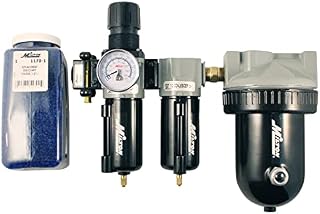 Milton 1072 1/2" Deluxe Desiccant Dryer SystemCheck price on Amazon
 1045-GZPUYAN DRY-200B Air Dryer Silica Gel Desiccant forCheck price on Amazon
 Milton 1170 1/2" Compact Desiccant DryerCheck price on Amazon
This guide links to our product roundups, where WeldGearLab gets a commission on purchases made through links on this page, and your price stays the same.
Desiccant vs refrigerated air dryer: the difference
A desiccant dryer passes compressed air through beads that absorb moisture from the air stream. The beads change from blue to pink when saturated, which tells you the drying media needs changing. A refrigerated dryer cools the compressed air so moisture condenses out of it, then drains the condensate away. Desiccant drying works at the line or at the tool with no cooling plant, while refrigerated drying suits a fixed shop air system that feeds air through a cooler and drain.
Side by side
| Desiccant dryer | Refrigerated dryer | What to check | |
|---|---|---|---|
| How it dries | Desiccant beads absorb residual moisture from the air | Cools compressed air so moisture condenses out, then drains it | Beads or cooling named in the listing |
| Power | No power stated in the listings here | Not stated in the listings here | Power need stated in the listing |
| Stages in the listings here | Up to 4 stages: 5-micron filter, 0.01-micron coalescing filter, desiccant stages | Not stated in the listings here | Stages named in the title and bullets |
| Maintenance signal | Blue-to-pink beads show saturation; DAIERTEK sight glasses show condensate | Condensate drains from the unit | Bead color or drain named in the listing |
| Fittings in the listings here | 1/2 inch, 3/4 inch and 3/8 inch NPT | Not stated in the listings here | Thread size matches your line |
| Flow stated in the listings here | 22 CFM on the LE LEMATEC unit; 105 SCFM at 90 psi on the NANPU unit | Not stated in the listings here | Flow stated for your tool |
| Pressure range stated | 0-240 PSI, 1 to 150 PSI and 0-145 psi across the listings here | Not stated in the listings here | Pressure range covers your tool |
| Suits | Point-of-use drying at the tool or line, including plasma cutting | A fixed shop air system feeding several tools | Use named in the listing |
The desiccant figures in the table come from the listings in this guide. Refrigerated figures are not stated in those listings, so that column describes the type in general words rather than figures from a listing.
The desiccant dryers in this guide
The 4 listings in this guide are all desiccant dryers, and they show how much the type varies. The DAIERTEK 4-stage system with 1/2 inch NPT fittings combines a 5-micron particulate filter, a 0.01-micron coalescing filter and dual desiccant drying stages, with a regulator and a 0-240 PSI gauge, metal bowls and sight glasses for checking condensate and desiccant condition. The listing states up to 99.99% removal of remaining water vapor and oil aerosols, with the dual desiccant stages absorbing residual moisture, and the kit includes spare 5-micron and 0.01-micron elements plus desiccant drying media bags. The DAIERTEK 3-stage system with 3/4 inch NPT fittings uses the same filter pairing plus a desiccant stage, with a regulator, a 0-240 PSI gauge, metal bowls, sight glasses, a filter replacement indicator and blue-to-pink beads, and the listing states 99.98% removal of remaining moisture and oil aerosols, with the final desiccant stage absorbing residual moisture. Its listing states the dryer must be installed vertically for proper auto drain operation. The LE LEMATEC inline desiccant filter with 3/8 inch NPT threads is a compact unit that fits at the tool inlet, with a working pressure of 1 to 150 PSI and a flow rate of 22 CFM, a rugged zinc housing, and color-changing beads that shift from blue to pink on saturation. The NANPU inline desiccant dryer with 3/8 inch NPT fittings uses a zinc alloy body, states a max output pressure of 0-145 psi, a flow rate of 105 SCFM at 90 psi and a temperature range of 41-140°F, and includes desiccant beads bags, fittings, a brass coupler and plug kit and thread seal tape.
When a desiccant dryer is the better choice
- Point-of-use drying. An inline unit at the tool inlet dries air right before it reaches the tool: the LE LEMATEC listing names a plasma cutter, spray gun or sandblaster, and the NANPU listing names pneumatic tools.
- No cooling plant. Desiccant beads absorb moisture with no refrigeration circuit, so the dryer needs no cooler.
- Visible media condition. Blue-to-pink beads show when the media is spent, and the DAIERTEK systems here add sight glasses for checking condensate and desiccant condition, which suits a shop that wants a plain visual check.
- Multi-stage filtration in that unit. The DAIERTEK systems pair particulate and coalescing filters with desiccant stages, so particles, oil aerosols and residual moisture are handled before the tool.
Our best air dryer filter for plasma cutter guide covers dryer filters for plasma work.
When a refrigerated dryer is the better choice
- A fixed shop air system. A refrigerated dryer is usually installed on the main line and dries air for the shop as a whole, rather than at an individual tool.
- Steady air use across the day. Cooling and draining handle moisture while the system runs, with no beads to swap on a schedule.
- Several tools on a shared line. Air dried at the main line can feed plasma cutting, painting, sandblasting and pneumatic tools on a shared line, where the dryness level suits each tool.
- Less media care. Condensate drains away instead of saturating beads, so there is no desiccant media to change.
How to tell which type a listing is
Read the title and bullets, not just the category name. A desiccant listing names desiccant beads, a color change from blue to pink, or desiccant drying stages, as all 4 listings here do. A refrigerated listing names a refrigeration circuit, cooling and a condensate drain instead. Check the fittings against your line: the listings here use 1/2 inch, 3/4 inch and 3/8 inch NPT threads, and a mismatch means extra fittings or a different unit. Check the stated flow against your tool: the listings here state 22 CFM on the LE LEMATEC unit and 105 SCFM at 90 psi on the NANPU unit, and those figures are stated under different conditions, so compare them with care. Check the stated pressure range too: the DAIERTEK systems state 0-240 PSI, the LE LEMATEC unit states 1 to 150 PSI and the NANPU unit states 0-145 psi. For plasma cutting, dry air protects the torch consumables and keeps moisture out of the cut, and some listings here name plasma cutting among their uses.
FAQ for welders
Can a desiccant dryer feed a plasma cutter?
Yes. Some listings here name plasma cutting among their uses, and the DAIERTEK systems pair particulate and coalescing filters with desiccant stages for moisture-sensitive tools. Fit the dryer on the line feeding the cutter and check the beads regularly. Follow your cutter manual for its own air requirements.
How do I know the desiccant is spent?
The beads change from blue to pink when saturated, which all 4 listings here describe. Sight glasses on the DAIERTEK systems let you check condensate and desiccant condition at a glance. Change the media when the beads show pink, and keep spare beads on hand so the line is not left undried.
Does a refrigerated dryer replace a desiccant dryer?
Not always. A refrigerated dryer dries air at the main line for the shop, while a desiccant unit dries air at the tool or at a line that needs extra drying. Some shops run a refrigerated dryer on the main line and a desiccant unit at a moisture-sensitive tool. The right setup depends on how wet your air is and what the air feeds.
What fitting size do I need?
Match the dryer fittings to your air line. The listings here use 1/2 inch, 3/4 inch and 3/8 inch NPT threads, and the DAIERTEK and NANPU kits here include fittings and thread seal tape. Check the thread size on your line before ordering, since a mismatched thread needs an adapter.
Do I still need filters with a desiccant dryer?
The DAIERTEK systems here build the filters in, pairing a 5-micron particulate filter and a 0.01-micron coalescing filter with the desiccant stages. The inline LE LEMATEC and NANPU units are desiccant dryers that sit at the tool inlet, so a separate particulate or coalescing filter upstream still helps where the line carries particles or oil. Read the listing to see which stages a unit includes.
Related: best air dryer filter for plasma cutter, best plasma cutter consumables for beginners, and best inverter plasma cutter. Also see our plasma cutter vs MIG welder guide.