Can a Saw Cut Metal? Blades and Saws That Work
A saw can cut metal when the blade is made for metal and the saw runs at a speed that suits it, and tooth count, blade size, and setup decide whether the cut comes out clean.

On this page
Top picks at a glance
As an Amazon Associate I earn from qualifying purchases.
- 1
 Evolution S6CCS-Li Loaded Kit9.6/10View on Amazon
- 2
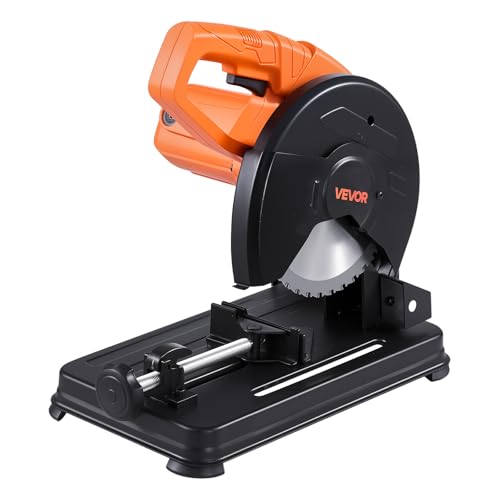 VEVOR Chop Saw9.6/10View on Amazon
- 3
 Evolution S355CPSL9.5/10View on Amazon
A length of angle iron waits on the bench, marked for a bracket, and the saw on the stand is already in the shop. The question is whether that saw can make the cut, or whether the job needs a different tool. Can a saw cut metal? Yes, when the blade is made for metal and the saw runs at a speed that suits metal. A wood blade on steel dulls fast, skates across the surface, and leaves a ragged edge. A metal cutting blade, matched to the saw and the stock, cuts clean and keeps its edge.
This guide links to our product roundups, where WeldGearLab gets a commission on purchases made through links on this page, and your price stays the same. Read our affiliate disclosure.
Can a saw cut metal?
Yes, and the blade does the work. Metal cutting blades use hardened teeth shaped to bite into steel instead of scraping across it, and the tooth count sets how the blade meets the stock. The TOMAX blade (on Amazon) in the listings is a 12 inch blade with 60 tooth cermet teeth, made for mild steel profiles, pipe, angle iron, tube, channels, steel studs, and solid bars. The maker lists it for a low RPM metal cutting saw at 1700 to 2000 RPM, which is the speed range the blade is built for. A saw built for wood spins faster than that range, and at wood speed the teeth rub, overheat, and dull before the cut is done.
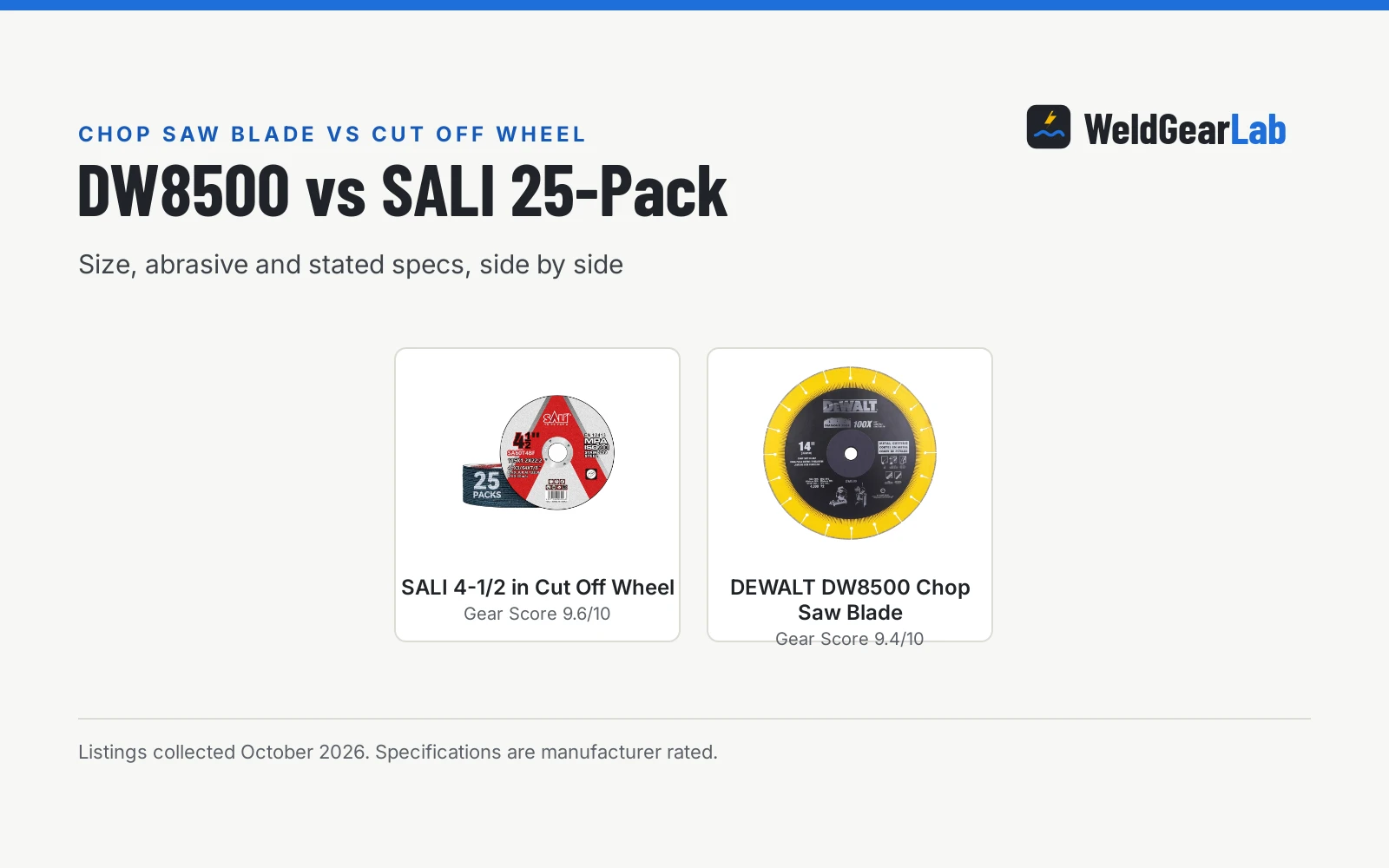
Tooth count changes the edge the blade leaves. The DEWALT listings show the spread: a 16 tooth metal cutting blade and a 68 tooth metal cutting blade, each made for a circular saw. Fewer teeth take a bigger bite per tooth and clear chips fast, which suits thick stock and rough cuts. More teeth take a smaller bite per tooth and leave a smoother edge, which suits thin stock and work that stays visible. Match the tooth count to the stock and the finish the job needs.
Which saw for which cut
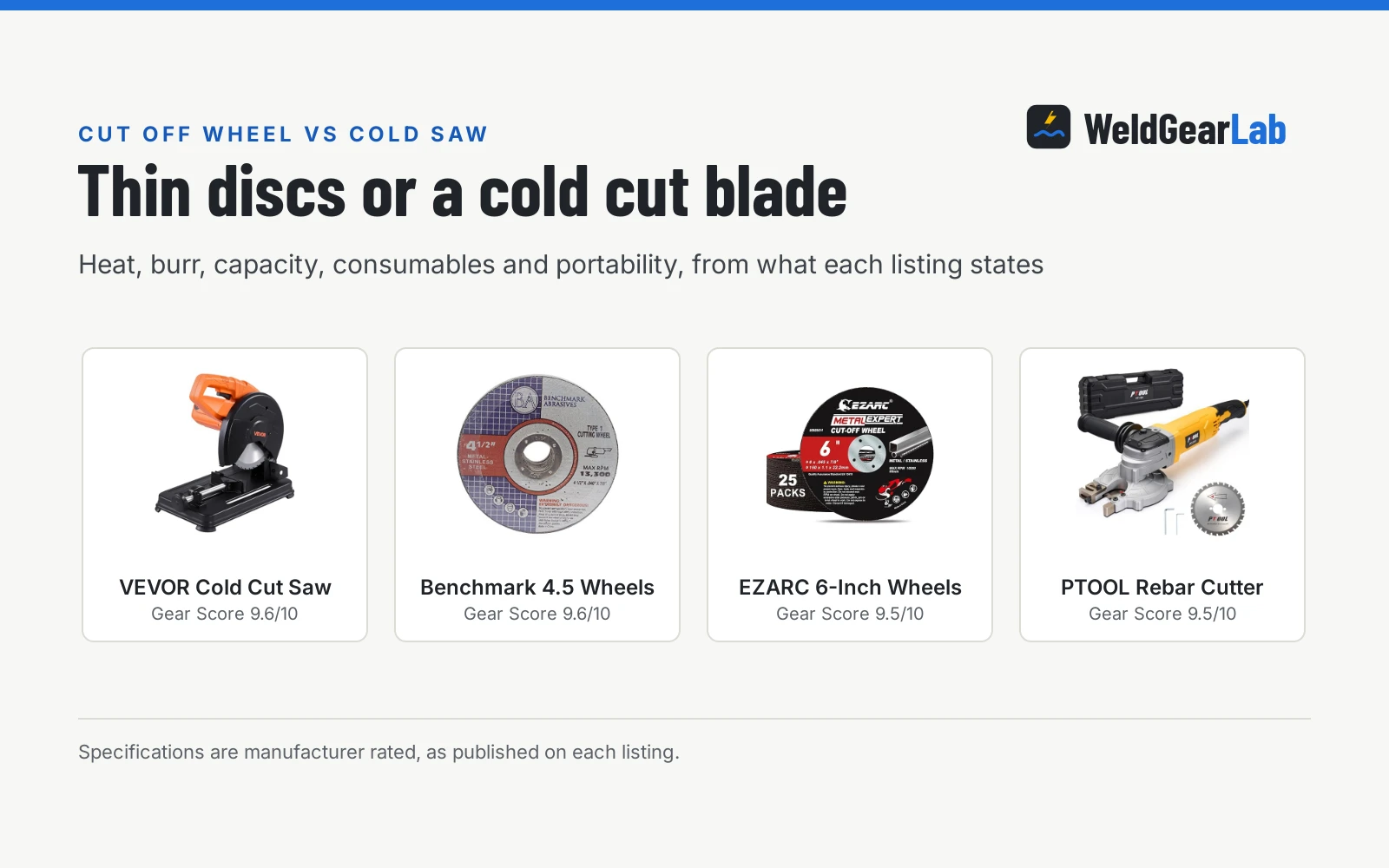
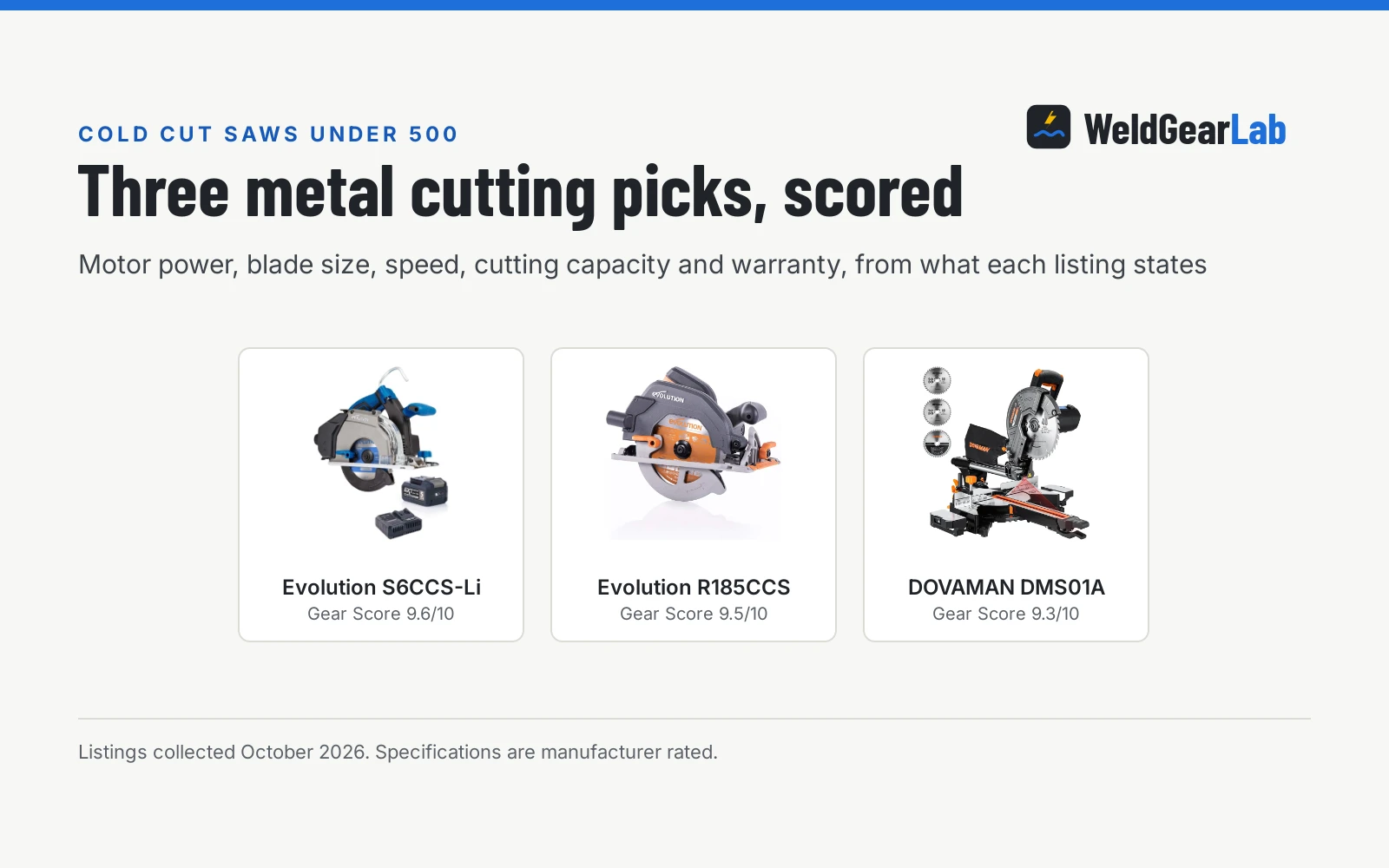
A circular saw with a metal cutting blade handles straight cuts in sheet, angle iron, and tube, and it goes where the work is, on site or in the yard. A chop saw suits repeat cuts in the shop, with the stock clamped and the blade dropping through the same line on each pass; see the best chop saw for metal cutting guide for saws built for that job. A cold cut saw leaves a cooler edge with little burr, and the best cold cut saw guide compares saws made for clean metal cuts. A band saw suits curves and long cuts in bar and tube, with the blade running in a loop while the work feeds by hand; the best band saw blade for metal guide covers blades for that saw. A reciprocating saw suits rough cuts in place, where the edge does not need to look clean, and the best reciprocating saw blade for metal guide covers blades for it. A hacksaw still earns its place for a trim where a power saw cannot reach, and the best hacksaw blade for stainless steel guide covers bi-metal blades for stainless. Match the saw to the cut, then match the blade to the saw.
Blade size and arbor
Blade size must match the saw. A 12 inch blade fits a saw built for a 12 inch blade, and the arbor must match too: the TOMAX blade lists a 1 inch arbor. A blade that does not seat on the arbor wobbles, and a wobbling blade cuts crooked and wears fast. Check the arbor size on the saw before ordering a blade, and check the blade size against the guard and the depth of cut the job needs.
Blade specs side by side
| TOMAX 12 inch blade | DEWALT 16 tooth blade | DEWALT 68 tooth blade | |
|---|---|---|---|
| Tooth count | 60 tooth | 16 tooth | 68 tooth |
| Saw it fits | Low RPM metal cutting saw | Circular saw | Circular saw |
| Arbor | 1 inch arbor | Not stated | Not stated |
| Cuts | Mild steel profiles, pipe, angle iron, tube, channels, steel studs, solid bars | Steel and iron | Metal |
| Speed range | 1700 to 2000 RPM | Not stated | Not stated |
The table above lines up the reference blades the listings describe. The TOMAX blade covers mild steel stock in many shapes, while the DEWALT blades are circular saw blades in different tooth counts for the same kind of work. Tooth count is the main difference between the DEWALT blades: 16 tooth for fast, rough cuts and 68 tooth for smooth cuts in thin stock. Arbor and speed range are stated for the TOMAX blade and not stated for the DEWALT blades, so check the saw before ordering.
How to set up the cut
Metal cutting throws hot chips and sharp edges, so set the job up before the blade spins. Clamp the work so it cannot shift or pinch the blade. Mark the cut line and check that the blade path stays clear of the clamp. Wear eye protection and a face shield, and keep gloves away from rotating parts while the blade turns. Check that the guard moves freely and sits in place. Let the blade reach full speed before it touches the metal, then feed with steady pressure and let the teeth do the work. Ease off at the end of the cut so the offcut does not drop and pinch the blade. Clear chips with a brush, not a bare hand, and let the cut edge cool before handling it.
FAQ for welders
Can a regular wood saw cut metal?
A wood saw can cut metal only with a metal cutting blade fitted, and only when the saw runs at a speed that suits metal. The TOMAX blade shows the setup: a 12 inch blade with 60 tooth cermet teeth on a low RPM metal cutting saw at 1700 to 2000 RPM. Fit the right blade, check the speed, and the saw cuts metal clean.
Can a circular saw cut metal?
Yes, with a metal cutting blade made for a circular saw. The DEWALT listings show metal cutting blades for circular saws, a 16 tooth blade and a 68 tooth blade. The 16 tooth blade suits fast, rough cuts, while the 68 tooth blade suits smooth cuts in thin stock.
What tooth count is right for cutting metal?
It depends on the stock and the finish the job needs. Fewer teeth cut fast and leave a rough edge, which suits thick stock and cuts that get ground or hidden, while more teeth leave a smooth edge for thin stock and visible work. The reference blades run from 16 tooth to 68 tooth, and the TOMAX blade sits at 60 tooth for mild steel profiles and bar.
Can a saw cut steel?
Yes, mild steel is the stock these blades are made for. The TOMAX blade lists mild steel profiles, pipe, angle iron, tube, channels, steel studs, and solid bars, all cut with a 12 inch blade with 60 tooth cermet teeth. Hard steel and thick plate need a blade and a saw rated for that stock, so check what the maker lists before cutting stock harder than mild steel.
Does a metal cutting blade need a special saw?
It needs a saw that runs at the speed the blade is built for. The TOMAX blade lists use on a low RPM metal cutting saw at 1700 to 2000 RPM, so a standard wood saw that spins faster will overheat the teeth. A cold cut saw built for metal runs in the right range, and the best cold cut saw guide compares saws made for that work.
Related: best chop saw for metal cutting, best reciprocating saw blade for metal, band saw blade sizes, chop saw vs band saw for metal, and the metal fab tools hub.