Bi-metal vs Carbide Hole Saw: Which One Should You Buy?
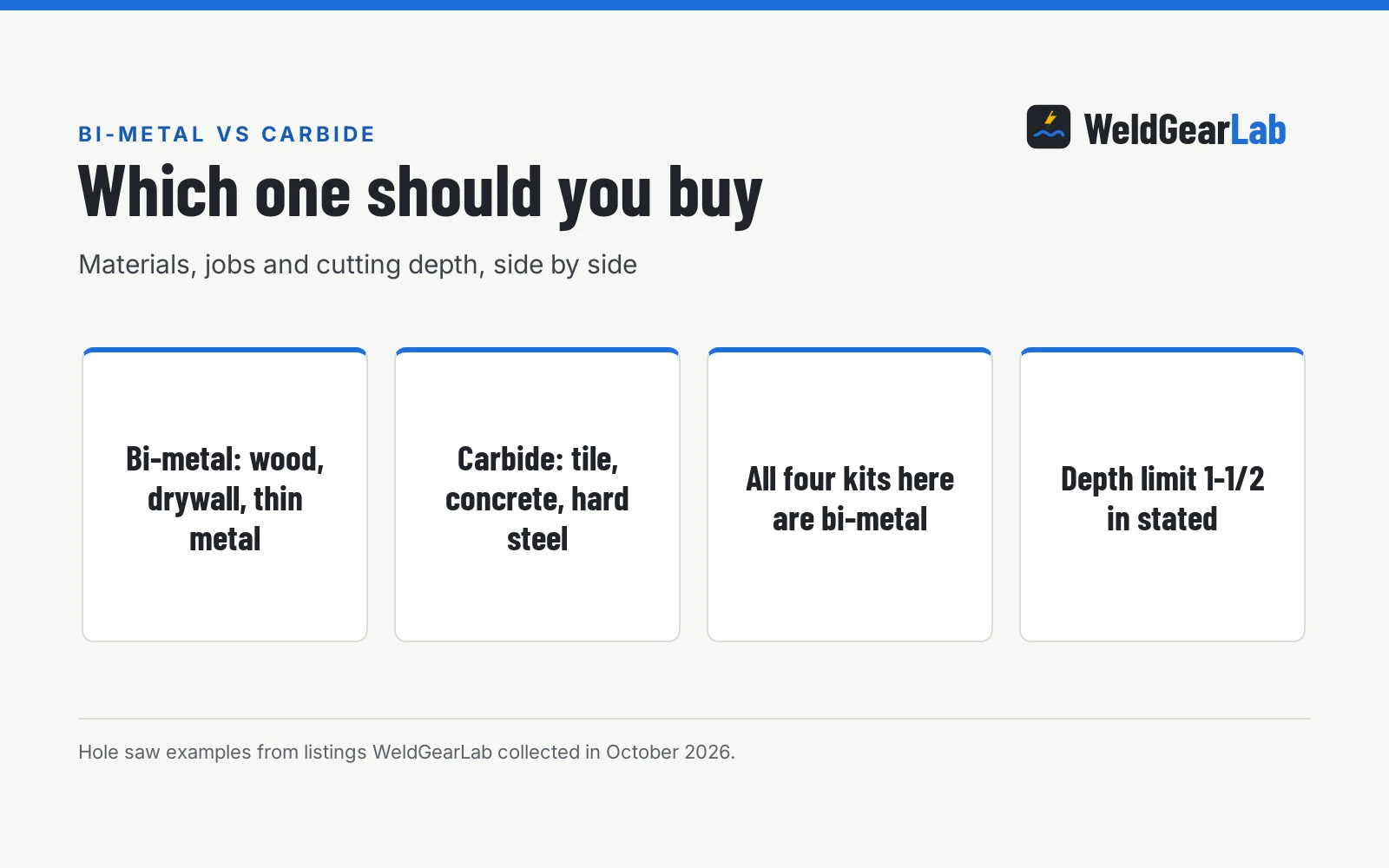
Bi-metal hole saws cut wood, drywall and thin metal; carbide cuts tile, concrete and hard steel. Which tooth fits your work, with four bi-metal kits featured.

On this page
Top picks at a glance
As an Amazon Associate I earn from qualifying purchases.
- 1
 VEVOR Double Head Sheet Metal Nibbler Cutter9.7/10View on Amazon
- 2
 Hole Saw 8 PCSView on Amazon
- 3
 Hole Saw 1.5-inch/38mm Metal Hole Saw Carbide Tipped HoleView on Amazon
- 4
 2 Inch TCT Hole Saw for MetalView on Amazon
Bi-metal hole saws cut wood, drywall, plastic and metal; carbide hole saws cut the hard, abrasive stuff that eats bi-metal teeth, like tile, concrete, brick and stone. That is the short answer to bi-metal vs carbide hole saw: match the tooth to the material, not the other way around. This guide lays out where each one wins and features four bi-metal saws and kits from current listings, since all four products in this guide are bi-metal.
Other welders and gear to compare
 Hole Saw 8 PCSCheck price on Amazon
 Hole Saw 1.5-inch/38mm Metal Hole Saw Carbide Tipped HoleCheck price on Amazon
 2 Inch TCT Hole Saw for MetalCheck price on Amazon
This guide links to our product roundups, where WeldGearLab gets a commission on purchases made through links on this page, and your price stays the same. Read our affiliate disclosure.
Bi-metal vs carbide hole saw: the short answer
Pick bi-metal for wood, drywall, plastic and metal, and carbide for tile, concrete, brick, stone, glass and masonry. For thick hardened steel, the KATA listing rules out its bi-metal kit. The four kits featured below are all bi-metal, so the carbide side of this guide is general guidance on when to step up to a harder tooth.
The difference in one paragraph
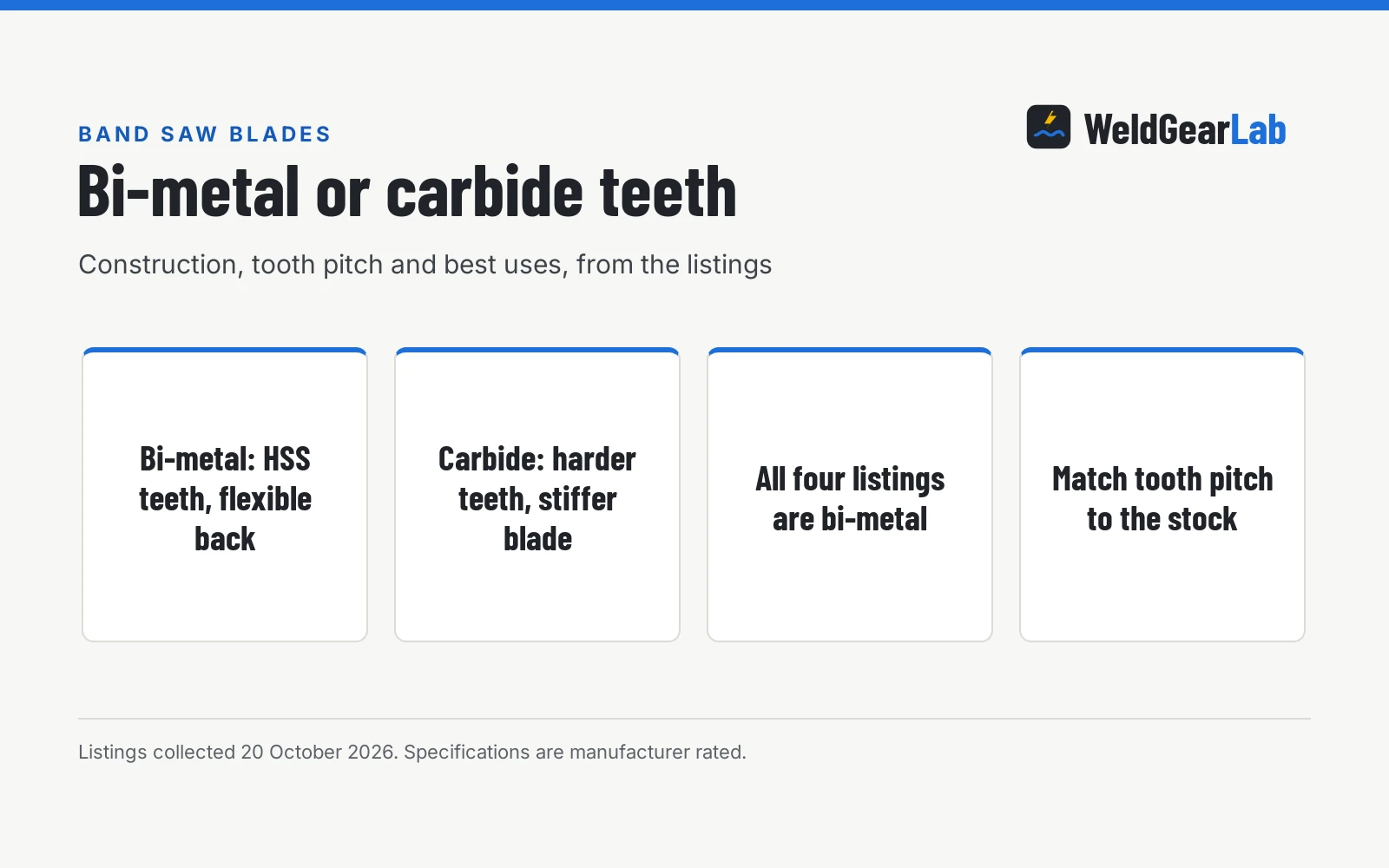
A bi-metal hole saw bonds high speed steel teeth to a steel body; all four listings here state bi-metal construction. Carbide hole saws use carbide teeth, which hold an edge far longer in hard and abrasive materials. The trade is simple: bi-metal cuts fast in soft materials, carbide survives materials that would strip bi-metal teeth.
Side by side
| Bi-metal | Carbide | Stated in listings | |
|---|---|---|---|
| Best for | Wood, drywall, plastic, thin metal | Hard, abrasive materials bi-metal cannot cut | All four bi-metal listings; KATA and GARHWAL rule-outs |
| Tooth | High speed steel teeth on a steel body | Carbide teeth (general) | All four listings state bi-metal construction |
| Kits here | 9 to 19 pieces, 3/4 in to 4-3/4 in | Not covered here | Bosch and GARHWAL 9 pc; KATA 19 pc; Lenox single |
| Cutting depth | Lenox states 1-9/16 in | Not covered here | KATA warns not beyond about 1-1/2 in (38 mm) |
| Arbor | Included with the kit | Not covered here | All four listings include an arbor |
Ratings in this table are the makers’ own claims taken from each product page (21 October 2026). The four listings in this guide are all bi-metal, so the carbide column is general guidance.
When bi-metal is the better choice
- Wood, drywall and plastic. Every listing here covers these: door locks, vents, speaker holes and can lights.
- Thin metal sheet. The GARHWAL, KATA and Bosch listings state thin metal or metal, and the Lenox is stated for metal.
- Size range in one box. The four products span a single 2 in saw to a 19-piece kit, covering 3/4 in to 4-3/4 in across the listings.
- Drill press or handheld drill. All four work with standard drills, with an arbor included.
When carbide is the better choice
- Tile, concrete, brick, stone, glass and masonry. The GARHWAL and KATA listings explicitly rule these out for bi-metal.
- Thick hardened steel. The KATA listing rules it out for its bi-metal kit.
- Deep or long cuts in hard material. The KATA listing warns not to cut beyond about 1-1/2 in (38 mm) with its bi-metal kit.
- Abrasive materials that eat teeth. Carbide holds an edge where bi-metal wears fast.
The bi-metal kits in this guide
Four bi-metal kits, ranked by our scores.
Bosch HSBIM9
The Bosch HSBIM9 is a 9-piece bi-metal kit with two SpinLOCK universal arbors, a steel pilot bit and six hole saws from 3/4 to 2 in, in a plastic case. The saws use 8% cobalt alloy with a progressor tooth design, and the kit weighs 2.2 pounds. Stated for wood, aluminum, metal and plastic.
KATA 19-piece kit
The KATA kit is the widest here: 19 pieces with 14 blades from 3/4 to 4-3/4 in, mandrels, drill bits and a hex key in a hard storage case. It states high speed steel bi-metal construction for wood, thin metal, PVC and drywall, and warns it is not for tile, concrete, brick, stone, glass, masonry or thick hardened steel, nor for cutting depths beyond about 1-1/2 in (38 mm). Item weight is 3.6 kg.
GARHWAL 9-piece kit
The GARHWAL kit covers 3/4 to 3 in across nine saws with an arbor and pilot bit, for wood, plywood, drywall, ceiling, thin metal and plastic. It states bi-metal construction with a variable positive tooth configuration, and notes it is not for hard wood, hard metal or stone. A 60-day free returns policy is stated.
Lenox 2-inch saw
The Lenox is a single 2 in bi-metal hole saw with an arbor, a Speed Slot design for plug ejection and a 1-9/16 in cutting depth, at 6.4 ounces. The listing claims 2X durability and 50 percent longer life than previous LENOX saws, stated for metal.
What to check before you buy
- Material first. If the job is tile, concrete, brick, stone or thick hardened steel, bi-metal is the wrong tooth; the KATA and GARHWAL listings say so outright.
- Arbor fit. All four listings include an arbor; the Bosch SpinLOCK is stated to fit all brands and sizes of hole saw drill bits.
- Cutting depth. The Lenox states 1-9/16 in; the KATA warns against cutting beyond about 1-1/2 in (38 mm).
- Size coverage. The four kits span 3/4 in to 4-3/4 in; pick the kit whose range covers your most common holes.
Hole saw safety. Clamp the work, wear eye protection, and keep hands clear of the cut; a dull saw or a bound pilot bit can grab. Unplug the drill or remove the battery before changing saws on the arbor.
FAQ for welders
Can a bi-metal hole saw cut metal?
Thin metal, yes. The GARHWAL, KATA and Bosch listings state thin metal or metal, and the Lenox is stated for metal. For thick hardened steel, the KATA listing rules out bi-metal for its kit; that is the case for stepping up to a harder tooth.
What is a bi-metal hole saw not for?
The GARHWAL listing rules out hard wood, hard metal and stone. The KATA listing rules out tile, concrete, brick, stone, glass, masonry and thick hardened steel.
Do these kits include an arbor?
All four do. The Bosch includes two SpinLOCK universal arbors, the KATA includes mandrels, and the GARHWAL and Lenox each include an arbor with a pilot bit.
How deep can these hole saws cut?
The Lenox states a 1-9/16 in cutting depth. The KATA listing warns not to cut beyond about 1-1/2 in (38 mm).
Which kit covers the most sizes?
The KATA 19-piece kit with 14 blades from 3/4 to 4-3/4 in. The Bosch and GARHWAL are 9-piece kits, and the Lenox is a single 2 in saw.
Related: best hole saw for metal, bi-metal vs carbide band saw blade, and tubing notcher vs hole saw jig.