Best Use for 7016 Welding Rods (2026)
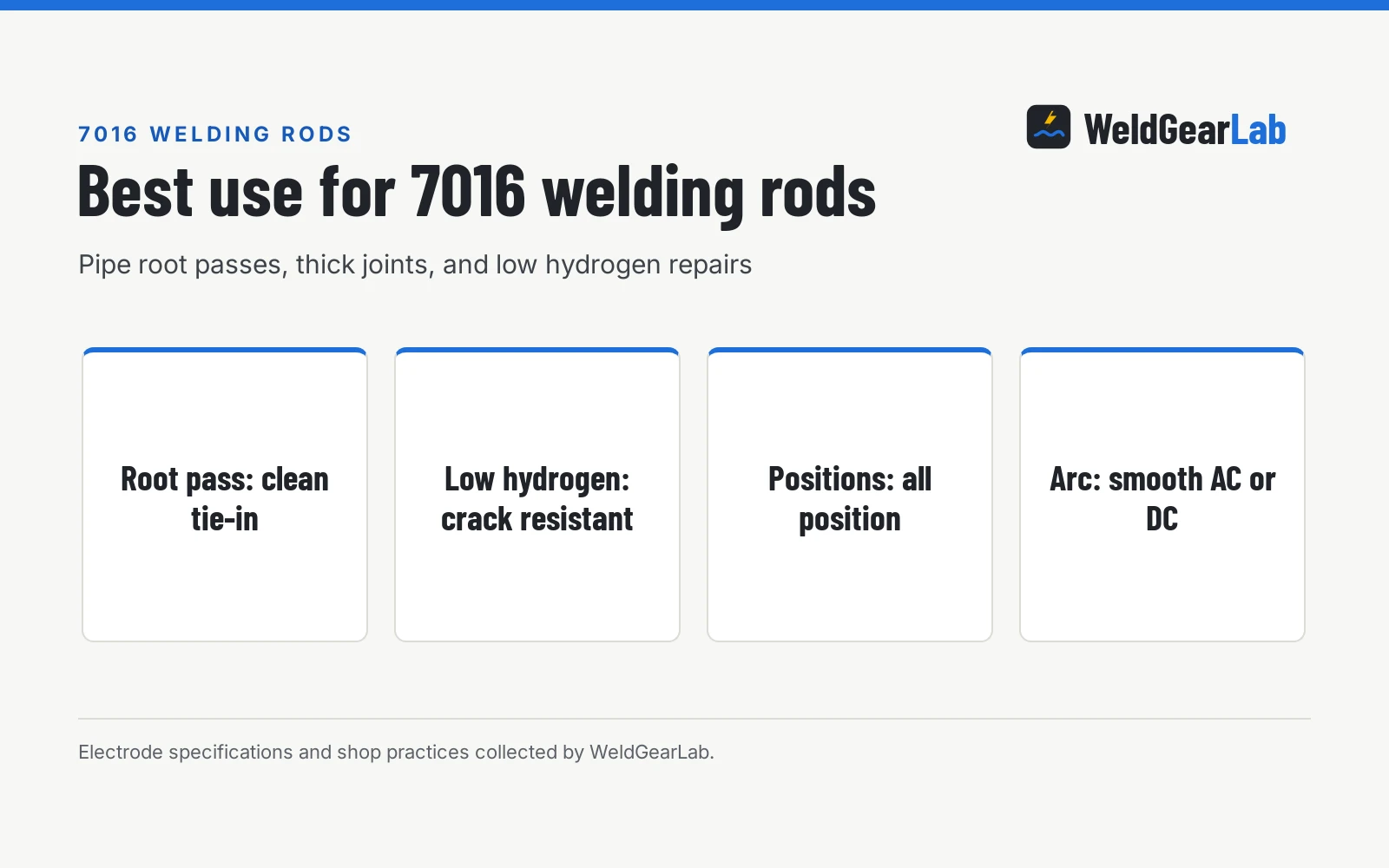
The best use for 7016 welding rods covers pipe root passes, heavy structural fabrication, and restrained joints where low hydrogen puddle control matters for crack-sensitive joints.

On this page
Top picks at a glance
As an Amazon Associate I earn from qualifying purchases.
- 1
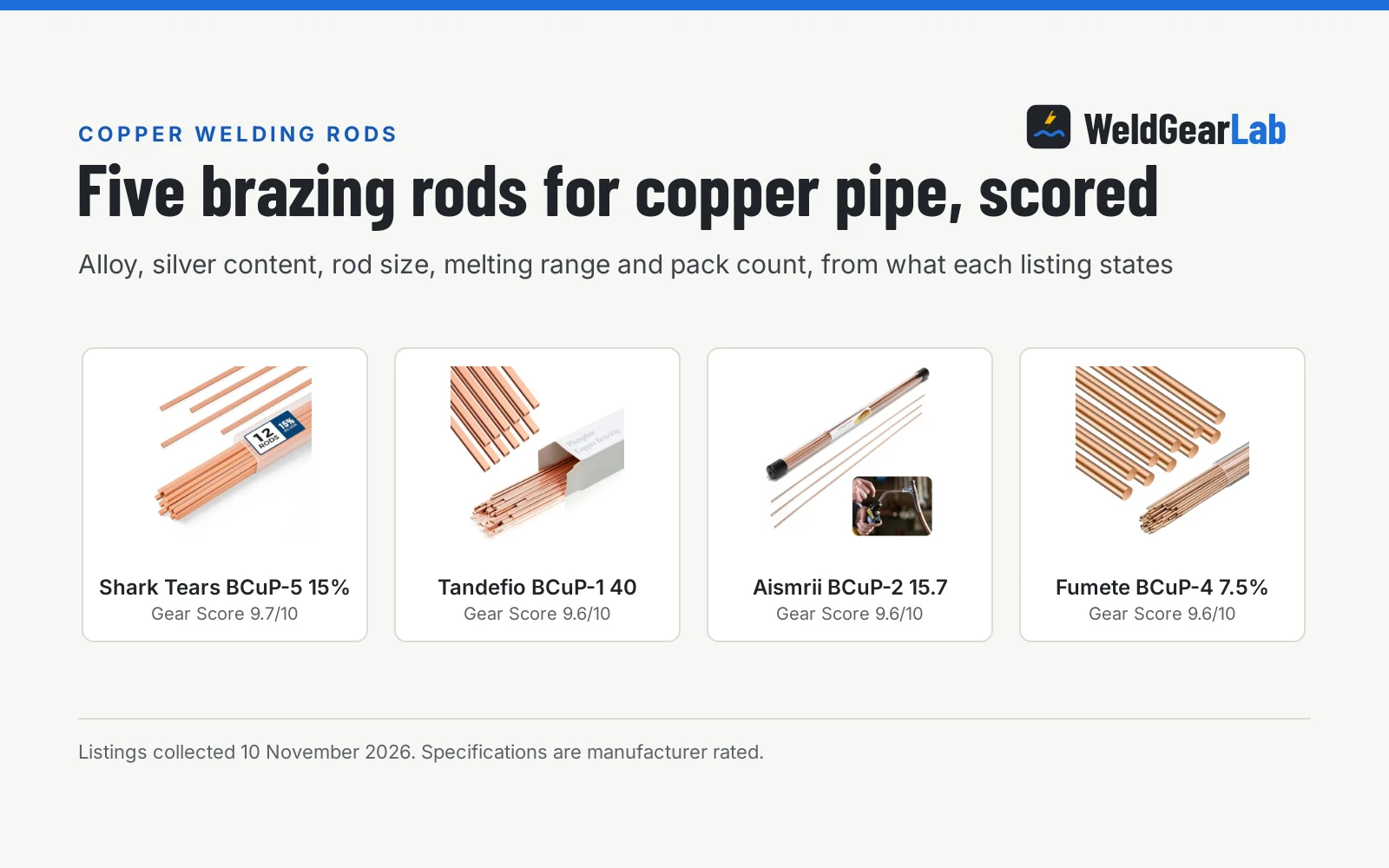
 12 pcs Brazing Rods AWS BCuP-5 15% Silver Solder Phos Copper9.7/10View on Amazon
- 2
 Tandefio Brazing Rods AWS Bcup-1 40 Sticks9.6/10View on Amazon
- 3
 Brazing Rods9.6/10View on Amazon
When you have heavy structural steel clamped on the welding table or an open-root pipe joint beveled and ready to tack, picking the right stick electrode decides whether that joint holds under load or cracks down the center. The best use for 7016 welding rods is open-root pipe welding, heavy steel fabrication, and restrained joints where you need crack resistance and clean puddle control without a harsh, gouging arc. These low hydrogen rods run on direct current or alternating current, depositing clean weld metal that resists cold cracking in thick sections. This guide explains how 7016 behaves on the shop bench, where it outworks general-purpose electrodes, and how to get sound results without sticking or porosity.
This guide links to our product roundups, where WeldGearLab gets a commission on purchases made through links on this page, and your price stays the same. Read our affiliate disclosure.
The core difference in brief
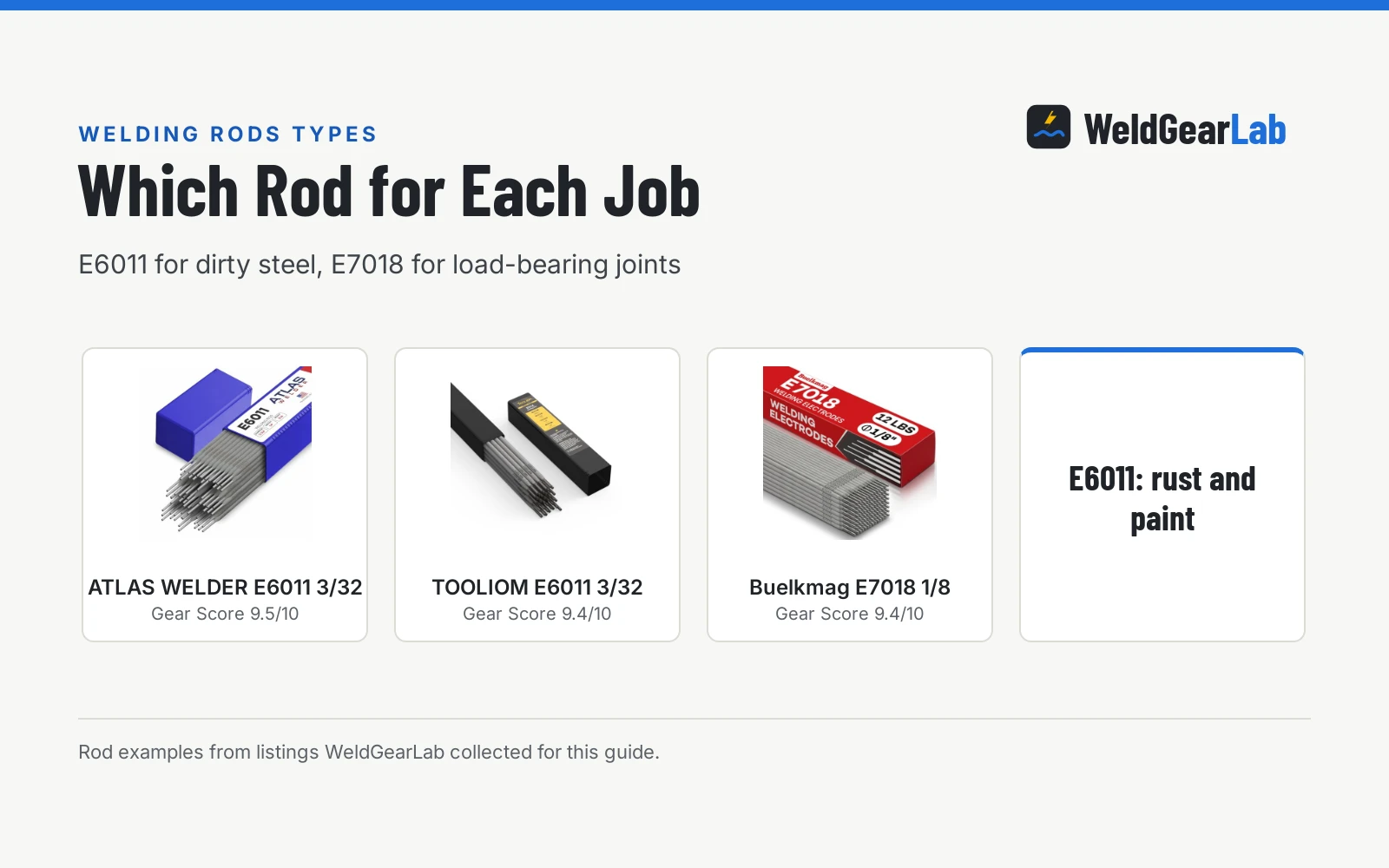
Standard stick electrodes rely on cellulose or rutile coatings that burn vigorously or create fluid, heavy slag pools. A 7016 electrode uses a basic potassium flux coating that delivers low diffusible hydrogen in the deposited weld bead. That basic coating produces a smooth, quiet arc, moderate slag volume that freezes rapidly, and high resistance to cracking under heavy restraint. Because the flux incorporates potassium silicate rather than sodium compounds, a 7016 rod runs stably on alternating current machines as well as direct current polarity, giving you clean root penetration and uniform tie-ins on structural steel.
Side by side
| 7016 low hydrogen rods | Cellulosic rods | Rutile rods | |
|---|---|---|---|
| Coating chemistry | Basic low hydrogen with potassium | High cellulose organic | Titania rutile |
| Primary shop use | Root passes, pipe joints, thick structural steel | Deep digging, open root, pipe lines | Sheet metal, light framing, clean appearance |
| Crack resistance | High resistance to hydrogen cracking | Moderate crack resistance | Low crack resistance on thick plate |
| Arc characteristics | Smooth, stable arc with low spatter | Harsh, forceful, deep digging arc | Soft, quiet arc with minimal spatter |
| Root pass capability | Flat, uniform root bead without burn through | Keyhole penetration, prone to internal undercut | Prone to slag inclusions in tight grooves |
| Welding positions | All position capable | All position capable | All position capable |
| Power source | AC or DCEP polarity | DCEP standard (some run on AC) | AC or DC polarity |
| Slag removal | Crisp slag blanket, peels readily | Very light, thin slag blanket | Heavy, fluid slag with complete coverage |
| Steel surface tolerance | Requires clean steel and ground bevels | Tolerates rust, paint, and mill scale | Requires clean or lightly prepped steel |
Always follow the polarity printed on your electrode container and the recommendations in your welder manual. Low hydrogen electrodes like 7016 produce sound deposits only when stored properly away from atmospheric humidity.
Best use for 7016 welding rods
- Open-root pipe and tube welds. When joining pipe without backing rings, a 7016 rod deposits a clean root bead with smooth reinforcement inside the pipe wall. The potassium-based coating stabilizes the arc, letting you control the keyhole without blowing out the land.
- Restrained structural joints. Thick steel plates clamped rigidly into assemblies generate severe shrinkage stress as the puddle cools. The low hydrogen chemistry of 7016 suits heavy structural welds where underbead cracking and brittle failure are a concern.
- Alternating current capability. While basic low-hydrogen rods with sodium coatings require direct current electrode positive, a 7016 rod uses potassium compounds in its coating to stabilize the arc on alternating current. When your AC power source supplies adequate open circuit voltage, 7016 allows you to make clean low-hydrogen welds without needing direct current.
- High sulfur or medium carbon steels. When welding steels with tricky metallurgy that tend to crack when welded with ordinary rods, a low hydrogen rod like 7016 is the usual pick for crack-sensitive joints.
- Heavy repair fabrication. Farm equipment hitches, excavator buckets, and machine frames subject to shock loads benefit from the ductile, tough weld deposit left by 7016.
If you are stocking your shop for a variety of repair jobs, check our guide to the best welding rods for mild steel to see how low hydrogen rods compare to everyday farm rods.
When other stick rods work better
- Rusty, painted, or greasy steel. Low hydrogen basic coatings are sensitive to surface contaminants that release moisture or hydrogen into the puddle. For dirty scrap or quick field repairs on unground steel, a deep-digging fast-freeze rod handles mill scale with less risk of porosity.
- Sheet metal and thin-walled tubing. Low hydrogen basic electrodes require sufficient current to keep the puddle fluid and the arc stable, which can cause excessive heat buildup and burn through on thin sheet metal. General-purpose rutile electrodes are better suited for light gauge sheet because they maintain a stable arc at lower heat input.
- Poor fit-up and wide gaps. Low hydrogen rods should be dragged or stepped with a very tight arc and minimal manipulation to avoid trapping slag or causing porosity. When joints have uneven fit-up or wide gaps, fast-freezing cellulosic rods are easier to bridge because their light slag and fast freeze allow whip-and-pause techniques.
- Jobs without electrode storage protection. Because 7016 relies on maintaining low moisture levels in its flux, rods left open on a shop shelf in humid air will absorb moisture and lose their low hydrogen advantages.
How to tell if your welder can run 7016
Running 7016 rods successfully depends on whether your welder delivers adequate open circuit voltage and arc stability. Here is what to check on your machine before buying a batch of rods:
- Open circuit voltage rating. Basic flux coatings require sufficient open circuit voltage to strike and maintain a steady arc. Check your machine manual or the data plate on the rear panel for open circuit voltage. Inverter welders with high open circuit ratings strike low hydrogen rods far easier than entry-level machines with weak voltage output.
- Direct current capability. Although 7016 runs on alternating current, it performs best on direct current electrode positive polarity. If your welder has output lugs for polarity selection, direct current gives you a quieter arc, smoother ripple pattern, and minimal spatter.
- Arc force and hot start features. Modern inverter stick welders often include adjustable hot start and arc force controls. Hot start gives a momentary surge of current when you strike the arc, preventing the 7016 rod from freezing to cold plate, while arc force prevents extinguishing when you push the rod into a tight joint root.
If you need a capable machine for running low hydrogen rods reliably, take a look at our roundup of capable portable stick welders for shop and field work, or browse our guide to stick welders for farm use.
Current and polarity for 7016 rods
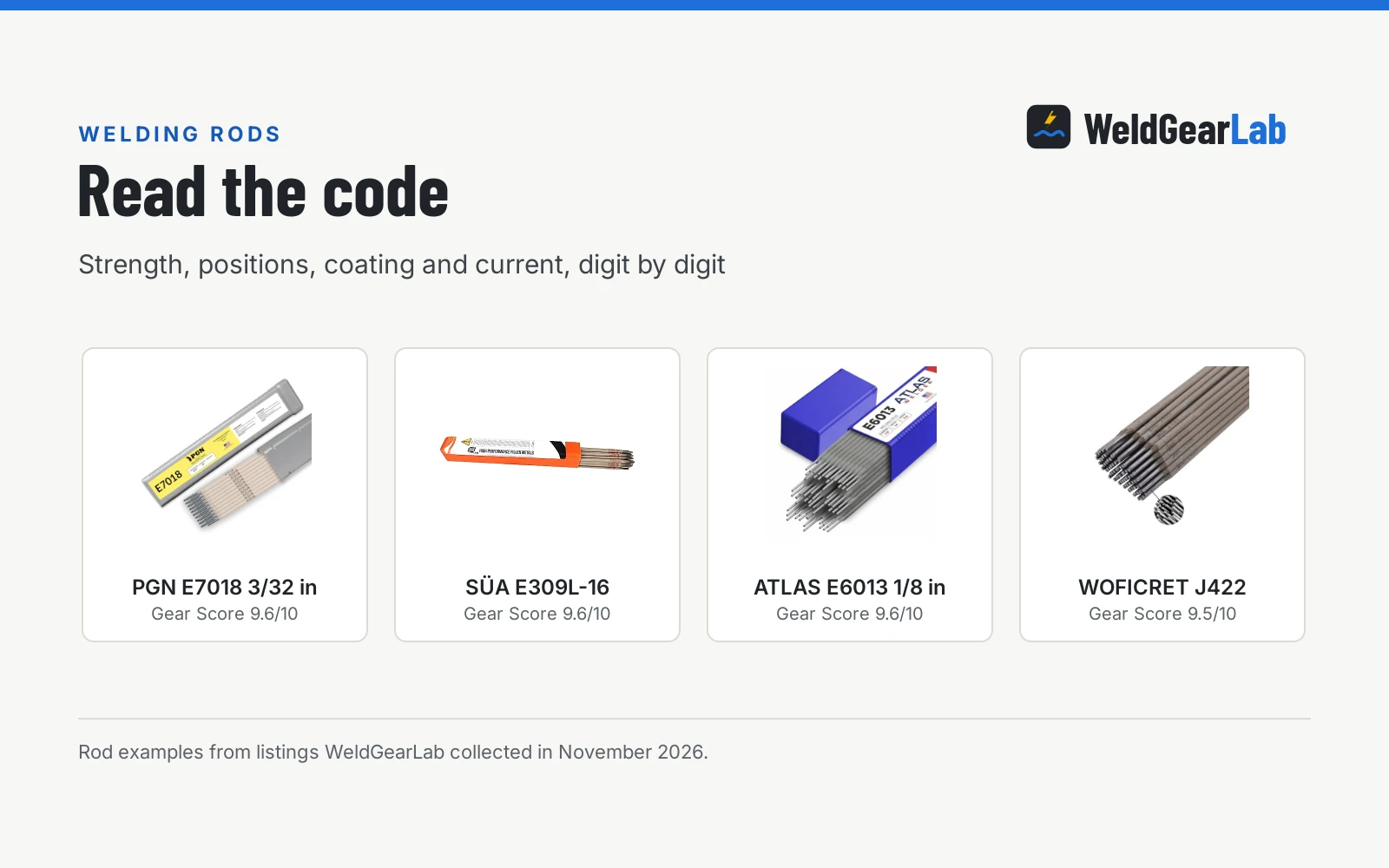
A key practical advantage of 7016 is its ability to operate on either alternating current or direct current. The potassium silicate in the basic coating ionizes readily in the arc gap, keeping the arc lit as the current passes through zero during AC cycles. Running on direct current electrode positive produces a quiet arc, low spatter, and moderate, controlled penetration that washes smoothly into joint sidewalls. While alternating current helps avoid arc blow when welding deep groove joints or magnetic plate, direct current electrode positive remains standard shop practice for pipe roots and structural fabrication. For a deeper breakdown of how machine power affects your bead, read our comparison of DC vs AC stick welding.
Can 7016 handle root pass and cap?
Yes. In structural welding and pipe fabrication, many welders rely on 7016 for both the root pass and the remaining fill and cap passes. The electrode produces a sound, uniform root bead with smooth internal reinforcement on the inside of the joint, followed by clean, crack-resistant fill layers that tie evenly into the groove sidewalls. Because the slag blanket separates easily with a light rap from a chipping hammer, interpass cleaning is fast and leaves minimal debris in the joint groove.
Storage and moisture precautions. Low hydrogen flux coatings absorb atmospheric moisture rapidly when exposed to humid air. Moisture in the flux breaks down in the arc into hydrogen, which dissolves into the molten steel and causes delayed cold cracking under stress. Store open packages of 7016 in an airtight storage container or a heated rod oven if you work in a humid garage. Always grind joint bevels clean of oil, moisture, and mill scale before striking an arc. Always wear proper shade helmet lenses, leather welding gloves, and safety glasses under your helmet when chipping slag. Ensure adequate ventilation to keep welding fumes away from your breathing zone, and clear the shop floor of flammable materials before beginning hot work. Read our complete guide in our welding consumables section for additional tips on filler metal storage.
FAQ for welders
How to choose the right welding rod?
Match the rod to the metal thickness, joint design, base metal composition, and available welder power. For heavy structural joints and pipe root passes where joint failure or cracking is a concern, low hydrogen rods like 7016 are the proper choice. For light sheet metal or quick repairs on the farm, general-purpose electrodes offer easier striking and handle surface rust better.
What is a welding rod made of?
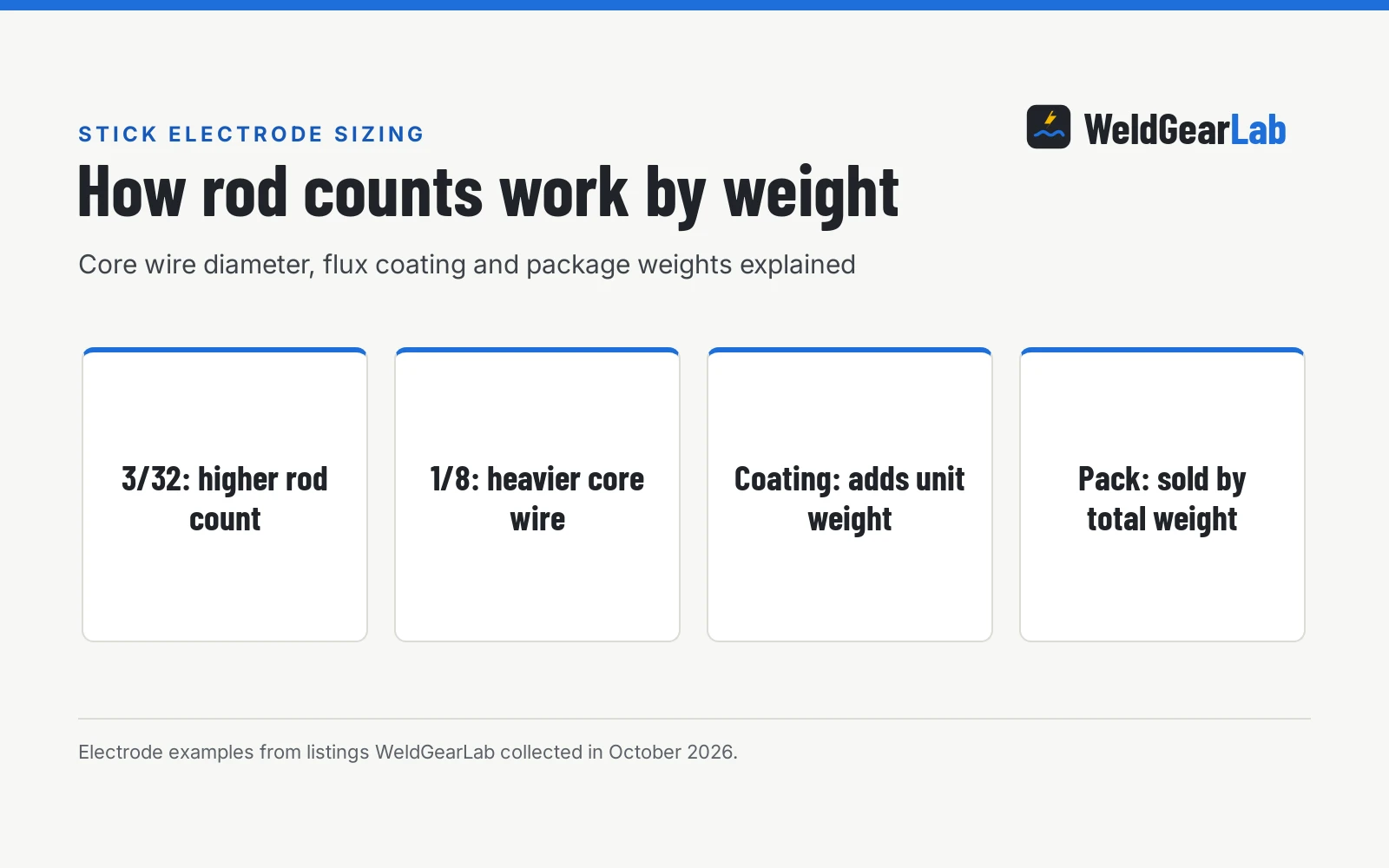
A stick welding rod consists of a solid carbon steel core wire surrounded by an extruded chemical flux coating. On a 7016 rod, that coating contains basic minerals and potassium compounds that melt in the arc to generate a protective shielding atmosphere. As the puddle cools, the molten flux solidifies into a protective slag blanket over the bead.
Why do welding rods stick?
Welding rods stick when the core wire touches the steel workpiece without sufficient arc gap to sustain the electrical plasma, fusing the rod tip to the puddle. This often happens from a slow scratch start, holding too short an arc length, or running at inadequate machine current. If you struggle with rod freeze during arc initiation, review our troubleshooting guide on why does my welding rod keep sticking and practice your technique with our tips on how to strike an arc with a stick welder.
What size welding rod for 1/2 steel?
When joining 1/2 steel plate, joint preparation and pass sequence dictate rod diameter rather than plate thickness alone. Fabricators typically bevel the plate edges and run a thinner diameter electrode for the root pass to ensure full joint penetration and complete sidewall tie-in. Subsequent fill and cap passes are run with thicker diameter rods to deposit metal efficiently without overheating the joint.
How much do welding rods cost?
Welding rod costs depend on package weight, electrode chemistry, and protective packaging. Low hydrogen rods like 7016 carry a modest price premium over general-purpose electrodes because of their specialized flux chemistry and moisture-resistant packaging. Buying larger sealed containers reduces cost per pound, while specialty stainless and alloy rods cost significantly more than carbon steel rods.
Related: best welding rods for mild steel, best stick welder for farm use, how to use stick welder, and the stick welders hub. Also see our guide on DC vs AC stick welding.