Best All Around Stick Welding Rod (2026): 4 Scored
Three stick welding rods compared by stated versatility, positions, penetration and value, for steel.

On this page
Top picks at a glance
As an Amazon Associate I earn from qualifying purchases.
- 1
 Best OverallYESWELDER E6011 10 lb9.5/10View on Amazon
- 2
 Easiest to LearnLIIJII E6013 1 lb9.4/10View on Amazon
- 3
 Best for Thin SteelHobart 6011 1 lb9.4/10View on Amazon
The trailer hitch needs a gusset, the steel is rusty and the grinder is two bays away: the best all around stick welding rod is the one that burns through the rust and still holds. Stick welding forgives dirty metal, and the right rod forgives a shaky hand. We scored three stick electrodes on stated versatility, positions, penetration and value, from the listings alone.
WeldGearLab gets a commission on purchases made through links on this page, and your price stays the same. Read our affiliate disclosure.
Quick picks
- Best Overall YESWELDER E6011 10 lb: E6011 3/32 in rod, 10 lb, all-position with deep penetration on dirty steel Check price on Amazon
- Easiest to Learn LIIJII E6013 1 lb: E6013 3/32 in rod, 1 lb, all-position AC/DC with easy arc starting Check price on Amazon
- Best for Thin Steel Hobart 6011 1 lb: 6011 1/16 in rod, 1 lb, all positions on carbon and galvanized steel Check price on Amazon
The machines

YESWELDER E6011 3/32'' 10LB Welding Rods Stick
YESWELDER E6011 3/32 in stick electrodes, 10 lb box, all-position with deep penetration on dirty steel and 40-80A stated amperage.
Pros
- E6011 all-position rod with deep penetration stated
- Fast freezing on dirty, rusty and painted materials
- 40A to 80A recommended amperage stated
- 10 lb box, the most rod per order here
Cons
- No warranty term is stated
- No safety certification is stated
- 10 lb box is a lot for occasional use

E6013 Welding Rods 3/32" x 14" Carbon Steel 1LB
LIIJII E6013 3/32 in x 14 in stick electrodes, 1 lb, all-position AC/DC with easy arc starting for general fabrication.
Pros
- E6013 all-position electrode, AC and DC compatible
- Easy arc starting with a smooth arc stated
- Readily removable slag stated
- Listed as one of the easiest electrodes to learn
Cons
- No warranty term is stated
- No safety certification is stated
- Best on clean or lightly rusted steel, not heavy rust
- No amperage range is stated

Hobart H112216-R01 1-Pound Plastic 6011 Stick
Hobart 6011 1/16 in stick electrode, 1 lb, all positions on carbon and galvanized steel with 60,000 PSI tensile strength.
Pros
- 6011 rod for carbon and galvanized steel
- All positions stated
- 60,000 PSI tensile strength stated
- Runs on AC or DCEP polarity
Cons
- No warranty term is stated
- No safety certification is stated
- 1/16 in diameter limits it to thin metal
Other welders and gear to compare
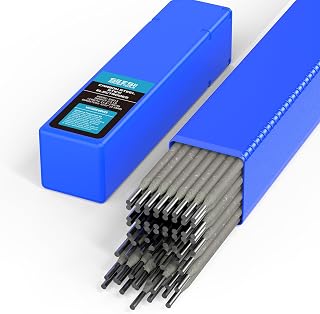 Seesii E6013 2.5LB 3/32'' Welding Rod Carbon Steel StickCheck price on Amazon
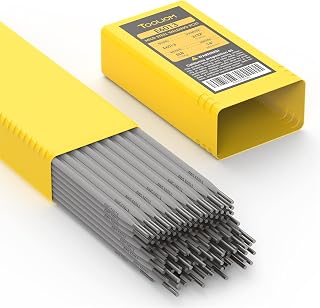 TOOLIOM E6013 Welding Rod Carbon Steel Stick ElectrodesCheck price on Amazon
 TOOLIOM E6011 Welding Rod Carbon Steel Stick ElectrodesCheck price on Amazon
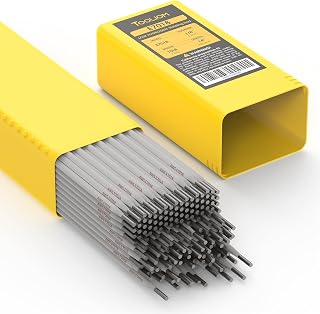 TOOLIOM E7018 Welding Rod Low-Hydrogen Stick ElectrodesCheck price on Amazon
 ATLASWELDER 6013 Welding Rod 1/8" 10LBCheck price on Amazon
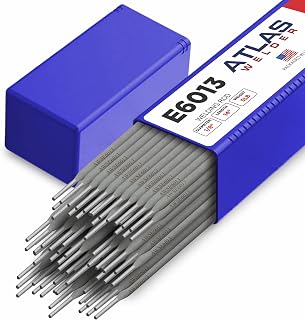 ATLASWELDER 6013 Welding Rod 1/8" 5LBCheck price on Amazon
Spec sheet comparison
| Rod | Gear Score | Class | Diameter | Weight | Positions | Amps stated |
|---|---|---|---|---|---|---|
| YESWELDER E6011 10 lb | 9.5/10 | E6011 | 3/32 in | 10 lb | All-position | 40-80A |
| LIIJII E6013 1 lb | 9.4/10 | E6013 | 3/32 in | 1 lb | All-position | Not stated |
| Hobart 6011 1 lb | 9.4/10 | 6011 | 1/16 in | 1 lb | All-position | Not stated |
Treat the specs as maker ratings pulled straight from the listings; we gathered them on 19 October 2026.
Buying guide: best all around stick welding rod
6011 vs 6013
The 6011 rods here dig: the YESWELDER lists deep penetration and fast freezing on dirty, rusty and painted materials, and the Hobart lists all positions on carbon and galvanized steel with 60,000 PSI tensile strength. The LIIJII E6013 lists itself as one of the easiest electrodes to learn, with easy arc starting, a smooth arc and readily removable slag on clean or lightly rusted mild steel. Pick 6011 for rough metal, 6013 for clean work and learning. See our best 6011 welding rod and best 6013 welding rod for thin metal guides.
Diameter and amperage
Two listings run 3/32 inch: the YESWELDER and the LIIJII. The LIIJII title states a 14-inch length. Only the YESWELDER states amperage: 40A to 80A. The Hobart runs 1/16 inch, the thin pick for sheet metal. Match the diameter to the metal thickness and your machine; see the welders category for the machines that burn these rods.
Rod class: 6011 vs 6013
The class code on the rod tells you what it does, and the three picks here show two classes. The YESWELDER and Hobart are 6011 rods: deep-penetrating, fast-freeze rods that burn through rust, paint and mill scale, which is why they suit farm repair on dirty steel. The Hobart lists 60,000 PSI tensile strength, the number the 60 in 6011 stands for. The LIIJII is an E6013: a softer arc with easy slag removal that suits clean steel and beginners, and the listing states all-position welding.
For all-around farm and shop work, 6011 is the classic choice because it tolerates the steel you actually have: rusty, painted, imperfectly prepped. The YESWELDER lists 3/32 in diameter at 40 to 80 amps in a 10 lb box, and the Hobart lists 1/16 in in a 1 lb tube. The 6013 suits the welder who preps carefully and wants a smooth bead on clean steel.
Diameter and amperage
Diameter sets the amperage window, and the listings give you the numbers. The YESWELDER 3/32 in E6011 lists 40 to 80 amps. The Hobart 1/16 in 6011 runs cooler still, suited to sheet and thin sections where a 3/32 in rod would burn through. The LIIJII 3/32 in E6013 lists all-position capability without an amperage figure, so start low on your machine and watch the puddle.
Thinner rods suit thinner steel. If your work is mostly 16-gauge panels, exhaust and light brackets, the 1/16 in Hobart is the right diameter. If your work is 1/8 in and up: trailer frames, gates, implement repairs, the 3/32 in rods carry more metal per pass. Keep both on hand if the shop does both, since a 1 lb tube of each costs less than one ruined panel.
How much rod to buy
The three picks span 1 lb to 10 lb, and the right amount depends on your burn rate. The YESWELDER lists a 10 lb box of 3/32 in E6011: the bulk pick for the welder who burns rod every weekend on fences, gates and equipment. The LIIJII and Hobart list 1 lb each, which suits the occasional repair or the welder trying a new class before committing.
Rod goes stale. Moisture in the flux causes porosity and sticking, so a 10 lb box only makes sense if you burn through it or store it dry. The 1 lb tubes suit the welder who strikes an arc a few times a month. Buy the 10 lb YESWELDER when 6011 is your daily rod; buy the 1 lb tubes when you are learning, taking a class or fixing one thing.
Storing rods so they stay dry
The flux coating on stick rods absorbs moisture from the air, and damp flux causes porosity, sticking and a rough arc. The 1 lb tubes from LIIJII and Hobart are naturally resealable: close the tube after each session and the rods stay dry for the occasional welder. The 10 lb YESWELDER box suits the welder who burns rod steadily; if it will sit for months, a sealed rod container or a dry cabinet keeps the flux sound. Whatever the size, store rods off the concrete floor and out of the weather, and if a rod sticks and sputters, suspect moisture before you blame the machine.
Before You Strike an Arc
- Match the rod to the metal: E6011 or E6013 for mild steel.
- Check polarity: the Hobart runs AC or DCEP, the YESWELDER is designed for AC, the LIIJII runs AC or DC.
- Store rods dry; a 10 lb box outlasts a 1 lb tube on the shelf.
FAQ for welders
What kind of welding is stick?
Shielded metal arc welding: a flux-coated electrode that shields its own arc. No gas bottle is needed, which is why stick suits farm and field repairs.
Does stick welding require gas?
No. The flux coating on these electrodes forms the shield. None of the three listings mention gas.
6011 or 6013 for a beginner?
The LIIJII E6013 listing calls itself one of the easiest electrodes to learn, with easy arc starting and removable slag. The 6011 rods dig deeper on dirty metal.
How many rods are in a pound?
No single number covers every rod: diameter and length change how many rods make a pound, so check the listing for the rod you buy. See our how many welding rods in a pound guide.
Scoring, line by line
Each rod is scored out of 10 on performance, build, value, safety and warranty, using only what the listing publishes. For electrodes, performance means stated versatility across metals and positions, penetration and ease of use. None of the three listings state a warranty term or a safety certification. The weights are on our How We Pick page.
| Product | Gear Score | Perf. /35 | Build /25 | Value /25 | Safety /10 | Warranty /5 |
|---|---|---|---|---|---|---|
| YESWELDER E6011 10 lb | 9.5 | 30 | 21 | 22 | 0 | 0 |
| LIIJII E6013 1 lb | 9.4 | 28 | 20 | 20 | 0 | 0 |
| Hobart 6011 1 lb | 9.4 | 27 | 20 | 20 | 0 | 0 |
Think of 9.2 as the bottom and 9.8 as the top. Totals are placed between them in proportion, which keeps the order intact: more points, higher score.
More welding guides
Also see our best 6011 welding rod. Also see our best 6013 welding rod for thin metal. Also see our stick welder vs multi process welder.