Bench Vise vs Welding Vise: Which One Should You Buy?
Bench vises and welding vises compared for fabrication: what each is built for, when each is the better choice, and four vise examples from the listings.

On this page
Top picks at a glance
As an Amazon Associate I earn from qualifying purchases.
- 1
 VEVOR Bench Vise 8 Inch Jaw Width Multipurpose with9.7/10View on Amazon
- 2
 2 PCS 3 Inches Bench Vise9.6/10View on Amazon
- 3
 Forward 30606 6 Inch Bench Vise Heavy Duty with Anvil and9.7/10View on Amazon
- 4
 MYTEC 2-In-1 Bench Vise Heavy Duty for WorkbenchView on Amazon
- 5
 Wilton Multi-Purpose Bench ViseView on Amazon
- 6
 Real Avid ViseView on Amazon
- 7
 VEVOR Bench Vise 6.5" Jaw Width Multipurpose 360-DegreeView on Amazon
- 8
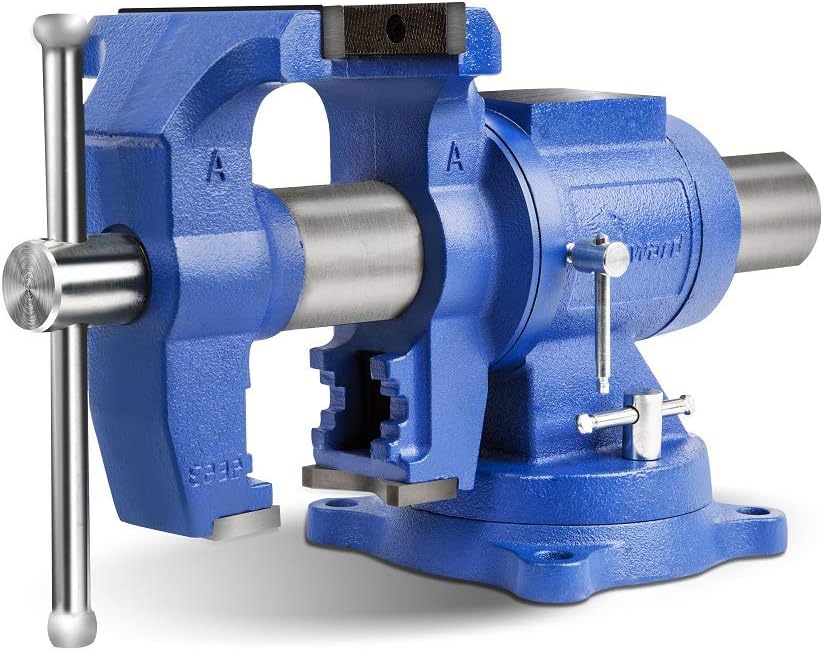 Forward DT150B 6 Inch Heavy Duty Bench Vise with 360° SwivelView on Amazon
- 9
 Nakkaa 4" Bench Vise Ductile Cast Iron Bench Vise with 360°View on Amazon
A bench vise holds your work. A welding vise holds your work while you beat on it. That is the whole difference: a bench vise is a general clamping vise for sawing, drilling, filing and gluing, while a welding vise is a heavier vise built for hammering, grinding sparks and hot metal. This bench vise vs welding vise guide explains the difference, when each is the better choice, and shows four vise examples from the listings.
Other welders and gear to compare
 MYTEC 2-In-1 Bench Vise Heavy Duty for WorkbenchCheck price on Amazon
 Wilton Multi-Purpose Bench ViseCheck price on Amazon
 Real Avid ViseCheck price on Amazon
 VEVOR Bench Vise 6.5" Jaw Width Multipurpose 360-DegreeCheck price on Amazon
 Forward DT150B 6 Inch Heavy Duty Bench Vise with 360° SwivelCheck price on Amazon
 Nakkaa 4" Bench Vise Ductile Cast Iron Bench Vise with 360°Check price on Amazon
This guide links to our product roundups, where WeldGearLab gets a commission on purchases made through links on this page, and your price stays the same. Read our affiliate disclosure.
bench vise vs welding vise: the difference in one paragraph
Both are vises: a fixed jaw, a moving jaw, a screw and a base. A bench vise optimizes for grip and versatility across materials, with flat serrated jaws, often a swivel base and sometimes pipe jaws. A welding vise optimizes for abuse: heavier castings, usually ductile iron rather than plain cast iron, a large anvil for hammering, and jaws that hold round tube and pipe. You can weld with work held in a bench vise, but you should not hammer on one like a welding vise.
Side by side
| Bench vise | Welding vise | What it means | |
|---|---|---|---|
| Main job | Holding work for sawing, drilling, filing, gluing | Holding work for welding, grinding and hammering | General clamping or welding work |
| Hammering | Light taps on the anvil only | Built for it: heavy casting, large anvil | Light taps or full hammering |
| Heat and sparks | Keep heat away from paint and temper | Made to take sparks and hot metal | Keep heat away or take sparks |
| Jaws | Flat serrated jaws; pipe jaws on some | Serrated jaws plus V-jaws and pipe jaws for round stock | Flat jaws or V and pipe jaws |
| Swivel | 270-degree to 360-degree bases on the examples | Often fixed or rotating; mass matters more | 270 to 360 degrees on the examples |
| Example | MYTEC 6 in, Olympia 4 in, Real Avid 5 in | Wilton 650P, 6-1/2 in jaws, ductile iron | Four vises from the listings |
| Example warranty | 2 Year Manufacturer on the Real Avid | Lifetime on the Wilton | Lifetime on Wilton; 2 years on Real Avid |
Treat the specs as maker ratings pulled straight from the listings; we gathered them on 21 October 2026.
When a bench vise is the better choice
- General shop work. Sawing, drilling, filing, sanding, gluing and small assembly. The MYTEC 6 in example covers woodworking, metal working, cutting conduit, drilling, gluing and sanding in one listing.
- Portability. The MYTEC offers both: a clamp base for workbench or table so it moves to the job, or permanent bolting down.
- Light weight. The Olympia 4 in example weighs 5.1 pounds and the Real Avid 11 pounds, easy to carry and store.
- Precision positioning. The Real Avid’s 360-degree swivel and plus or minus 3-degree leveling knob suit careful alignment work.
Our best bench vise for metal work guide covers five more general-purpose vises.
When a welding vise is the better choice
- Hammering and shaping. The Wilton 650P’s large built-in anvil and ductile iron casting are made for forming and shaping with a hammer.
- Hot work and sparks. Welding, grinding and hot metal belong on a vise built for heat, not a light cast iron vise.
- Round stock. The Wilton’s V-jaws hold round stock vertically and its replaceable pipe jaws take 1/4 to 1-11/16 in pipe; the MYTEC’s serrated pipe jaws hold tubes and pipes too.
- Clamping force. The MYTEC lists a 3300 lbs working maximum clamping force for heavy work.
The gear: four vises from the listings
The Wilton 650P is the welding vise of the group. The title states a 6-1/2 in jaw width, 6-1/4 in jaw opening and 3-1/4 in throat, with a 360-degree rotating head indexed at 30-degree increments, replaceable steel pipe jaws, a large built-in anvil and V-jaws that hold round stock vertically. It is backed by Wilton’s lifetime warranty against manufacturing defects. Note the listing’s own table disagrees on several figures, giving 4-1/2 in jaw width, 4-1/4 in opening, 2-1/4 in throat and two different weights; the title wins those arguments.
The Real Avid is the positioning vise: 5 in jaw width, 360-degree swivel, a leveling knob for plus or minus 3 degrees of side-to-side adjustment, and high-torque work to 100 ft-lb through a locking ball and socket joint. It weighs 11 pounds with reversible jaw sleeves, and it states a 2 Year Manufacturer warranty. Its listing leans toward gunsmithing, but the vise itself is a general bench vise.
The MYTEC 6 in is the versatile clamp-on: high-strength cast steel, a 270-degree swivel base, and a choice of bolting down or clamping on with a 2.1 in base clamp range. It lists a 4.3 in maximum jaw opening, 6 in jaw width, 2.2 in throat depth, 3300 lbs working maximum clamping force and a 17 pound net weight, with serrated pipe jaws plus flat jaws and a polished anvil. No warranty term is stated, only a refund or exchange promise.
The Olympia Tools 38-604 is the light 4 in bench vise: cast iron, 270-degree swivel base, 5.1 pounds, with a polished anvil, permanent pipe jaws, replaceable hardened steel jaw faces and a 1500 pound tensile strength. The warranty line is only an email address, so no warranty term is stated.
Welding safety. Ventilate when welding, wear the right eye and face protection for the process, and keep flammables clear of sparks and hot metal. Bolt the vise down for hammering work; a clamp base trades some holding power for portability. See the OSHA welding overview and our Safety Disclaimer.
FAQ for welders
Can I weld with parts held in a regular bench vise?
Yes, for holding and tacking. The difference shows up when you hammer, grind or lay heavy beads: that is welding vise work, with a heavier casting and a real anvil.
What size vise do I need for welding?
The examples here run from a 4 in bench vise to the Wilton’s 6-1/2 in jaws, with the MYTEC at 6 in and the Real Avid at 5 in.
Do I need pipe jaws on a welding vise?
For tube and pipe work, yes. The Wilton lists replaceable pipe jaws for 1/4 to 1-11/16 in pipe plus V-jaws for vertical round stock, and the MYTEC lists serrated pipe jaws alongside its flat jaws.
Should a welding vise swivel?
It helps. The examples offer 270-degree swivel bases on the MYTEC and Olympia and 360-degree rotation on the Wilton head and Real Avid. Lock the swivel before hammering.
Which of these vises has the best warranty?
The Wilton states a lifetime warranty against manufacturing defects. The Real Avid states 2 years. The MYTEC and Olympia listings state no warranty term.
Related: best welding vise for mechanics, best welding vise under 100, welding table vs workbench and best bench vise for metal work.