Best Welding Vise for Mechanics (2026)
Five bench and pipe vises compared by jaw size, iron strength, swivel base and warranty, for mechanics and shop repair work.

On this page
Top picks at a glance
As an Amazon Associate I earn from qualifying purchases.
- 1
 Rebuildable ClassicWilton Gray Cast9.6/10View on Amazon
- 2
 Strongest IronWilton 72,000 PSI Ductile9.6/10View on Amazon
- 3
 Most Jaw OptionsForward CR60A9.6/10View on Amazon
- 4
 Best AnglesWORK IQ Articulating9.5/10View on Amazon
- 5
 Pipe SpecialistVEVOR Chain Pipe Vise9.5/10View on Amazon
A seized bolt on a bracket, an exhaust hanger to tack, a roll-cage tube to fit up: the best welding vise for mechanics is the one that holds that exact part. That means a bench vise with strong iron and a real anvil for beating on parts, an articulating vise for angled work, or a chain pipe vise for exhaust and roll-cage tubing. We compared five vises on clamping performance, build, value, safety and warranty, using only what each listing states.
WeldGearLab gets a commission on purchases made through links on this page, and your price stays the same. Read our affiliate disclosure.
Quick picks
- Rebuildable Classic Wilton Gray Cast: 360-degree double-lockdown base, replaceable steel jaws and a stated lifetime warranty. Check price on Amazon
- Strongest Iron Wilton 72,000 PSI Ductile: 72,000 PSI ductile iron with 6-inch jaws and large anvil. Check price on Amazon
- Most Jaw Options Forward CR60A: 6.5-inch jaws, dual jaw sets and built-in pipe jaws on a swivel base. Check price on Amazon
- Best Angles WORK IQ Articulating: 360-degree articulating head with 130 ft-lbs locking pin. Check price on Amazon
- Pipe Specialist VEVOR Chain Pipe Vise: Chain vise for 1/8 to 5-inch pipe, mounts to bench, truck or tripod. Check price on Amazon
The machines

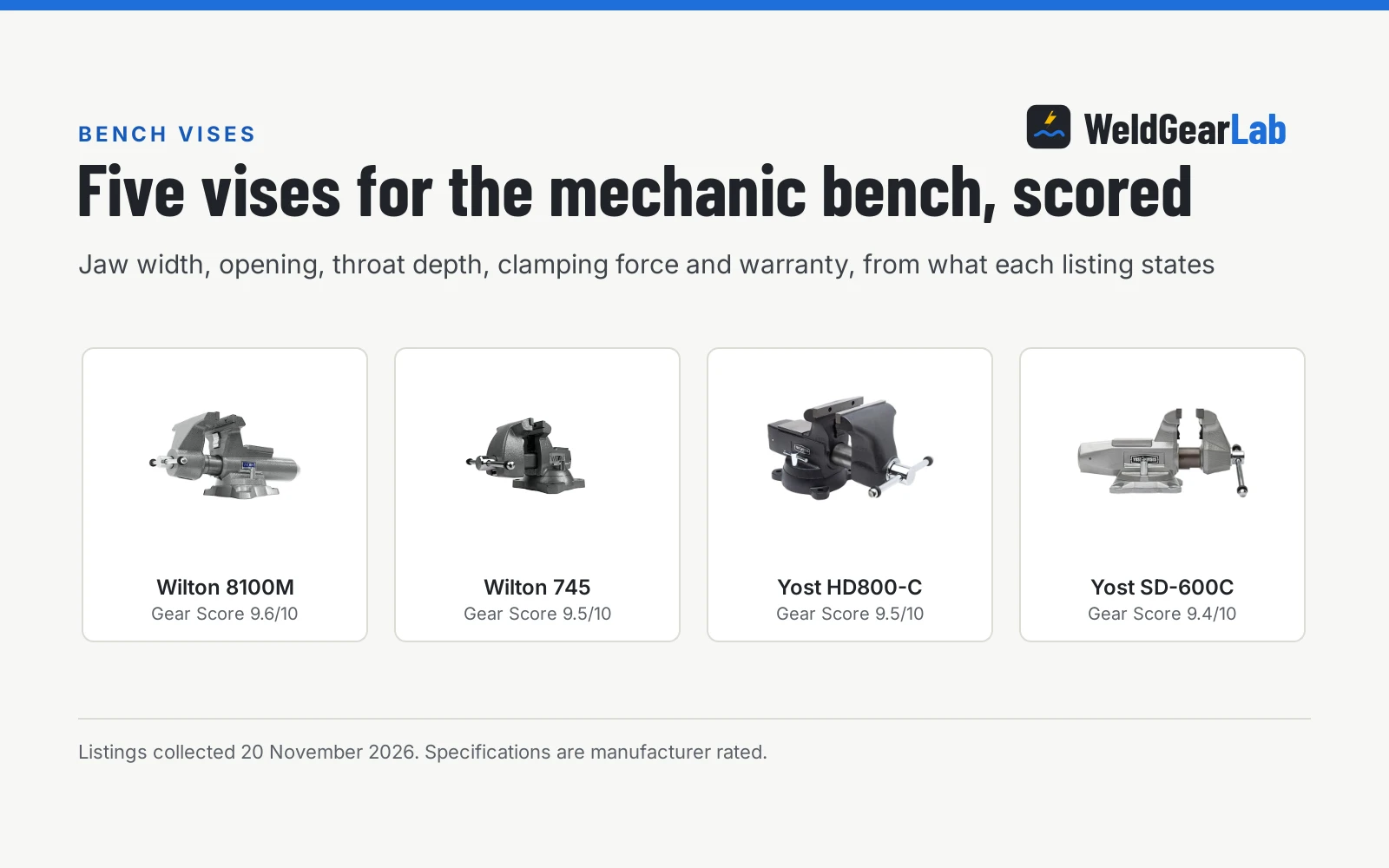
Wilton Mechanics Bench Vise, 6" Jaw Width
A heavy-duty bench vise with 6-inch jaws, a 360-degree double-lockdown swivel base, replaceable jaws and a stated lifetime warranty.
Pros
- 360-degree swivel base with double lockdowns for stability
- Replaceable hardened steel top and pipe jaws, plus a large anvil work surface
- Fully-enclosed spindle and nut for long service life
- Lifetime manufacturer warranty stated in the listing
Cons
- 64 lb weight needs a sturdy bench
- 30,000 PSI is the lowest iron strength stated here
- No pipe capacity range is stated in the listing
Wilton 6" Apprentice vise (WVA6)
A 6-inch ductile iron bench vise with 72,000 PSI strength, 6-inch opening and 3.75-inch throat.
Pros
- 72,000 PSI ductile iron: the strongest iron stated here
- 6-inch jaw width and 6-inch opening for larger materials
- 3.75-inch throat depth and large anvil surface for forming work
- 1/4 to 3-inch pipe capacity built in
Cons
- No warranty term is stated in the listing
- No swivel base is stated
- No pipe-jaw detail beyond the stated capacity range
- At 25.7 pounds it is lighter than the gray cast Wilton, so bolt-down matters

Forward CR60A 6.5 Inch Bench Vise Heavy Duty
A 6.5-inch 60,000 PSI ductile iron bench vise with 210-degree swivel base, dual jaw sets and built-in pipe jaws.
Pros
- 6.5-inch jaw width with 60,000 PSI ductile iron body
- 210-degree swivel base for angled workpieces
- Two jaw sets: replaceable flat jaws with slot jaws, plus built-in pipe jaws for 1/2 to 3-1/2 inch pipe
- Large reinforced anvil for grinding, cutting and tapping
Cons
- No warranty term is stated in the listing
- 210-degree swivel is less than a full 360
- No locking-angle figure is stated
- Anvil work area is 3.1 by 2.9 inch: smaller than the large-anvil picks
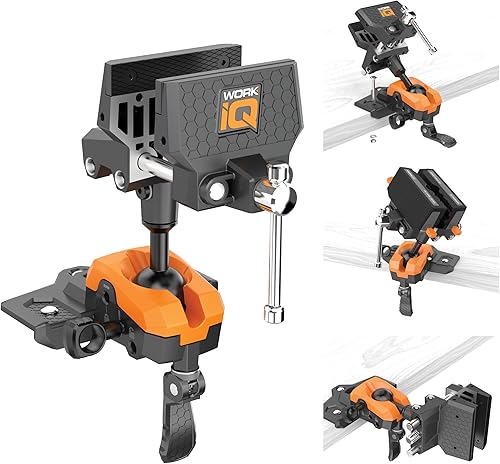
WORK IQ TOOLS IQ Vise 360° Articulating Bench
A 360-degree articulating vise with 5-inch parallel jaws, a locking pin with 130 ft-lbs of torque capacity and accessory ports.
Pros
- 360-degree ball-and-socket articulation with one-hand Quick Cam lock; the locking pin engages 8 fixed working positions with 130 ft-lbs of torque capacity
- 5-inch smooth parallel jaws with swappable Flex-Fit pads
- Four ports accept work light, magnifier and phone holder
- Grips a 2x4 or a playing card per the listing
Cons
- No warranty term is stated in the listing
- No pipe capacity is stated: not the pipe-work pick
- Cast aluminum body trades some heft for portability
- Jaws and accessories are sold separately
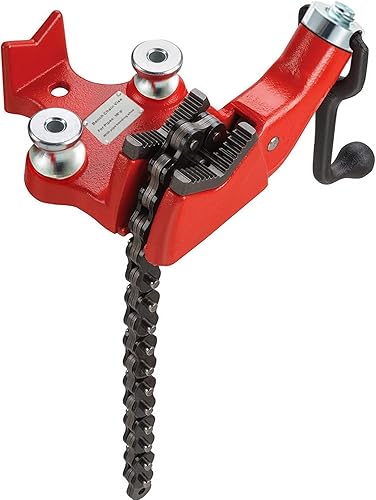
Mophorn Screw Bench Chain Vise 1/8 to 5-Inch Pipe
A chain-style pipe vise with 1/8 to 5-inch pipe capacity, cast iron base and crank handle.
Pros
- Holds 1/8-inch to 5-inch pipes: the widest pipe range here
- Chain and crank handle fix pipes tightly with no fatigue, per the maker
- Mounts to a workbench, truck or tripod stand
- Neoprene-coated jaws, described as compact and lightweight for field work
Cons
- No warranty term is stated in the listing
- Chain vise only: not for flat workpieces
- No iron strength figure is stated
- Lightweight build trades stability for portability
Other welders and gear to compare
 Wilton Mechanics Bench ViseCheck price on Amazon
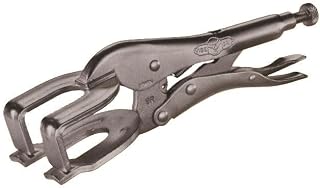 IRWIN VISE-GRIP Locking PliersCheck price on Amazon
 11-Inch C-Clamp Locking PliersCheck price on Amazon
 Wilton Mechanics Pro Bench ViseCheck price on Amazon
 Locking Pliers SetCheck price on Amazon
Spec sheet comparison
| Model | Gear Score | Jaw / pipe | Iron | Base | Warranty (stated) |
|---|---|---|---|---|---|
| Wilton Gray Cast | 9.6/10 | 6 in. width, 5-3/4 in. opening | 30,000 PSI gray cast iron | 360-degree double lockdown | Lifetime |
| Wilton 72,000 PSI Ductile | 9.6/10 | 6 in. width, 6 in. opening | 72,000 PSI ductile | Bench | Not stated |
| Forward CR60A | 9.6/10 | 6.5 in. width, 6 in. opening | 60,000 PSI ductile | 210-degree swivel | Not stated |
| WORK IQ Articulating | 9.5/10 | 5 in. parallel jaws | Hardened steel, cast aluminum | 360-degree articulating | Not stated |
| VEVOR Chain Pipe Vise | 9.5/10 | Chain, 1/8 to 5 in. pipe | Cast iron base | Bench, truck or tripod | Not stated |
Specifications are manufacturer stated, as published on each listing and collected 21 October 2026.
The short version: the classic Wilton gray cast is the rebuildable veteran with the only stated warranty, the Wilton 72,000 PSI vise is the strongest iron for heavy work, the Forward CR60A is the spec leader with two jaw sets, the WORK IQ articulates for tricky angles, and the VEVOR chain vise owns pipe work.
What the listings tell you
Iron strength separates the bench vises. The Wilton Apprentice states 72,000 PSI ductile iron, the Forward CR60A states 60,000 PSI ductile iron, and the classic Wilton states 30,000 PSI gray cast iron. If you hammer on parts in the vise, the two ductile picks carry the higher stated figures.
Jaw size and opening run 5 to 6.5 inches. The Forward CR60A has the widest stated jaws at 6.5 inches with a 6-inch opening and 3.8-inch throat, the two Wilton bench vises list 6-inch jaws, while the WORK IQ runs 5-inch smooth parallel jaws and the VEVOR chain vise ignores flat work entirely for 1/8 to 5-inch pipe. For mechanics, pipe capacity matters as much as jaw width: the Forward covers 1/2 to 3-1/2 inch, the Wilton Apprentice covers 1/4 to 3 inch, and the VEVOR covers the widest range at 1/8 to 5 inch.
Swivel and articulation decide positioning. The classic Wilton rotates a full 360 degrees with double lockdowns, the Forward CR60A swivels 210 degrees, and the WORK IQ articulates on a ball-and-socket head with a locking pin with 130 ft-lbs of torque capacity. For complex repair work at odd angles, the WORK IQ’s articulation wins; for stable clamping on a swivel base, the Wilton’s double lockdowns win.
Best Welding Vise for Mechanics: Buying Guide
Ductile vs gray cast iron
The listings state three iron figures: 72,000 PSI and 60,000 PSI ductile, and 30,000 PSI gray cast iron. Compare the stated PSI before you buy, and note that the classic Wilton listing mixes materials: its bullets call the swivel base ductile iron and the vise 30,000 PSI gray cast iron. It is a rebuildable vise with replaceable jaws, but it carries the lowest stated strength here.
Jaw size for shop repairs
Five to 6.5-inch jaws are what these listings state. The Forward’s 6.5-inch width is the biggest here; the WORK IQ’s 5-inch parallel jaws trade width for smooth, even grip on finished surfaces, per the maker.
Swivel base or articulating head
A swivel base rotates the vise on the bench; an articulating head tilts the work to any angle. The WORK IQ’s ball-and-socket head is the most flexible for repair work at odd angles, while the Wilton’s 360-degree double-lockdown base is the one built around stability.
Pipe capacity
If you work exhaust, roll cages or plumbing, check pipe capacity before jaw width. The VEVOR chain vise covers 1/8 to 5 inch, the Forward’s built-in pipe jaws cover 1/2 to 3-1/2 inch, and the Wilton Apprentice covers 1/4 to 3 inch. A chain vise is the dedicated tool for round work.
Warranties
Only the Wilton Gray Cast states a warranty term, a lifetime manufacturer warranty. For the other four, the listing gives no term, so compare build features and jaw hardware instead.
Use as directed. Bolt the vise to a solid bench before heavy work, keep the work area clear of anything that can burn when you weld or grind on a clamped part, and wear the eye and hand protection the job calls for.
Before You Strike an Arc
- Bolt the vise to a solid bench or table before hammering or pressing work. The Wilton Gray Cast lists a 64 lb weight and the Wilton Apprentice 25.7 lb, so mounting needs differ.
- Check jaw width against your common parts, and for exhaust and tubing work pick by pipe capacity range, not jaw width.
- On arrival, confirm the swivel locks solidly before grinding or tapping. The Wilton lists double lockdowns, the Forward a 210-degree swivel base, the WORK IQ a Quick Cam lever.
- Check what is in the box: the WORK IQ lists jaws and accessories as sold separately, and the Forward lists two jaw sets.
- Use the anvil for forming work, not the jaws: hammering on jaws damages them. If you weld near the vise, clamp your ground to the workpiece and keep the spindle covered from spatter.
FAQ for welders
What size welding vise does a mechanic need?
The picks here run 5 to 6.5-inch jaws, which is the range these listings state. The Forward CR60A’s 6.5-inch width is the biggest stated; the WORK IQ’s 5-inch parallel jaws suit finer work.
Is ductile iron better than gray cast iron for a vise?
The listings state higher strength figures for the ductile picks: the Wilton Apprentice states 72,000 PSI and the Forward states 60,000 PSI, versus 30,000 PSI gray cast iron on the classic Wilton. Check the stated PSI against the work you plan to do.
What is a chain pipe vise for?
A chain pipe vise like the VEVOR clamps round pipe from 1/8 to 5 inch for welding, cutting and threading work. It is not for flat parts: pair it with a bench vise for general repairs.
Do I need a swivel base?
A swivel base lets you position work at angles for grinding and welding. The Wilton rotates 360 degrees with double lockdowns; the WORK IQ articulates on a ball-and-socket head for even more angles.
Which of these vises lists a warranty?
Only the Wilton Gray Cast: it states a lifetime manufacturer warranty. The other four list no term, so judge them on build features, jaw hardware and iron strength instead.
Scoring, line by line
Each vise was scored on clamping performance, build quality, value, safety and warranty from the listing data alone. One of the five listings states a warranty term: the Wilton Gray Cast carries a lifetime manufacturer warranty, so it leads on warranty while the other four score zero there. None of the five lists a safety standard, so none earns safety points. The table below shows each product’s total and how it became the published Gear Score.
| Product | Gear Score | Perf. /35 | Build /25 | Value /25 | Safety /10 | Warranty /5 |
|---|---|---|---|---|---|---|
| Wilton Gray Cast | 9.6 | 27 | 20 | 19 | n/a | 4 |
| Wilton 72,000 PSI Ductile | 9.6 | 29 | 21 | 19 | n/a | 0 |
| Forward CR60A | 9.6 | 28 | 20 | 20 | n/a | 0 |
| WORK IQ Articulating | 9.5 | 27 | 20 | 20 | n/a | 0 |
| VEVOR Chain Pipe Vise | 9.5 | 26 | 19 | 20 | n/a | 0 |
Displayed scores fall between 9.2 and 9.8: the weighted point total is mapped onto that band in a straight line, so earning more points always lifts the score. Unpowered items with no stated safety features skip the safety line, and their score comes from the 90 points that are left.