7014 Welding Rod Uses: Where This Electrode Fits
7014 welding rod uses run from sheet metal tacks and rusty steel repairs to structural steel, storage tanks and machine parts, with a stable arc and a smooth bead.

On this page
Top picks at a glance
As an Amazon Associate I earn from qualifying purchases.
- 1
 Forney 32005 E7014 Welding Rod9.5/10View on Amazon
- 2
 Forney 32110 E7014 Welding Rod9.5/10View on Amazon
- 3
 Hobart H114216-R01 1-Pound Plastic 7014 Stick Electrode9.5/10View on Amazon
A cracked trailer bracket, a rusty gate hinge, a sheet metal patch that needs a tack before it moves: the job on the bench decides the rod, and the rod decides how the day goes. 7014 welding rod uses start with that kind of general repair work, and this guide lays out where the electrode fits, what sizes the listings state, and how it compares with 6013.
This guide links to our product roundups, where WeldGearLab gets a commission on purchases made through links on this page, and your price stays the same. Read our affiliate disclosure.
7014 welding rod uses, summed up
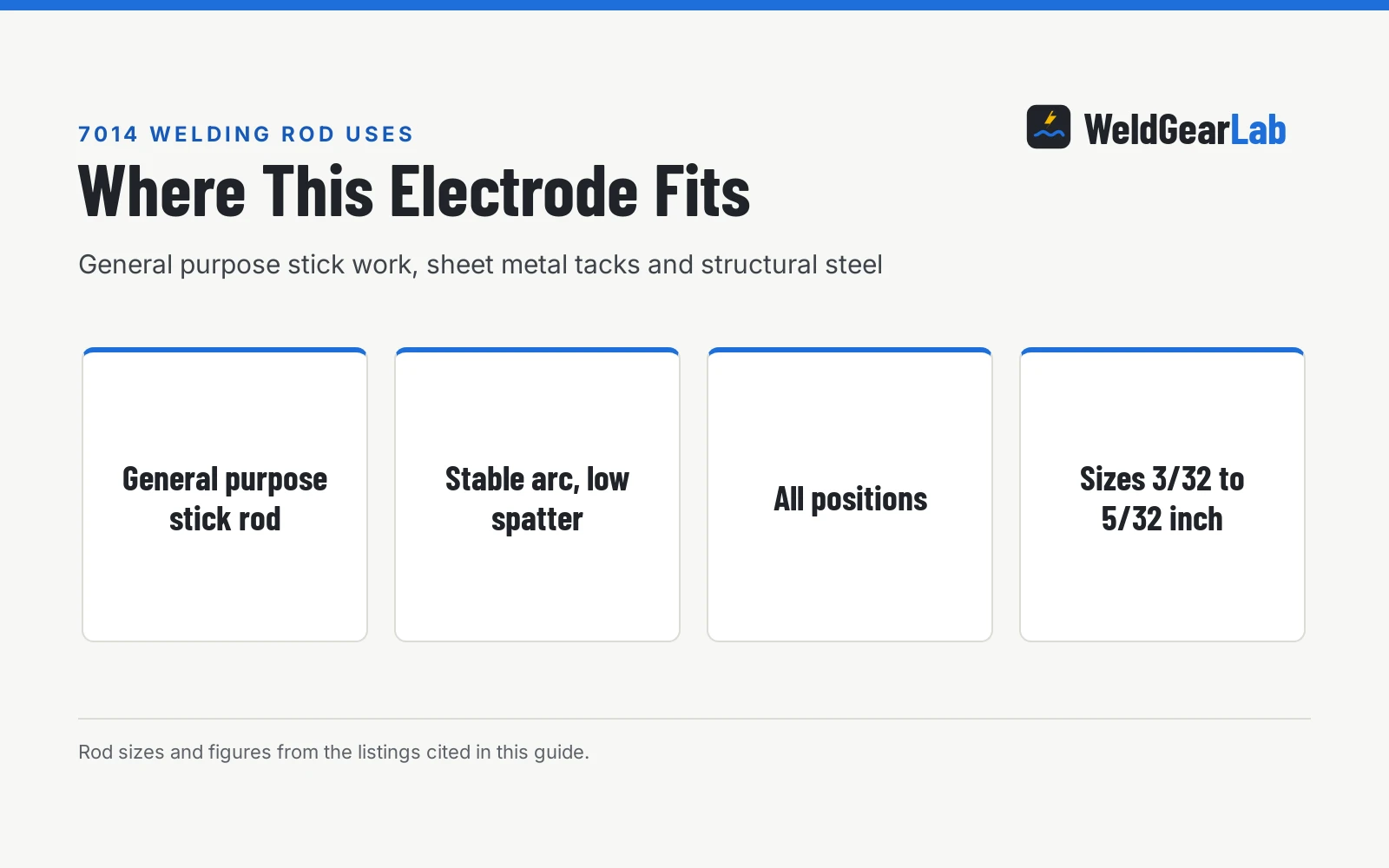
The listing states 7014 is for general purpose, high speed welding of carbon and low alloy steels. Iron powder in the flux and higher amperage settings give greater deposition efficiency than 6013, and the maker lists a stable arc, low spatter, excellent restrike capability and a smooth weld bead with fine ripples. The same listings state the rod runs on small AC machines as well as DC units, in single-pass and multiple-pass applications and in all positions, including vertical-down and overhead.
7014 rod sizes side by side
The listings state rod sizes from 3/32 inch to 5/32 inch, each on a 14 inch rod, with pack weights that vary by listing. The table below sets out what the listings state for each size, and where a figure is absent the table says so.
| 3/32 inch | 1/8 inch | 5/32 inch | |
|---|---|---|---|
| Rod length | 14 inches | 14 inches | 14 inches |
| Pack weights the listings state | 5.0 and 10.0 pounds | 5.0, 10.0 and 50.0 pounds | 5.0 and 10.0 pounds |
| Tensile strength the maker lists | Not stated | 70,000 PSI | Not stated |
| Power sources | AC and DC | AC and DC | AC and DC |
| Positions | All positions, including vertical-down and overhead | All positions, including vertical-down and overhead | All positions, including vertical-down and overhead |
| Packaging the listings state | Box | Box and steel can | Box |
The 1/8 inch size is named in packs from 5.0 pounds to a 50.0 pound steel can. The Hobart listing states 70,000 PSI tensile strength for its 1/8 inch rod, and the table leaves the tensile strength of the other sizes as not stated because the listings give no figure for them.
Where 7014 fits
The listings name a wide spread of work for this rod:
- Sheet metal and tack work. Tack or contact welding sheet metal or galvanized, rusty or dirty steels.
- Ornamental iron and frames. Ornamental iron, mobile home frames, automobiles and railcars.
- Structural work. Structural steel buildings, storage tanks and machine parts, plus shipbuilding and bridge construction named in a separate listing.
- Single-pass and multiple-pass joints. The listings state the rod suits single-pass and multiple-pass applications.
That spread is why the rod shows up as a general purpose pick rather than a specialty rod: the same electrode is listed for thin tack work and for structural steel. For a closer look at how rods differ by job, see the welding rods types guide.
7014 vs 6013
The listings state 7014 was designed for many of the same applications as 6013, with greater deposition efficiency from iron powder in the flux and the ability to run at higher amperage settings. The trade is bead character: 6013 is the light, easy rod for clean sheet work, while 7014 lays metal down faster on the same kind of joints. The 6013 vs 7014 welding rod comparison sets them side by side, and the 6013 welding rod uses guide covers where 6013 fits.
How to pick a size
Start from the joint, not the box. A 3/32 inch rod suits sheet metal tacks and light sections, where a smaller bead and lower heat keep thin metal from burning through. A 1/8 inch rod suits the structural and repair work the listings name, from storage tanks to machine parts. A 5/32 inch rod lays down more metal per pass and suits heavier sections, where the joint needs fill and the machine can run it.
Match the rod to the power source too: the listings state 7014 runs on small AC machines as well as DC units, and the Hobart listing states AC, DCEN or DCEP. Check the polarity the rod label and the machine manual call for before striking an arc.
What to watch before you weld
7014 is listed for galvanized, rusty or dirty steels, which is part of its appeal, and that same work makes fume control matter: weld with ventilation or outdoors with your head out of the plume, and clear dry grass and anything flammable from the area. Keep rods dry, since moisture in the flux hurts the bead, and check the rod ends and the pack on arrival for damage. A damp or damaged rod is not worth running.
For more options, see our welding consumables guides.
FAQ for welders
What is 7014 welding rod used for?
7014 welding rod uses cover general purpose, high speed welding of carbon and low alloy steels. The listings name sheet metal tacks, galvanized, rusty or dirty steels, ornamental iron, mobile home frames, automobiles and railcars, structural steel buildings, storage tanks and machine parts. The listings also name shipbuilding and bridge construction.
Can 7014 weld in all positions?
The listings state single-pass and multiple-pass applications in all positions, including vertical-down and overhead. That is the claim across the listings for the 3/32, 1/8 and 5/32 inch sizes. Set the machine to the polarity the rod label and the machine manual call for, and check the manual for the joint.
Does 7014 run on AC or DC?
The listings state 7014 runs on small AC machines as well as DC units. A separate listing states AC and DC(-) power sources, and the Hobart listing states AC, DCEN or DCEP. Check the label on the rod and the machine manual for the polarity to use.
What sizes does 7014 come in?
The listings state 3/32, 1/8 and 5/32 inch rods, each 14 inches long. Pack weights the listings state run from 5.0 pounds to a 50.0 pound steel can for the 1/8 inch size. The table above sets out the sizes and packs side by side.
Is 7014 the same as 6013?
No. The listings state 7014 was designed for many of the same applications as 6013, but with greater deposition efficiency from iron powder in the flux and the ability to run at higher amperage settings. The rods cover similar work, and the comparison linked above sets out where each fits.
What does the 70,000 PSI rating mean?
The Hobart listing states 70,000 PSI tensile strength for its 1/8 inch 7014 rod. Tensile strength is the pull the weld metal is rated to hold before it breaks, and the figure is the maker’s stated rating for that rod. For structural or load bearing work, have a certified welder do or inspect it.
Related: welding rods types and the 6013 vs 7014 welding rod comparison.