6010 vs 7018 Welding Rod: Which One Should You Buy?
6010 vs 7018 welding rod compared: deep-penetrating 6010 and 6011 for dirty steel and pipe against low-hydrogen 7018 for clean structural work, from the listings.

On this page
Top picks at a glance
As an Amazon Associate I earn from qualifying purchases.
- 1
 Victory Welding Alloys 6010 Welding Rod 5/32" E6010 5/32" 59.6/10View on Amazon
- 2
 ATLASWELDER 7018 Welding Rod 3/32" 10LB9.5/10View on Amazon
- 3
 Forney 31101 E6011 Welding RodView on Amazon
- 4
 50 lb Steel Can E6010 1/8" Stick electrodes welding rodView on Amazon
- 5Victory Welding Alloys 6010 Welding Rod 1/8" E6010 1/8" 5View on Amazon
- 6Victory Welding Alloys 6010 Welding Rod 3/32" E6010 3/32" 5View on Amazon
- 7
 E6010 3/32"-1/8"-5/32" Stick electrodes welding rod 2 lbView on Amazon
- 8
 E6010 Stick electrodes welding rod 10 lbView on Amazon
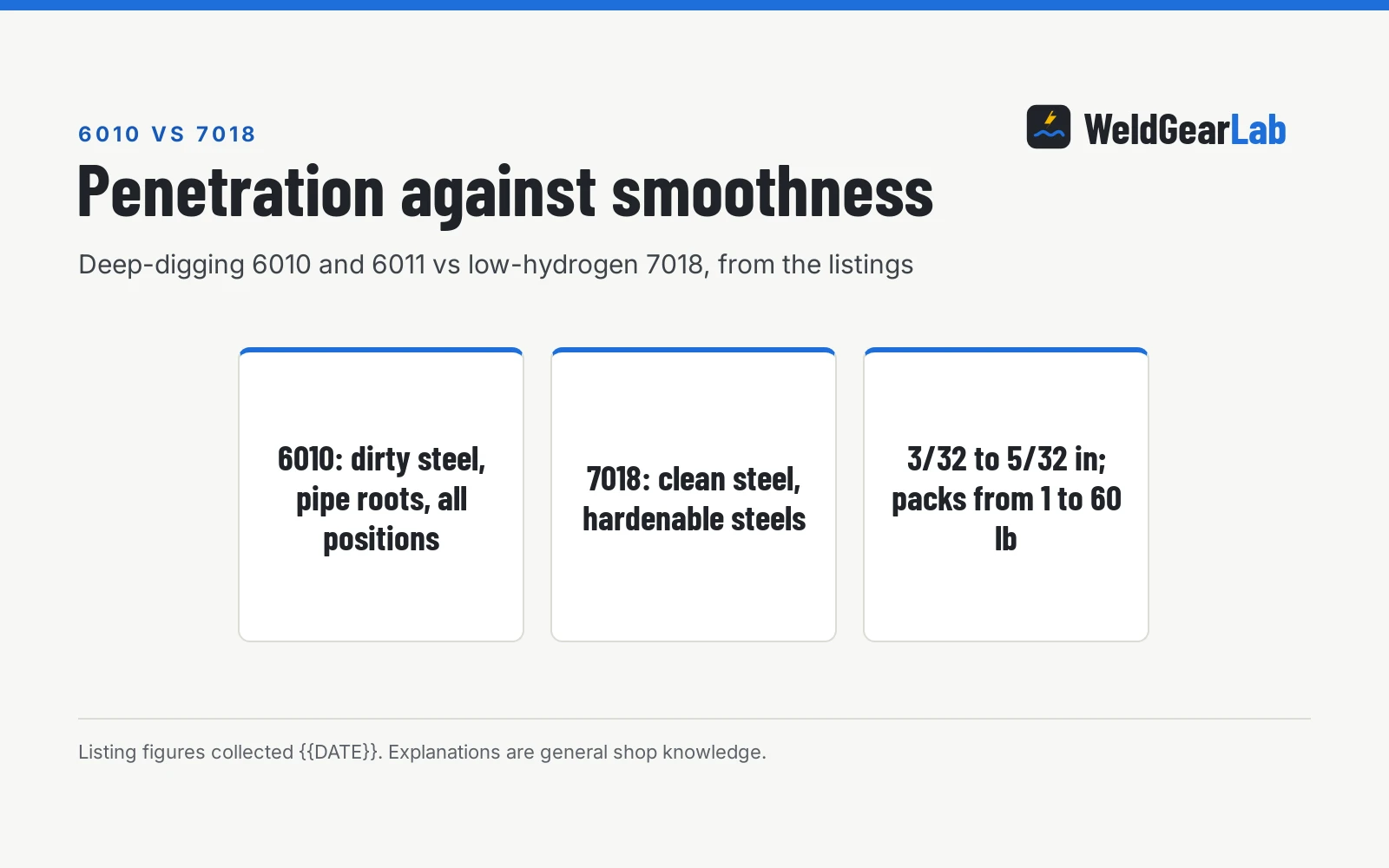
In the 6010 vs 7018 welding rod question, the answer is about the weld, not the brand. Pick 6010 (or its AC cousin 6011) for deep penetration on dirty, rusty or painted steel, root passes on pipe, and all-position work where the metal is not clean. Pick 7018 for smoother, low-hydrogen welds on clean steel, hardenable steels and structural work. The listings we reviewed lean heavily 6010: six 6010 listings, three 6011 listings and a single 7018 listing, so the 6010 side is described in detail and the 7018 side from its one example.
Other welders and gear to compare
 Forney 31101 E6011 Welding RodCheck price on Amazon
 50 lb Steel Can E6010 1/8" Stick electrodes welding rodCheck price on Amazon
 Victory Welding Alloys 6010 Welding Rod 1/8" E6010 1/8" 5Check price on Amazon
- Victory Welding Alloys 6010 Welding Rod 3/32" E6010 3/32" 5Check price on Amazon
 E6010 3/32"-1/8"-5/32" Stick electrodes welding rod 2 lbCheck price on Amazon
 E6010 Stick electrodes welding rod 10 lbCheck price on Amazon
This guide links to our product roundups, where WeldGearLab gets a commission on purchases made through links on this page, and your price stays the same. Read our affiliate disclosure.
6010 vs 7018 welding rod: side by side
| Factor | 6010 / 6011 side (listed) | 7018 side (listed) | Read |
|---|---|---|---|
| Example products | HYW and STARTECHWELD 6010; Forney and YESWELDER 6011 | HYW E7018 60 lb | Nine vs one listing |
| Diameters | 3/32, 1/8, 5/32 in | 1/8 in | 6010 covers more sizes |
| Amperage | 35-125 (Forney); 110-170 (YESWELDER) | Not stated | Listings disagree |
| Warranty | 90 day (Forney) | Not stated | Forney only |
All specs here repeat what the maker rates and the listing prints, copied down 19 October 2026.
What 6010 does
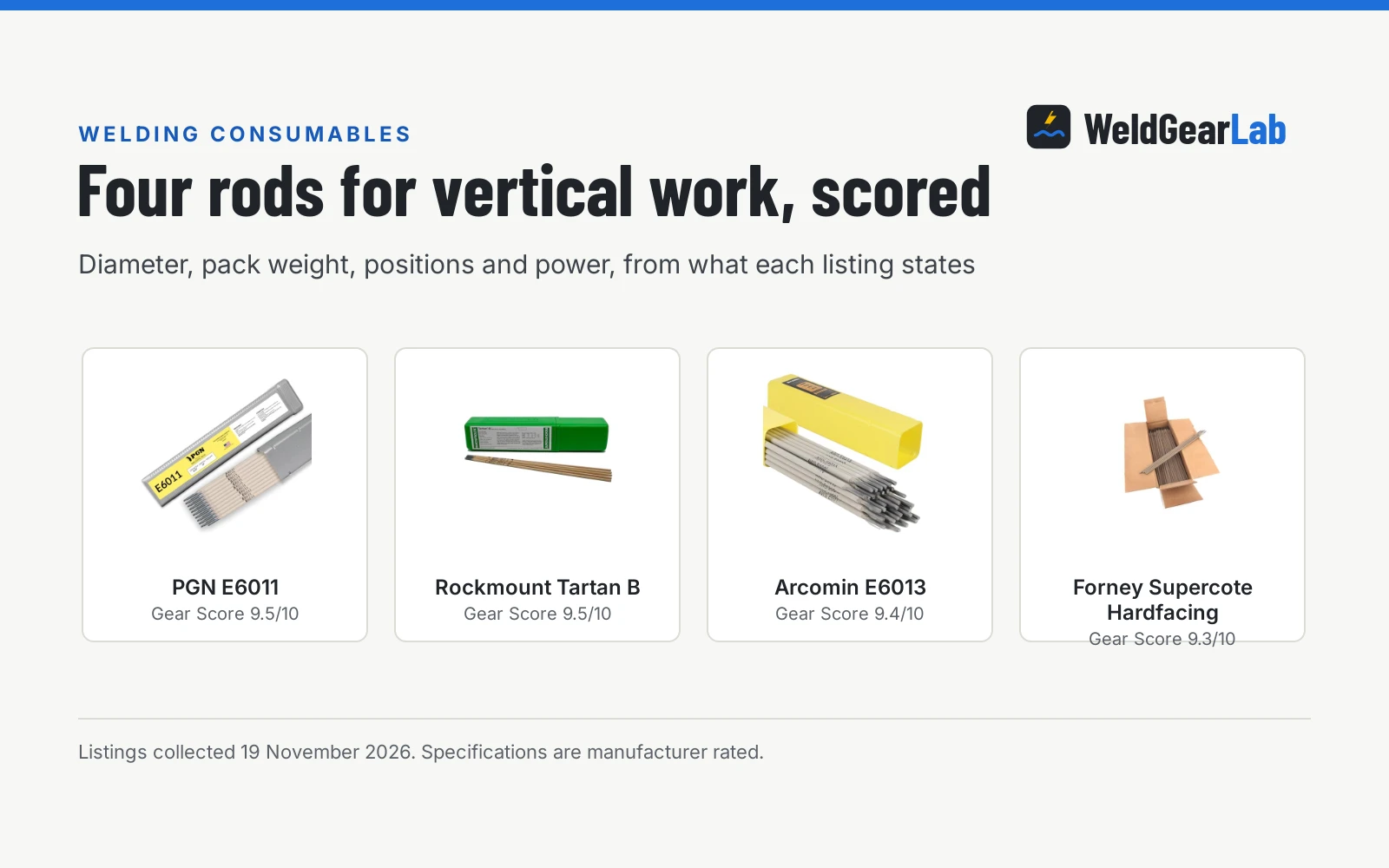
The 6010 listings sell penetration. The Forney 31101 E6011 listing describes an all-purpose rod for deep penetration and fast freezing on dirty, rusty and painted materials, with minimal surface preparation required. The STARTECHWELD 6010 listings describe a strong forceful arc that creates deeply penetrating welds, with fast freeze for any position including vertical-up, vertical-down, overhead and flat or horizontal, producing x-ray quality deposits. Typical uses named are pipes, carbon steel, galvanized steel, pressure pipes, pressure vessels, storage tanks and ship hulls. The HYW 6010 listings are thinner but confirm the sizes: 3/32, 1/8 and 5/32 in, in packs from 2 to 50 lb. See the best 6010 welding rod for pipe root pass.
What 7018 does
The single 7018 listing is the HYW E7018 Premium Arc: 1/8 in electrode in a 60 lb pack (10 lb x 6), designed for welding hardenable steels, cold rolled steels and low alloy and mild steels, all-position. The 7018 is the low-hydrogen rod: it wants clean, dry steel and gives a smooth, ductile bead, which is why it is the structural and code-work rod. One listing is thin evidence, so take the 7018 side as the general rule rather than a full comparison: where 6010 digs through the dirt, 7018 finishes on clean metal. See the best 7018 welding rod for beginners.
E6011: the 6010 cousin
Three listings are E6011, not E6010, and the difference matters for your machine. The Forney 31101 listing calls its E6011 dependable and ideal for AC operation, weldable DC+ too. The YESWELDER E6011 listing says it is designed primarily for use on AC power sources. If your welder is AC-only, the 6011 listings are your 6010-class option; on DC, either runs. See the best 6011 welding rod.
Sizes, packs and the amperage question
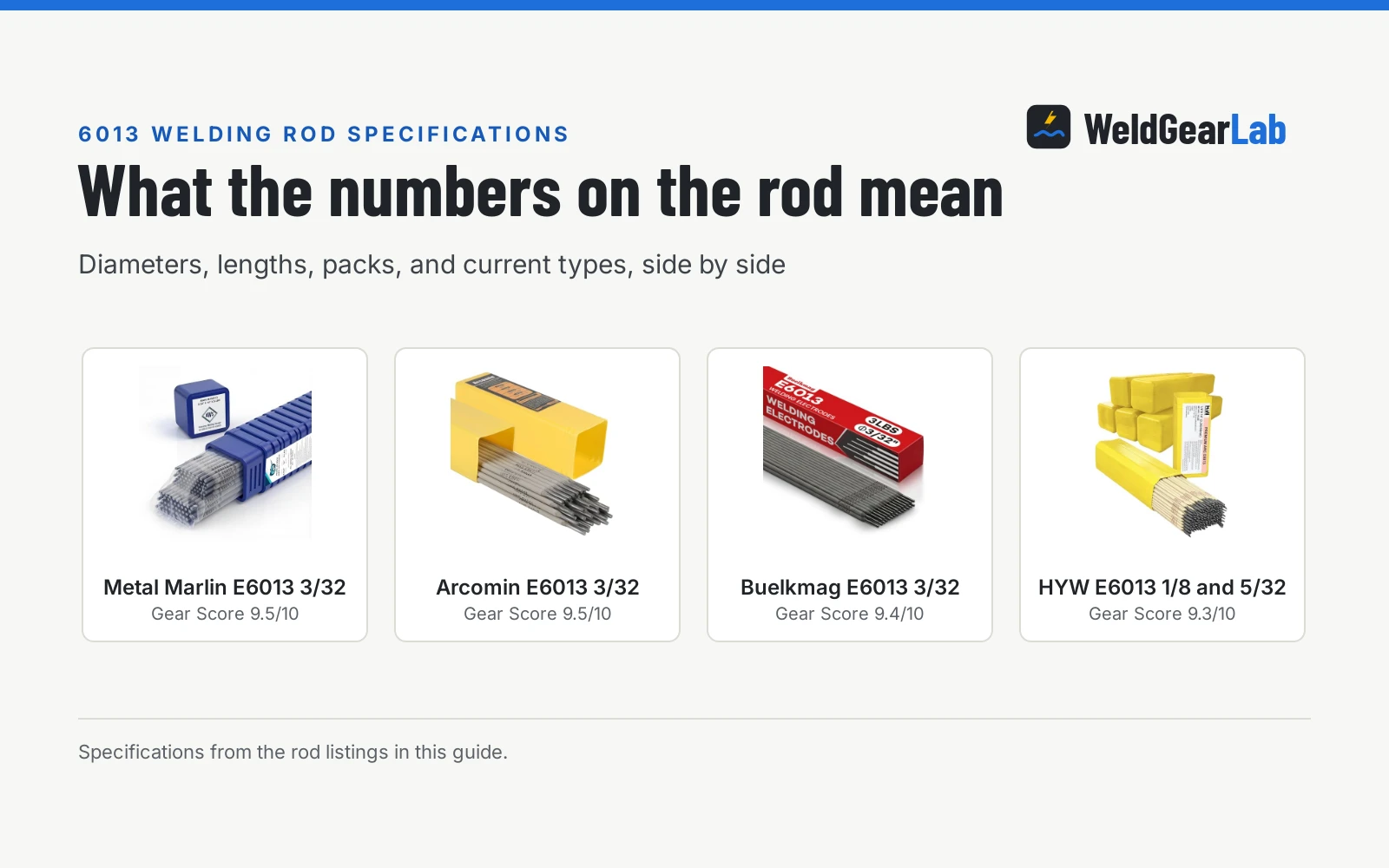
Diameters across the listings are 3/32, 1/8 and 5/32 in, at 14 in length where stated except one HYW listing whose bullets state 12 in. Pack sizes run from the Forney 1 lb box to the HYW 60 lb case, with 2, 4, 5, 10 and 50 lb in between. Amperage is where the listings disagree: the Forney spec table lists 35-125 amps for its 3/32 in E6011, while the YESWELDER listing recommends 110A-170A for its 3/32 in E6011. Both figures are the listings’ own; for 3/32 in rod, start low and let the puddle tell you. The 7018 listing states no amperage.
Which should you buy?
Buy 6010 or 6011 if you weld rusty, painted or dirty steel, run root passes on pipe, or work in all positions on farm and maintenance repair. The Forney 1 lb box is the small try; the STARTECHWELD 5 lb boxes and HYW bulk packs are the working quantities. Buy 7018 if your steel is clean and you want smooth, low-hydrogen welds on structural or hardenable steel. Many shops keep both: 6010 for the root and the rust, 7018 for the fill and cap. See the best welding rods under 30.
Buying advice: pack size, diameter and storage
Buy the pack size that matches how much you weld. The Forney E6011 comes in a 1 lb box of 3/32 in rod and the YESWELDER E6011 in a 2 lb pack, both sensible first buys if you are trying the 6010 class. The STARTECHWELD 6010 rods come in 5 lb boxes in 1/8 and 3/32 in, a working quantity for a home shop. HYW sells 6010 in 10 lb packs and a 50 lb steel can, and its E7018 in 60 lb as six 10 lb packs, which is shop or crew territory. The listings here run from the Forney 1 lb box to the HYW 60 lb case, so pick the pack size that matches how much you weld.
Diameter follows the work. The listings show 3/32, 1/8 and 5/32 in, with 14 in length stated on the HYW 6010 and one HYW listing’s bullets stating 12 in. The single 7018 listing here is 1/8 in. Thinner rod runs lower amps and suits thin stock and tight joints, while 1/8 in is the general-purpose size most beginners reach for first. Match the diameter to your machine’s output as well: the Forney listing spans 35-125 amps while the YESWELDER E6011 recommends 110A-170A, and the two listings disagree, so start low and tune to the puddle.
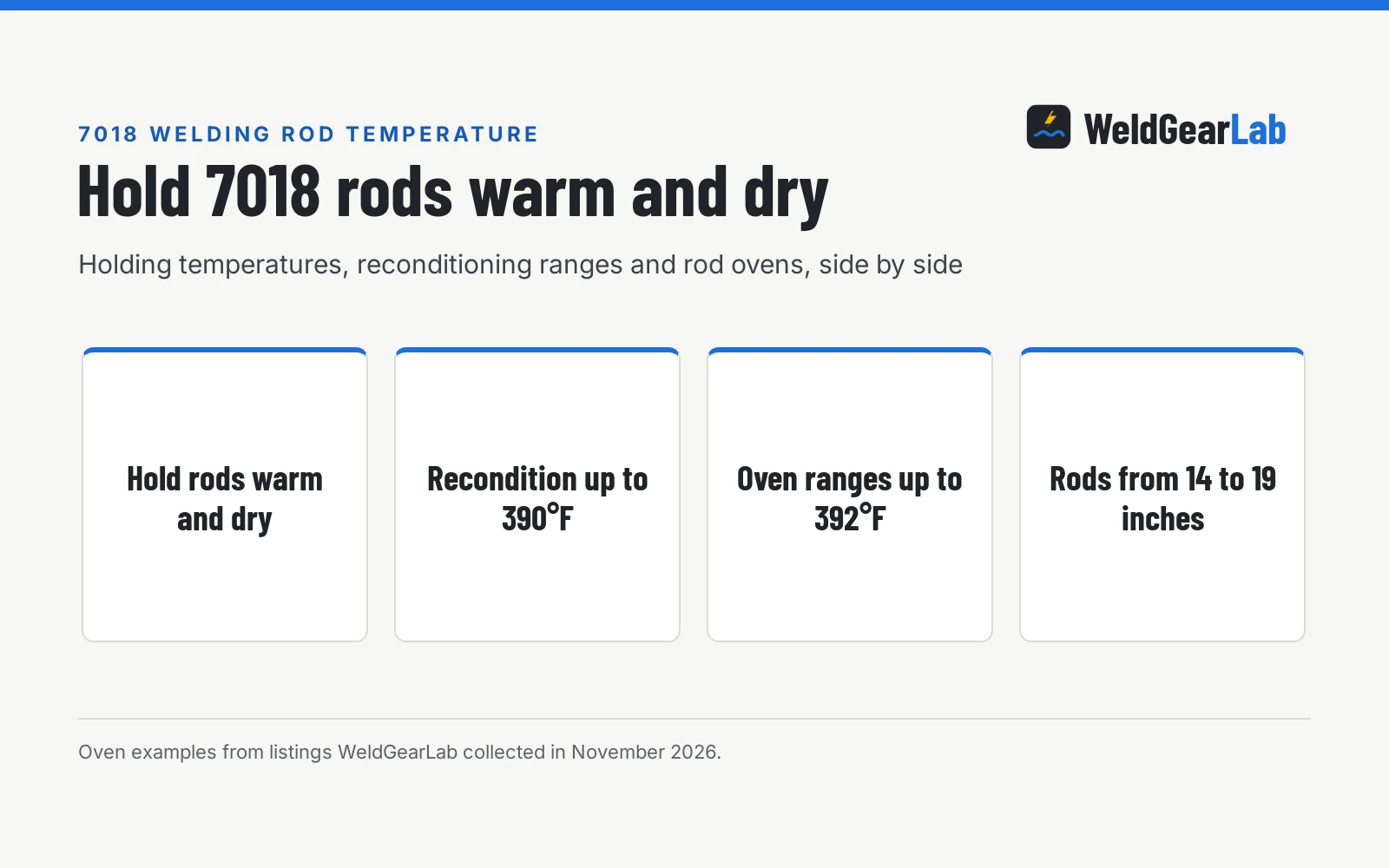
Storage matters more for 7018 than 6010. Low-hydrogen 7018 picks up moisture from the air, and damp 7018 is the classic cause of porosity and cracking, which is why shops keep it in sealed containers or rod ovens and buy only the quantity they will burn. The 6010 and 6011 class is more forgiving of storage, another reason it suits farm and field repair where the rod rides in a toolbox.
FAQ for welders
What is 6010 rod best for?
Deep penetration on dirty, rusty or painted steel with minimal prep, all-position work, and pipe root passes, per the Forney and STARTECHWELD listings.
What is 7018 rod best for?
Smooth, low-hydrogen welds on clean steel, hardenable steels and structural work, per the HYW listing. It wants clean, dry metal.
What is the difference between 6010 and 6011?
6011 is the AC-friendly version of the 6010 class. The Forney listing calls its E6011 ideal for AC operation, weldable DC+ too; the YESWELDER listing says it is designed primarily for AC power sources.
What diameters do these rods come in?
The listings show 3/32, 1/8 and 5/32 in, at 14 in length where stated except one HYW listing whose bullets state 12 in. The single 7018 listing is 1/8 in.
What amperage for 3/32 in 6010 or 6011?
The listings disagree: Forney lists 35-125 amps, YESWELDER recommends 110A-170A. Start low and adjust to the puddle.
More welding guides
See the best 6010 welding rod for pipe root pass, best 7018 welding rod for beginners, best 6011 welding rod and best welding rods under 30.