6010 vs 7014 Welding Rod: Which One Should You Buy?
6010 vs 7014 welding rod: what the listed rods actually state. Deep-penetration 6010 and 6011, low-hydrogen 7018, and a note on checking a 7014 listing.

On this page
Top picks at a glance
As an Amazon Associate I earn from qualifying purchases.
- 1
 Victory Welding Alloys 6010 Welding Rod 5/32" E6010 5/32" 59.6/10View on Amazon
- 2
 Forney 32005 E7014 Welding Rod9.5/10View on Amazon
- 3
 Forney 31210 E6011 Welding RodView on Amazon
- 4
 50 lb Steel Can E6010 1/8" Stick electrodes welding rodView on Amazon
- 5
 50 lb Steel Can E6010 3/32" Stick electrodes welding rodView on Amazon
- 6Victory Welding Alloys 6010 Welding Rod 1/8" E6010 1/8" 5View on Amazon
- 7
 E6010 3/32"-1/8"-5/32" Stick electrodes welding rod 2 lbView on Amazon
- 8
 E6010 Stick electrodes welding rod 10 lbView on Amazon
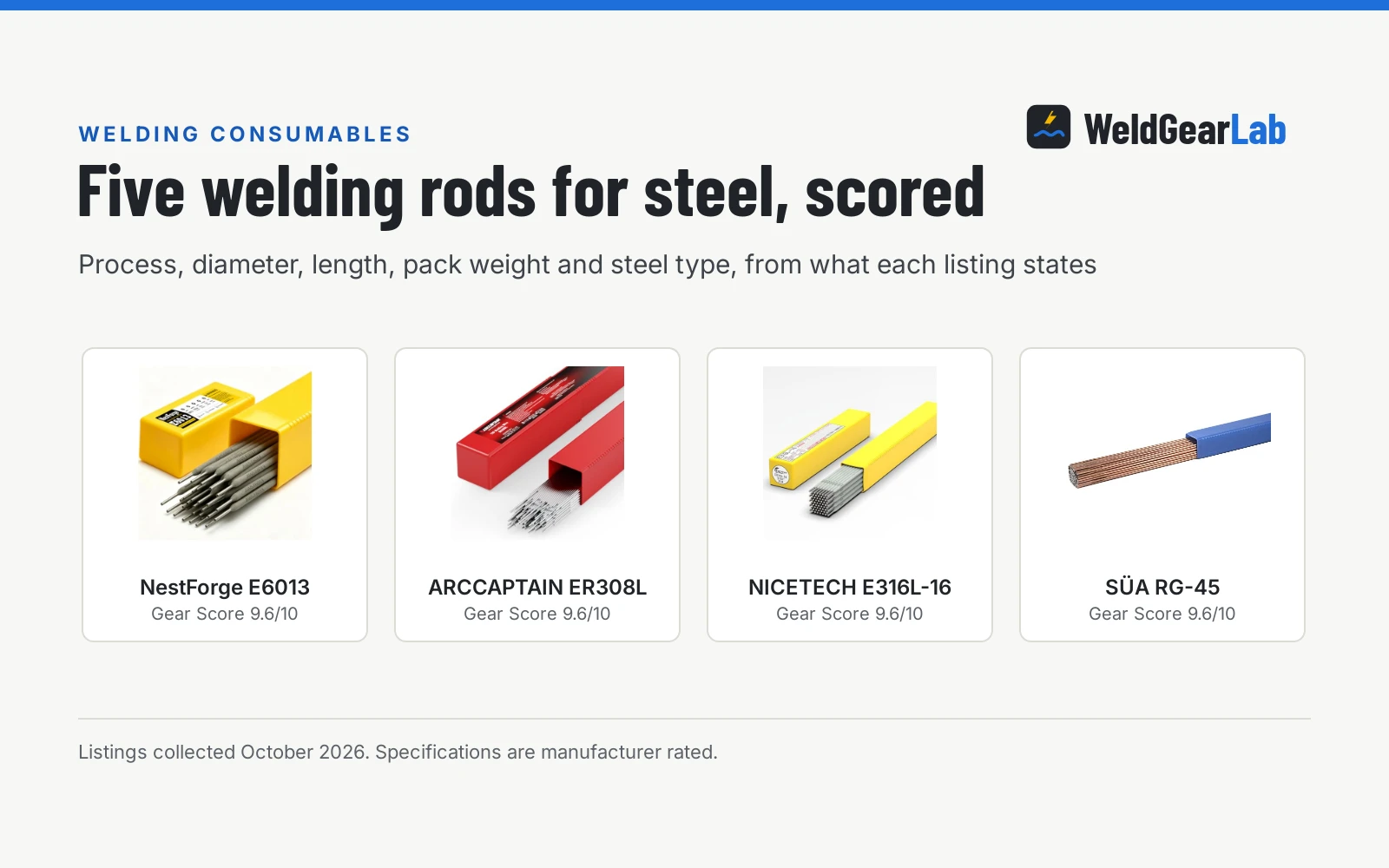
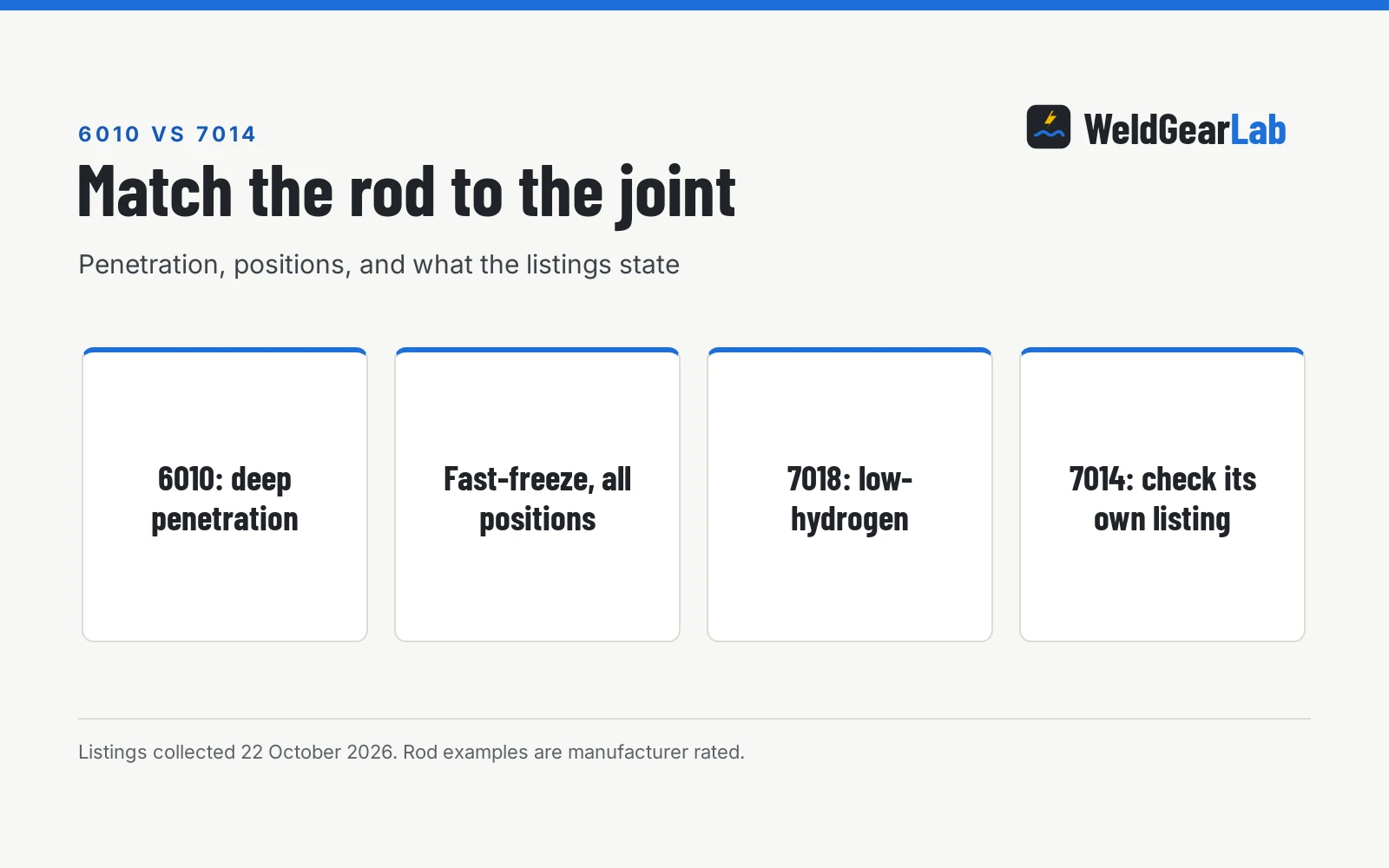
The short answer to 6010 vs 7014 welding rod: pick the rod whose listing matches your work. The 6010-family rods in the listings below are deep-penetration, fast-freeze, all-position rods for dirty, rusty or painted steel and pipe work. The four rods compared here are 6010, 6011 and 7018 rods.
Other welders and gear to compare
 Forney 31210 E6011 Welding RodCheck price on Amazon
 50 lb Steel Can E6010 1/8" Stick electrodes welding rodCheck price on Amazon
 50 lb Steel Can E6010 3/32" Stick electrodes welding rodCheck price on Amazon
 Victory Welding Alloys 6010 Welding Rod 1/8" E6010 1/8" 5Check price on Amazon
 E6010 3/32"-1/8"-5/32" Stick electrodes welding rod 2 lbCheck price on Amazon
 E6010 Stick electrodes welding rod 10 lbCheck price on Amazon
This guide links to our product roundups, where WeldGearLab gets a commission on purchases made through links on this page, and your price stays the same. Read our affiliate disclosure.
6010 vs 7014 welding rod in one paragraph
The 6010 listings here describe a strong, forceful arc with deeply penetrating welds and a fast-freeze characteristic that allows vertical-up, vertical-down, overhead, flat and horizontal welding. The 6011 listing is the all-purpose cousin: deep penetration and fast freezing on dirty, rusty and painted materials with minimal surface preparation, running AC or DC+. The 7018 listing is the low-hydrogen iron-powder contrast: a steady arc with low spatter producing high-quality x-ray welds on medium grade carbon steels. This guide compares the rods actually listed here.
Side by side
| 6010 family (6010, 6011) | Low-hydrogen (7018) | Takeaway | |
|---|---|---|---|
| Listed rods | HYW E6010 1/8 in, 50 lb; STARTECHWELD E6010 1/8 in, 5 lb; Forney E6011 1/8 in, 10 lb | YESWELDER E7018 1/8 in x 14 in, 10 lb | Four rods listed |
| Arc | Strong, forceful; deep penetration; fast freeze | Steady; low spatter | Penetration against a steady arc |
| Positions | All positions, incl. vertical-up, vertical-down, overhead | All positions | All positions on both sides |
| Dirty steel | Minimal prep on dirty, rusty, painted, galvanized steel | For steels showing porosity with conventional electrodes | 6010 family for dirty steel |
| Amperage stated | 130 A max (Forney E6011) | 115 to 165 A | Amperage stated on both sides |
| Warranty stated | 90 days (Forney); not stated on the others | Not stated | Only Forney states a warranty |
| Typical uses | Pipe, pressure vessels, tanks, ship hulls, repairs | Medium carbon steels, structurals, offshore rigs | Uses differ by rod family |
When the 6010 family is the better choice
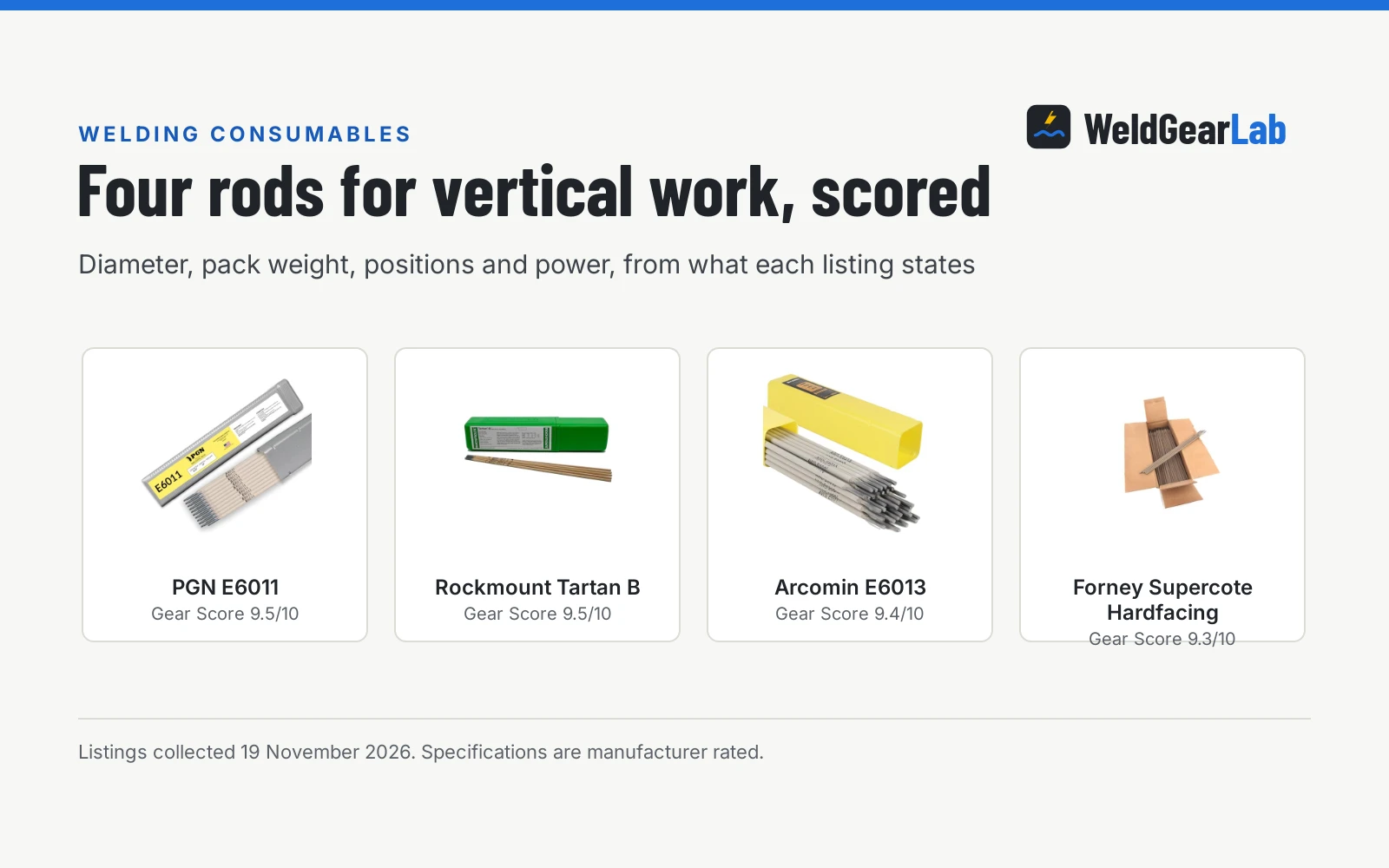
Reach for the 6010-family rods when the steel is not clean and the joint is not flat. The STARTECHWELD 6010 listing states deeply penetrating welds with a fast-freeze characteristic for vertical-up, vertical-down, overhead, flat and horizontal work, and names pipes, pressure pipes, pressure vessels, storage tanks and ship hulls as typical uses. The Forney 6011 listing adds dirty, rusty and painted materials with minimal surface preparation, plus galvanized steel and rusty or oily steel in maintenance and repair. That is the 6010-family brief: penetration first, prep second.
The trade the listings describe is arc behavior. The STARTECHWELD bullets promise a strong, forceful arc (its title also says ‘Smooth Stable Arc’). The Forney 6011 softens that slightly with smooth arc wetting and spread and faster travel speeds, but it is still a penetration rod. If your work is pipe joints or repairs on rusty farm steel, that is the rod you want.
When the low-hydrogen E7018 is the better choice
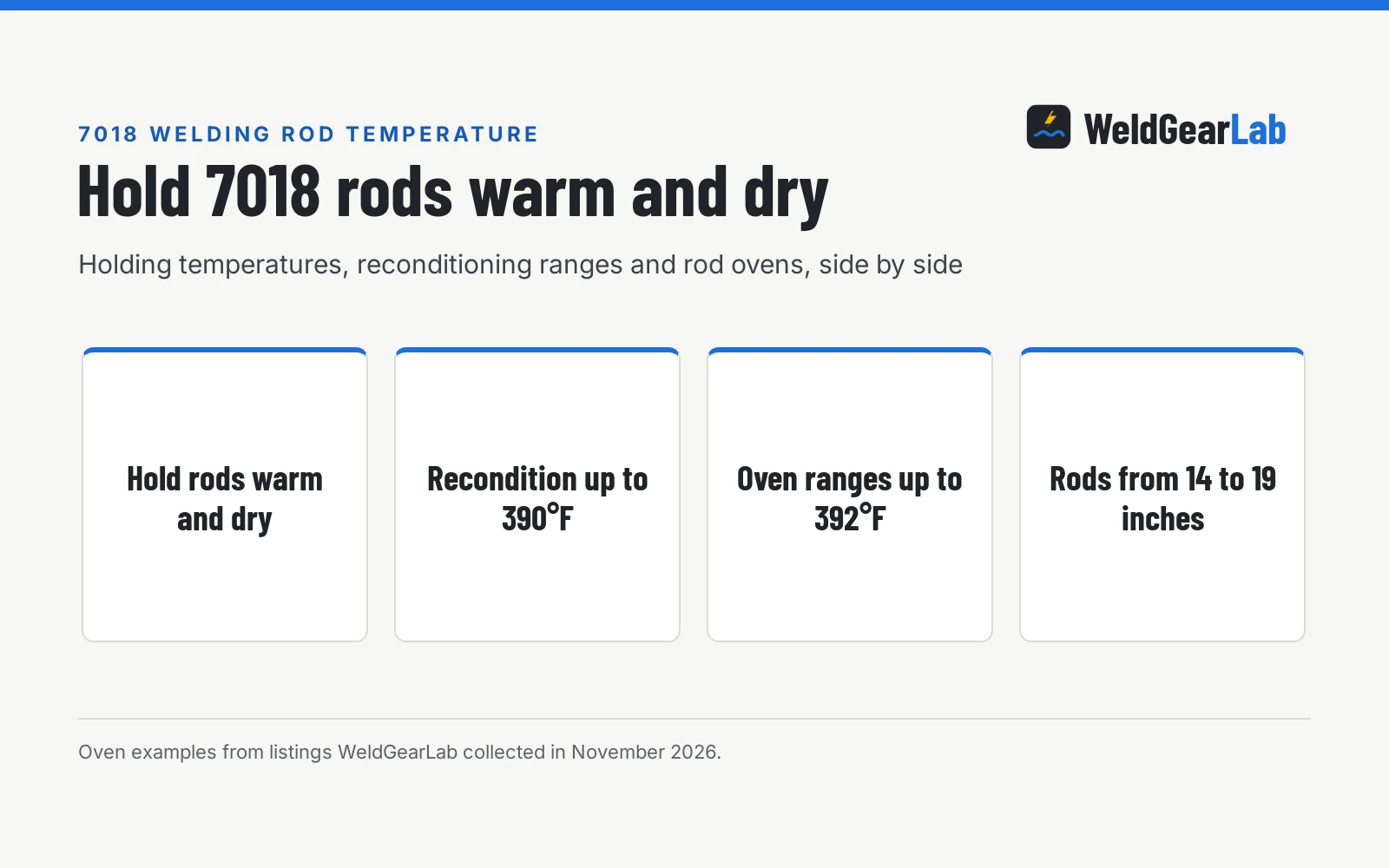
The YESWELDER 7018 listing describes a different weld: a low-hydrogen iron-powder electrode that produces high-quality x-ray welds, with a steady arc, low spatter and excellent re-striking ability. It is stated for all positions on AC or DC reverse polarity, for medium grade carbon steels where no preheat is used and for cold rolled steels that show excessive porosity with conventional electrodes. Stated amperage runs 115 to 165 A on the 1/8 in rod.
Pick it when the weld has to look good and hold: structural work, medium carbon steels, anything where the listing’s x-ray quality claim matters. The 6010 family digs in; the 7018 lays down. Match the rod to the joint, not to habit.
What about 7014?
The honest answer: if you are choosing between a 6010 and a 7014 rod on the shelf, read the 7014 listing the way this guide reads these four: check the stated diameter, the stated positions and the stated applications, then pick the rod whose spec matches your joint. Do not assume a 7014 listing behaves like the 7018 here just because the numbers look related; only the listing tells you.
The rods in this guide
Forney 31210 E6011, 1/8 in, 10 lb. The most detailed listing: an all-purpose, all-position rod for deep penetration and fast freezing on dirty, rusty and painted materials, with smooth arc wetting and faster travel speeds. Stated for AC operation and DC+ too, with a 130 A max and 60,000 tensile strength, and the only stated warranty here at 90 days against manufacturer defects. Stated uses include galvanized steel and rusty or oily steel in maintenance and repair.
YESWELDER E7018, 1/8 in x 14 in, 10 lb. The low-hydrogen iron-powder rod: high-quality x-ray welds, all positions, AC or DC reverse polarity, for medium grade carbon steels and cold rolled steels showing porosity with conventional electrodes. Steady arc, low spatter, excellent re-striking, 115 to 165 A.
STARTECHWELD E6010, 1/8 in, 5 lb. The small-box 6010: a strong forceful arc with deeply penetrating welds and fast-freeze for vertical-up, vertical-down, overhead, flat and horizontal. Stated uses run from pipe and pressure vessels to ship hulls and storage tanks. Five pounds is the try-it size.
HYW E6010, 1/8 in x 14 in, 50 lb. The bulk can: AWS A 5.1-04 E6010 carbon steel, fifty pounds for long runs. The thinnest listing here, but the stated spec is the whole story for a commodity rod.
FAQ for welders
Can 6010 rods weld on AC?
The Forney E6011 listing states dependable and ideal operation on AC, and that it can be welded DC+ too. The two E6010 listings here state no power source, and the E7018 listing states AC or DC reverse polarity. Check the listing on the box you buy.
What does 1/8 inch mean on a welding rod?
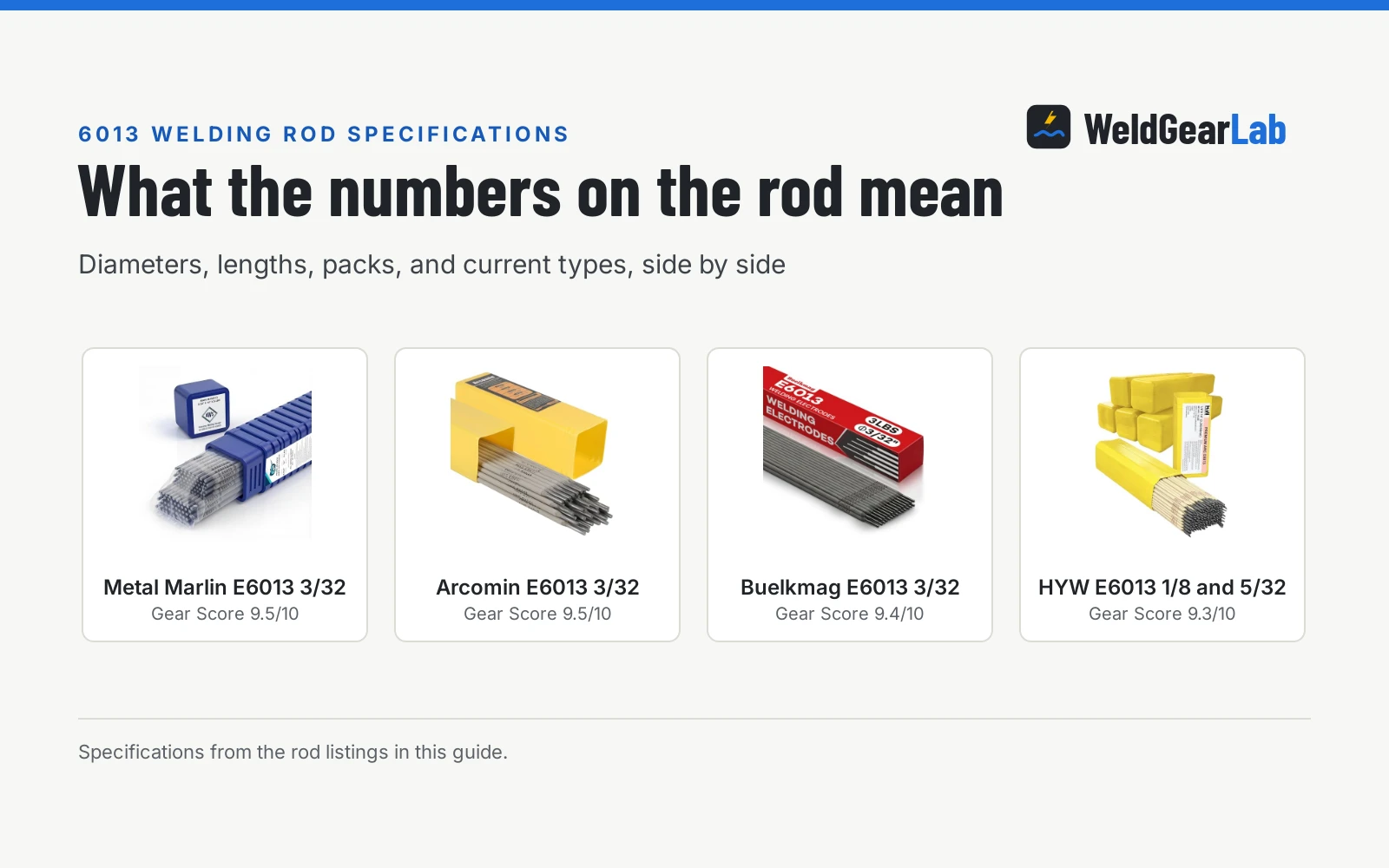
It is the stated diameter of the electrode. All four listings here are 1/8 in rods, with the YESWELD 7018 and the HYW 6010 stating 14 in length. The listings pair diameter with amperage: 130 A max on the Forney E6011, 115 to 165 A on the YESWELDER E7018.
What is a fast-freeze rod?
Fast-freeze is the listings’ term for it. The STARTECHWELD 6010 listing states the fast-freeze characteristic allows vertical-up, vertical-down, overhead, flat and horizontal welding. The Forney 6011 listing states fast freezing on dirty, rusty and painted materials.
What is a low-hydrogen rod?
The YESWELDER E7018 listing states a low-hydrogen iron-powder electrode that produces high-quality x-ray welds, with a steady arc and low spatter, for medium grade carbon steels. Low-hydrogen is the listing’s term for the rod family; the stated result is the weld quality.
Which of these rods has a warranty?
Only the Forney E6011, with a stated 90 day warranty against manufacturer defects. The other three listings state no warranty. A warranty on a consumable rod covers defects, not how you burn it.
Related: mig vs stick for pipe welding, best 7014 welding rod for beginners, best 6011 welding rod for pipe welding, and brazing rods vs welding rods.