3/32 vs 5/32 Welding Rod: Which One Should You Buy?
3/32 vs 5/32 welding rod: pick 3/32 for thin metal and small machines, 5/32 for thicker plate. Four 3/32 listings ranked on their stated…

Wire, rods, tips, nozzles and shielding gas supplies. We compare sizes, compatibility and what each listing states about the product.
3/32 vs 5/32 welding rod: pick 3/32 for thin metal and small machines, 5/32 for thicker plate. Four 3/32 listings ranked on their stated…
Stainless wire for stainless steel, mild steel wire for mild steel: a guide to the difference, with three self-shielded stainless flux core wires and…
1/16 vs 1/8 tungsten electrode: 1/16 described from the listings on blends, current and certification, with four 1/16 electrodes compared.
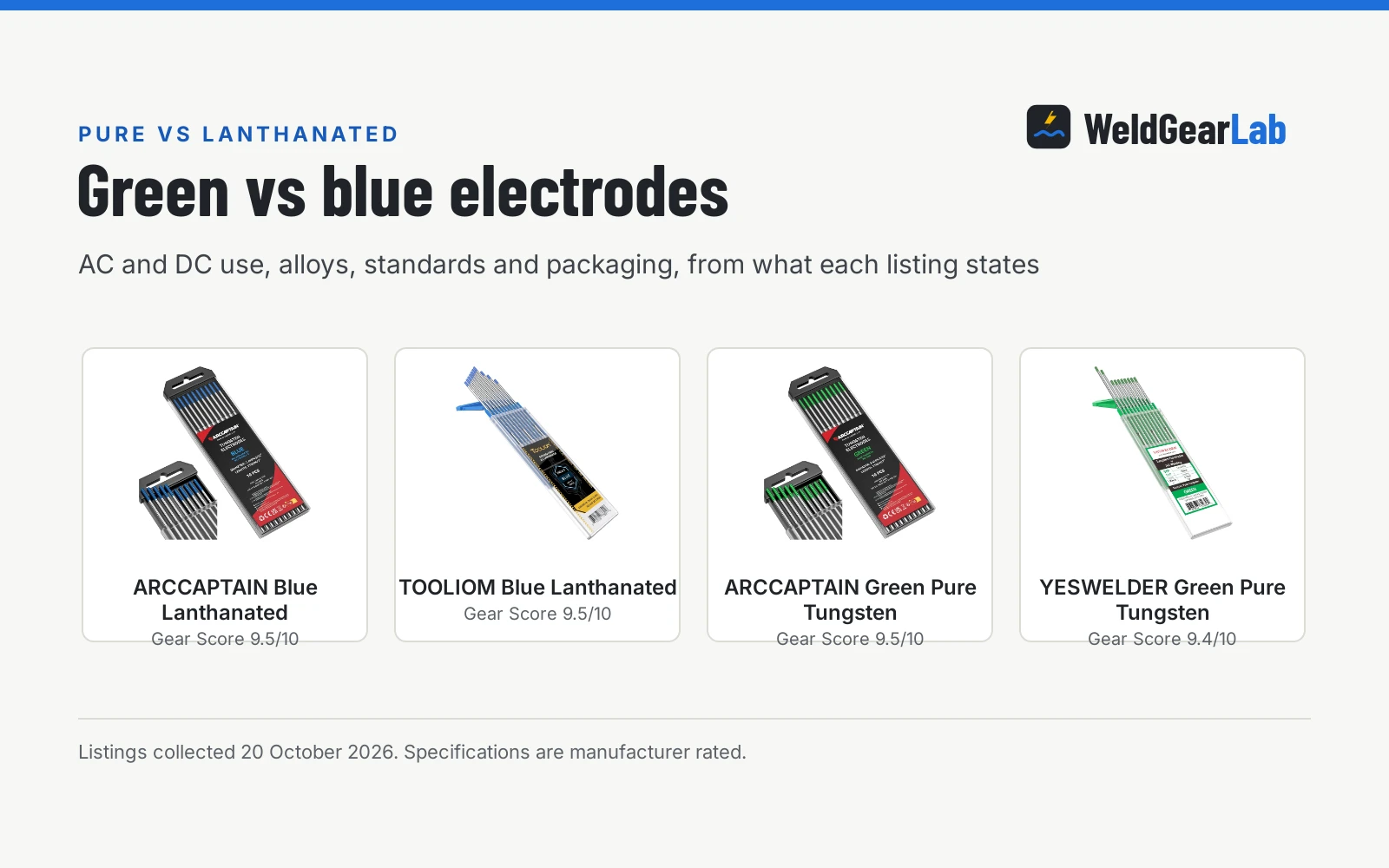
Pure vs lanthanated tungsten electrodes compared on AC and DC use, alloys, standards and packaging, from what each listing states.
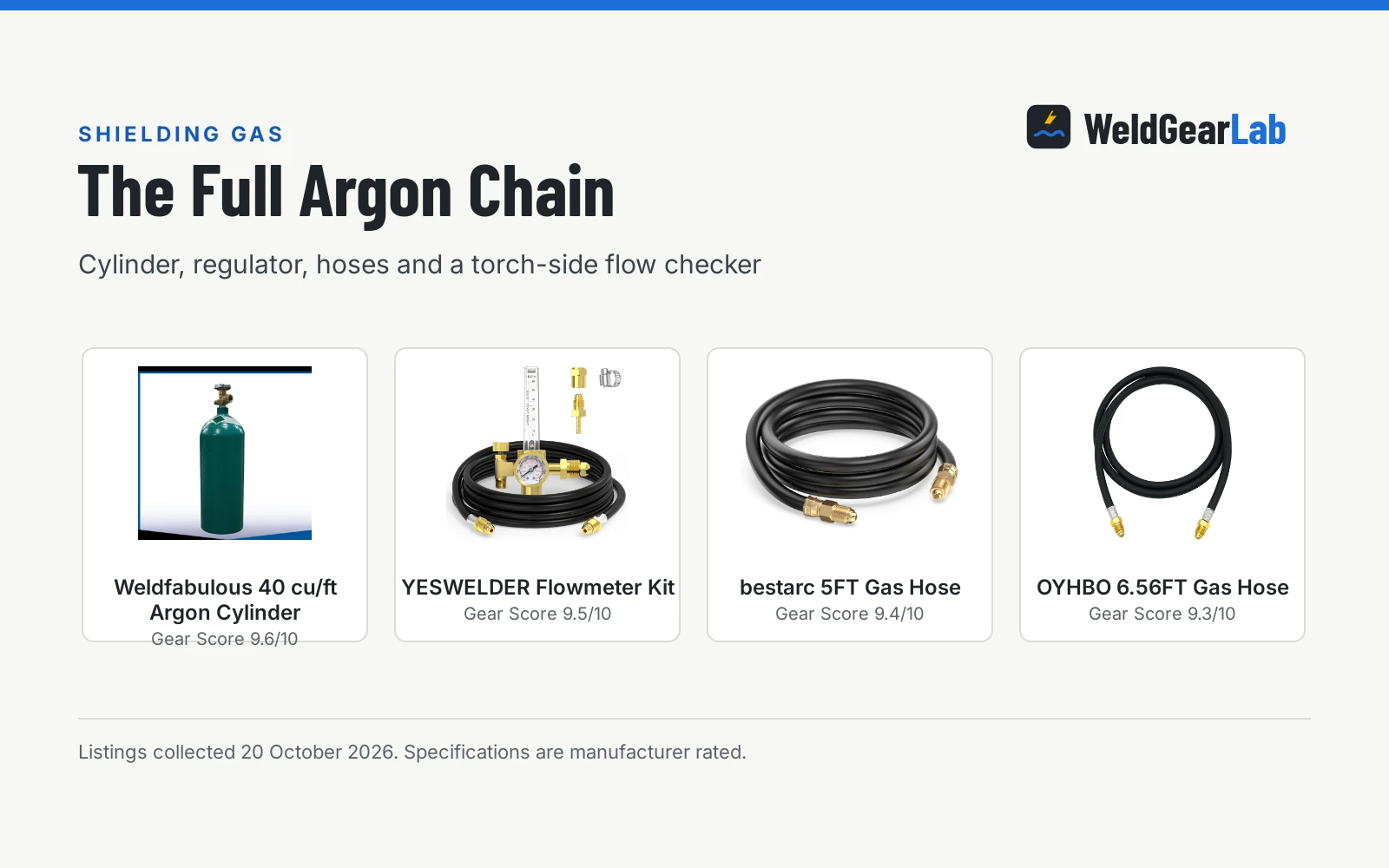
Five shielding-gas products for TIG compared: a 40 cu/ft argon cylinder, a flowmeter kit, two gas hoses and a torch-side flow checker, on stated…
5/32 vs 1/8 welding rod compared: diameter, deposition and amperage differences, plus four listed 5/32 rods ranked, from an E7018 10 lb box to…
Pure tungsten vs ceriated tungsten for TIG: what green-band pure tungsten does on AC, where ceriated fits, and two pure tungsten electrode packs ranked.
.035 suits sheet metal and auto body work and is the diameter all four listings here state, sold as 10 lb 2-packs and 33…
3/32 vs 1/8 tungsten electrode compared for TIG work: when the general-purpose size wins, when to size up, and four electrode picks ranked from…
Argon is the stocked cylinder gas in these listings, while helium uses the same regulator inlet and hose family, so the choice comes down…