Tungsten Electrode Color Chart for TIG Welding
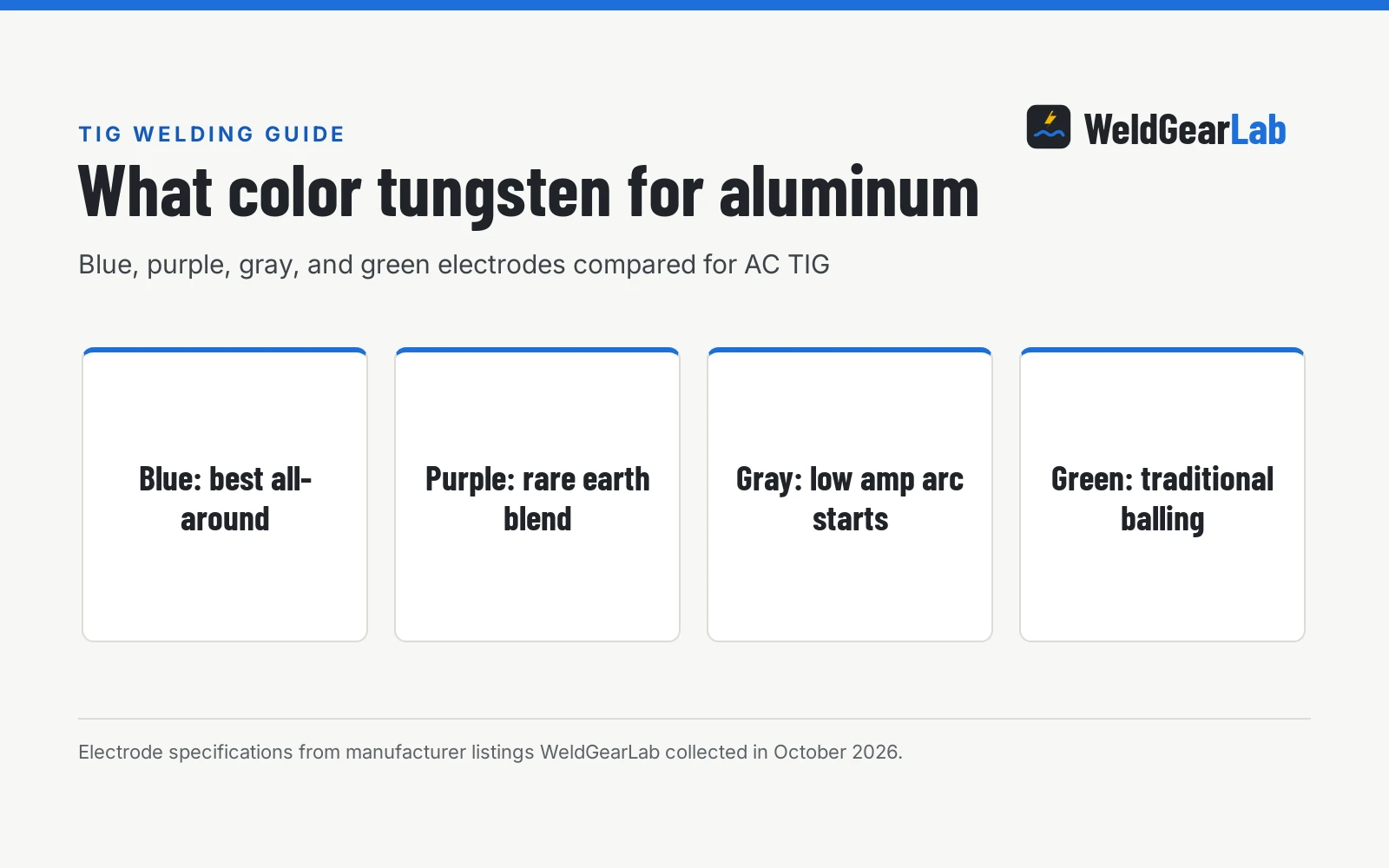
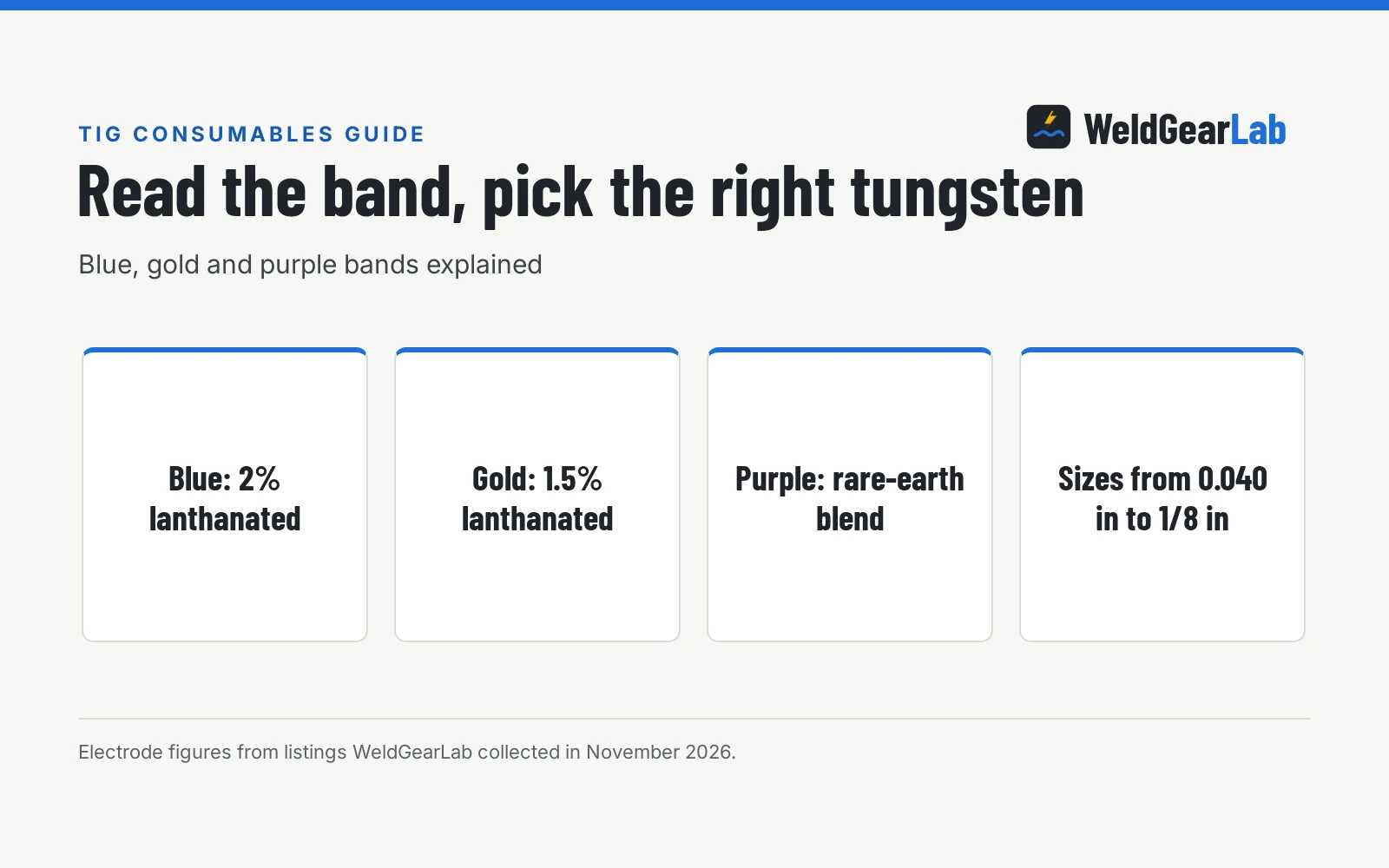
The tungsten electrode color chart reads the band on the end of the rod: blue is 2% lanthanated, gold is 1.5% lanthanated, and purple is a rare-earth blend.

On this page
Top picks at a glance
As an Amazon Associate I earn from qualifying purchases.
- 1
 ARCCAPTAIN TIG Welding Tungsten Electrode 10-Pack 3/32"x 7"9.6/10View on Amazon
- 2
 YESWELDER TIG Welding Tungsten Electrode 2% Lanthanated 10-pk9.6/10View on Amazon
- 3
 ARCCAPTAIN TIG Welding Tungsten Electrode 10-Pack 0.04" x 7"9.6/10View on Amazon
A tungsten electrode with the wrong band color still strikes an arc, but it welds like the wrong tool for the metal on the bench. The tungsten electrode color chart is the quick way to read what is in the electrode from the colored band on its end, so the rod in the torch matches the metal and the current. This guide explains the blue, gold and purple bands the listings state, what each one suits, and how to pick a size.
This guide links to our product roundups, where WeldGearLab gets a commission on purchases made through links on this page, and your price stays the same. Read our affiliate disclosure.
The tungsten electrode color chart
Tungsten electrodes for TIG welding are color coded by composition: the band on the end of the rod names what is in it, and the listings state the color alongside the composition: blue for 2% lanthanated, gold for 1.5% lanthanated, and purple for a rare-earth blend. Read the band before the rod goes in the torch, because the composition affects how the arc starts, how steady it holds, and which metals it suits.
Side by side
| Blue | Gold | Purple | |
|---|---|---|---|
| Composition | 2% lanthanated | 1.5% lanthanated | Rare-earth blend |
| AC and DC use | Both AC and DC | Both DC and AC | Not stated |
| Length | 7 in | 7 in | 7 in |
| Pack | 10-pack | 10-pack | 10-pack |
| Non-radioactive | Yes | Yes | Yes |
| Metals the maker names | Aluminum alloys, magnesium alloys, nickel alloys, copper alloys, titanium alloys, low-alloyed steels | Not stated | Not stated |
The chart above lines up the colors the listings state. Blue and gold are both lanthanated types, with gold holding the lower lanthanated share, while purple is the rare-earth blend the maker offers as a replacement for the traditional red thoriated type.
How to read the color band
Check the band on the end of the rod. The YESWELDER listing notes that the color of the outer packaging can be checked to tell the color and model apart, which helps when several packs sit on the same shelf. Keep each color in its own tube or slot so a blue rod never ends up in a gold pack, and read the band again after grinding the tip, since grinding can take the color with it.
A band that is worn off or ground away leaves no way to tell the rod apart by sight. When the color is gone, set the rod aside for practice work rather than guessing at its composition on a real joint.
Blue, gold and purple in the shop
Blue 2% lanthanated is the general shop rod in these listings. The ARCCAPTAIN listing states it suits both DC and AC applications, and names aluminum alloys, magnesium alloys, nickel alloys, copper alloys, titanium alloys and low-alloyed steels. The Midwest Tungsten Service listings state the same AC and DC use for their blue rods. Blue is the rod to reach for when the job list covers more than one metal, and the best tungsten welding electrode guide compares the packs.
Gold 1.5% lanthanated is the lower-lanthanated option. The Blue Demon listing states it works as a non-radioactive substitute for the traditional thoriated type, for both DC and AC applications. The listing states its operating characteristics are very similar to the thoriated type. The choice between gold and blue comes down to what the local supplier stocks and what the machine manual calls for.
Purple is the rare-earth blend. The YESWELDER listing states it is comparable to the purple rare-earth type and a replacement for the traditional thoriated rod, and it is non-radioactive. It suits welders who want to move away from thoriated rods.
Picking a size
Size is stated as a diameter and a length. The listings state a 1.6mm diameter on a 175mm rod in the ARCCAPTAIN blue (on Amazon) pack, and a 0.040 in diameter in the Midwest blue pack, with a 7 in length on the packs that state one. A thin rod suits thin metal and low current, while a thick rod suits heavy plate and high current, so match the rod to the metal and the current the job needs, then check the machine manual for the size range it accepts.
Pack size is simple: the ARCCAPTAIN, Midwest, YESWELDER and Blue Demon listings each state a 10-pack, so each pack covers a run of practice joints and real work before a reorder is needed. Vacuum packing is stated on the ARCCAPTAIN and YESWELDER listings, which keeps the rods from oxidizing on the shelf.
For more options, see our welding consumables guides.
FAQ for welders
What does the blue band on a tungsten electrode mean?
Blue means 2% lanthanated tungsten. The listings state it for both DC and AC use, and name aluminum alloys, magnesium alloys, nickel alloys, copper alloys, titanium alloys and low-alloyed steels among the metals it suits.
What does the gold band mean?
Gold means 1.5% lanthanated tungsten. The Blue Demon listing states it as a non-radioactive substitute for the traditional thoriated type, for both DC and AC applications.
What does the purple band mean?
Purple means a rare-earth blend. The YESWELDER listing states it is comparable to the purple rare-earth type and a replacement for the traditional thoriated rod, and it is non-radioactive.
Can blue tungsten weld aluminum?
Yes, according to the listings. The ARCCAPTAIN and Midwest listings state blue 2% lanthanated suits both DC and AC applications, and both name aluminum alloys among the metals it covers. Set the machine for AC on aluminum, as the machine manual directs.
How do I pick a tungsten size?
Match the diameter to the metal and the current: the listings state diameters from 0.040 in to 1/8 in, with a 7 in length on the packs that state one. When in doubt, check the machine manual for the size range it accepts, and keep a 10-pack on hand so a worn tip never stops a job.
Does the color band wear off?
It can, especially after grinding the tip. Keep rods in their own tubes so colors never mix, and read the band before the rod goes in the torch. A rod with no readable band belongs on practice work, not on a real joint.
Related: the best tungsten welding electrode picks, the best all around tungsten electrode for TIG guide, and the best tungsten electrode grinder guide. Also see how to TIG weld aluminum and the TIG torch set up guide.