Solid Wire vs Flux Core Wire: Which One Should You Buy?
Gas or gasless? How solid wire and flux core wire differ in shielding, wind tolerance and cleanup, and which to choose for indoor and outdoor welding.

On this page
Top picks at a glance
As an Amazon Associate I earn from qualifying purchases.
- 1
 PGN ER70S-6 .030" Solid MIG Welding Wire9.7/10View on Amazon
- 2
 Blue Demon 308LFC-O X .045 X 10LB Spool Stainless Steel Flux9.7/10View on Amazon
- 3
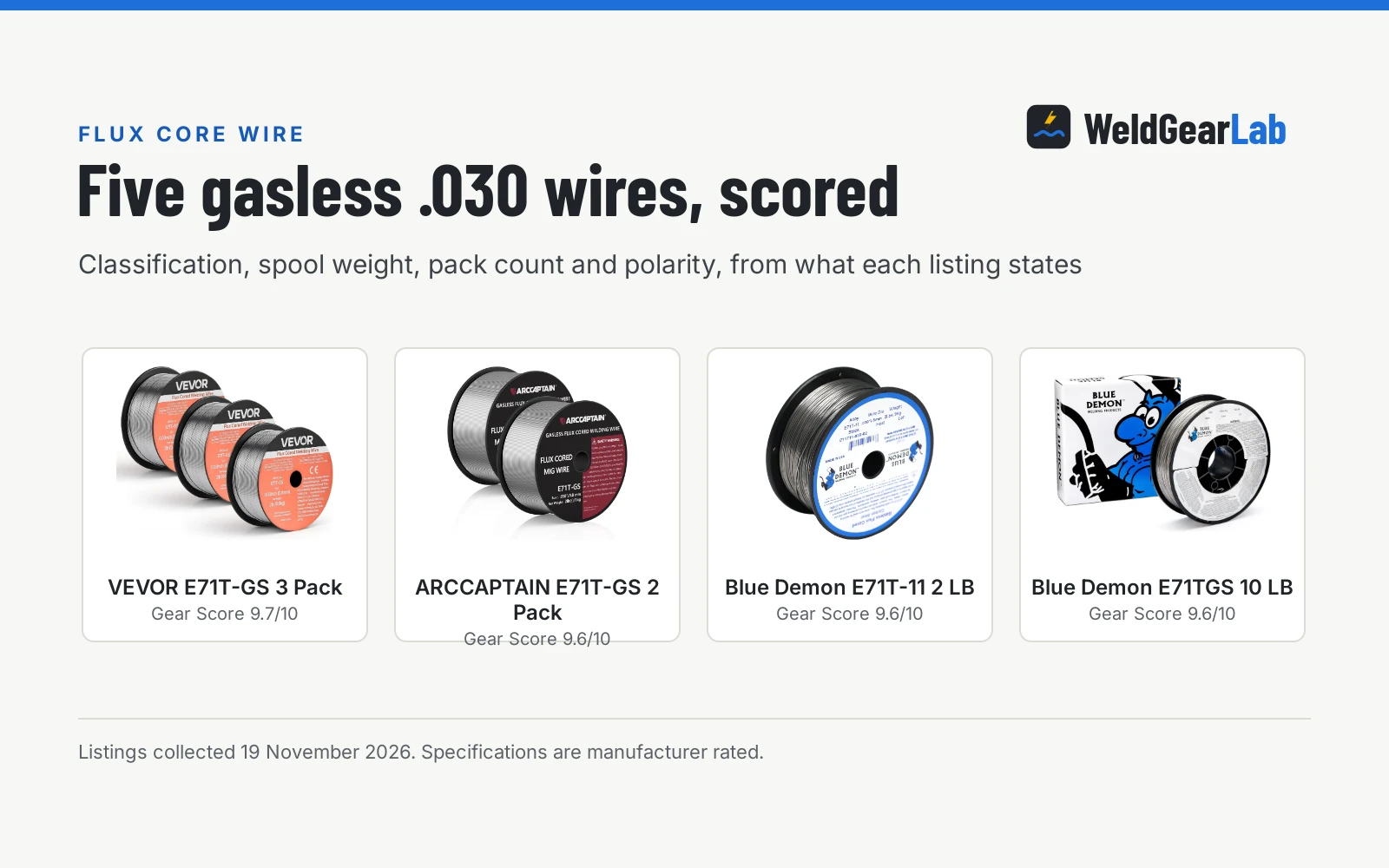
 VEVOR Flux Core Welding Wire9.6/10View on Amazon
- 4
 YESWELDER Gasless Flux Core MIG WireView on Amazon
- 5
 YESWELDER Flux Core Gasless MIG Welding WireView on Amazon
- 6
 Forney 42300 Flux Core Mig Welding Wire 2-Pound PremiumView on Amazon
- 7
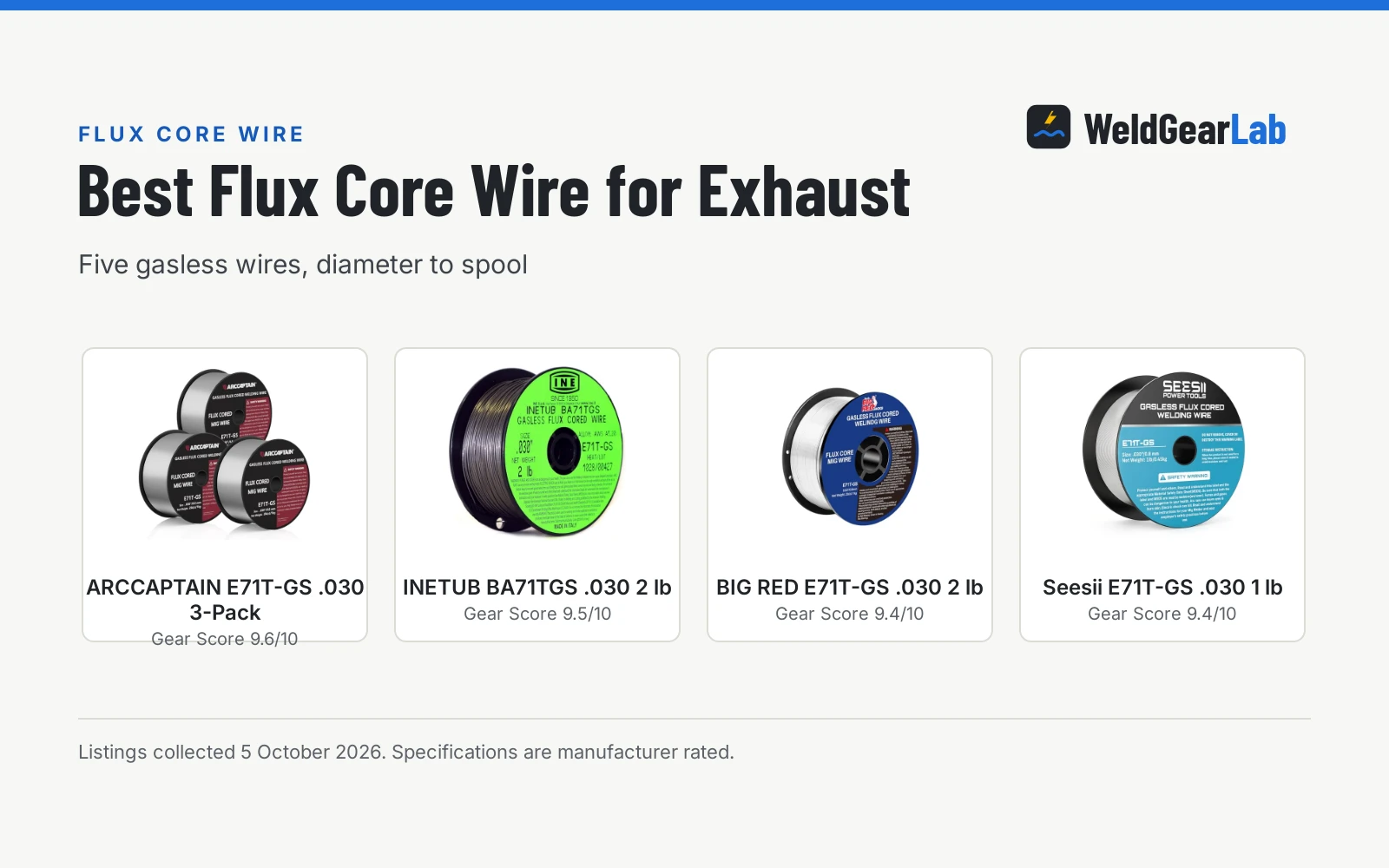
 5-Pack INETUB BA71TGS Flux Core Welding Wire .030"View on Amazon
- 8
 3 Packs 2-Pound 030 Flux Core Welding WireView on Amazon
- 9
 ARCCAPTAIN Flux Core Welding Wire E71T-GS .035" 10LB x 1 MildView on Amazon
Solid wire vs flux core wire is the gas-or-no-gas question in MIG welding. Solid wire is bare metal wire that needs shielding gas from a cylinder to protect the weld. Flux core wire is a hollow wire filled with flux, and the flux burns to create its own shielding, so most flux core needs no gas at all. The short answer: choose solid wire with gas for clean indoor work, and flux core for outdoor work, wind and dirty metal where gas shielding would fail.
Other welders and gear to compare
 YESWELDER Gasless Flux Core MIG WireCheck price on Amazon
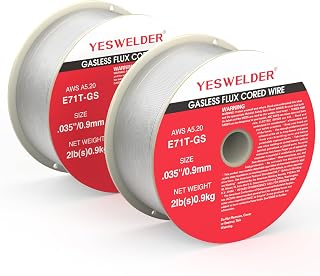 YESWELDER Flux Core Gasless MIG Welding WireCheck price on Amazon
 Forney 42300 Flux Core Mig Welding Wire 2-Pound PremiumCheck price on Amazon
 5-Pack INETUB BA71TGS Flux Core Welding Wire .030"Check price on Amazon
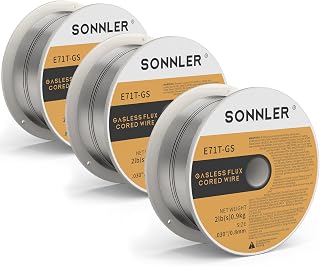 3 Packs 2-Pound 030 Flux Core Welding WireCheck price on Amazon
 ARCCAPTAIN Flux Core Welding Wire E71T-GS .035" 10LB x 1 MildCheck price on Amazon
This guide links to our product roundups, where WeldGearLab gets a commission on purchases made through links on this page, and your price stays the same. Read our affiliate disclosure.
The difference in one paragraph
A weld needs shielding from the air while the metal is molten, or it comes out porous and weak. Solid wire gets that shielding from a bottle of gas flowing out of the gun. Flux core wire gets it from the flux inside the wire, which vaporizes in the arc and blankets the weld. Gas shielding gives the cleaner arc; flux shielding works where gas cannot reach or stay put. Everything below follows from that difference.
Side by side
| Aspect | Flux core wire | Solid wire (gas MIG) | Why it matters |
|---|---|---|---|
| Shielding | Flux inside the wire | Gas from a cylinder | Gas gives the cleaner arc |
| Outdoor and wind | Tolerates a breeze | Gas blows away, needs shelter | Wind is flux core territory |
| Dirty or rusty steel | More forgiving | Needs cleaner metal | Prep matters less with flux |
| Thin sheet metal | More heat, harder to avoid burn through | Cleaner small beads | Thin work favors gas |
| Spatter and cleanup | Slag to chip, more spatter | No slag, less spatter | Gas means less grinding |
| Fumes | More smoke | Less smoke | Ventilate either way |
| Gear beyond the welder | Wire only | Wire, cylinder, regulator, hose | Flux core travels lighter |
When flux core is the better choice
Flux core earns its place anywhere gas shielding struggles. Outdoors, a breeze that you barely feel will scatter shielding gas and ruin a solid-wire weld; flux core tolerates it far better. On dirty, rusty or painted steel, flux core is more forgiving of imperfect prep, which suits farm repair and field work. It also runs hotter, which helps on thicker sections. The price is cleanup: flux core leaves slag to chip and throws more spatter, and it makes more smoke, so ventilation matters. On multi-pass welds, chip the slag between passes; welding over slag traps it inside the joint.
When solid wire with gas is the better choice
Indoors, solid wire with gas is the cleaner process. The arc is smoother, there is no slag to chip, spatter is lower, and thin sheet metal is easier to weld without burning through. Auto body panels, shop fabrication and anything where the finished look matters all favor gas MIG. The price is the gas setup: a cylinder, a regulator and a hose, plus refills, and a workspace sheltered from wind. Set the gas flow per the machine’s chart; too little leaves porosity, too much wastes gas and can pull surrounding air into the weld.
How to tell what a machine supports
Most MIG welders run both wires, but the setup changes. Flux core usually wants the polarity flipped from the gas MIG setting, so check the chart inside the machine’s wire compartment or the manual before swapping. The drive rolls and gun liner that feed solid wire generally feed flux core too, though some machines ship with rolls suited to one or the other. If the machine is sold as gasless-only, it will not have the gas solenoid and hose fitting for solid wire.
Wire diameter and drive setup
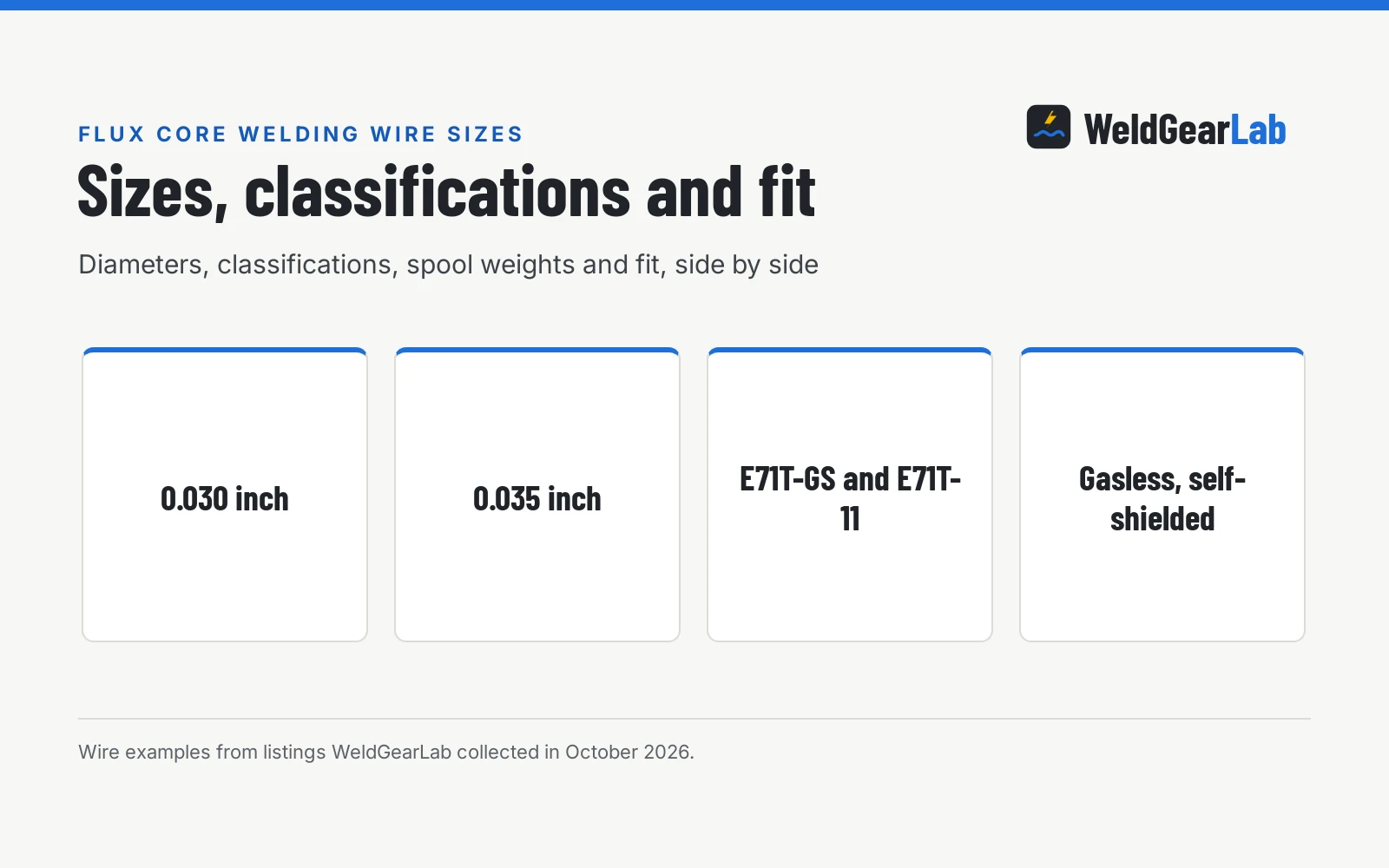
Wire comes in different diameters, and the choice follows the metal: thinner wire for thin sheet metal, thicker wire for thicker sections. Check the spool and match it to the work. Whatever the diameter, the drive rolls need the right tension: too loose and the wire slips and stutters, too tight and it deforms, especially the hollow flux core wire. The contact tip should match the wire diameter, and the gun liner should be clean and sized for the wire.
Solid wire vs flux core wire: which should you buy?
Buy the wire that matches where you weld. Welding outside, on a farm, or on rusty steel you cannot fully clean? Flux core. Welding inside a garage or shop on clean steel, especially thin stuff? Solid wire with gas. Many home shops keep both: flux core loaded for outdoor repair, solid wire and a gas bottle for bench work. For wire picks by job, see our best MIG wire for dirty metal and the MIG welding best practices guide.
FAQ for welders
Can I run flux core wire in a MIG welder?
Usually yes. Most MIG machines run both, with a polarity change between them; check the machine’s chart or manual. Gasless-only machines lack the gas hardware for solid wire.
Does flux core need gas?
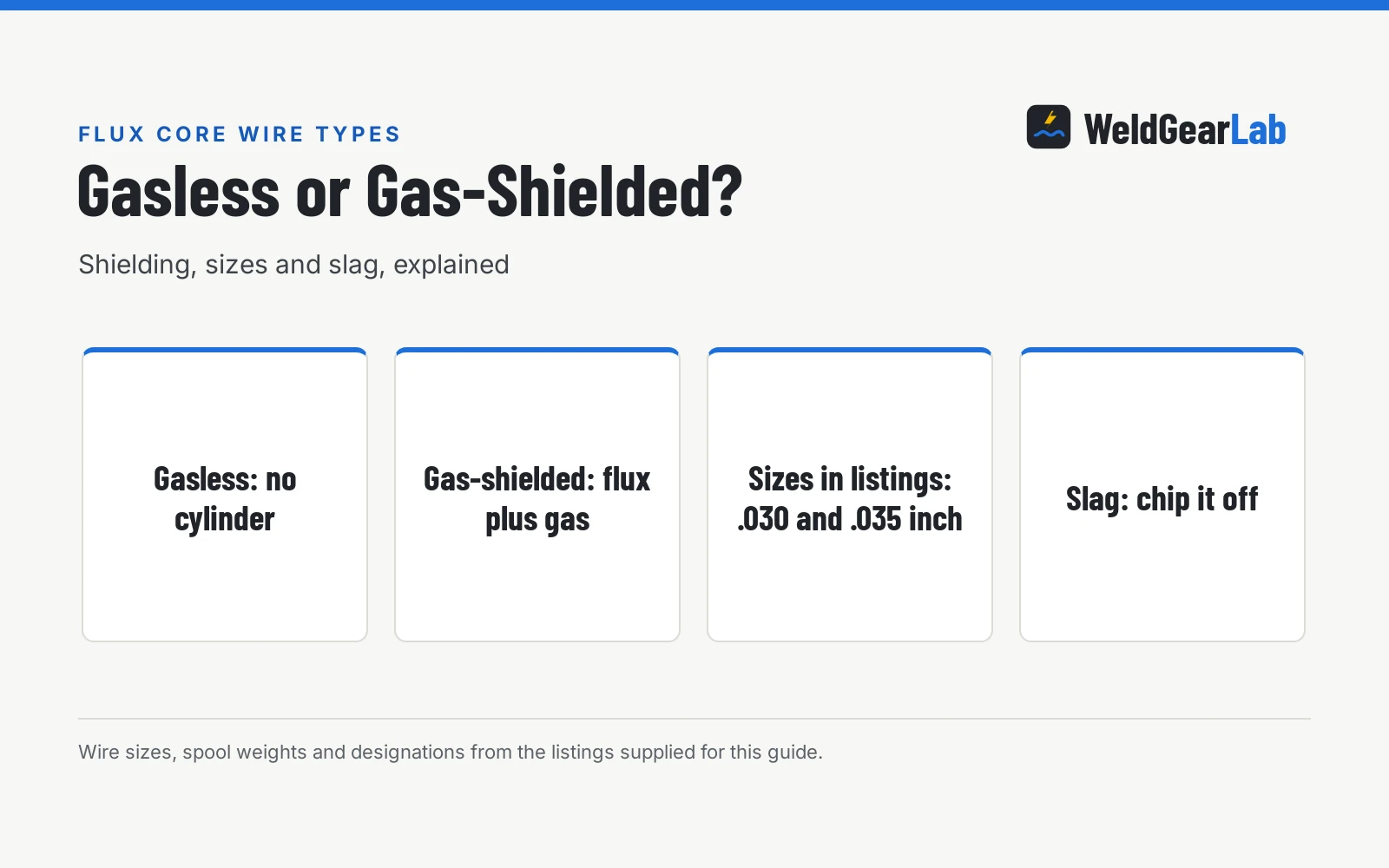
Self-shielded flux core needs no gas: the flux provides the shielding. There is also gas-shielded flux core, which uses both flux and gas, but the common home-shop wire is the self-shielded kind.
Which makes more spatter?
Flux core. It throws more spatter and leaves slag to chip off, while solid wire with gas leaves no slag and less spatter.
Can I weld aluminum with flux core?
No. Aluminum MIG uses solid wire with gas, usually through a spool gun or a setup made for soft wire.
Which is better outdoors?
Flux core. Wind scatters shielding gas, so solid wire with gas needs shelter; flux core tolerates a breeze.
Which wire should a beginner start with?
It depends on where the welding happens. Indoors on clean steel, solid wire with gas teaches cleaner technique with less cleanup. Outdoors or on rusty farm steel, flux core forgives the conditions a beginner cannot control yet. Either way, practice on scrap of the same thickness before touching the real work.
More welding guides
For the deeper wire debate, read gasless vs gas shielded flux core wire. For technique, see MIG welding best practices.