Single Phase vs Three Phase Plasma Cutter: Which One Should You Buy?
Single and three phase plasma cutter input explained, with three dual-voltage machines that run on 110V/220V and 120V/240V.

On this page
Top picks at a glance
As an Amazon Associate I earn from qualifying purchases.
- 1
 50A Plasma Cutter MachineView on Amazon
- 2
 ARCCAPTAIN 55A Non-HF Plasma Cutter MachineView on Amazon
- 3
 ARCCAPTAIN iControl CUT55 MP [Non-HF] Plasma Cutter MachineView on Amazon
- 4
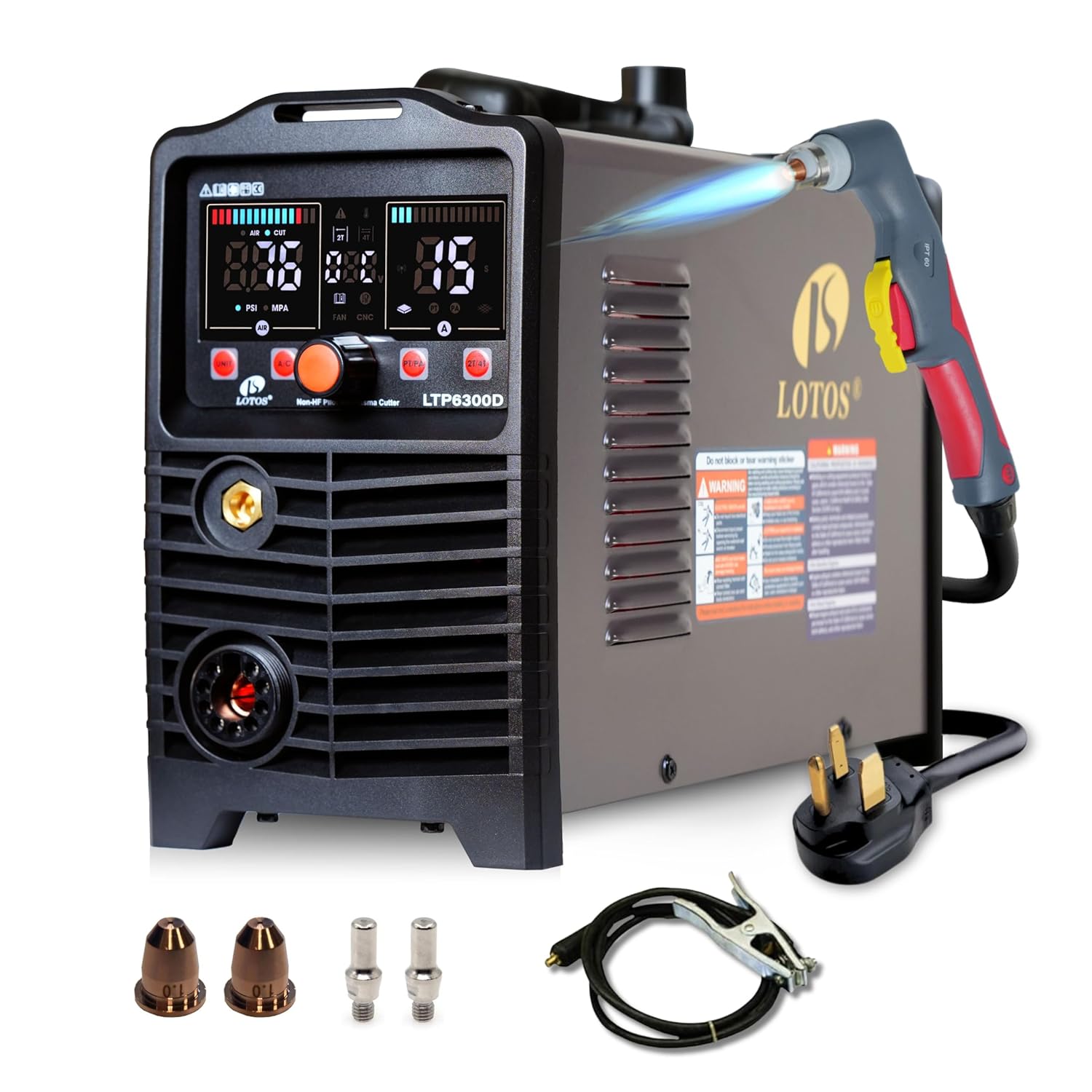 LOTOS LTP6300D 63A Non-Touch Pilot Arc Plasma CutterView on Amazon
- 5
 ATO 5hp VFDView on Amazon
- 6
 LOTOS LTP5505D 55A Pilot Arc Plasma Cutter with Rust RemovalView on Amazon
A cut that starts clean depends on the supply behind the machine as much as the torch in hand, and the single phase vs three phase plasma cutter question comes down to what the building provides. Single phase is the supply found in homes and small shops, while three phase is the supply found in larger industrial buildings with heavier service. The three machines in the gear section below all list dual-voltage input for home and small-shop use, so this guide explains both supplies, shows how to tell what a machine supports, and covers what those three machines actually state.
Other welders and gear to compare
 50A Plasma Cutter MachineCheck price on Amazon
 ARCCAPTAIN 55A Non-HF Plasma Cutter MachineCheck price on Amazon
 ARCCAPTAIN iControl CUT55 MP [Non-HF] Plasma Cutter MachineCheck price on Amazon
 LOTOS LTP6300D 63A Non-Touch Pilot Arc Plasma CutterCheck price on Amazon
 ATO 5hp VFDCheck price on Amazon
 LOTOS LTP5505D 55A Pilot Arc Plasma Cutter with Rust RemovalCheck price on Amazon
This guide links to our product roundups, where WeldGearLab gets a commission on purchases made through links on this page, and your price stays the same. Read our affiliate disclosure.
Single phase vs three phase plasma cutter: the difference
Single phase power is the standard supply in a home or small shop: one alternating waveform feeding the outlets on the wall. Three phase power uses three waveforms and is wired into larger industrial buildings, where the service is built for heavier loads and longer runs. The practical difference for a buyer is not the cut itself but whether the building can feed the machine.
Every machine in the gear section below lists dual-voltage input: 110V/220V on two machines and 120V/240V on the third. No listing here states a three-phase input, so the three-phase side of this guide is general explanation, while the single-phase side is shown with real machines and their listed figures.
Side by side
| Single phase input | Three phase input | In the gear section | |
|---|---|---|---|
| Supply | The standard home and small-shop supply | The supply in larger industrial buildings | All three machines: dual voltage |
| Machines in the gear section | All three machines below | None stated here | Three machines below |
| Voltage listed | 110V/220V on two machines, 120V/240V on the third | Not stated on any listing here | 110V/220V, 120V/240V |
| Cut capacity listed | Up to 1 inch on the 55A machines, 2/3 inch max on the 50A machine | Not stated on any listing here | 1 inch max on the 55A machines |
| Air supply | Dry compressed air; the bestarc and CUT55 Non-HF listings state the compressor is separate or not included | Not stated on any listing here | See the gear section |
| Arc start | Pilot arc, non-touch on all three machines | Not stated on any listing here | Pilot arc on all three |
Cut figures are as listed for each machine; check the manual for the supply, air setup and breaker figures that fit the machine being ordered.
When single phase is the better choice
- Home garage, farm repair and workshop work. The bestarc listing names home garages, farm repairs, workshops and metal fabrication projects, and the CUT55 Non-HF listing names home garages and workshop environments.
- One machine on two voltages. Dual voltage lets the same machine run on the lower household voltage or the higher shop voltage, as listed on all three machines below.
- Dirty, rusty or painted metal. All three machines use a pilot arc that starts without touching the metal, which the listings say works on rusted, painted or dirty surfaces.
- Cutting up to 1 inch on a small-shop supply. Both 55A machines below list a 1 inch max cut on their higher voltage.
See the best home hobby plasma cutter guide and the best plasma cutter for farm use guide for more home and small-shop machines.
When three phase is the better choice
- A building that already has three-phase service. If the shop is wired for three phase, a machine built for it matches the service in place.
- Long production runs. A larger shop cutting all day benefits from a supply built for sustained, heavier loads.
- Heavier cutting beyond these machines. The machines below top out at a listed 1 inch max cut, so work beyond that calls for a larger machine class, not just a different plug.
Note the limit in this guide: none of the three machines below states a three-phase input. A three-phase shop should check the voltage figures on the listing before ordering, since a dual-voltage 110V/220V or 120V/240V machine is not a three-phase machine.
The gear: three dual-voltage machines
Ranked by the features each listing states, from the fullest set to the simplest, the three machines below all run on dual-voltage input. None states a three-phase input.
ARCCAPTAIN CUT55 MP
The CUT55 MP lists the fullest feature set here: 55A on 120V/240V input, app control from a smartphone, plasma gouging, expanded metal cutting and rust removal. It cuts up to 1 inch (26mm) thick, with a cutting range of 120V: 12-15mm and 240V: 18-26mm, and the listing states a recommended pressure of 0.4 MPa (57.5 PSI). The included components list 10FT air hose, 10FT earth clamp, 10FT IPT60 cutting torch and a 120/240V power adapter, the listed weight is 20.5 pounds, and the warranty description states 3-YEAR.
ARCCAPTAIN CUT55 Non-HF
The CUT55 Non-HF is a 55A machine on 110V/220V input with a blowback non-high-frequency arc start, which the listing says prevents signal interference. It lists 3/5 inch clean cuts and a 1 inch max cut, with a maximum cutting thickness of 15mm at 35A on 110V at 50PSI and 26mm at 55A on 220V at 60PSI. Current display reads 20-35A at 110V and 20-55A at 220V, the air system warns with E80 below 30 PSI and E81 above 80 PSI, and the listing states IP21 water resistance. The listed weight is 18.81 pounds, and no warranty term is stated on the listing.
bestarc 50A Pilot Arc
The bestarc machine is a 50A plasma cutter on 110V/220V dual voltage with a high-frequency non-touch pilot arc. It lists 1/2 inch clean cuts and a 2/3 inch max cut, with 1/2 inch at 35A on 110V at 50PSI and 2/3 inch at 50A on 220V at 65PSI. The built-in air sensor displays pressure on the front panel, the recommended air pressure is within 65 PSI at a flow rate of 250 liters per minute, and post time adjusts from 3-15s with a recommended cooling time of 4-8 seconds. The listed weight is 10.14 pounds, and the warranty description states 2 Year Manufacturer.
How to tell what a machine supports
Read the voltage figures first: 110V/220V and 120V/240V on the listings here are dual-voltage inputs for home and small-shop supply, while a three-phase machine names three-phase input directly. Next, check the air figures: the bestarc listing recommends pressure within 65 PSI, the CUT55 Non-HF listing states an external air compressor is required and not included, and the MP listing recommends 0.4 MPa (57.5 PSI). Finally, check the torch and trigger modes: 2T/4T, PA and PT appear on all three machines, with pilot arc time adjustable up to 15s on the bestarc and 2-10s on the CUT55 Non-HF. See 120V vs 240V plasma cutter and blowback start vs high frequency plasma cutter for closer comparisons.
FAQ for welders
Can a plasma cutter run on a normal home outlet?
Not from voltage alone. The bestarc and CUT55 Non-HF list 110V input and the CUT55 MP lists 120V input, alongside their higher voltages, but voltage alone does not state the outlet or breaker rating. Check the manual and the breaker figures for the machine being ordered before cutting.
Do I need three phase power for thick cuts?
Not for the machines here: both 55A machines list a 1 inch max cut on 110V/220V or 120V/240V input, and the bestarc lists a 2/3 inch max cut. No listing here states a three-phase input.
What air supply does a plasma cutter need?
Dry compressed air. The bestarc listing recommends pressure within 65 PSI at 250 liters per minute, the CUT55 Non-HF listing states an external air compressor is required and not included, and the MP listing recommends 0.4 MPa (57.5 PSI).
What is a pilot arc?
A pilot arc starts the cut without the torch touching the metal. The bestarc uses a high-frequency non-touch start, while both ARCCAPTAIN machines use a blowback non-high-frequency start, and the listings say the arc works on rusted, painted or dirty surfaces.
Do these machines cut mesh?
Yes, on these listings. The bestarc lists mesh cut with pilot arc timing adjustable up to 15s, the CUT55 Non-HF lists mesh and expanded metal cutting with a rust removal mode, and the CUT55 MP lists expanded metal cutting, rust removal and plasma gouging.
Related: best home hobby plasma cutter, best plasma cutter for farm use, best air compressor for plasma cutter, and the plasma cutters hub.