Blowback Start vs High Frequency Plasma Cutter: Which One Should You Buy?
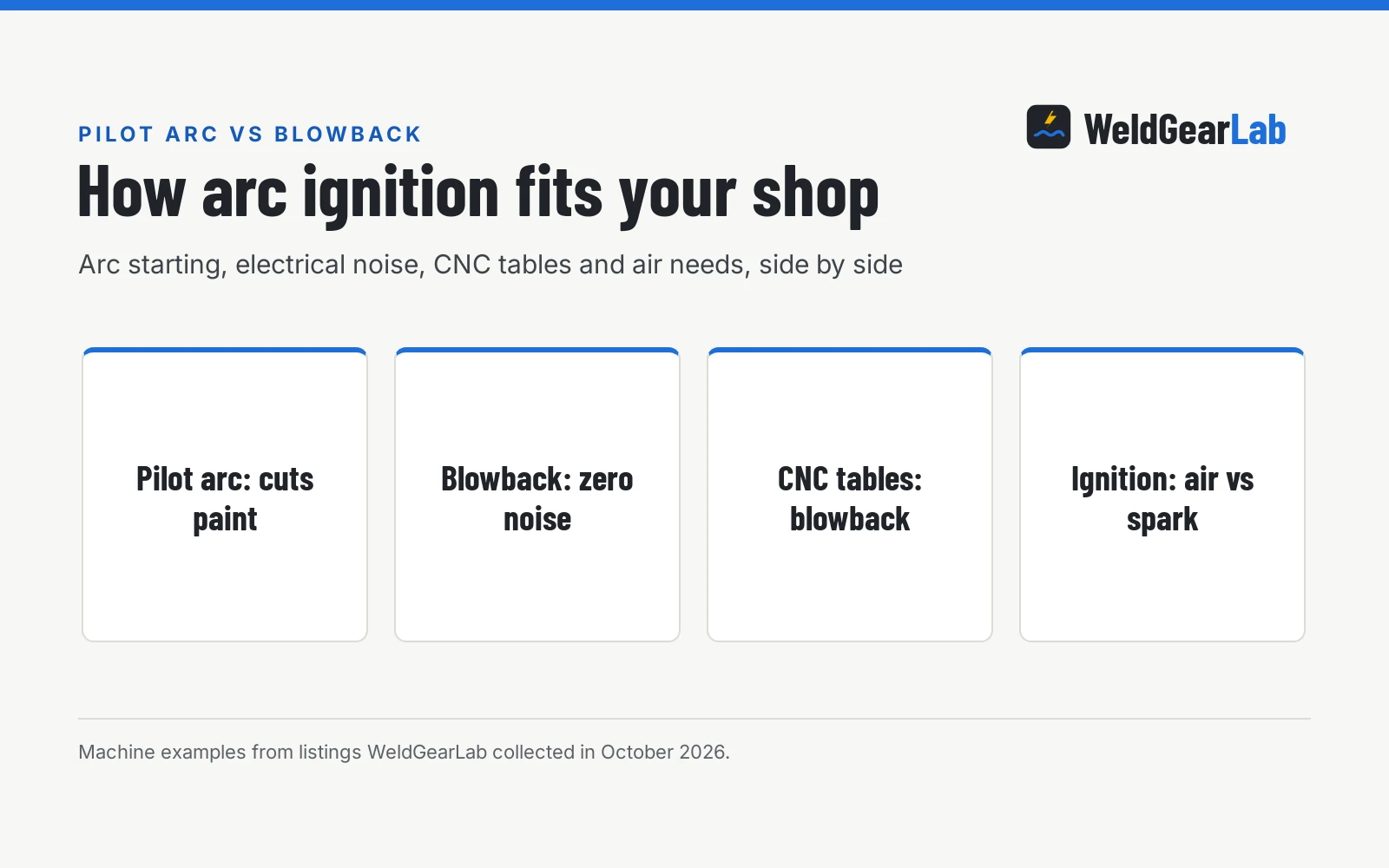
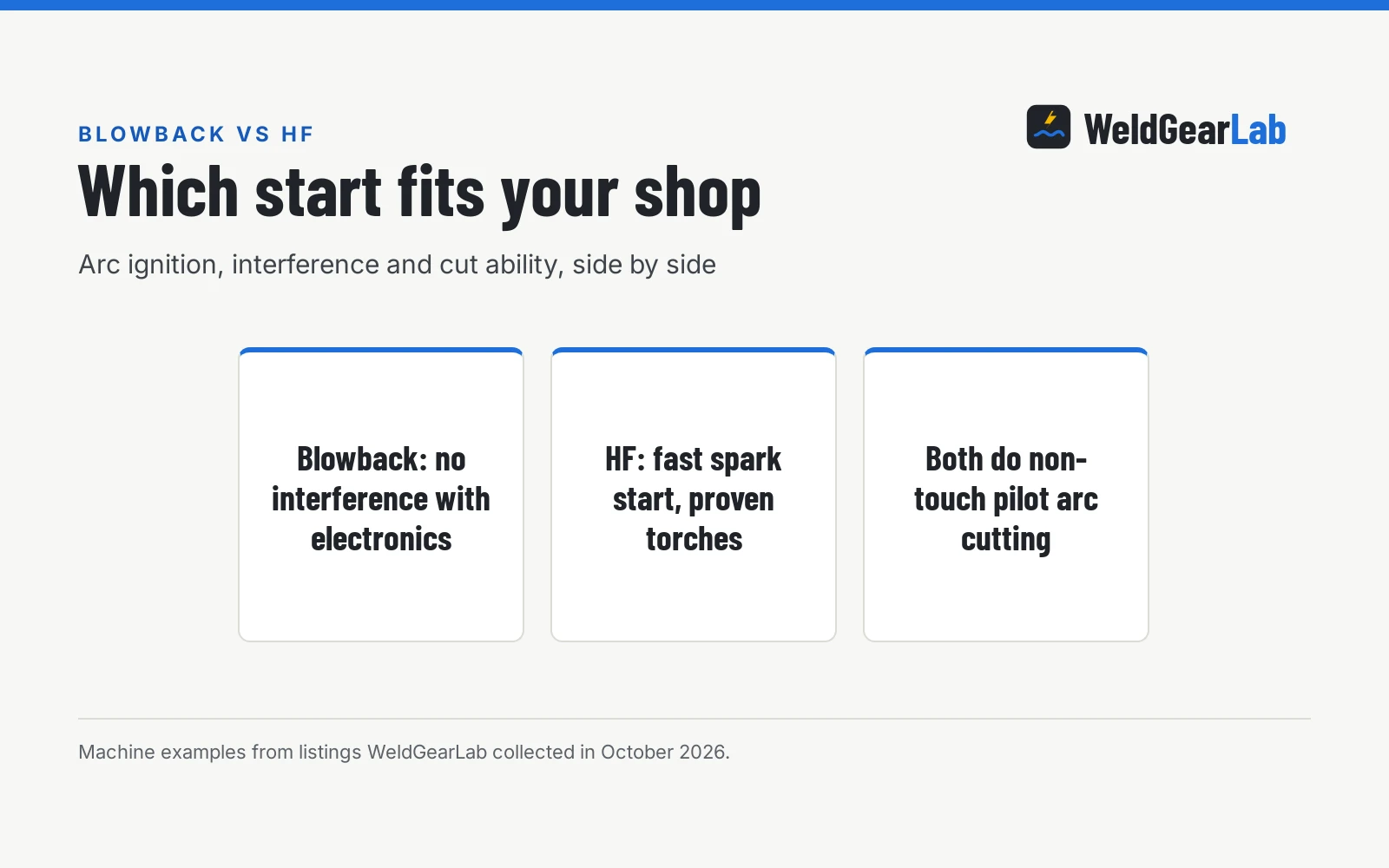
Blowback start strikes the plasma arc without a high-frequency spark, so it will not interfere with shop electronics; HF start uses a spark and suits proven, simple torches. How to tell which a listing uses.

On this page
Top picks at a glance
As an Amazon Associate I earn from qualifying purchases.
- 1
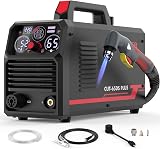 YESWELDER CUT-65DS PLUS Plasma Cutter9.7/10View on Amazon
- 2
 PT31 Air Plasma Cutting Torch Head Body9.4/10View on Amazon
- 3
 Bestarc 60A Non-HF Plasma Cutter9.6/10View on Amazon
- 4
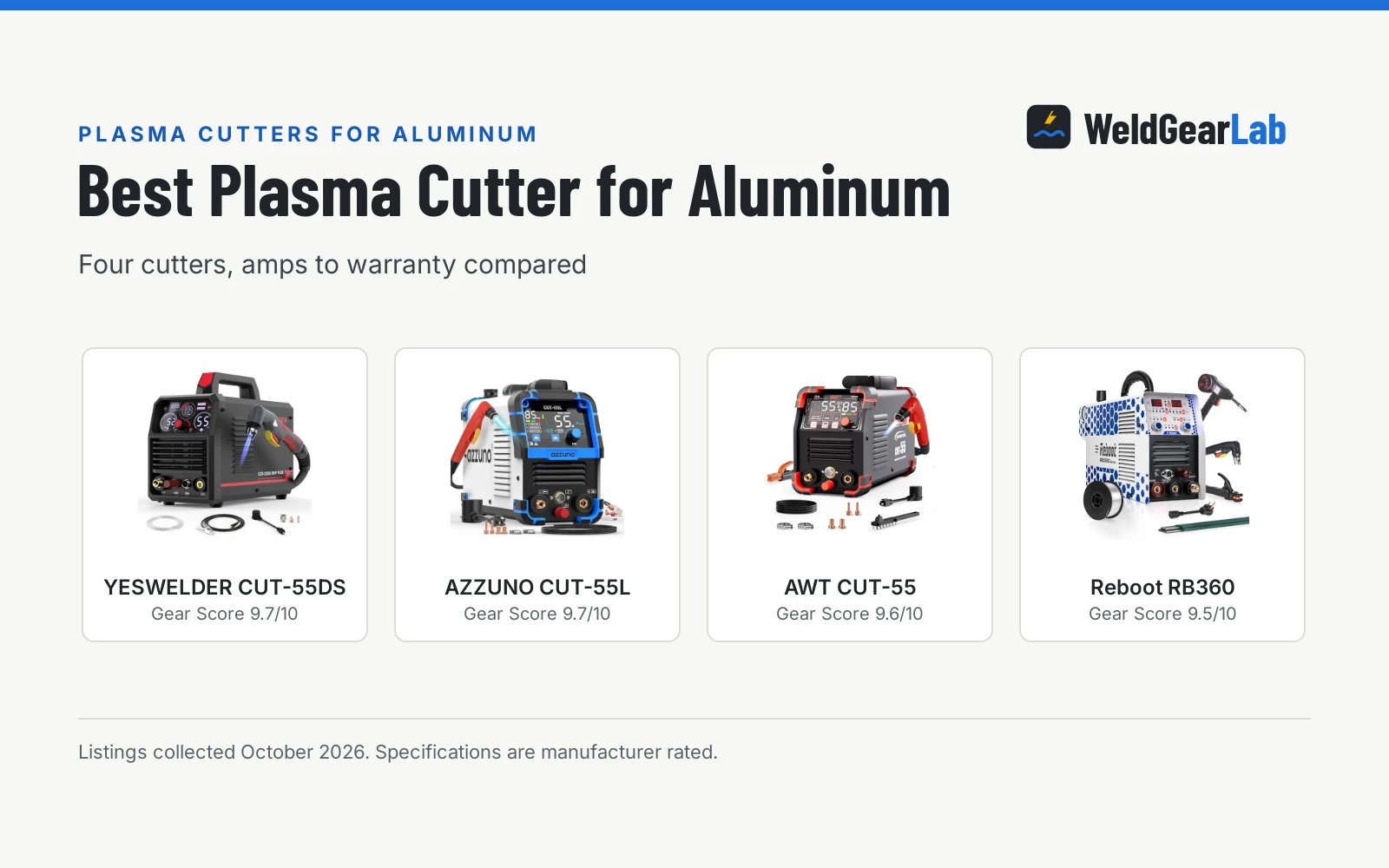
 ARCCAPTAIN iControl CUT55 Prolux Plasma Cutter MachineView on Amazon
- 5
 ARCCAPTAIN 55A Non-HF Plasma Cutter MachineView on Amazon
- 6
 ARCCAPTAIN iControl CUT55 MP [Non-HF] Plasma Cutter MachineView on Amazon
- 7
 AWT Plasma CutterView on Amazon
- 8
 GNI 55Amp Portable Plasma CutterView on Amazon
- 9
 FLARING Plasma CutterView on Amazon
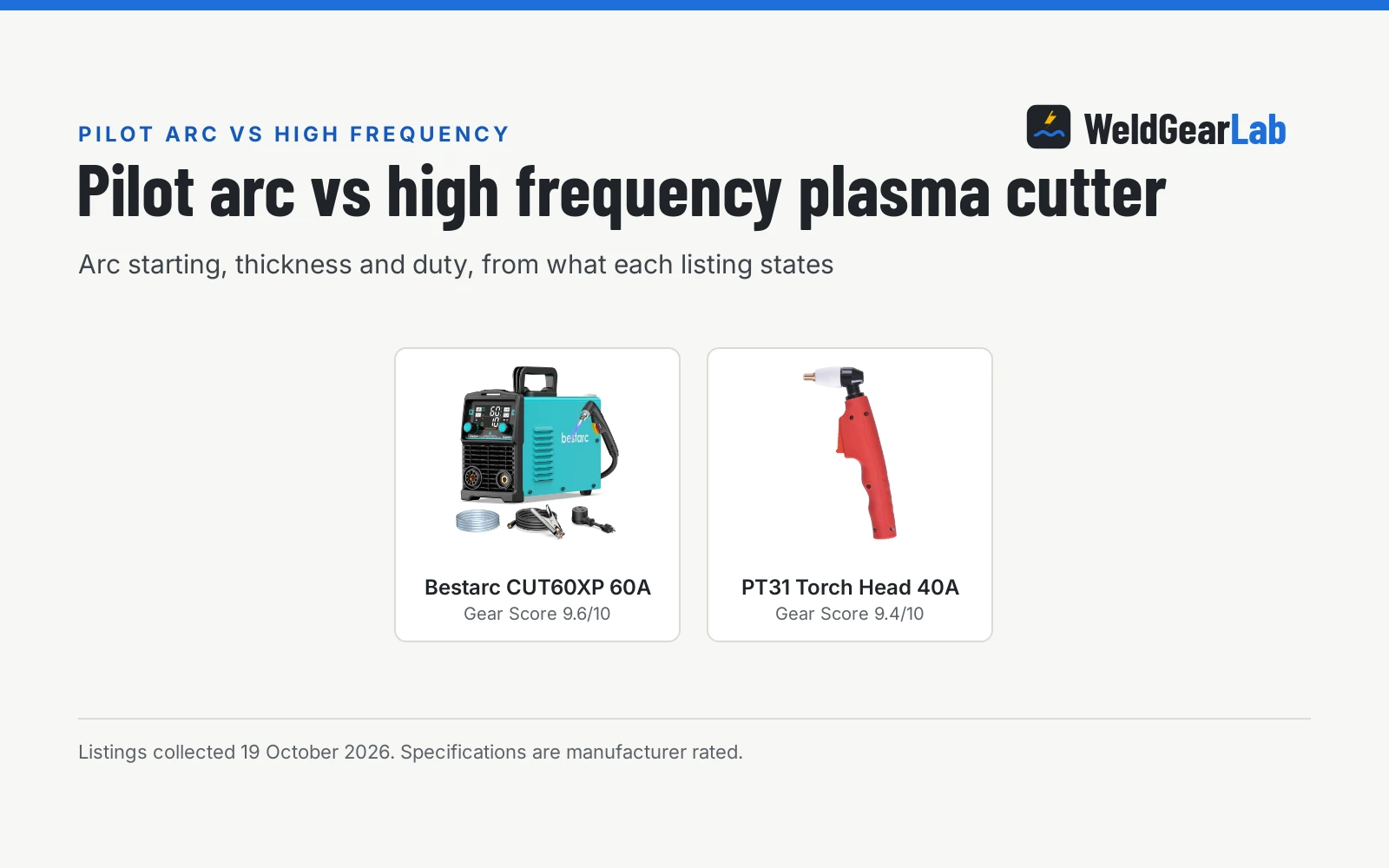
Every pilot-arc plasma cutter has to strike an arc somehow, and the two methods in modern listings work very differently. Blowback start vs high frequency plasma cutter: blowback start strikes the arc mechanically, with no high-frequency spark, so it does not interfere with surrounding electronics; high-frequency (HF) start fires a high-voltage spark across the gap to start the arc, which can cause electromagnetic interference. This guide compares them on interference, cutting ability, consumables and how to tell which one a listing uses.
Other welders and gear to compare
 ARCCAPTAIN iControl CUT55 Prolux Plasma Cutter MachineCheck price on Amazon
 ARCCAPTAIN 55A Non-HF Plasma Cutter MachineCheck price on Amazon
 ARCCAPTAIN iControl CUT55 MP [Non-HF] Plasma Cutter MachineCheck price on Amazon
 AWT Plasma CutterCheck price on Amazon
 GNI 55Amp Portable Plasma CutterCheck price on Amazon
 FLARING Plasma CutterCheck price on Amazon
This guide links to our product roundups, where WeldGearLab gets a commission on purchases made through links on this page, and your price stays the same. Read our affiliate disclosure.
The difference in one paragraph
A pilot arc needs an initial path before the full cutting arc can form. Blowback start moves the electrode and nozzle apart under air pressure, striking the arc without any high-frequency signal: the ARCCAPTAIN Non-HF listing describes a low-frequency arc maintenance system that improves cutting stability and reduces electrode burn during idle time, and the Everlast PowerPlasma 82i listing states blowback start avoids high frequency which can interfere with surrounding electronics. HF start instead sends a high-voltage, high-frequency spark through the torch to jump the gap. Both give you a non-touch pilot arc, and both appear on 55A to 80A machines, so the choice is about your shop, not raw power.
Blowback start vs high frequency plasma cutter: side by side
| Blowback start | High-frequency start | |
|---|---|---|
| How the arc starts | Electrode parts move under air pressure, no high-frequency spark | High-voltage spark jumps the gap |
| EMI around electronics | No HF, listed as safe around surrounding electronics (Everlast) | Can interfere; blowback listings cite this as the difference (ARCCAPTAIN) |
| Non-touch pilot arc | Yes, cuts without touching metal (ARCCAPTAIN Non-HF) | Yes, non-contact arc starting (AWT CUT-65, GNI 55A) |
| Expanded metal and mesh | Yes, adjustable pilot-arc time 2 to 10s (ARCCAPTAIN Non-HF) | Yes, expanded-metal cutting mode (ARCCAPTAIN CUT65) |
| Rust and paint removal | Rust removal mode listed (ARCCAPTAIN Non-HF, CUT55 MP) | Rust removal mode listed (ARCCAPTAIN CUT65) |
| Example machines | ARCCAPTAIN 55A Non-HF, 110/220V; Everlast 80A at 60% duty | AWT CUT-65 65A; GNI 55A at 9.51 lb |
| Warranty examples | 3-YEAR (ARCCAPTAIN CUT55 MP) | 2 Years (ARCCAPTAIN CUT65) |
Figures like amperage and cut thickness belong to the named listing only. A 65A HF machine and a 55A blowback machine are not comparable on output; compare the start method, not the size.
When blowback start is the better choice
- Electronics nearby. CNC tables, computers, phone chargers and shop electronics. The Everlast listing’s own words: blowback starts the arc without the high frequency that can interfere with surrounding electronics.
- Home garages and shared shops. The ARCCAPTAIN Non-HF listing calls blowback ideal for home garages and workshop environments, with minimal risk to bystanders.
- Rusty, painted or expanded metal work. The ARCCAPTAIN Non-HF listing supports mesh cutting with adjustable pilot-arc time (2 to 10s) and a rust removal mode, all without touching the metal.
- Longer consumable life between changes. The low-frequency maintenance system is listed as reducing electrode burn during idle time.
Our best portable plasma cutter guide covers non-HF machines like the ARCCAPTAIN 55A Non-HF with 110V/220V dual voltage.
When high frequency start is the better choice
- Proven, simple torch designs. HF torches like the bestarc AG60P and the Cuwiny AG60 are widely sold with stated 60A ratings and 60% duty cycles, and consumables are easy to find.
- Fast arc striking on clean metal. The AWT CUT-65 lists 65A HF non-touch arc starting for ignition without metal contact, with clean cuts of 3/8 inch at 110V and 3/4 inch at 220V.
- Heavy cut capacity. The ARCCAPTAIN CUT65, whose part number reads CUT65 HF, lists a maximum cut of 1-3/16 inches (30mm) at 65A, showing HF start scales to bigger machines too.
- Compact DIY machines. The GNI 55A at 9.51 lb uses HF non-touch pilot arc in a portable 120V/240V package.
How to tell what a machine uses
Listings do not always say it clearly. Look for these phrases:
- Blowback: blowback pilot arc, blowback start, non-HF, non-high-frequency. The ARCCAPTAIN Non-HF and CUT55 MP listings lead with these exact words.
- High frequency: HF pilot arc, high-frequency start, high-frequency non-touch pilot arc. The AWT CUT-65 and GNI 55A listings use these.
- Ambiguous: non-touch pilot arc alone, as on the ARCCAPTAIN CUT55 Prolux, does not say which start method is inside. Non-touch describes the pilot arc, not how it strikes.
- Part numbers can hint: the ARCCAPTAIN CUT65’s part number reads CUT65 HF, matching its high-frequency design.
If the listing does not say, the safest assumption is nothing at all. Ask the seller which start the machine uses before you buy for a CNC table or an electronics-heavy shop.
Does the start method change cut thickness?
No, or not by itself. Cut thickness follows amperage and voltage: the blowback Everlast 80A lists a 1-inch maximum cut, the blowback ARCCAPTAIN 55A Non-HF lists up to 26mm at 55A and 220V, and the HF AWT 65A lists a 1-inch maximum cut at 65A. A bigger machine cuts thicker regardless of how its arc starts. Compare amperage, duty cycle and input voltage for capacity; compare start method for interference and shop safety. See our dual voltage vs 110V guide on input voltage.
Plasma cutting safety. Both types throw sparks and bright ultraviolet light, and both need dry compressed air at the right pressure. Wear a proper welding helmet or shade, gloves and flame-resistant clothing, keep a fire extinguisher within reach, and never cut on containers that held flammables. See the OSHA welding overview and our Safety Disclaimer.
FAQ for welders
Does high frequency start damage electronics?
It can interfere with them. The Everlast and ARCCAPTAIN blowback listings both present the absence of high frequency as the reason their machines are safer around surrounding electronics. If your shop has a CNC table or computers, that is the practical difference.
Can a blowback machine cut expanded metal?
Yes. The ARCCAPTAIN Non-HF listing supports mesh cutting with an adjustable pilot-arc time of 2 to 10 seconds, and the CUT55 MP lists expanded metal as a cutting mode. Longer pilot-arc time keeps the arc alive across the gaps.
Do blowback machines need to touch the metal?
No. The ARCCAPTAIN Non-HF listing describes non-touch cutting on rough, painted, rusty or dirty surfaces: the pilot arc bridges the gap without contact, just like an HF machine’s non-touch start.
Which consumables does each type use?
Both use nozzles and electrodes, sold as consumable kits for 50 to 60A torches, and torch-specific parts like the AG60 consumables listed with the bestarc torch. Blowback listings claim reduced electrode burn during idle; HF non-touch listings claim reduced wear from no-contact starts. Buy the kit that matches your torch model.
Is non-touch pilot arc the same as blowback?
No. Non-touch describes the pilot arc bridging to the work without contact. Blowback and high frequency are the two ways that arc gets started. A machine can be non-touch with either start method.
Related: contact start vs pilot arc, best air compressor for plasma cutter, and the plasma cutters hub. Also see our consumable life guide.