Screw Extractor vs Bolt Extractor: Which One Should You Buy?
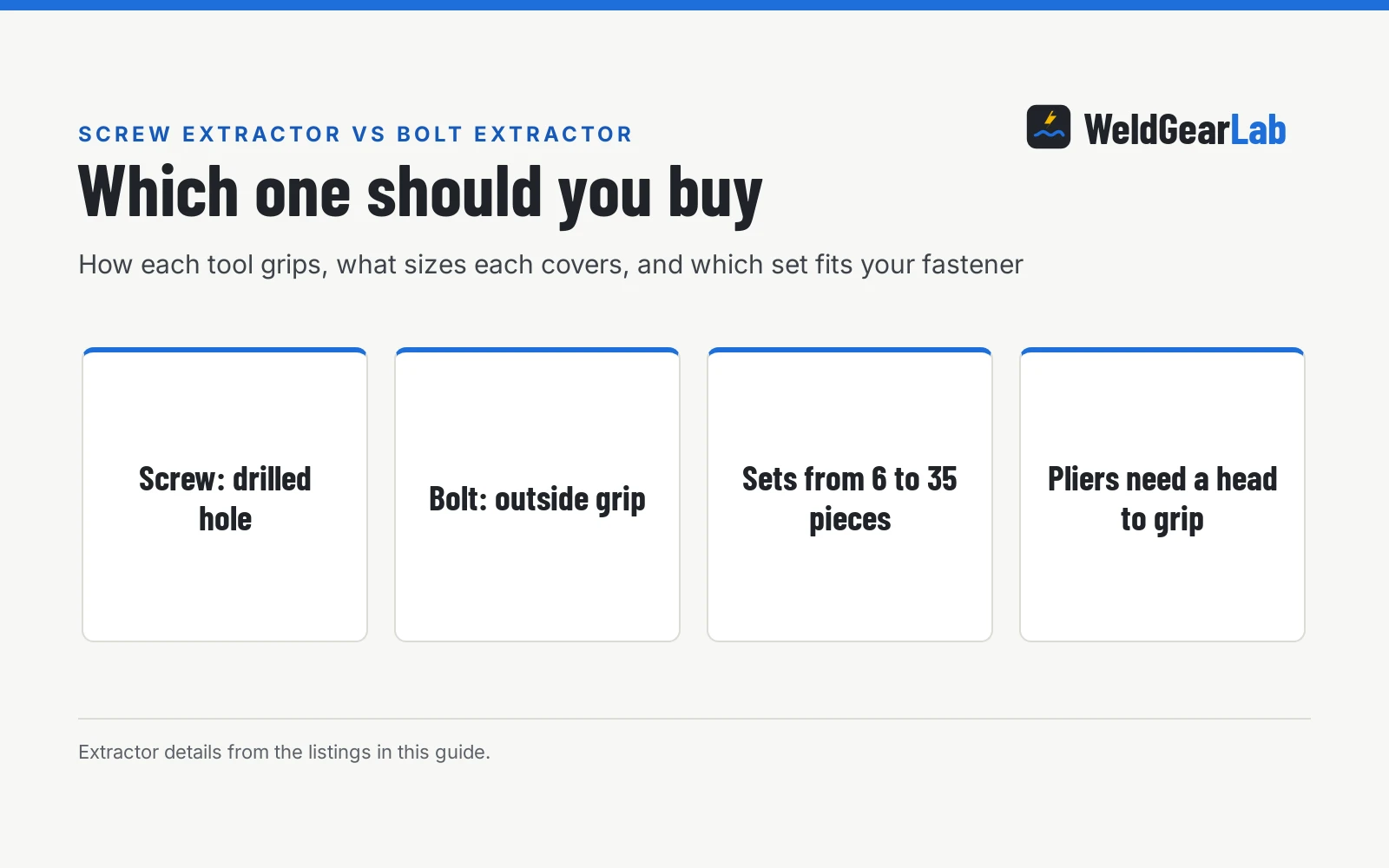
A drill-in screw extractor bites into a drilled hole to turn a broken screw out, while a bolt extractor grips the outside of a rounded bolt head, and this guide compares both tools and the 4 extractor sets that use them.

On this page
Top picks at a glance
As an Amazon Associate I earn from qualifying purchases.
- 1
 VAMPLIERS 5" Mini Stripped M2 Screw Extractor Pliers ESD Safe9.7/10View on Amazon
- 2
 toolant 46-Piece Impact Bolt Extractor Set9.5/10View on Amazon
- 3
 ENGINEER PZ-58 Screw Removal Pliers Stripped Screw ExtractorView on Amazon
- 4
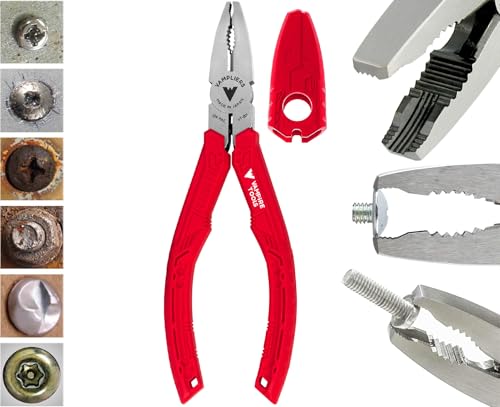 VAMPLIERS 6.25" Stripped Screw Extractor Combination PliersView on Amazon
- 5
 19 Piece Easy Out Screw Extractor Set and Left Hand DrillView on Amazon
- 6
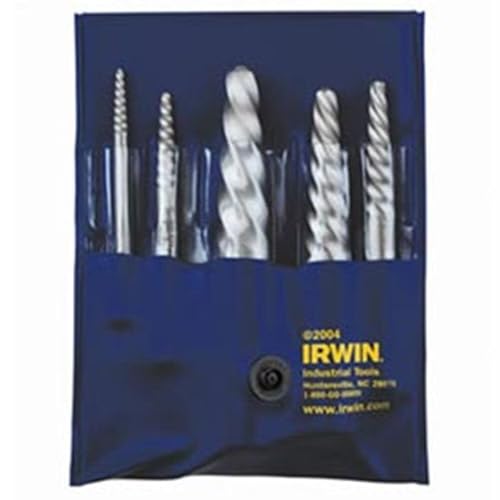 IRWIN Screw ExtractorView on Amazon
- 7
 NEIKO 01925A Screw-Extractor And Left-Hand Drill-Bit SetView on Amazon
- 8
 LOPMOU Damaged Screw Extractor SetView on Amazon
A screw snaps off flush in a bracket, or a bolt head rounds out under the wrench, and the fastener has to come out without wrecking the part around it. Screw extractor vs bolt extractor is the question that follows, and the answer turns on what broke: a drill-in screw extractor bites into a hole drilled in the broken screw, while a bolt extractor grips the outside of a rounded bolt head or nut. This guide compares both tools, then looks at the four extractor sets in this guide.
Other welders and gear to compare
 ENGINEER PZ-58 Screw Removal Pliers Stripped Screw ExtractorCheck price on Amazon
 VAMPLIERS 6.25" Stripped Screw Extractor Combination PliersCheck price on Amazon
 19 Piece Easy Out Screw Extractor Set and Left Hand DrillCheck price on Amazon
 IRWIN Screw ExtractorCheck price on Amazon
 NEIKO 01925A Screw-Extractor And Left-Hand Drill-Bit SetCheck price on Amazon
 LOPMOU Damaged Screw Extractor SetCheck price on Amazon
This guide links to our product roundups, where WeldGearLab gets a commission on purchases made through links on this page, and your price stays the same. Read our affiliate disclosure.
Screw Extractor vs Bolt Extractor: The Short Version
A screw extractor is a reverse-threaded or fluted tool that goes into a hole drilled in the broken screw, then turns it out counterclockwise as it bites deeper. A bolt extractor grips the outside of a damaged bolt head, nut or stud, and turns it out with a ratchet, impact wrench or hand wrench. The drill-in screw extractor needs a drilled pilot hole and works from the inside; the bolt extractor needs enough of the head or shank left to grip and works from the outside. The pliers in this guide are the exception: they grip the head from the outside and need no drilled hole. Pick the drill-in screw extractor when the head is gone, and the bolt extractor when the head is rounded but still standing proud.
Side by side
| Screw extractor | Bolt extractor | What to check | |
|---|---|---|---|
| What it removes | Broken or stripped screws | Rounded bolts, nuts and studs | Match the tool to the fastener |
| How it grips | Reverse flutes bite inside a drilled hole | Multi-spline flutes bite the outside of the head | The flutes must seat snug before you turn |
| Drive tool | Drill or hand wrench | Ratchet, impact wrench or hand drill | Use the drive adapter that fits your tool |
| Typical sizes | 3 to 12 mm (THOSAF set); 1/8 to 13/32 inch (XEWEA set) | 1/8 to 13/32 inch (XEWEA set) | Measure the fastener before you pick |
| Needs a drilled hole | Yes for drill-in sets | No | A drilled hole is the screw extractor starting point |
| Reach into tight spots | Left-hand drill bits and spiral extractors | Extension bar and universal joint | Pick the accessory that matches the space |
| Where it struggles | Coobeast drill bits not suggested for stainless steel | Heads too rounded to grip | Switch tools when the extractor slips |
Both tools turn the fastener out in reverse. The screw extractor needs the drilled hole straight and centered to bite cleanly, and the bolt extractor needs to seat square on the head before you turn.
When a screw extractor is the better choice
- Head snapped off below the surface. A drill and a screw extractor can reach a fastener that no socket or pliers can grip.
- Small screws in tight spots. Left-hand drill bits can spin a broken screw out while you drill, and the extractor finishes the job.
- Rusted screws in a bracket. The reverse bite works the screw out a little at a time.
For deep or recessed fasteners, our best extra long screw extractor roundup covers longer sets built for that reach.
When a bolt extractor is the better choice
- Rounded bolt heads and nuts. Multi-spline flutes bite into the outside of the head where a socket slips.
- Studs and frozen bolts. A ratchet-driven extractor puts steady torque on the fastener without a drilled hole.
- Angled or tight spaces. An extension bar and a universal joint can reach a bolt that sits where a straight drill cannot.
The extractor sets in this guide
XEWEA 14-piece screw extractor set. The XEWEA set includes 10 multi-spline screw extractors from 1/8 inch to 13/32 inch, plus a 3/8 inch to 1/4 inch hex adapter, a 3/8 inch to 1/2 inch impact adapter, a 3/8 inch drive extension bar and a 3/8 inch universal joint. The extractors are heat-treated chromium-molybdenum steel, and the 3/8 inch drive connects straight to impact wrenches, ratchets and hand drills. The listed dimensions are 6.7 inches by 4.3 inches by 1.6 inches.
coobeast 35-piece screw extractor set. The coobeast set is the biggest kit here, with 16 left-hand cobalt drill bits, 13 multi-spline screw extractors and 6 spiral screw extractors. The drill bits carry a titanium coating and a 135 degree angle, and the multi-spline extractors match the drill bit sizes, with laser etching for identification. The spiral extractors can reach deeper places, and the blow molded case keeps the set organized. The listing notes the drill bits are not suggested for stainless steel.
THOSAF damaged screw extractor set. The THOSAF set is a 6-piece screw extractor set for screws and bolts from 3 to 12 mm, made from high-speed steel H.S.S 4341 with a stated hardness of 63 HRC. The listing also states hardness of 63 to 65 HRC in a later bullet, while the spec table lists the set as 5 Count, so count the pieces on arrival. It works with any drill, and removal runs in two simple steps: drill a hole with the right size extractor, then turn the screw out counterclockwise.
WORKPRO 8 inch linesman screw extractor pliers. The WORKPRO pliers take a different approach: they squeeze and turn the fastener instead of drilling into it. The listing states the jaw range two ways, 0.41 inch to 0.97 inch in diameter and 2.46 to 10.5 mm, and those two ranges do not agree, so go by the screw sizes, truss screws from M2 to M4 and pan screws from M1.6 to M5. The pliers are chrome vanadium steel, with heat-treated hardness up to 55 HRC and high-frequency treated hardness up to 65 HRC. This is the pick for a fastener with enough head left to grip, and the wrong tool once the head is gone.
How to pick the right size
Match the extractor to the fastener before you drill or grip. For a screw extractor, drill the hole the extractor size calls for, then turn it out counterclockwise. A hole that is too small leaves no bite, and a hole that is too large leaves thin walls that can split. For a bolt extractor, pick the spline size that seats snug on the rounded head, and use the drive adapter that fits your ratchet or impact wrench. The WORKPRO pliers need a head between 0.41 inch and 0.97 inch in diameter to grip. When in doubt, pick the size that seats snug, and step down to the next smaller spline size if a bolt extractor slips.
FAQ for welders
What is the difference between a screw extractor and a bolt extractor?
A drill-in screw extractor works from the inside: you drill a hole in the broken screw, then the reverse flutes bite and turn it out counterclockwise. A bolt extractor works from the outside: multi-spline flutes grip a rounded bolt head, nut or stud, and a ratchet or impact wrench turns it out. Use a drill-in screw extractor when the head is gone, and the bolt extractor when the head is rounded but still there.
Do screw extractors work with any drill?
The THOSAF set states it works with any drill, and the XEWEA set connects to impact wrenches, ratchets and hand drills through its 3/8 inch drive. The coobeast set pairs left-hand drill bits with matching extractors, and running an impact wrench in reverse helps spin the broken bolt out.
Can a bolt extractor remove a rusted bolt?
Yes, the XEWEA set is listed for stripped, rusted, frozen or rounded bolts, screws and studs, and the coobeast set covers broken and damaged bolts in automotive, home and production repair. If the head rounds further under the extractor, step to the next smaller spline size for a tighter bite.
What size screw extractor do I need?
Match the extractor to the screw: the THOSAF set covers screws and bolts from 3 to 12 mm, the XEWEA set runs from 1/8 inch to 13/32 inch, and the WORKPRO pliers grip heads from 0.41 inch to 0.97 inch in diameter. Measure the fastener before you pick, and choose the extractor the listing pairs with that size.
Can I use a screw extractor on stainless steel?
The coobeast listing notes its drill bits are not suggested for stainless steel, so do not reach for that set on a stainless fastener. Pick an extractor whose listing states it suits the material, and keep the drill speed low with steady pressure.
Related: our best extra long screw extractor roundup, and the Metal Fab Tools hub.