Reciprocating Saw vs Hacksaw for Metal: Which One Should You Buy?
Reciprocating saw vs hacksaw for metal: powered speed against hand control, with three recip saws and carbide blades ranked.

On this page
Top picks at a glance
As an Amazon Associate I earn from qualifying purchases.
- 1
 Reciprocating Saw Blades9.7/10View on Amazon
- 2
 HAUTMEC 12" Bi-Metal Hacksaw Blades Set9.7/10View on Amazon
- 3
 EZARC Obsidian Carbide Reciprocating Saw Blades 6" 8TPI Thick9.7/10View on Amazon
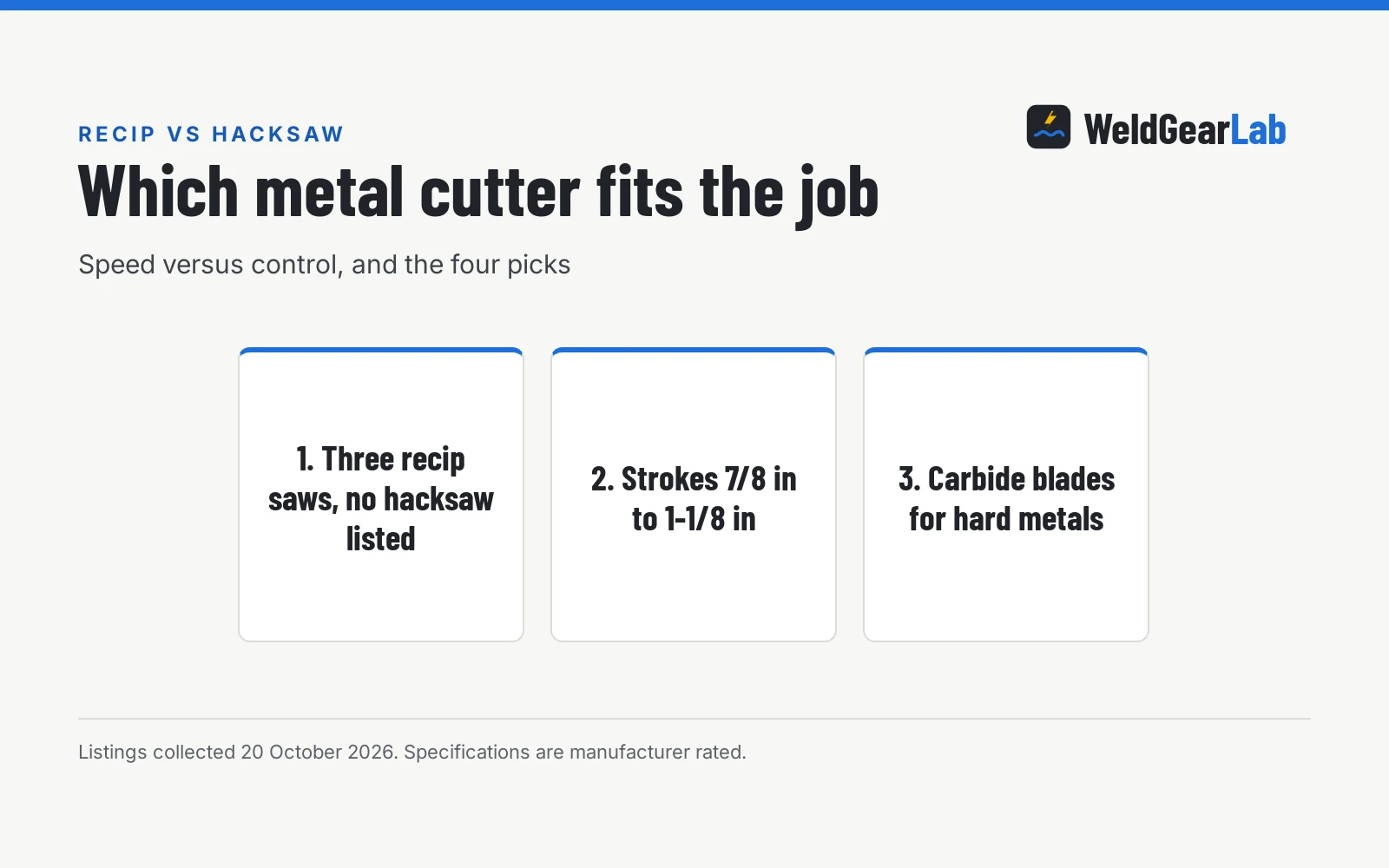
For cutting metal, the verdict is about speed versus control. A reciprocating saw vs hacksaw for metal choice pits a powered saw that does the stroking for you against a hand tool you push yourself. The three saws in these listings are all reciprocating saws, cordless and corded, with strokes from 7/8 inch to 1-1/8 inch and speeds of 0-2900 spm or 4500 rpm per the listings; no hacksaw was in the listings, so the hacksaw side is described only in general terms. This guide compares the two, then ranks the four metal-cutting picks.
WeldGearLab gets a commission on purchases made through links on this page, and your price stays the same. Read our affiliate disclosure.
Reciprocating saw vs hacksaw for metal: the short answer
A reciprocating saw drives the blade back and forth with a motor, so the cutting speed comes from the tool: the DEWALT here runs 0-2900 spm with a 1-1/8 inch stroke, the BLACK+DECKER and Milwaukee 4500 rpm. A hacksaw is hand powered: you supply the strokes, which is slower but gives fine control on small work. The EZARC carbide blade listing claims up to 50x longer life than bi-metal blades and cuts high-alloy steel, stainless steel, bolts and hardened screws, which shows what the right blade does for a reciprocating saw.
Side by side
| Reciprocating saw | Hacksaw | Takeaway | |
|---|---|---|---|
| Power | Battery or corded, per the three saw listings | Hand powered; no hacksaw in these listings | Powered vs hand powered |
| Speed | 0-2900 spm (DEWALT); 4500 rpm (B+D, Milwaukee) | Manual strokes; not stated here | Motor speed vs manual strokes |
| Stroke length | 7/8 in (Milwaukee); 1-1/8 in (DEWALT) | Not stated here | Stated for recip saws only |
| Blade change | Tool-free (B+D); keyless lever (DEWALT) | Not stated here | Tool-free or keyless on recip saws |
| Warranty | 2 year (B+D); 3 year (DEWALT) | Not stated here | Stated for recip saws only |
| Metal blades | Carbide, up to 50x bi-metal life claimed (EZARC) | Not stated here | Carbide blades claimed for recip saws |
Figures are the listings’ own claims, not our measurements. Where a listing contradicts itself, the bullets win: the DEWALT spec table says 9000 rpm while its bullets say 0-2900 spm.
When the reciprocating saw wins
- Demolition and teardown. The EZARC blade listing aims its carbide blades at wood and metal demolition, including nail-embedded wood.
- Hard metals. The EZARC blades claim to cut high-alloy steel, stainless steel, bolts and hardened screws where bi-metal blades fail quickly.
- Cordless convenience. The BLACK+DECKER 20V kit includes battery and charger at 4.5 lb; the Milwaukee Hackzall is a 1-handed bare tool for tight spots.
- Heavy-duty corded power. The DEWALT 12-amp corded saw with a 4-position blade clamp suits flush cutting and long sessions.
When the hacksaw wins
- Fine, controlled cuts. Hand stroking gives control a powered saw cannot on small stock.
- No power needed. A hacksaw works anywhere with no battery to charge.
- One caveat from the listings. No hacksaw was in these listings, so nothing here is scored against one; the comparison table marks the hacksaw side as not stated.
The four metal-cutting picks
Ranked by what each listing states. The DEWALT DWE305 leads: a corded 12-amp saw with 0-2900 spm, a 1-1/8 inch stroke, a 4-position blade clamp for flush cutting, a keyless lever-action clamp and a 3 year limited warranty. Next is the Milwaukee M18 FUEL Hackzall: an 18V brushless bare tool with a 7/8 inch stroke, 4500 rpm, a pivoting shoe, one-handed design and up to 3x longer tool life claimed over competitive one-handed recips; its listing meets OSHA specification and recommends metal. Third is the BLACK+DECKER BDCR20C kit: a 20V cordless saw with battery and charger, tool-free blade change, pivoting shoe and variable speed trigger at 4.5 lb, with a 2 year limited warranty. The EZARC 3-pack of 9-inch 6TPI carbide blades closes the list: up to 50x longer life than bi-metal claimed, cutting high-alloy steel, stainless, bolts and hardened screws, with a 1/2-inch universal shank.
Two caveats from the listings: the BLACK+DECKER and DEWALT spec tables list wood as the surface recommendation even under this metal-cutting keyword, and the EZARC spec table says teeth material bi-metal with cobalt while its title and bullets say carbide; we trust the titles and bullets.
Cutting metal safely. Clamp the workpiece, wear eye protection and gloves, and let the blade do the work instead of forcing it. The Milwaukee listing notes a pivoting shoe for constant contact and less bucking. Disconnect or remove the battery before changing blades, and keep the cord clear of the blade path on the corded saw. See the metal fab tools hub for more shop gear.
Blades make the metal cut
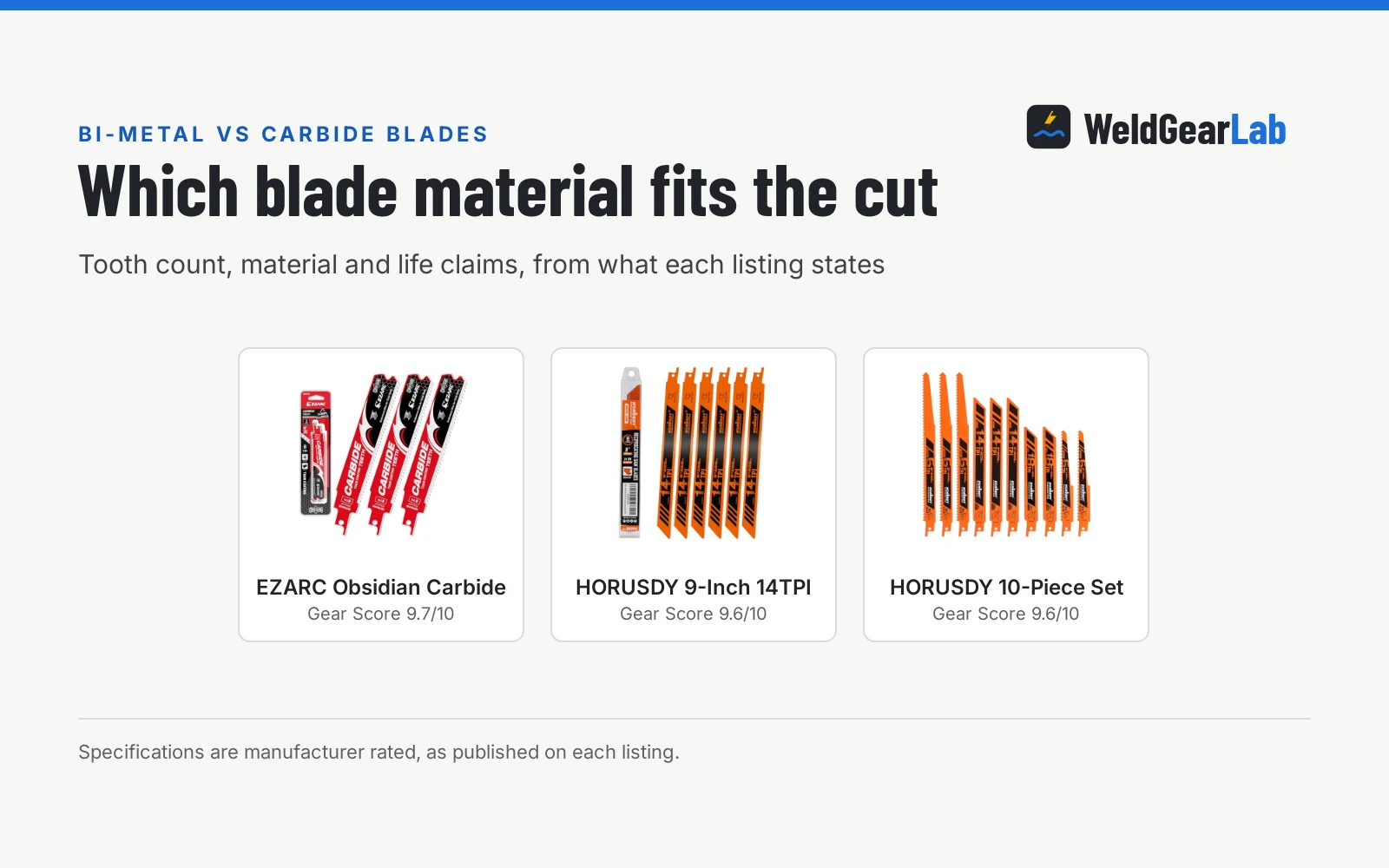
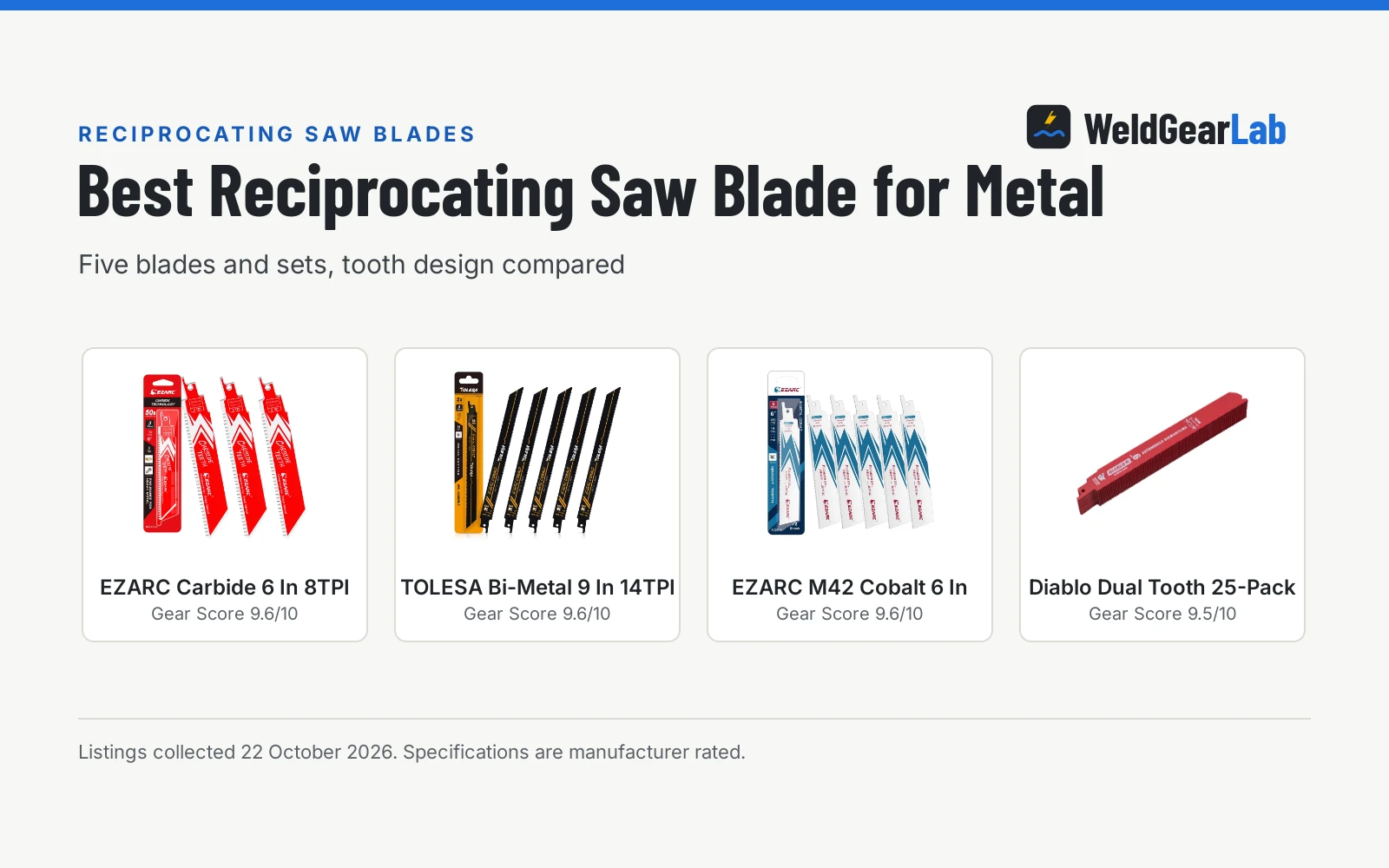
The saw is only half the story. The EZARC 3-pack states 9-inch carbide blades at 6 TPI, rated for wood and metal, with a claimed life up to 50 times longer than bi-metal, and states cutting high-alloy steel and stainless. The listing states carbide teeth, precision ground and individually welded, for heavy duty demolition work, and claims cutting high-alloy steel, stainless steel, bolts and hardened screws where bi-metal blades fail quickly. The listing states the 6 TPI design is for wood and metal demolition, including nail-embedded wood, with a 1/2-inch universal shank.
Cordless vs corded in this set
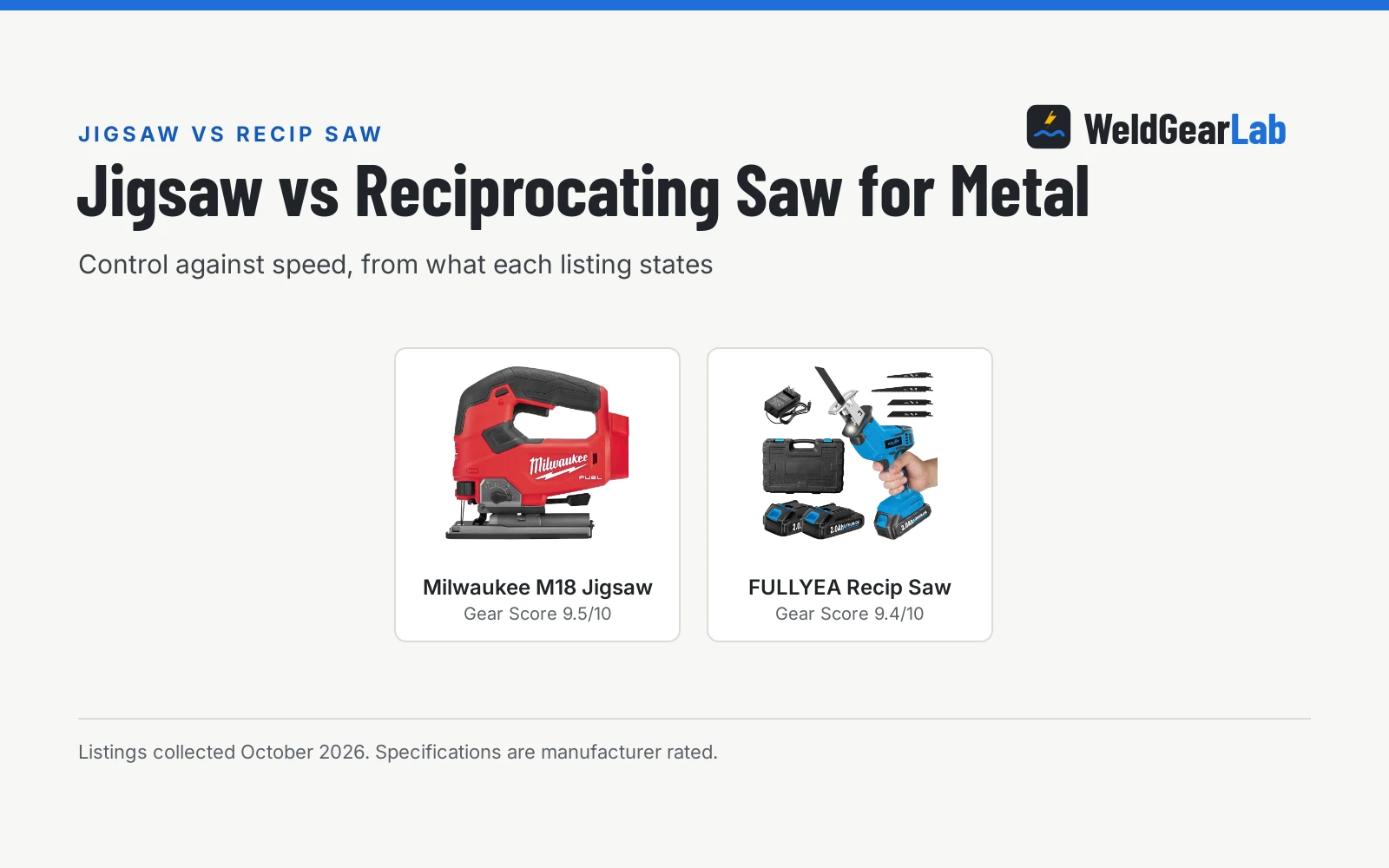
Two saws run on batteries and one on a cord. The BLACK+DECKER BDCR20C is a 20V MAX cordless kit with a stated 2-year warranty and tool-free blade change. The Milwaukee 2719-20 is an M18 FUEL Hackzall, bare tool, with a stated 7/8 in stroke. The DEWALT DWE305 is corded at 12 amps with 0-2,900 spm, a 4-position blade clamp, a variable speed trigger, a 1-1/8 in stroke and a stated 3-year warranty. Cordless suits the yard and the truck bed; corded suits the shop bench where the outlet is always there.
FAQ for welders
Can a reciprocating saw cut metal?
Yes, with the right blade. The EZARC carbide blades claim to cut high-alloy steel, stainless steel, bolts and hardened screws, and the Milwaukee listing recommends metal as a surface.
What does TPI mean for metal?
Teeth per inch. The EZARC blades are 6 TPI for demolition; the DEWALT and BLACK+DECKER listings state 24 and the Milwaukee 18 in their spec tables.
Corded or cordless for metal?
The DEWALT corded 12-amp saw suits long heavy sessions; the 20V BLACK+DECKER kit and 18V Milwaukee suit portability. The Milwaukee is a bare tool, so it needs a battery you already own.
Why do two spec tables say wood?
The BLACK+DECKER and DEWALT spec tables list wood as the surface recommendation. We report what the listings state; the Milwaukee lists metal and the EZARC blades are made for metal.
How long do carbide blades last?
The EZARC listing claims up to 50x longer life than bi-metal reciprocating saw blades. That is the listing’s claim, not our measurement.
Related: the best angle grinder for cutting metal, the best chop saw for metal cutting, the best portable band saw for metal, the abrasive chop saw vs cold saw and the metal fab tools hub.