Propane Regulator Repair Kit: What to Buy
A propane regulator repair kit covers the seals, hose and fittings that wear out first, and this guide shows what to check before ordering and when a new regulator is the better call.

On this page
Top picks at a glance
As an Amazon Associate I earn from qualifying purchases.
- 1
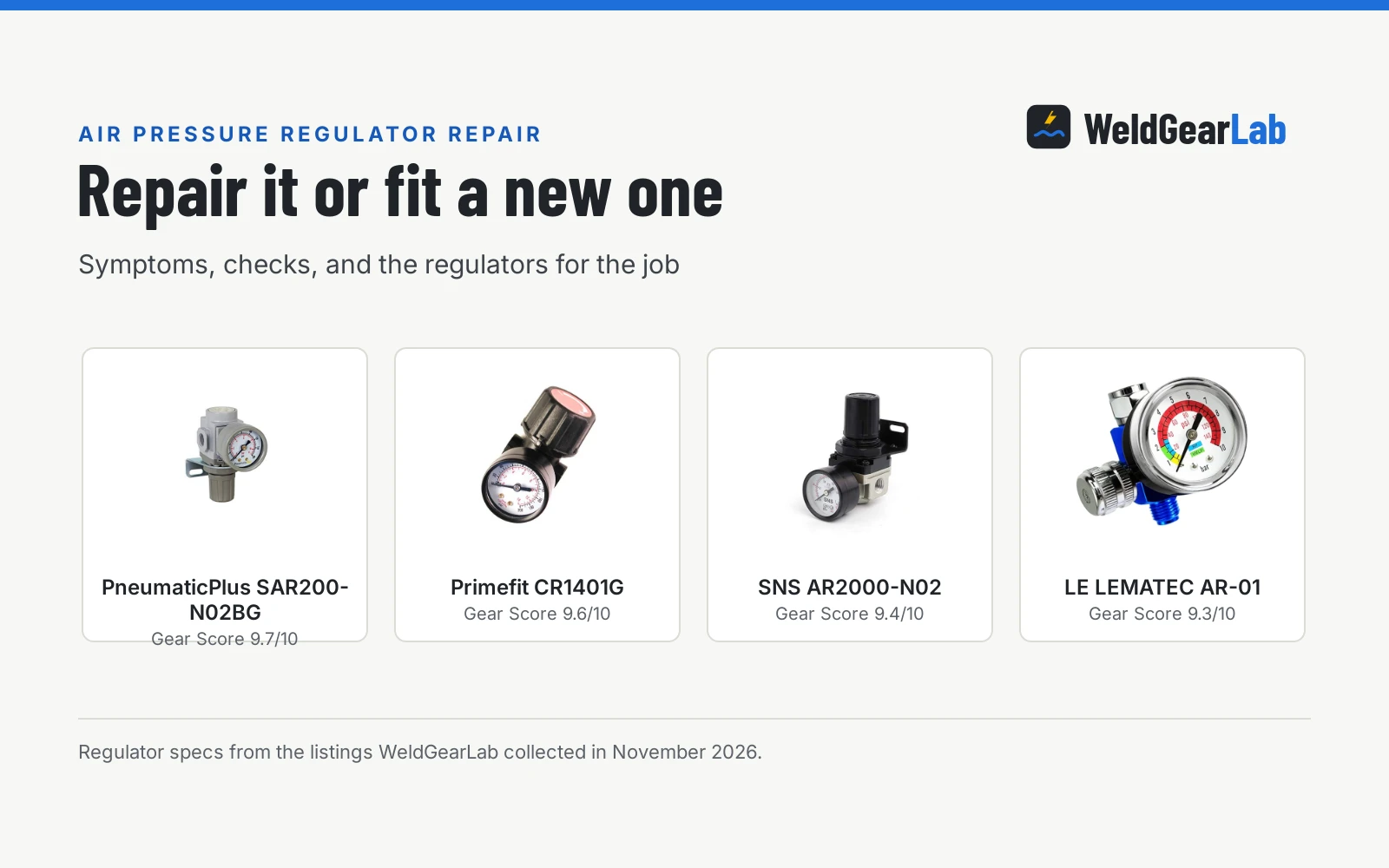
 PneumaticPlus SAR200-N02BG Compressed Air Pressure Regulator9.7/10View on Amazon
- 2
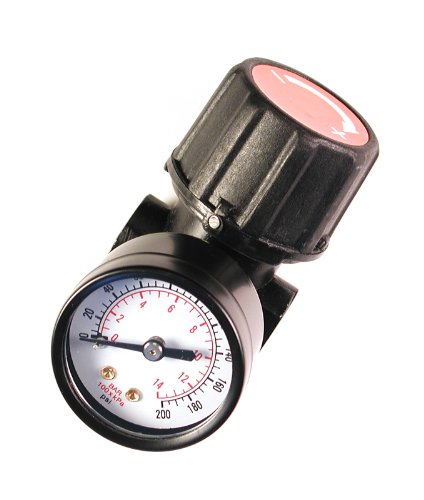 Primefit CR1401G Replacement Air Regulator with9.6/10View on Amazon
- 3
 SNS Air Compressor Pressure Regulator With Bracket and Gauge9.4/10View on Amazon
A grill that sputters, a heater that will not stay lit, or a forge that loses flame partway through a heat usually points at the regulator, and a propane regulator repair kit is the box of seals, hose and fittings that fixes the wearable parts without replacing the whole regulator. The kit makes sense when the regulator body still holds pressure and the fault sits in a seal, a hose or a fitting, and it is the wrong call when the body is cracked or the outlet pressure wanders. This guide walks through what a kit covers, how to match fittings and pressure to the appliance, and when a new regulator is the safer buy.
This guide links to our product roundups, where WeldGearLab gets a commission on purchases made through links on this page, and your price stays the same. Read our affiliate disclosure.
What a Propane Regulator Repair Kit Covers
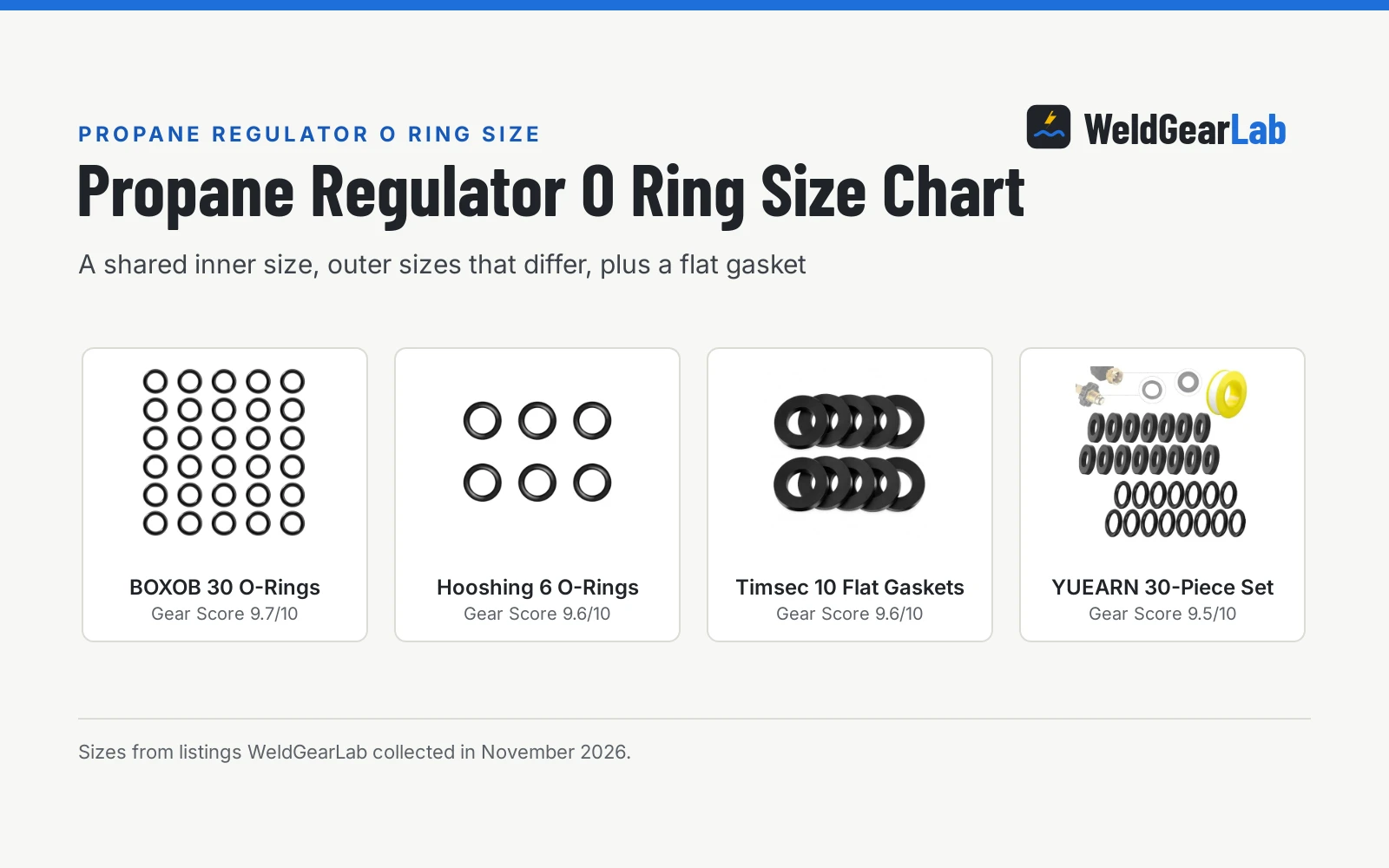
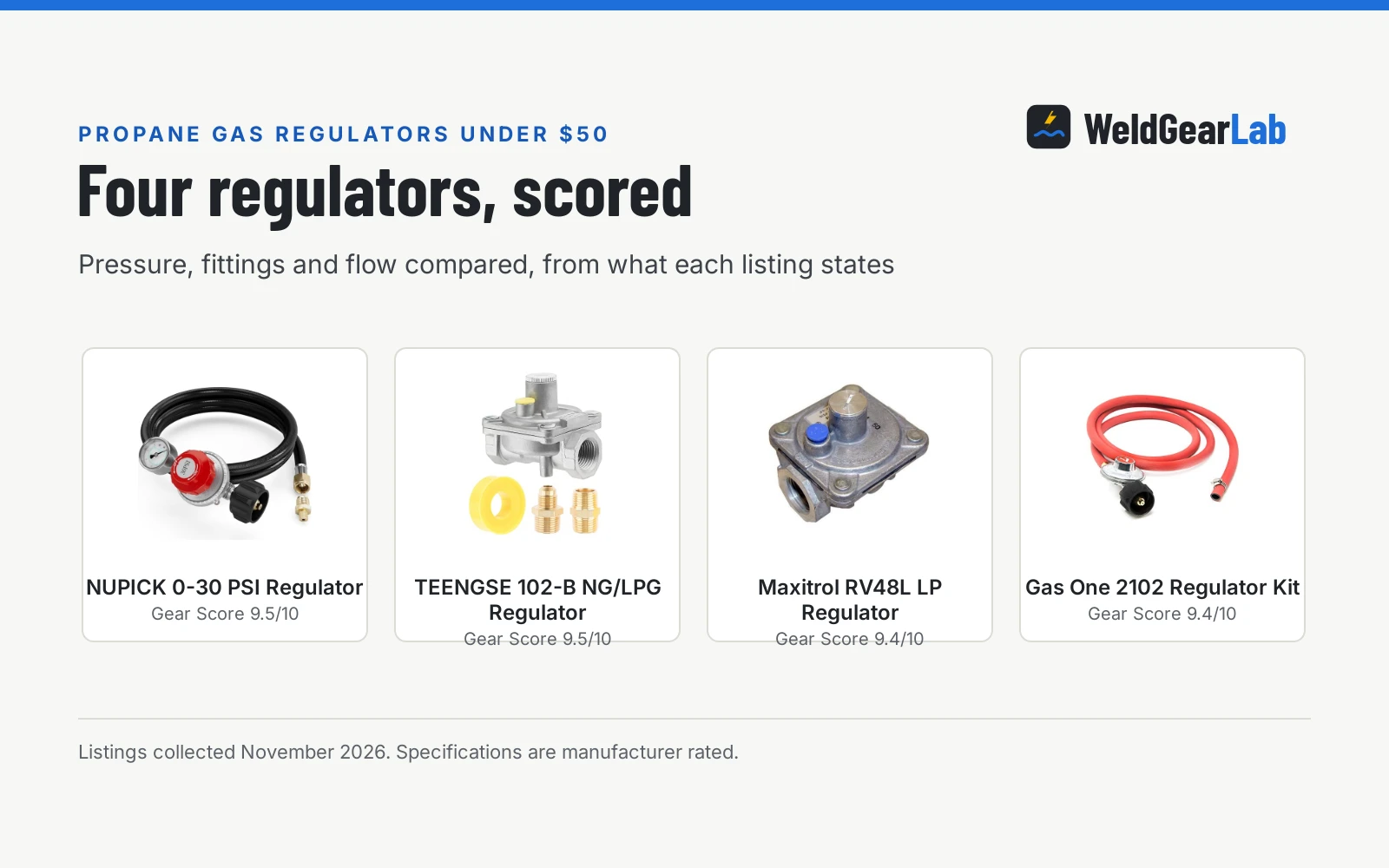
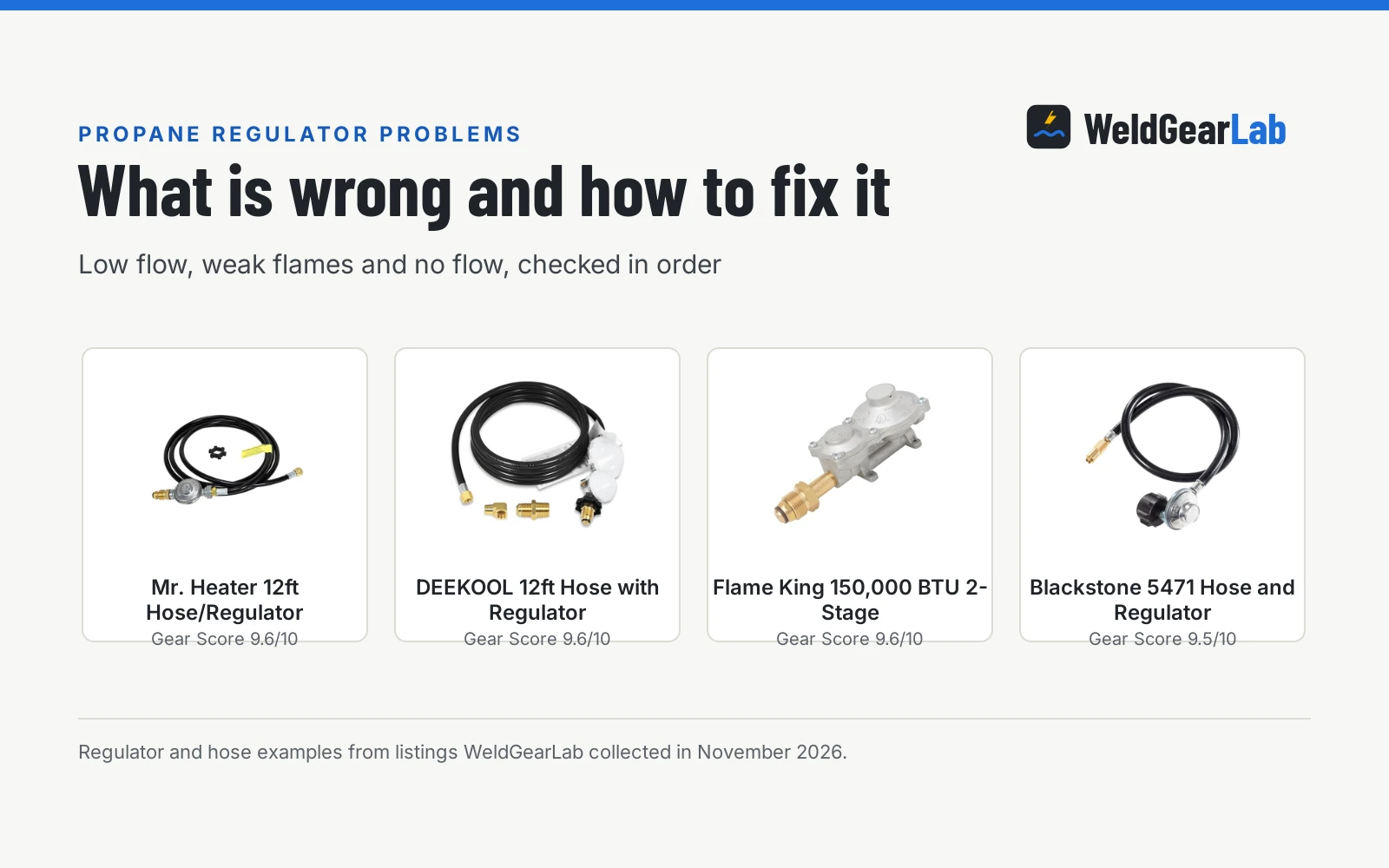
A repair kit is a collection of the parts that wear out first: a hose with brass fittings, a set of adapters, fresh seals and thread tape. The REDPANT kit pairs a 3-foot hose with a QCC-1 tank connection, a three-eighths-inch female flare fitting, a glow-in-the-dark gauge dial and a steady half PSI outlet, while the TEENGSE regulator (on Amazon) ships with brass adapters and thread tape and switches between LP and natural gas. The SURIEEN and MCAMPAS kits are adjustable valves with 4 adapters covering flare and hose barb connections.
Not every kit is a full repair set. The GasSaf and Joywayus pieces are single adapters: solid brass parts that convert one connection type to another, with built-in excess flow protection and no tools needed to fit them. At the other end, the MEGR home supply kit is a full first-stage and second-stage set, with a first stage regulator rated at 10 PSI and 1,000,000 BTU and a second stage rated at an 11-inch water column and 710,000 BTU, for a fixed home supply rather than a grill. The LIZAPUS kit (on Amazon) is narrower still, a direct replacement regulator for a generator, with a 12-month warranty. A repair kit covers the connections around the regulator; the body and the diaphragm inside it are parts a kit does not renew, and a fault there calls for a new regulator.
Side by side
| Repair kit | New regulator | Check first | |
|---|---|---|---|
| What it fixes | Worn seals, a cracked hose, loose fittings | A regulator that no longer holds pressure | Find the leak before ordering parts |
| Outlet pressure | Steady low pressure for grills and heaters | Adjustable from 0 to 20 PSI on high-pressure valves | Match the outlet to the appliance |
| Fittings | QCC-1 tank connection with flare and barb adapters | Comes with the fittings the maker lists | Match thread and flare size to the old part |
| Tank size | The hose kit fits 5 to 40 lb tanks | Sized to the tank and the appliance | Check the tank connection type |
| When it is enough | The body and diaphragm still work | The body is cracked or pressure wanders | A leak at the body means replace |
| Cost and effort | Less to buy, more fitting work | More to buy, less fitting work | Compare the kit with a new regulator |
The pressure figures in the table come from the makers: the REDPANT hose (on Amazon) kit holds a half PSI outlet, an 11-inch water column, while adjustable high-pressure valves run from 0 to 20 PSI with an inlet range of 25 to 250 PSI.
When a Repair Kit Is the Right Call
- A fitting that weeps gas. A worn seal or a loose flare fitting is the classic kit repair: new seals, thread tape and a fresh fitting, then a soapy-water check at the joint.
- A hose that is cracked or stiff. Rubber hose weathers outdoors, and a 3-foot replacement hose with brass ends restores the run from tank to appliance without touching the regulator body.
- A new appliance with a different fitting. A grill or heater with a three-eighths-inch flare inlet and a tank with a QCC-1 connection takes a hose kit with that pairing, and a high-pressure burner with a different fitting takes a kit with 4 adapters covering flare and hose barb sizes.
- A gauge that can no longer be read. A glow-in-the-dark dial on the REDPANT kit shows the tank level at a glance.
- The regulator still holds pressure. When the flame is steady and the outlet holds its rated pressure, the body is sound.
When to Replace the Regulator Instead
- The body is cracked or corroded. No seal or hose fixes a cracked body, and corrosion on brass fittings is a sign the regulator has reached the end of its service.
- Pressure that wanders. A flame that surges or fades while the tank is full points at the diaphragm or the spring inside, and neither is a part a repair kit renews.
- The wrong pressure class. A grill needs a low-pressure outlet, and a high-pressure valve that adjusts from 0 to 20 PSI belongs on burners, fryers and heaters, not on a grill.
- Missing safety parts. Excess flow protection is built into the REDPANT hose kit and the GasSaf and Joywayus adapters (on Amazon), and a regulator that has lost that protection, or a kit that leaves it out, is not worth rebuilding.
How to Match Fittings and Pressure
Matching is a matter of reading the old part before ordering. Take the hose and the regulator off the appliance, note the thread and flare sizes, and compare them with the kit contents. The what a propane regulator is guide explains the parts in plain terms.
- Tank connection. Most grill tanks use a QCC-1 handwheel, tightened by hand with no tools, while fixed supply and POL tanks use a soft nose POL connection.
- Flare and thread size. Common sizes in the kits covered here are half-inch NPT, three-eighths-inch flare, quarter-inch NPT, five-sixteenths-inch hose barb and eighth-inch NPT. Match each end: tank side, regulator side and appliance side.
- Outlet pressure. Grills, patio heaters and fire pits run on low pressure: the REDPANT hose kit holds a half PSI outlet, an 11-inch water column. High-pressure burners, turkey fryers and forges use an adjustable valve from 0 to 20 PSI. The TEENGSE regulator shows both sides of the split: an LP outlet of 2.45 to 2.55 kPa, a 10-inch water column, and a natural gas outlet of 0.95 to 1.05 kPa, a 4-inch water column.
- Flow capacity. The adjustable high-pressure valves list a flow capacity of 142800 BTU per hour, or 0 to 3 Kg per hour, and the TEENGSE lists 30 L per minute on LP and 50 L per minute on natural gas.
What to Check Before You Order
- Hose length. The REDPANT hose is 3 feet long, which suits a grill or patio heater set close to the tank. Measure the run from tank to appliance before ordering.
- Adapter count. The SURIEEN and MCAMPAS kits include 4 adapters each, which covers the flare and hose barb sizes those kits list. A single-adapter piece suits a known mismatch, not a new setup.
- Warranty and certification. The MCAMPAS valve (on Amazon) lists a 1 year warranty and CSA Listed certification, and the LIZAPUS generator kit states a 12-month warranty.
- What is in the box. Thread tape comes with the TEENGSE regulator, and the SURIEEN kit lists its 4 adapters by size. Check the contents against the old parts before the tank is disconnected.
FAQ for welders
Can a propane regulator repair kit fix a leak at the regulator body?
No. A kit covers seals, hose and fittings, and a leak at the body or a cracked casting means the regulator itself has failed. Replace the regulator instead.
What pressure does a grill regulator put out?
A low-pressure grill regulator holds a half PSI outlet, an 11-inch water column, on the REDPANT hose kit, while the TEENGSE regulator’s LP outlet is 2.45 to 2.55 kPa, a 10-inch water column. Either way, that is the low pressure grills, patio heaters and fire pits are built for, and a high-pressure valve that adjusts from 0 to 20 PSI is the wrong part for a grill.
Do propane fittings need thread tape?
Thread tape comes with kits such as the TEENGSE regulator, and it belongs on tapered pipe threads, where the thread itself makes the seal. Flare fittings seal on the flare face instead, so tape there does nothing.
What fitting size does a grill regulator use?
Most grill setups in the kits covered here use a QCC-1 tank connection and a three-eighths-inch flare fitting at the appliance end, with half-inch and quarter-inch NPT threads on adjustable valves. Read the old fitting before ordering, since a kit with the wrong flare size is a kit that goes back.
Can I use a high-pressure regulator on a grill?
No. A grill is built for a low-pressure supply, and a valve that can push 0 to 20 PSI will overfeed the burners. High-pressure valves suit burners, turkey fryers, heaters and forges, where the appliance is rated for that range.
Related: what a propane regulator is and how it works, best propane gas regulator, welding hose repair kit, and the metal fab tools hub. Also see whether an acetylene regulator works for propane and electric vs propane forge.