Plasma Gouging vs Carbon Arc Gouging: Which One Should You Buy?
Plasma gouging and carbon arc gouging take two different routes to remove metal, and here is how three real shop listings compare on power, air and torch setup.

On this page
Top picks at a glance
As an Amazon Associate I earn from qualifying purchases.
- 1
 YESWELDER CUT-65DS PLUS Plasma Cutter9.6/10View on Amazon
- 2
 1000amp K4000 Carbon Arc Gouging Torch9.5/10View on Amazon
- 3
 1000Amp K4000 Carbon Arc Air Gouging Torch with 7'9.3/10View on Amazon
Verdict. In plasma gouging vs carbon arc gouging, pick plasma for clean, precise defect removal on sheet or plate without carbon smoke, and pick carbon arc for rapid, high-amperage weld washing on heavy structural repairs.
When you have a cracked root pass on heavy plate or need to wash away a bad fillet weld, deciding between plasma gouging vs carbon arc gouging comes down to shop power, air supply, and cleanup grinding. This comparison puts three real shop listings across both methods side by side to show what each process delivers on the bench.
WeldGearLab gets a commission on purchases made through links on this page, and your price stays the same. Read our affiliate disclosure.
Three Picks Compared
| # | Product | Gear Score | Buy |
|---|---|---|---|
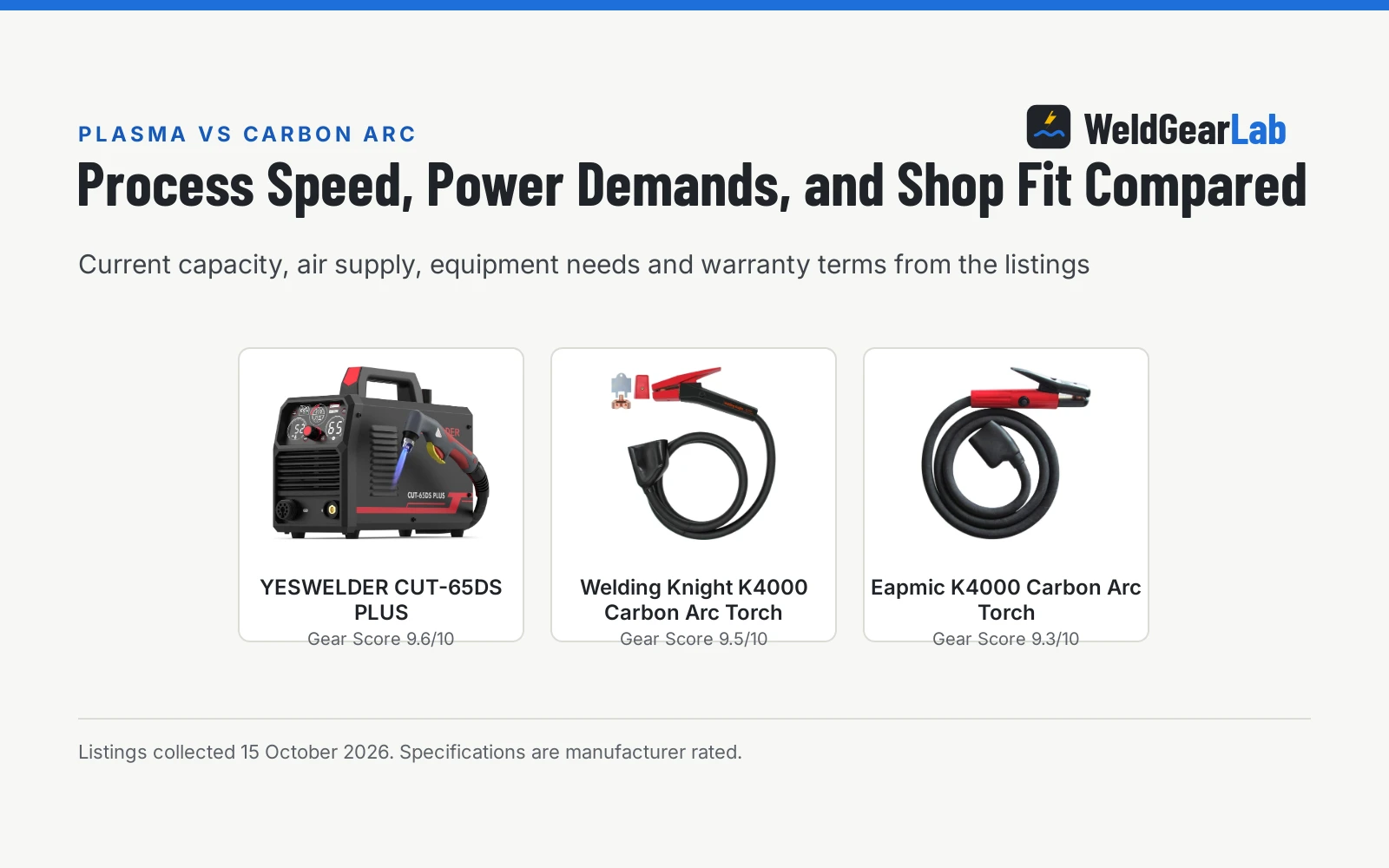
| 1 | YESWELDER CUT-65DS PLUS Plasma Cutter | 9.6/10 | Buy on Amazon |
| 2 | 1000amp K4000 Carbon Arc Gouging Torch | 9.5/10 | Buy on Amazon |
| 3 | 1000Amp K4000 Carbon Arc Air Gouging Torch with 7' | 9.3/10 | Buy on Amazon |

YESWELDER CUT-65DS PLUS Plasma Cutter
A 65A dual-voltage 110V/220V inverter plasma cutter with a non-touch pilot arc IPT40 torch, blow-back start, gouging consumables and a 2-year warranty.
Pros
- Dual-voltage 110V/220V input with 65A maximum cutting and gouging current
- Dedicated gouging mode with included gouging consumables and IPT40 torch
- Blow-back non-high-frequency start prevents electrical interference in the shop
- 2-year manufacturer warranty stated in the listing
Cons
- No duty cycle rating stated in the listing
- Requires swapping to specific torch accessories for gouging mode
- No safety certifications like UL or CSA listed
- Weighs 14 pounds and requires an external air supply
1000amp K4000 Carbon Arc Gouging Torch
A 1000A heavy-duty air carbon arc gouging torch with a 7-foot cable hose, 360-degree rotatable clip head and replacement parts kit.
Pros
- Rated for high-current gouging up to 1000A
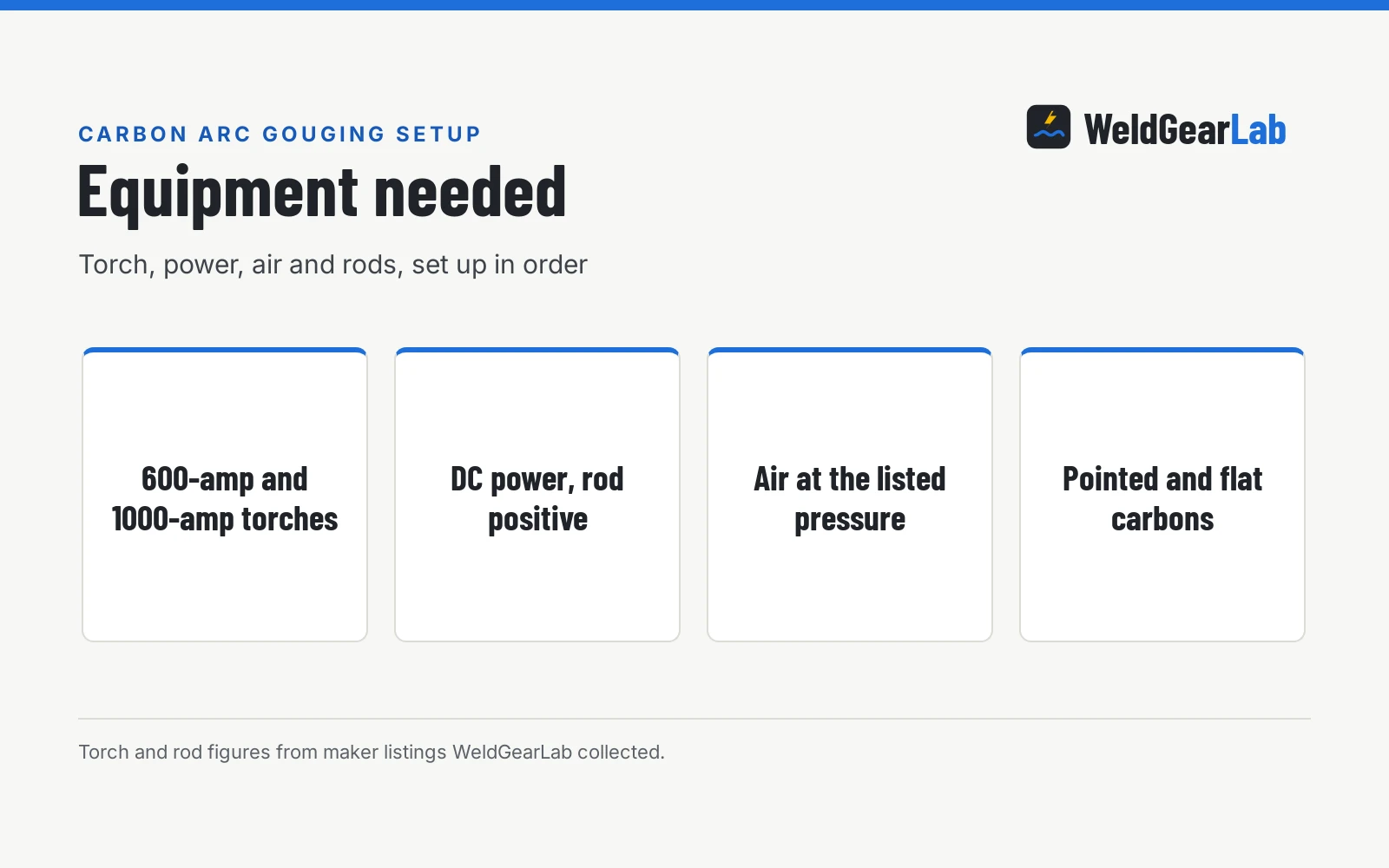
- Accepts 5/32 to 1/2 inch pointed and 3/8 to 5/8 inch flat carbon electrodes
- 360-degree rotatable clip head for flexible gouging angles
- Includes 7-foot cable hose, head assembly, wrench, insulation caps and manual
Cons
- No warranty term is stated
- Requires a high-amperage welding power source and compressed air supply
- Weighs 7.6 pounds with the cable assembly
- No duty cycle or safety certifications stated in the listing
1000Amp K4000 Carbon Arc Air Gouging Torch with 7'
A 1000A carbon arc gouging torch with a DMC insulated handle and 7-foot cable for gouging steel, iron, copper and aluminum.
Pros
- Rated for high-current gouging up to 1000A
- DMC heat-resistant insulation material on the handle
- 7-foot cable attached for maneuverability around large weldments
- Weighs 6.41 pounds, lighter than similar 1000A torches
Cons
- No warranty term is stated
- Package includes only the torch without spare hardware or wrench
Other welders and gear to compare
 61088010 Cut Skill CSK4000 Air Carbon Arc Gouging TorchCheck price on Amazon
 Red Arcair 600A Carbon Arc Gouging Torch with Cables Brand:Check price on Amazon
Side by side
| YESWELDER CUT-65DS PLUS | Welding Knight K4000 Carbon Arc Torch | Eapmic K4000 Carbon Arc Torch | |
|---|---|---|---|
| Gear Score | 69 | 58 | 51 |
| Gouging side | Plasma gouging | Carbon arc gouging | Carbon arc gouging |
| Equipment type | 4-in-1 plasma cutter with gouging | Carbon arc gouging torch | Carbon arc gouging torch |
| Current rating | 65A max | 1000A max | 1000A max |
| Input voltage / power | 110V/220V dual voltage (DC) | External welding power source | Table lists ac power source |
| Weight | 14 pounds | 7.6 pounds | 6.41 pounds |
| Cable / hose length | Torch lead included | 7ft cable hose | 7ft cable |
| Package contents | Adapter, air filter, hose, gouging consumables, clamp, IPT40 torch | Complete torch, insulation caps, wrench, head assembly, manual | Carbon arc gouging torch |
| Warranty | 2 years | Not stated | Not stated |
Treat the specs as maker ratings pulled straight from the listings; we gathered them on 15 October 2026. None of the listings state a CSA, UL, or ETL safety certification, and only the YESWELDER plasma cutter states a formal warranty term.
Plasma Gouging vs Carbon Arc Gouging: How the Processes Differ
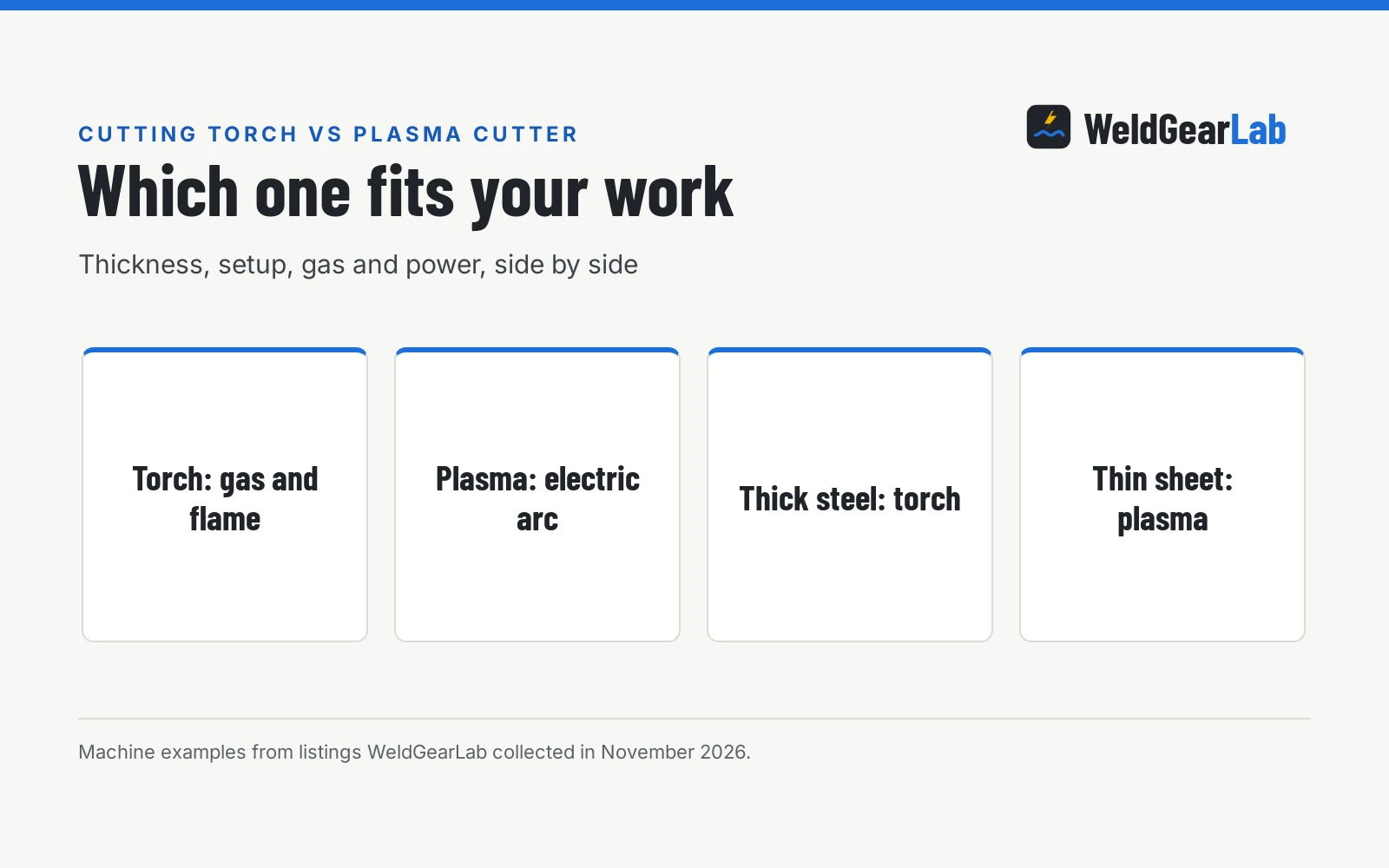
Plasma gouging and carbon arc gouging tackle the same shop problem from two distinct angles. Plasma gouging constricts an electric arc through a narrow orifice while high-velocity compressed air melts and blows the puddle away. Carbon arc gouging strikes an intense arc between a carbon electrode and the workpiece, using streams of compressed air from the torch to blast the molten puddle out of the seam.
In terms of cut cleanliness, plasma gouging produces a smooth, U-shaped groove with minimal dross. Carbon arc gouging creates a wider trough rapidly, but typically leaves carbon residue and rough slag that require grinding before welding fresh passes.
Power Sources and Amperage Demands
Power availability is the first major divider between these two methods. The YESWELDER plasma cutter runs on dual-voltage 110V or 220V power, delivering a maximum current of 65A from its internal DC inverter. That allows the machine to run from standard shop circuits without requiring a massive industrial generator or heavy three-phase power.
By contrast, the Welding Knight and Eapmic carbon arc torches require an external power supply and are rated for up to 1000A. Carbon arc torches do not have an internal power converter; they are heavy-duty lead attachments designed to connect to dedicated welding machines. While the Eapmic listing specification table lists its power source as AC, the listing bullets describe high-current operation up to 1000 amperes, which requires a heavy-duty shop welding machine rather than a standard wall plug.
Compressed Air Delivery and Metal Removal Action
Both processes rely on compressed air to clear molten metal, but their delivery mechanisms differ. The YESWELDER model requires an external air compressor, shipping with an air hose, an air compressor filter, and a PC10-02 air connector to supply clean air directly through the torch head, helping protect the IPT40 torch components.
Carbon arc torches combine electrical current with compressed air through a single cable hose assembly. The Welding Knight and Eapmic listings both feature 7-foot cable assemblies designed to supply current and air to flush away molten metal.
Torch Design, Weight, and Shop Handling
Torch handling differs noticeably between the two setups. The YESWELDER machine weighs 14 pounds, housing the entire inverter power unit, and operates with an IPT40 pilot arc torch.
The carbon arc tools are dedicated heavy torches. The Welding Knight example weighs 7.6 pounds with its 7-foot cable hose and features a 360-degree rotatable clip head that accepts pointed carbons from 5/32 to 1/2 inch and flat carbons from 3/8 to 5/8 inch. The Eapmic torch listing states a weight of 6.41 pounds and features a DMC heat-resistant handle, though its bullet points present contradictory electrode sizing ranges in consecutive sentences.
Warranty Terms and Stated Safeguards
Warranty coverage is sparse across these listings. The YESWELDER CUT-65DS PLUS listing provides a 2-year warranty description in its specification table, along with an IP21 water protection rating and over-heating protection. The remaining two listings leave warranty terms unstated.
None of the three listings state a certified safety standard such as UL, CSA, or ETL. When shopping for gouging equipment, confirm warranty policies directly with sellers if written support is a priority for your shop.
Choose Plasma Gouging if
- You want a smooth, clean groove on sheet metal or plate that requires minimal cleanup grinding before welding.
- You have a 110V or 220V outlet and want an all-in-one machine like the 14-pound YESWELDER unit.
- You work in an enclosed shop where minimizing sparks, spatter, and heavy carbon smoke is essential.
- You value a written warranty like the 2-year term on the YESWELDER example.
Choose Carbon Arc Gouging if
- You need to gouge out heavy weld defects or flush away casting risers with high-current equipment.
- You already own a high-amperage welding power source and a shop air supply.
- You want to work across varied metals including steel, copper, iron, and aluminum using pointed or flat carbon electrodes.
- You need torch maneuverability with a 360-degree rotating head like the 7.6-pound Welding Knight model.
Before You Strike an Arc
- Confirm electrical supply compatibility on arrival: the YESWELDER cutter runs on 110V or 220V, while the carbon arc torches connect to an external welding power source.
- Inspect torch consumables and fittings before connecting air lines: the YESWELDER unit includes gouging consumables and an air connector, while the Welding Knight package includes head assembly parts and insulation caps.
- Verify carbon electrode dimensions against torch capacity: the Welding Knight listing accepts pointed carbons from 5/32 to 1/2 inch and flat carbons from 3/8 to 5/8 inch.
- Check air hose connections and filter assemblies for clean delivery: gouging torches require compressed air to clear molten metal without fouling torch parts.
Review our Safety Disclaimer before striking an arc or firing a torch.
FAQ for welders
Can you use a regular plasma cutter for plasma gouging?
Plasma gouging requires specific gouging consumables or a machine with a dedicated gouging mode. The YESWELDER listing includes specialized gouging consumables and notes that operators must install the matching torch accessories to prevent rapid wear. The CUT-65DS PLUS listing warns that using incorrect accessories accelerates wear or makes them unusable.
What power source runs a carbon arc gouging torch?
Carbon arc torches require an external high-current power supply, typically a heavy-duty welding machine. While the Eapmic listing mentions AC in its specification table, carbon arc gouging listings like the Welding Knight and Eapmic examples are rated for up to 1000A, which requires a dedicated welding power source rather than a standard wall outlet.
Does plasma gouging or carbon arc gouging remove metal faster?
Carbon arc gouging removes metal at a much higher rate because high-current torches like the 1000A Welding Knight and Eapmic examples can melt and flush large volumes of metal in a single pass. Plasma gouging, such as on the 65A YESWELDER model, operates at lower current to remove metal with greater precision. Plasma gouging leaves a cleaner groove that requires less grinding before re-welding.
Do you need an air compressor for both gouging methods?
Both processes require compressed air to blow molten metal away from the groove. The YESWELDER plasma cutter listing includes an air hose, filter, and PC10-02 connector for hookup to an external compressor. The Welding Knight and Eapmic carbon arc torches connect compressed air through their 7-foot cable hoses to flush away molten metal.
Can carbon arc torches cut nonferrous metals like aluminum or copper?
The Eapmic listing states that its 1000A torch can cut copper, iron, steel, and aluminum. The torch uses electric arc heat to melt the metal and compressed air to flush it away, rather than relying on chemical oxidation. Plasma gouging also works on any electrically conductive metal.
Related: best plasma cutter for farm use, plasma cutting consumables guide, what size plasma cutter do I need, and the plasma cutters hub. Also see our gas for plasma cutter guide.
Scoring, line by line
All three products are scored out of 10 on performance, build, value, safety listing, and warranty, using the evaluation criteria explained on our How We Pick page.
| Product | Gear Score | Perf. /35 | Build /25 | Value /25 | Safety /10 | Warranty /5 |
|---|---|---|---|---|---|---|
| YESWELDER CUT-65DS PLUS | 9.6 | 30 | 21 | 21 | 0 | 3 |
| Welding Knight K4000 Carbon Arc Torch | 9.5 | 29 | 21 | 20 | 0 | 0 |
| Eapmic K4000 Carbon Arc Torch | 9.3 | 26 | 19 | 18 | 0 | 0 |
Think of 9.2 as the bottom and 9.8 as the top. Totals are placed between them in proportion, which keeps the order intact: more points, higher score.