Carbon Arc Gouging Setup: Equipment Needed
A carbon arc gouging setup pairs a gouging torch and carbon electrodes with a DC welder and compressed air, so an arc melts the metal and a jet of air clears the groove.

On this page
A cracked weld on a trailer frame, a bad root pass on a pipe joint, a pad weld that has to come off before the real repair starts. When grinding would take all afternoon and a cutting torch would leave too much heat in the plate, a carbon arc gouging setup is the tool for the job. A carbon arc gouging setup pairs a gouging torch and carbon electrodes with a DC welder and compressed air, so an electric arc melts the metal and a jet of air blows it out of the groove.
As an Amazon Associate I earn from qualifying purchases. This guide links to our product roundups, where WeldGearLab gets a commission on purchases made through links on this page, and your price stays the same. Read our affiliate disclosure.
What a carbon arc gouging setup includes
A working setup has a gouging torch, carbon electrodes, a DC power source, a compressed air supply and the protective gear for arc work. The torch holds the carbon rod, feeds air to the arc and takes the heat of the job, so size it before the rest of the setup.
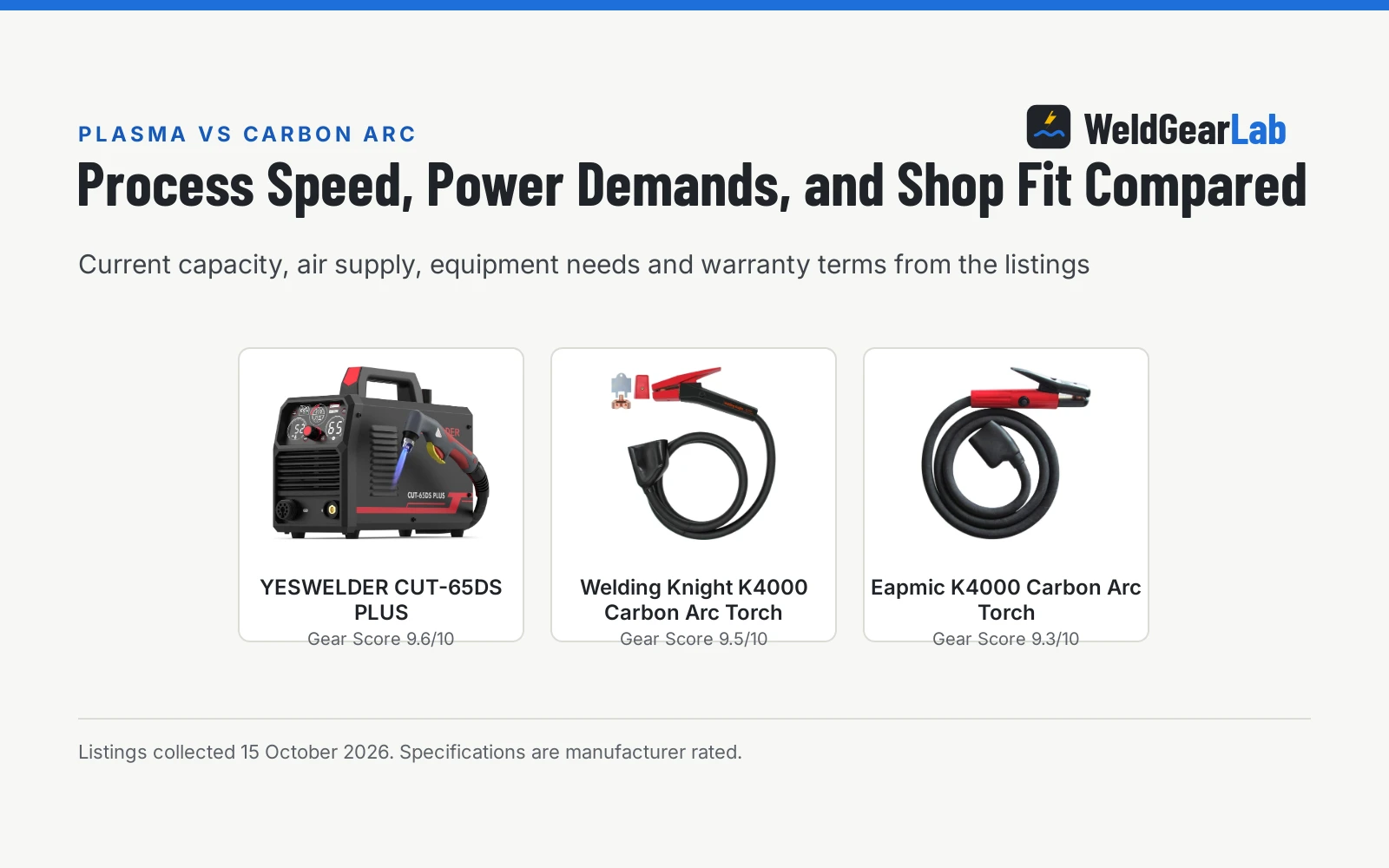
- Gouging torch. The torch clamps the carbon rod and aims the air jet at the arc. The Welding Knight K4000 (on Amazon) is rated at 1000 amps, takes pointed carbons from 5/32 to 1/2 inch and flat carbons from 3/8 to 5/8 inch, and comes with a 7 ft cable and a 360-degree rotatable clip head. The Welding Knight K3 (on Amazon) is rated at 600 amps, takes pointed carbons from 1/8 to 3/8 inch and flat carbons from 3/8 to 5/8 inch, and also comes with a 7 ft cable and a 360-degree rotatable clip head.
- Carbon electrodes. Copper coated rods in pointed and flat shapes. Pointed rods cut grooves and clean roots, while flat rods plane down weld beads and high spots.
- DC power source. A stick welder or other DC source that can reach the current the torch is rated for. If your shop welder is a stick machine, see our stick welding set up guide for the power side of the job.
- Compressed air. An air supply that meets the pressure and flow the torch maker lists. The Arcair CSK4000 (on Amazon) lists air at 80 psi and a flow rate of 28 cfm.
- Protective gear. A welding helmet, heavy gloves and a jacket, plus the gear for the smoke and sparks the job makes.
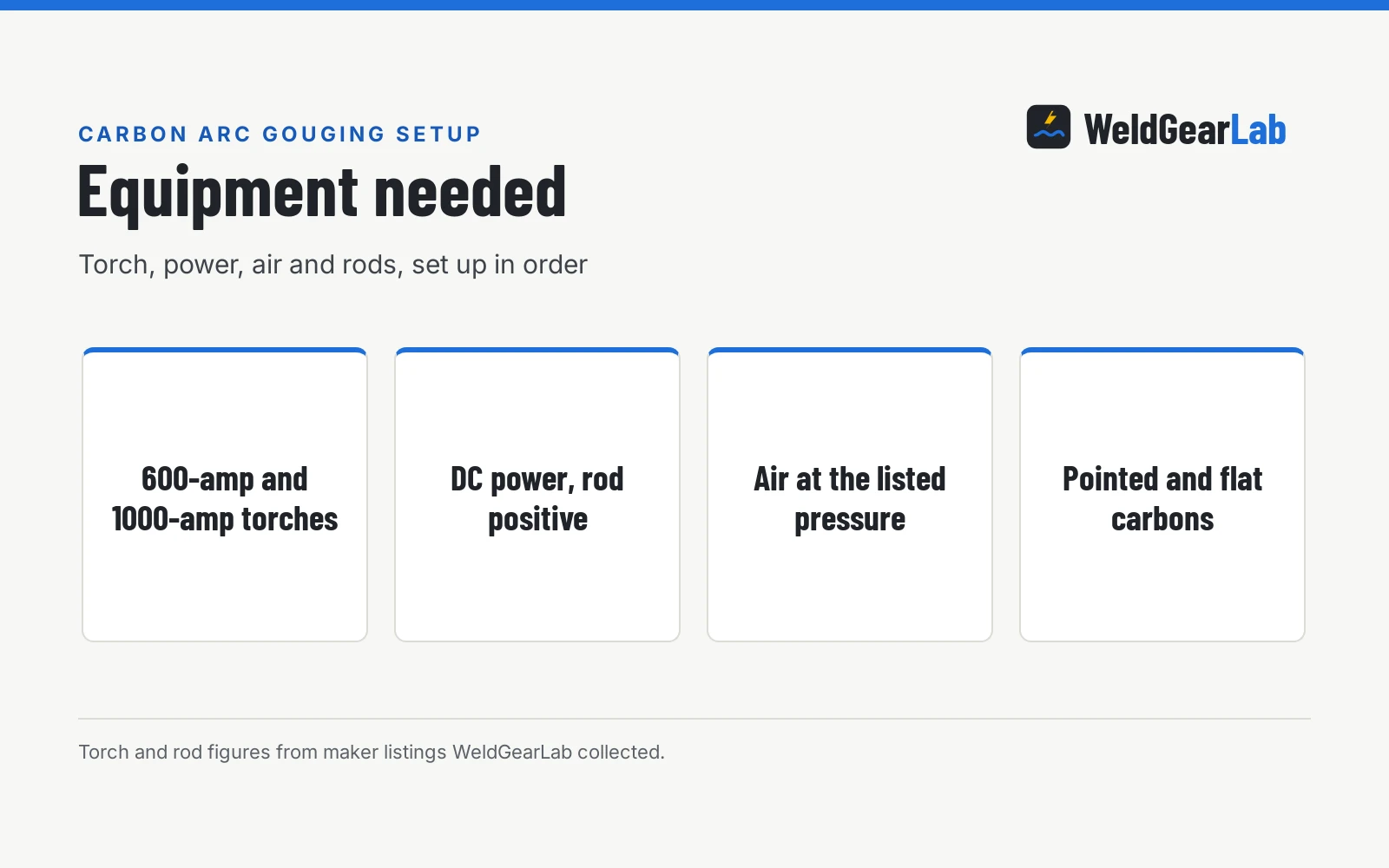
600-amp and 1000-amp torches
| 600-amp torch | 1000-amp torch | What it means | |
|---|---|---|---|
| Example | Welding Knight K3 | Welding Knight K4000 | Match the torch to the job |
| Max current | 600 A | 1000 A | Higher current takes larger rods |
| Pointed carbons | 1/8 to 3/8 inch | 5/32 to 1/2 inch | Bigger rods need more current |
| Flat carbons | 3/8 to 5/8 inch | 3/8 to 5/8 inch | Same flat range on each torch |
| Cable | 7 ft | 7 ft | Reach across the bench |
| Clip head | 360-degree rotatable | 360-degree rotatable | Gouge at different angles |
The K4000 takes larger pointed carbons, up to 1/2 inch, while flat carbons run 3/8 to 5/8 inch on each torch. A 600-amp torch suits smaller rods and lighter gouging, and the 1000-amp torch suits the larger pointed carbons and heavier work. Check the air figure on the torch you buy, since the Arcair CSK4000 lists air at 80 psi and a flow rate of 28 cfm.
Carbon arc gouging setup, step by step
- Hook up the power. Connect the torch lead to the DC source and set the polarity the rod maker states. The carbon rod goes to the positive pole and the workpiece goes to the negative pole.
- Connect the air. Run a compressed air line to the torch and set the pressure the torch maker lists.
- Fit the rod. Pick a pointed carbon in the size range the torch lists and clamp it in the head. Keep rods dry, and dry them before use when wet.
- Set the angle. Hold the rod at an angle of 45 degrees to the workpiece, as the rod instructions state, with the air jet aimed at the groove behind the arc.
- Strike the arc and move. Touch the rod to the work to start the arc, then travel along the groove at a steady pace and let the air jet blow the molten metal out behind the arc.
When the groove is deep enough, stop the arc, let the work cool and check the groove for leftover slag or missed spots before the next pass.
Picking carbon rods
Pointed rods cut grooves, clean weld roots and remove defects, while flat rods plane the temporary weld bead and scar left on a part and remove the excess height of a weld. Match the rod to the torch: the K3 lists pointed carbons from 1/8 to 3/8 inch, and the K4000 lists pointed carbons from 5/32 to 1/2 inch. Flat carbons run 3/8 to 5/8 inch on each torch.
Rods come in 12 inch and 13.98 inch lengths, in packs of 10 pieces, 20 pieces and 100 pieces. These rods are copper coated, with a blend of 80% graphite and 20% copper. The Blue Demon rod is 3/16 inch and comes in a 100-piece pack. If you still need a power source for the torch, see our best welder for beginners guide.
Safety gear and shop checks
Gouging throws molten metal, makes smoke and noise, and runs high current through the torch and leads. Wear a welding helmet, heavy gloves and a jacket, and keep the work area clear of flammable material. Work with ventilation or outdoors with your head out of the plume, and keep a fire extinguisher within reach. Check leads and connections before you strike an arc, and follow the safety notes in your machine manual.
FAQ for welders
What power source does carbon arc gouging need?
A DC power source, with the carbon rod on the positive pole and the workpiece on the negative pole. The torches in this guide are rated at 600 amps and 1000 amps, so match the machine to the torch rating before you start.
What size carbon rod should I start with?
Match the rod to the torch. The K3 lists pointed carbons from 1/8 to 3/8 inch, while the K4000 lists pointed carbons from 5/32 to 1/2 inch. Flat carbons run 3/8 to 5/8 inch on each torch, so a flat rod suits planing down a bead.
How much air does a gouging torch need?
It depends on the torch, so check the figure the maker lists. The Arcair CSK4000 lists air at 80 psi and a flow rate of 28 cfm. A shop compressor that cannot hold the listed pressure and flow will leave molten metal in the groove.
Can carbon arc gouging cut any metal?
Gouging torches cut, bevel, gouge, groove, pierce and flush away metal, and the rod makers list low carbon steel, cast steel, stainless steel, copper and other metals. The process suits repair work such as cleaning a weld root or removing a bad weld before the repair pass.
Do carbon rods need to stay dry?
Yes. Keep rods dry in storage, and dry them before use when wet. The maker states this in the rod instructions, so check the rods when you open the pack.
Related: plasma gouging vs carbon arc gouging, best flux core welder, stick welding for beginners, and the welders hub.