Parts Washer Brush and Hose Guide
A parts washer brush and hose feeds cleaning solvent straight to the bristles, so you can scrub a greasy part while fluid runs over it.

On this page
Top picks at a glance
As an Amazon Associate I earn from qualifying purchases.
- 1
 Parts Washer Brush with 31 Inch Hose9.4/10View on Amazon
- 2
 Pressure Washer Hose for Ryobi Power Washer Hose Replacement9.4/10View on Amazon
- 3
 Jack Boss 3.5 Gallon Capacity Portable Steel Cabinet Parts9.6/10View on Amazon
A greasy bracket comes off the machine, and the bench is the only place to clean it. A rag smears the grease around, and a brush dipped in a tub runs dry after a few strokes. A parts washer brush and hose fixes that by feeding cleaning fluid straight to the bristles while you scrub, so the part stays wet and the dirt has somewhere to go.
This guide links to our product roundups, where WeldGearLab gets a commission on purchases made through links on this page, and your price stays the same. Read our affiliate disclosure.
What a parts washer brush and hose does
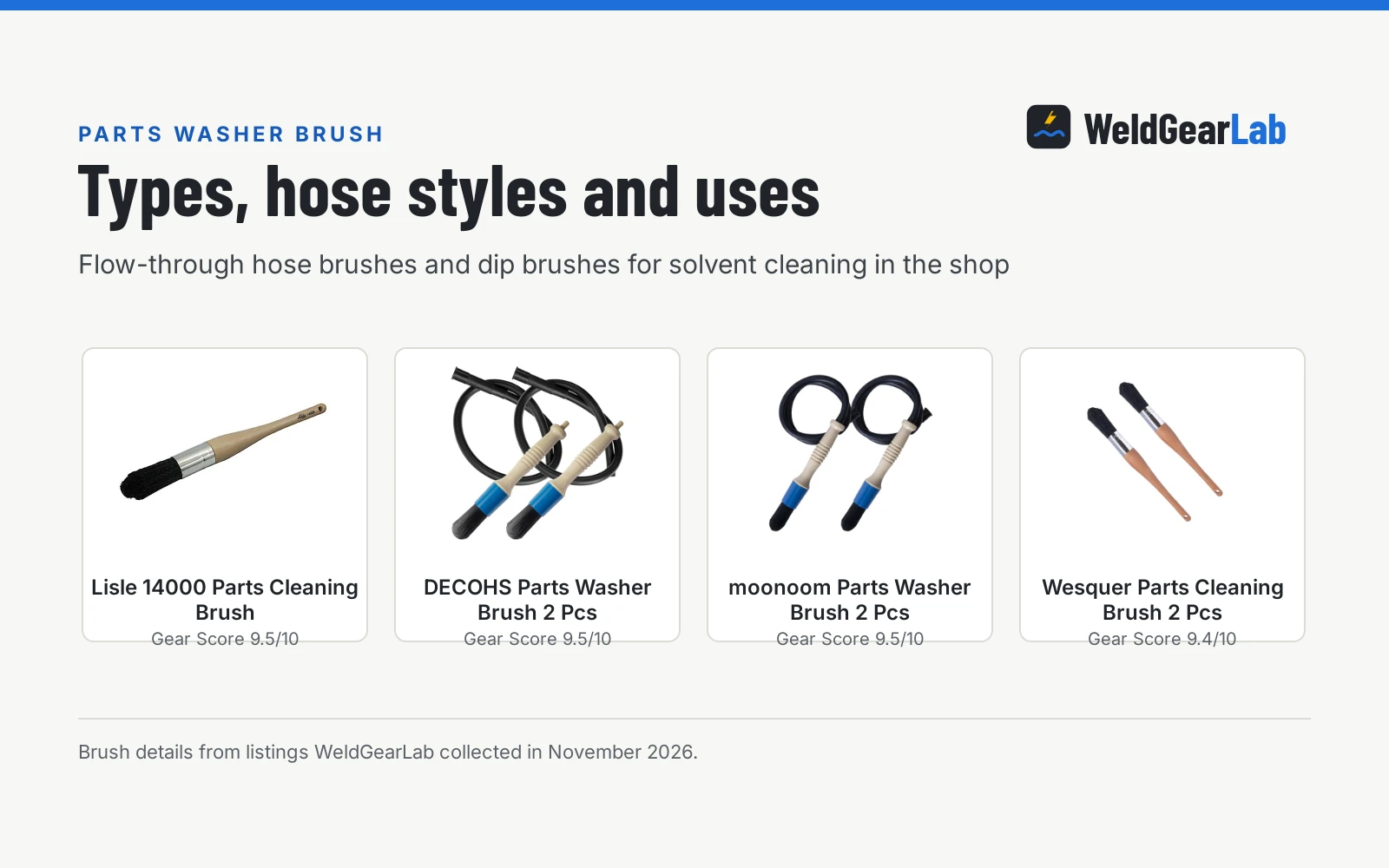
A parts washer brush and hose is a flow-through brush. The hose plugs into the washer nozzle, and the pump sends cleaning fluid through the hose to the bristles. You hold the part with a free hand and scrub with the brush, and the fluid carries loosened grease and dirt off the part and back into the washer. The TINGSOTIN OR101H (on Amazon) lists a 28 inch hose that connects to the washer nozzle and delivers cleaning fluid to the brush to remove grease, oil and grime.
That flow is what sets it apart from a plain brush. A plain brush, like the Lisle 14000 parts cleaning brush, has no hose and no fluid feed. You dip it, scrub until it runs dry, and dip again. A flow-through brush keeps fluid at the bristles for as long as the pump runs, which suits long scrubbing on a greasy part.
Flow-through or plain brush
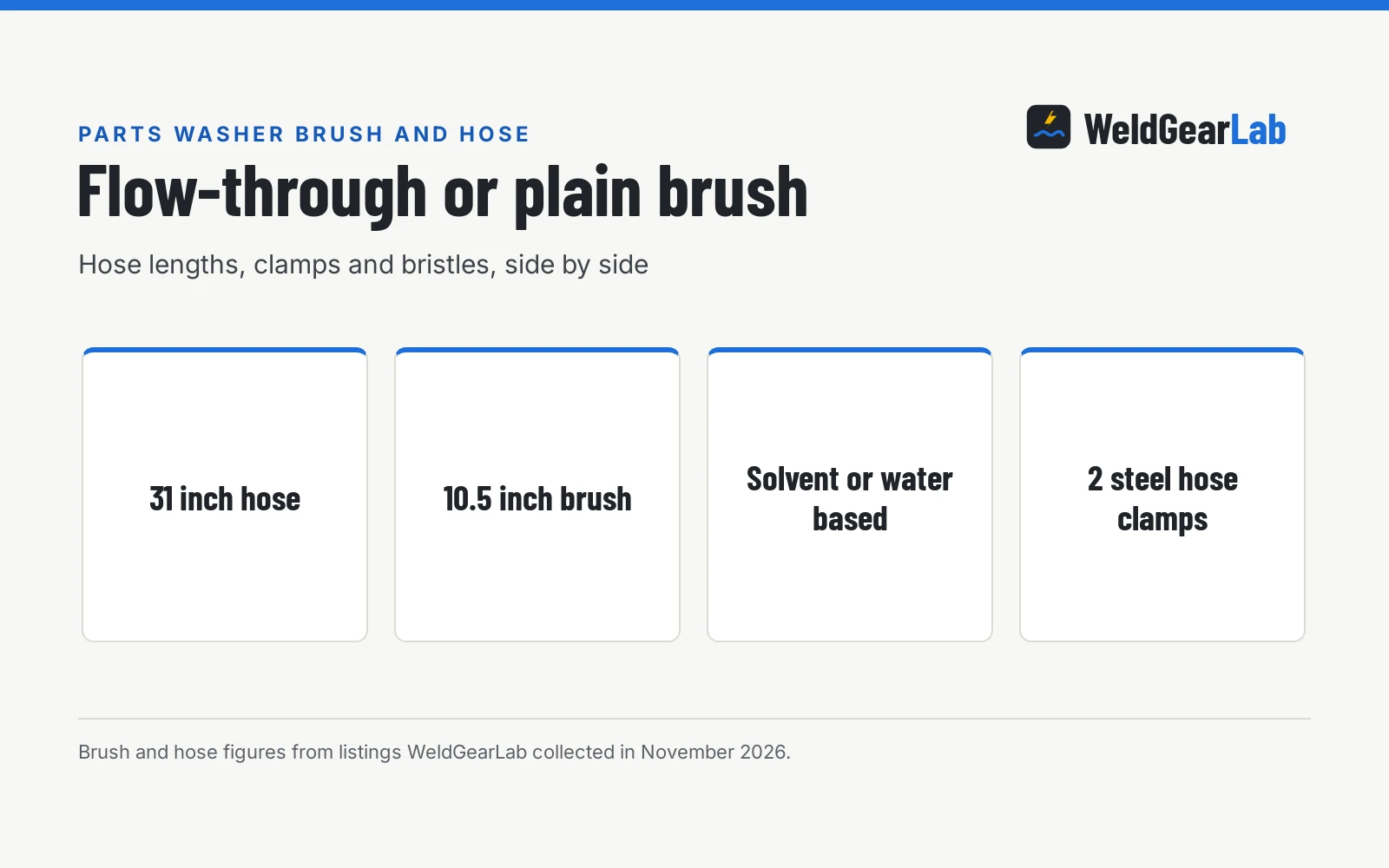
| Flow-through brush with hose | Plain parts brush | Notes | |
|---|---|---|---|
| Solvent delivery | Hose feeds solvent to the bristles | Dip the brush in the washer | Flow-through keeps fluid at the bristles while you scrub |
| Hose length | 31 inch, 28 inch or 27.5 inch | No hose | 31 inch is the longest hose listed |
| Brush size | 10.5 inch (DECOHS, moonoom) | 14.5 inches long | Lisle lists 14.5 inches for its plain brush |
| Hose clamps | Dreyoo lists 2 stainless steel clamps | Not stated | Tighten with a standard screwdriver |
| Bristles | PP bristles, solvent resistant filaments | Polypropylene | Match the bristle to the fluid in the washer |
| Uses | Parts washing, on-engine cleaning, fluid evacuation | Motors, machinery and metal parts | Both clean grease and dirt from metal |
Pick the flow-through brush when the washer has a nozzle the hose can plug into and the job needs steady fluid at the bristles. Pick a plain brush when the washer has no nozzle, or when the part needs a stiff scrub in a tub and a hose would get in the way. Either way, match the bristle to the fluid in the washer, and check the washer manual before you fit anything.
Hose length and fit
Hose length decides how far the brush can travel from the nozzle. The listings in this guide show a 31 inch hose on the DECOHS and moonoom brushes, a 28 inch hose on the TINGSOTIN OR101H, and a 27.5 inch hose on the Dreyoo brush (on Amazon). The 31 inch hose gives the most reach, and the 27.5 inch hose gives the least.
The hose is rubber on the DECOHS, moonoom and TINGSOTIN brushes. The DECOHS and moonoom listings call it corrosion resistant, oil resistant and abrasion resistant, and the TINGSOTIN listing calls its hose oil- and abrasion-resistant. The DECOHS and moonoom listings state good bending performance, and the Dreyoo listing says its hose is easy to bend and fold for easy storage. A hose that bends without kinking stays out of the way when you move the brush around a part.
Fit matters as much as length. The DECOHS and moonoom listings say the brush suits most parts washers, and the Dreyoo listing says its hose is designed to fit most cleaning machines. The TINGSOTIN OR101H listing names Black Bull and Eastwood washers. The Dreyoo brush ships with 2 stainless steel hose clamps, and the listing says the clamps can be adjusted and tightened with a standard screwdriver. If the hose slips on the nozzle, a clamp is the fix, not a tighter push.
Brush heads and bristles
The DECOHS and moonoom flow-through brushes in this guide use a 10.5 inch brush. The Dreyoo brush adds a pointed tip that reaches corners and deep holes, and its filaments are solvent resistant. The DECOHS and moonoom brushes use PP bristles on a plastic handle, with a threaded, ergonomic grip that the listings say reduces wrist strain and stops the brush slipping in the hand.
The plain Lisle brush (on Amazon) is the 14000: it measures 14.5 inches by 3.0 inches by 1.0 inches, with polypropylene bristles. The Lisle 89550 and 89640 are flow-thru brushes, not plain brushes. The Lisle 89550 (on Amazon) measures 14.5 inches by 3.0 inches by 1.5 inches, with bullet-shaped tips that resist mushrooming and a ribbed handle. The Lisle 89640 (on Amazon) measures 11.5 inches by 4.5 inches by 1.5 inches. The 89550 and 89640 use a stiff Trialoy polyester filament that the listing says can be used in either solvent-based or water-based cleaning solutions.
Bristle choice follows the fluid. Trialoy polyester filament suits either solvent-based or water-based cleaning, per the Lisle listing, and the Dreyoo filaments are solvent resistant. Polypropylene bristles hold up under repeated use in cleaning solvents, per the Lisle 14000 listing. A soft bristle is gentler on a finished surface, while a stiff filament suits caked grease on bare metal. Rinse the brush with water after use, as the DECOHS listing says to wash the brush with water directly.
How to use a parts washer brush and hose
Start with the washer off and the brush in hand. Push the hose onto the washer nozzle and, if the brush ships with hose clamps, tighten them with a standard screwdriver until the hose holds firm. Point the brush at the part, switch the washer on, and let the fluid reach the bristles before you start scrubbing.
Scrub with the bristles, not the handle, and let the fluid carry the dirt away. Work the brush into crevices and deep holes, using the pointed tip where the brush has one, and turn the part so the fluid reaches each face. When the part is clean, switch the washer off, lift the part out, and let the fluid drain back into the washer. Wash the brush with water directly and leave it to dry before storage.
Solvent fumes build up fast in a closed shop, so work with the doors open or with ventilation running, and keep the solvent away from flame and hot work. Wear gloves and eye protection when you scrub, and keep the fluid off your skin. If the washer manual calls for a respirator with the solvent you use, wear it. Check the washer manual for the fluid it takes, and never mix cleaning fluids.
FAQ for welders
Does a parts washer brush need a hose?
No. A plain brush like the Lisle 14000 cleans without a hose, and it suits a tub or a washer with no nozzle. A hose adds a steady feed of fluid to the bristles, which suits long scrubbing on a greasy part. Pick the brush that matches the washer you have.
What hose length fits a parts washer?
The listings in this guide show a 31 inch hose, a 28 inch hose and a 27.5 inch hose. The 31 inch hose is the longest listed. Measure the distance from the washer nozzle to the far side of the part and pick a hose that reaches it with slack to spare.
Can a parts washer brush run in water-based cleaner?
Yes. The Lisle 89550 and 89640 use a Trialoy polyester filament that the listing says can be used in either solvent-based or water-based cleaning solutions. The DECOHS brush can be washed with water directly. Check the washer manual for the fluid it takes before you fill it.
How do I stop the hose slipping off the nozzle?
Fit a hose clamp and tighten it with a standard screwdriver. The Dreyoo brush ships with 2 stainless steel hose clamps, and the listing says the clamps can be adjusted and tightened with a standard screwdriver. Check the clamp again after use, since a hose that has warmed up can loosen.
Which brush reaches into deep holes?
The Dreyoo brush has a pointed tip that the listing says can reach corners and deep holes. The DECOHS and moonoom brushes are made to clean deep crevices and loosen stubborn deposits. A pointed tip or a slim brush head reaches further into a hole than a wide, flat brush.
Related: parts washer with filter, parts washer ultrasonic, how to clean metal files, best abrasive pads for metal, best emery cloth for sanding metal, and the metal fab tools hub.