Mig vs Tig for Thick Steel: Which One Should You Buy?
MIG and TIG both weld thick steel, but they suit different jobs. How they differ on speed, joint size, stainless work and cleanup, and which filler rods fit.

On this page
Top picks at a glance
As an Amazon Associate I earn from qualifying purchases.
- 1
 035" V Groove Drive Roll Kit Compatible with Miller9.6/10View on Amazon
- 2
 DEWALT 14 oz. Steel Mig Weld Hammer DWHT51138XView on Amazon
- 3
 1-Lb ER316L Stainless Steel 316 TIG Welding Rod 1/16"x36"View on Amazon
- 4
 ARCCAPTAIN Stainless Steel TIG Welding Rod ER308LView on Amazon
- 5
 Mig Welding Wire ER70S-6 .030"View on Amazon
- 6
 Convivium ER308L Stainless Steel TIG Welding RodsView on Amazon
- 7
 ER70S-6 TIG Welding Rod 1/16" x 16"View on Amazon
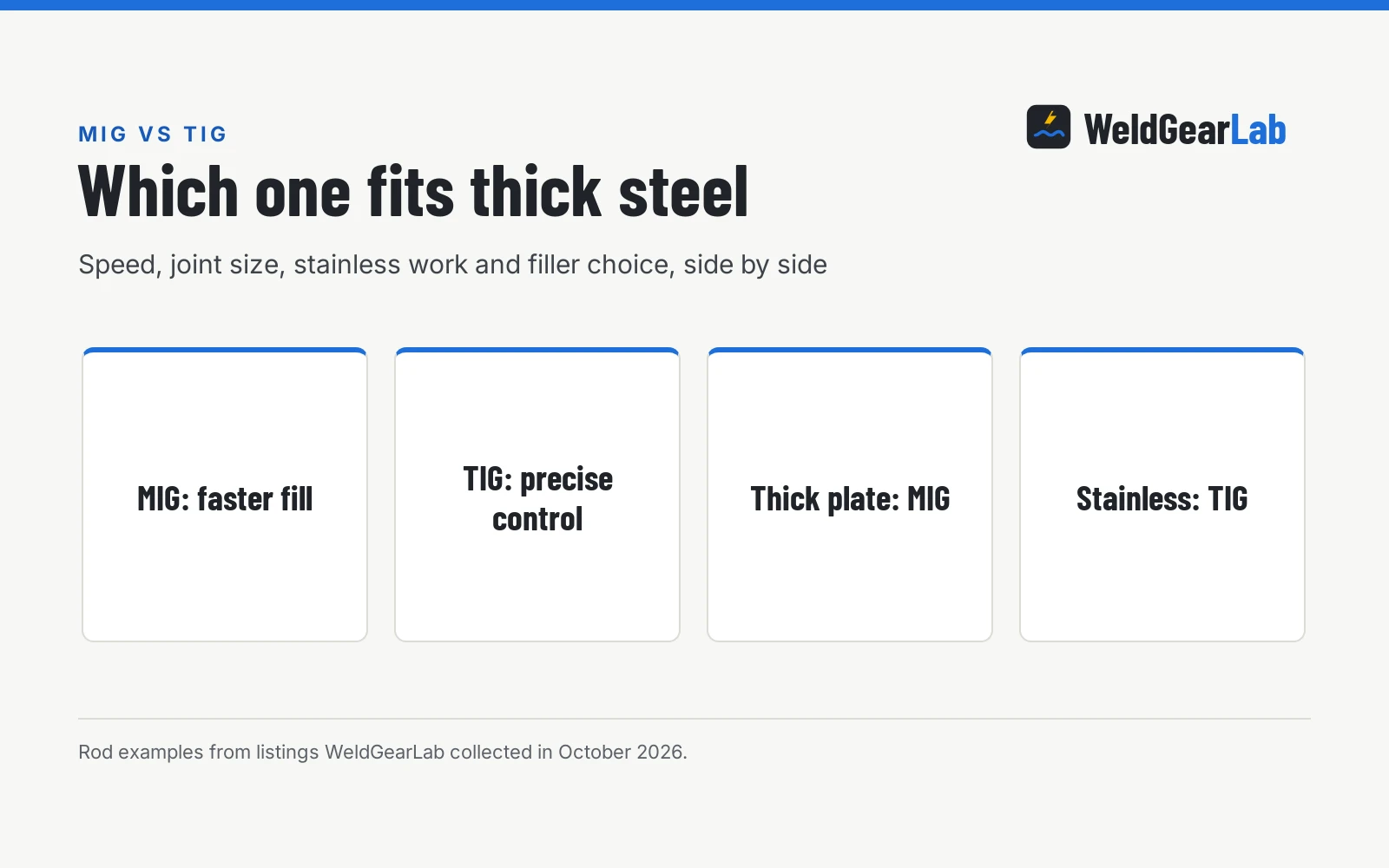
You have heavy plate on the bench, maybe a trailer frame or a cracked implement bracket, and a joint that needs real metal laid into it. The question is MIG vs TIG for thick steel, and the short answer is MIG for most of that work: the wire feeds continuously, so you fill big joints fast without stopping. TIG can do it, but feeding filler by hand, dab by dab, makes it slow going on long runs; it earns its keep on critical joints, stainless and work where the bead has to look as good as it holds.
Other welders and gear to compare
 DEWALT 14 oz. Steel Mig Weld Hammer DWHT51138XCheck price on Amazon
 1-Lb ER316L Stainless Steel 316 TIG Welding Rod 1/16"x36"Check price on Amazon
 ARCCAPTAIN Stainless Steel TIG Welding Rod ER308LCheck price on Amazon
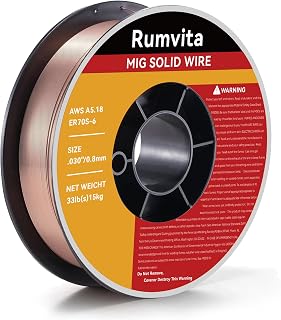 Mig Welding Wire ER70S-6 .030"Check price on Amazon
 Convivium ER308L Stainless Steel TIG Welding RodsCheck price on Amazon
 ER70S-6 TIG Welding Rod 1/16" x 16"Check price on Amazon
This guide links to our product roundups, where WeldGearLab gets a commission on purchases made through links on this page, and your price stays the same. Read our affiliate disclosure.
MIG vs TIG for thick steel in one paragraph
A weld goes bad when air reaches the molten puddle, so both processes shield it. MIG pushes wire through the gun under a gas shield while the arc melts wire and base metal together as you travel. TIG holds an arc off a tungsten electrode while your other hand dabs filler rod into the puddle. That difference, continuous wire versus hand-fed rod, is what decides speed on thick joints.
Side by side
| MIG | TIG | Edge on thick steel | |
|---|---|---|---|
| How metal is added | Wire feeds continuously through the gun | Filler rod fed by hand into the arc | MIG |
| Speed on thick joints | Fast: continuous wire fills big joints | Slow: dab by dab, often multiple passes | MIG |
| Thick steel fit | The practical pick for long runs on heavy plate | Works, but slow; shines on critical joints | MIG |
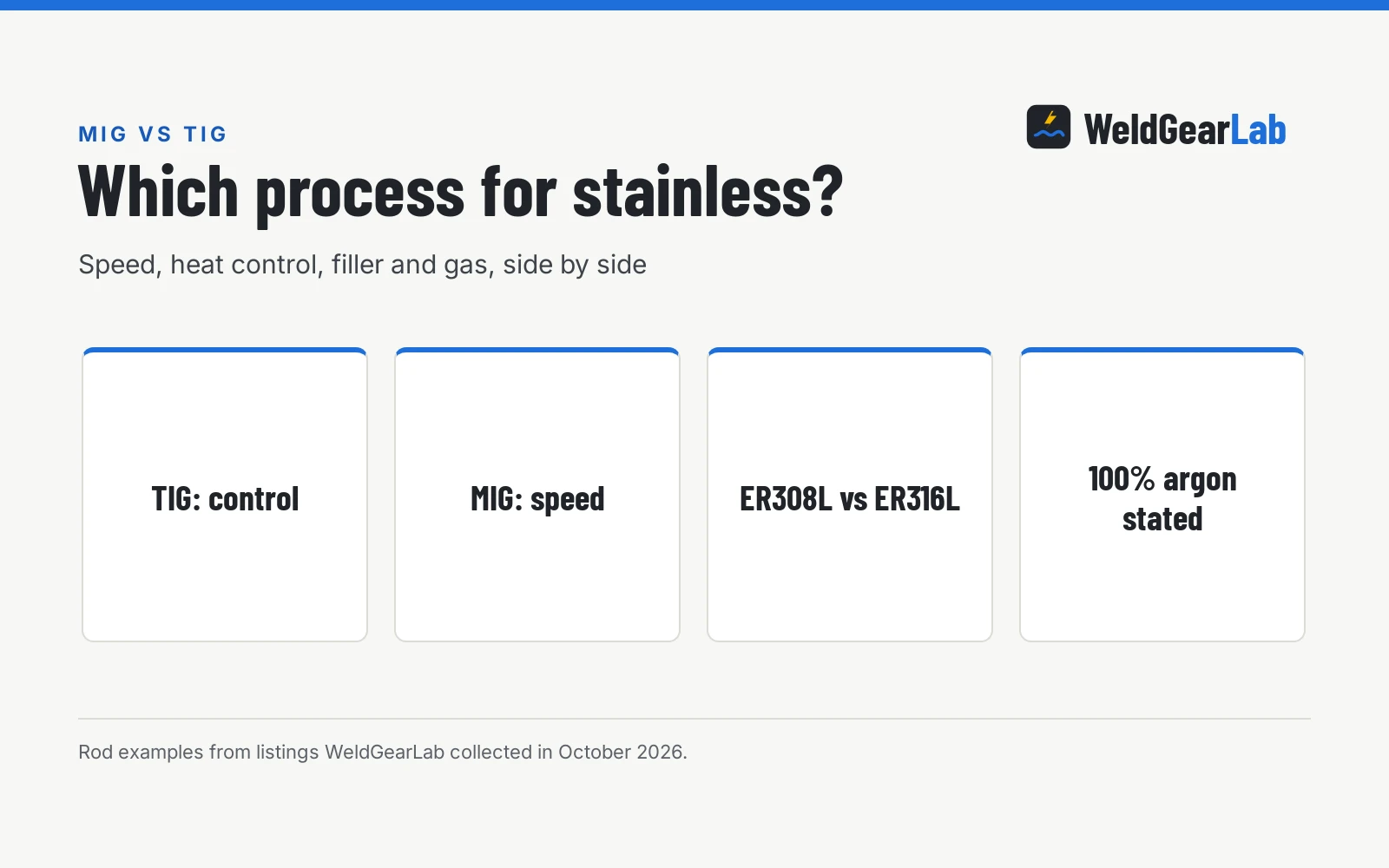
| Stainless work | Possible with the right wire and gas | The natural choice; ER308L and ER316L rods below | TIG |
| Learning curve | Easier to start laying decent beads | Steeper: pedal, torch angle and filler at once | MIG |
| Shielding | Gas from a cylinder, or flux core wire | 100 percent argon in these listings | Tie |
| Cleanup | Spatter to grind | Clean beads, little spatter | TIG |
Settings and polarity follow the machine’s door chart and the wire or rod maker’s guidance, not this page. When a listing gives a choice, match the filler to the base metal first and the joint second.
When MIG is the better choice
- Long runs on heavy plate. Frames, trailers, brackets and repairs where you need to lay a lot of metal. Continuous wire wins on speed.
- Single-pass convenience. Fewer stops and restarts than feeding rod by hand, which matters on long joints.
- Learning curve. Point, pull the trigger and travel. The basics come faster than TIG’s pedal, torch angle and filler together.
- Farm and field repairs. With flux core wire there is no cylinder to haul, though gas MIG wants shelter from the wind.
Our best MIG wire for thick steel covers wires for this work.
When TIG is the better choice
- Critical joints. Where the weld gets inspected or has to hold under load, TIG’s precise heat control pays off.
- Stainless steel. Food-grade and corrosion-resistant work where the filler must match the alloy, like the ER308L and ER316L rods below.
- Appearance. Clean, stacked beads with little spatter and no slag to chip.
- Thin to thick transitions. The foot pedal lets you back the heat off where the metal thins out.
See TIG vs stick for stainless steel for more on the stainless side.
TIG filler rods for the job
If the answer is TIG, the rod has to match the base metal. These four are ranked for thick steel work, mild steel first.
TOOLIOM ER70S-6, 1/16 in x 16 in, 5 lb
The mild steel pick. ER70S-6 copper-coated rod in 1/16 in diameter and 16 in length, 5 lb in a plastic case. The listing states it runs with an argon and CO2 mix or with 100 percent CO2, suits high welding currents with a stable arc and less spatter, and fits mild and low alloy steel. Note that the other TIG rod listings here state 100 percent argon or an argon and helium mix, so confirm the shielding gas with the maker before you weld. For thick mild steel plate, this is the rod to reach for.
ARCCAPTAIN ER308L, 3/32 in x 16 in, 5 lb
The stainless pick in the bigger diameter. ER308L rod, 3/32 in by 16 in, 5 lb, stated for 304 and 304L stainless with 100 percent argon or an argon and helium mix. The larger diameter lays more metal per dab than 1/16 in rod, which helps on heavier stainless joints.
WeldingCity ER316L, 1/16 in x 36 in, 1 lb
The long-rod stainless pick. ER316L to AWS A5.9, 1/16 in by 36 in, in a 1 lb pack, with 100 percent argon as the usual shielding gas. The 36 in length means fewer rod changes on a long joint. The listing also notes 5 lb and 10 lb packs.
UNIFAMILY ER308L, 1/8 in x 16 in, 1 lb
Read this listing carefully before ordering. The title says 1/8 in by 16 in, but the bullets describe 1/16 in diameter and 15.75 in length, and call the material low carbon steel on a stainless ER308L rod. The spec table lists a 90 day manufacturer warranty. With the title and bullets disagreeing on diameter, confirm the size you need before you buy.
Prep and settings
Thick steel forgives little in fit-up. Clean the joint to bright metal, bevel heavy edges so the arc reaches the root, and clamp the work so it cannot move as it heats. Start from the machine’s door chart for wire speed and heat, then tune on scrap of the same thickness. Check the chart again when you change wire, gas or filler.
Arc flash, fumes and fire. Both processes throw arc flash that burns eyes and skin, so wear a proper helmet, gloves and covered skin. Weld with ventilation or outdoors with your head out of the plume, and clear anything flammable from the area. Keep gas cylinders chained upright.
FAQ for welders
Can TIG weld thick steel?
Yes, with the right filler and enough passes, but it is slow. Each dab of rod adds only a little metal, so long joints take much longer than with MIG. TIG on thick steel suits critical or stainless joints better than long production runs.
What filler rod should I use for thick mild steel?
ER70S-6, like the TOOLIOM rod above in 1/16 in by 16 in. It is made for mild and low alloy steel and the listing states it suits high currents. Match the rod to the base metal before worrying about brand.
What shielding gas does TIG need for steel?
The listings here state 100 percent argon for the stainless rods, with argon and helium as an option on the ARCCAPTAIN ER308L. The TOOLIOM ER70S-6 lists an argon and CO2 mix or 100 percent CO2, which differs from the other TIG rod listings here. Confirm the shielding gas with the rod maker before you weld.
Why does TIG feel so slow on thick plate?
Because your hand feeds every bit of filler. MIG adds wire as fast as the drive rolls push it, while TIG adds one dab at a time. On a long, heavy joint that difference multiplies into real hours.
Do I need to bevel thick steel before welding?
For full penetration on heavy plate, yes in most cases. A bevel opens the joint so the arc reaches the root instead of bridging across the top. Clean the bevel to bright metal before striking an arc.
Related: best MIG wire for thick steel, MIG vs stick for thick steel, flux core vs MIG for thick steel, MIG vs TIG for mild steel, and the MIG welders hub.