Mig vs Stick for Auto Body: Which One Should You Buy?
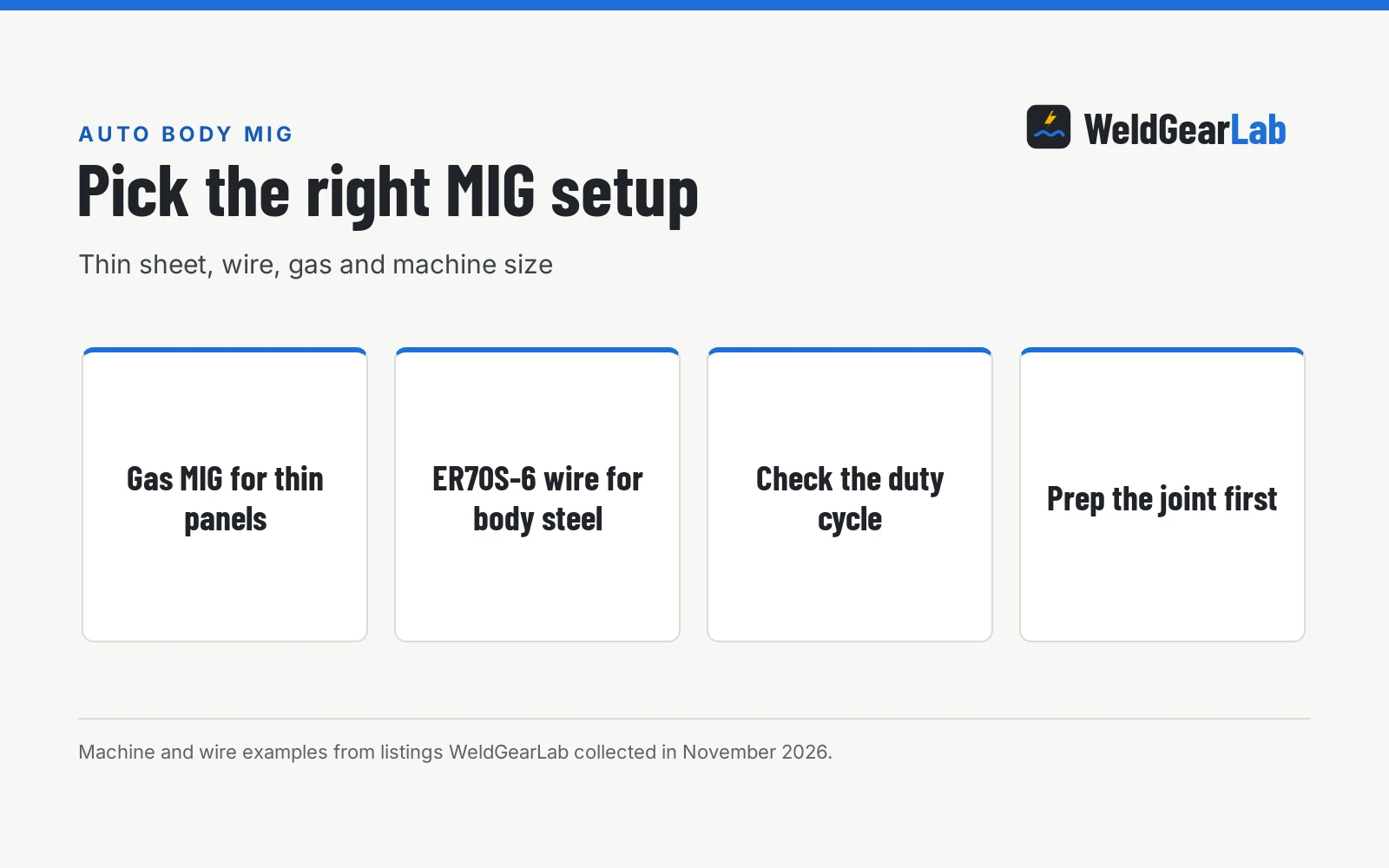
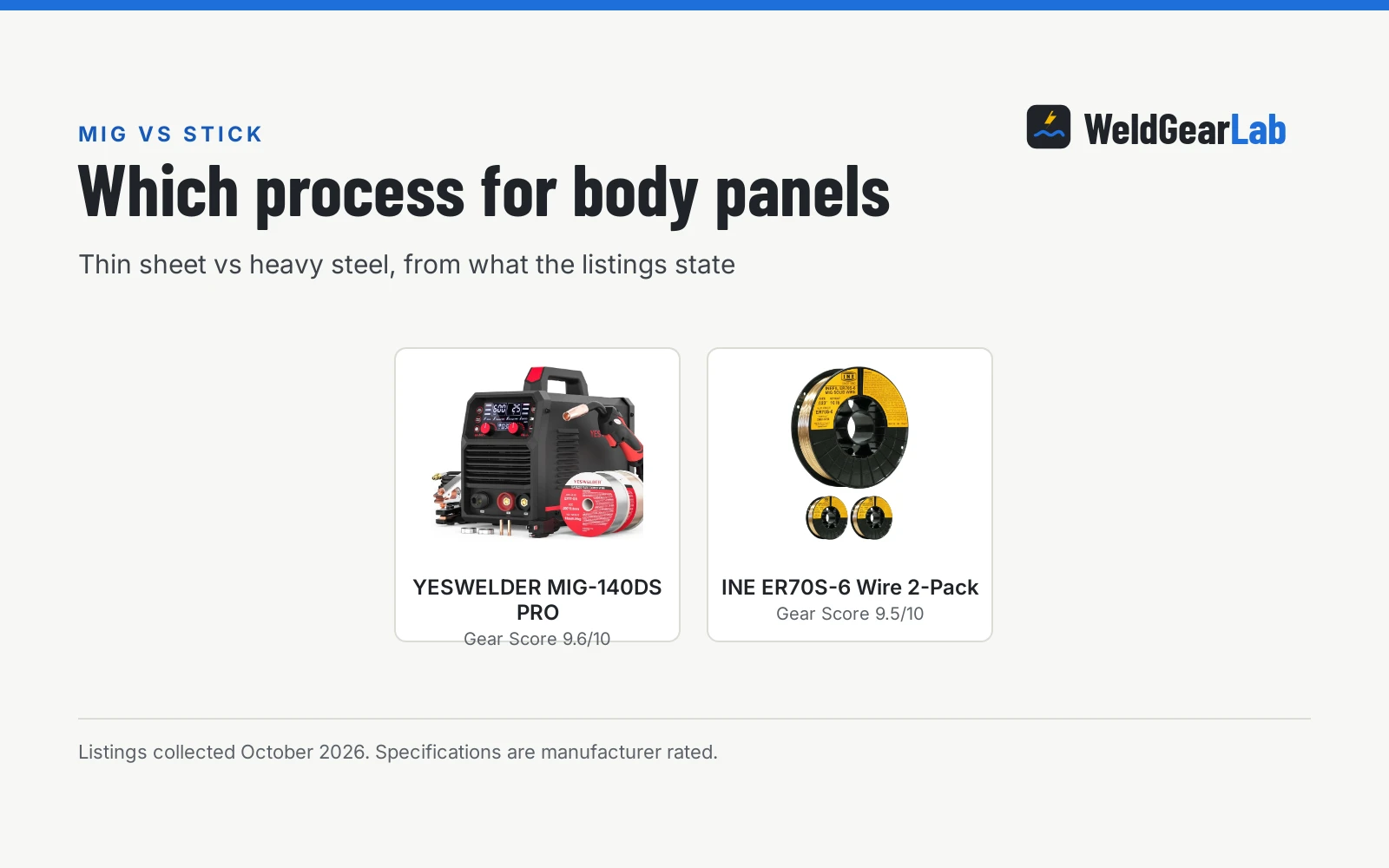
MIG or stick for auto body panels? The INE wire is rated 20 to 16 gauge, and the 140A machine covers gas MIG, flux core, lift TIG and stick.

On this page
Top picks at a glance
As an Amazon Associate I earn from qualifying purchases.
- 1
 YESWELDER 140A MIG Welder9.6/10View on Amazon
- 2
 2-Pack INEFIL ER70S-6 MIG Welding Wire .023"9.5/10View on Amazon
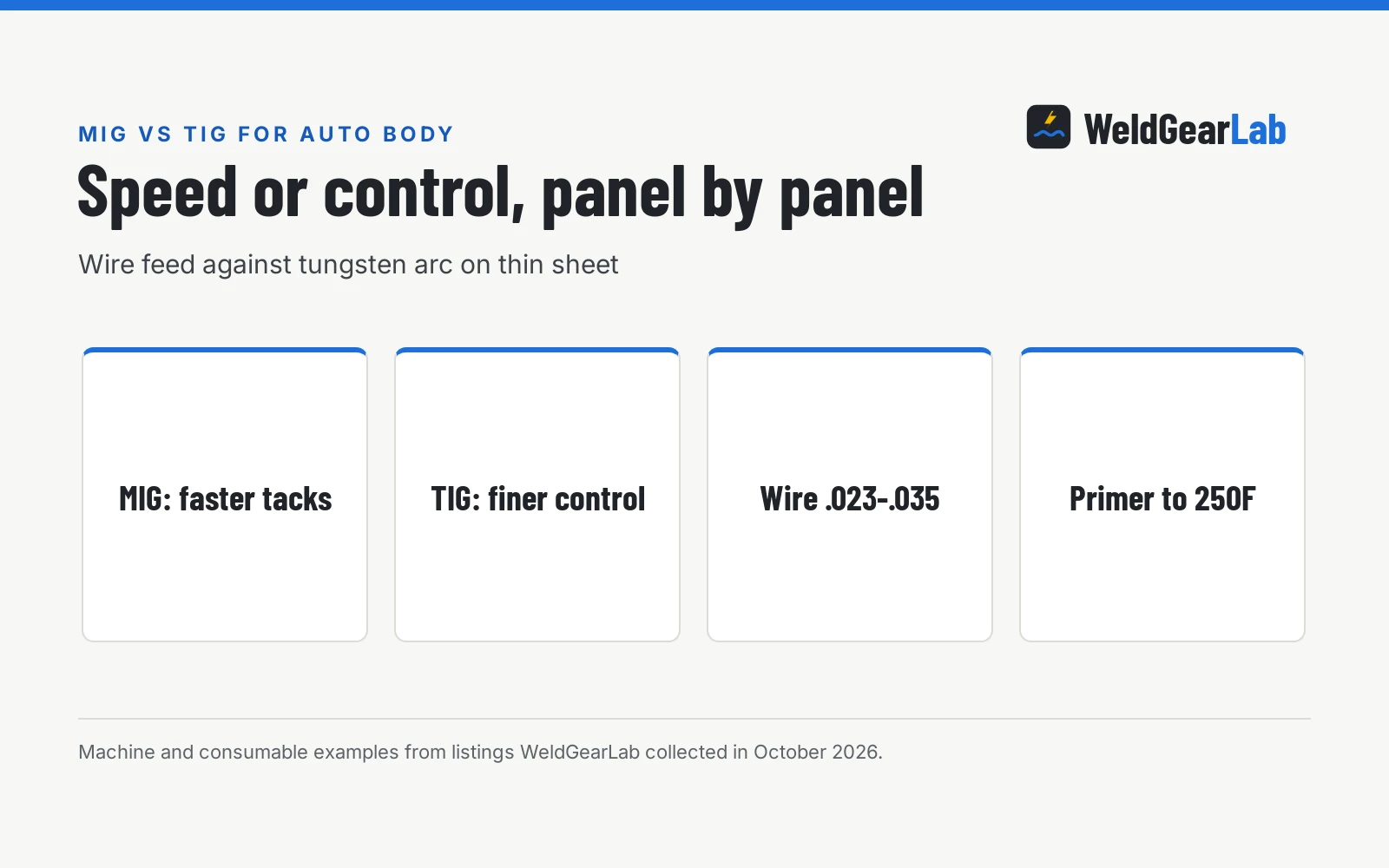
Verdict. Mig vs stick for auto body: for panels, pick MIG: the INE wire covers 20 gauge to 16 gauge and the YESWELDER offers gas MIG on 110 or 220 volts. Pick stick for heavy, rusty, outdoor work where wind kills gas coverage and heat input matters less. No stick listing was included in this comparison, so the stick side is described from the process itself, not from a listing.
A quarter panel does not forgive a hot process. One long bead with too much heat and the panel oil-cans, and you spend the afternoon shrinking it back. That is the whole of the mig vs stick for auto body question: which process puts metal where you want it without warping the panel around it. This comparison puts MIG, with a wire and a machine from the listings, against stick, described from what the process is, and says plainly where the listings leave the stick side uncovered.
WeldGearLab gets a commission on purchases made through links on this page, and your price stays the same. Read our affiliate disclosure.
The two picks

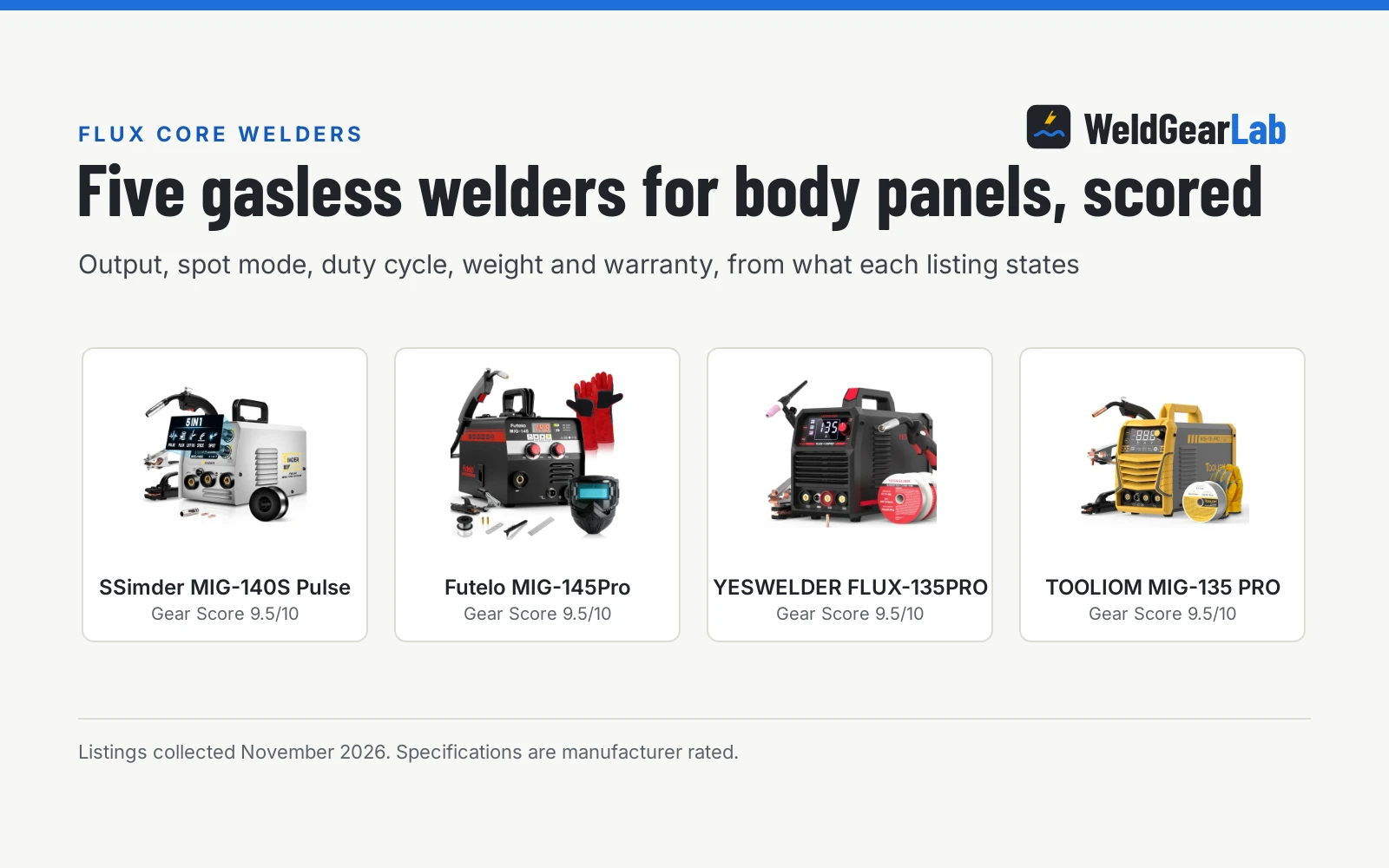
YESWELDER 140A MIG Welder
A 140 amp, 110V/220V 4-in-1 welder covering gas MIG, flux core, lift TIG and stick, with synergic MIG, a digital display and stated protections, at 22.8 pounds.
Pros
- 4-in-1 processes: gas MIG, flux core, lift TIG and stick in one unit
- 140 amps on 110 or 220 volts with synergic MIG mode
- States protections against over-current, over-load and over-heating with voltage fluctuation compensation
- Ships with E71T-GS and ER70S-6 wire, gas hose, drive rollers, ground clamp, electrode holder and MIG torch
Cons
- No warranty term is stated
- Lift TIG torch required is listed separately for TIG use
- 22.8 pounds is not a carry-everywhere weight
- 3.6 KW draw needs a suitable circuit

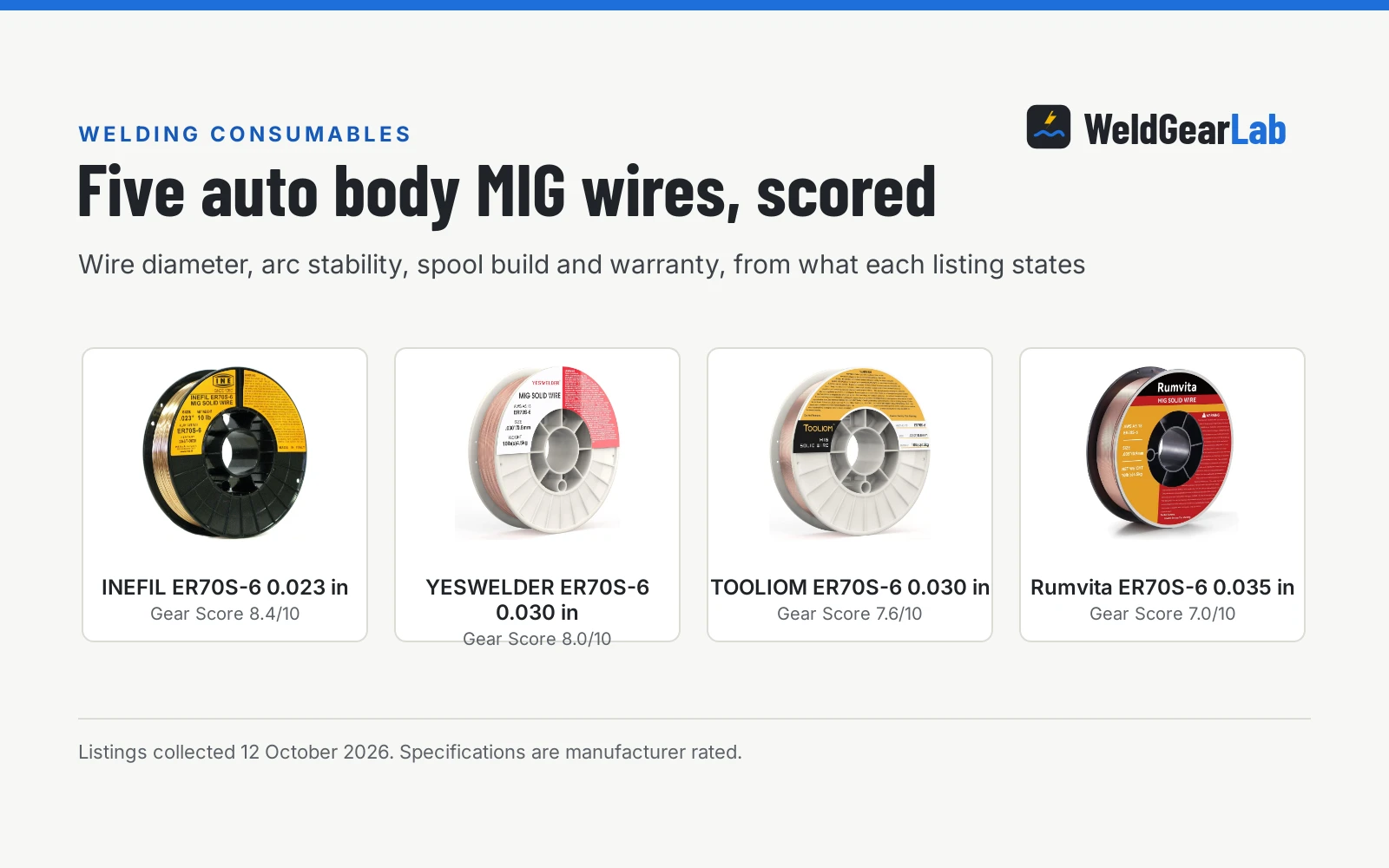
2-Pack INEFIL ER70S-6 MIG Welding Wire .023"
A 2-pack of .023 in ER70S-6 solid MIG wire on 10 lb spools, AWS A5.18 classified, rated for 20 to 16 gauge sheet with C25 or 100% CO2 shielding gas.
Pros
- AWS A5.18 classification with named third-party certifications
- Rated for 20 gauge to 16 gauge sheet, the auto body range
- States low spatter with minimal post-weld grinding
- Lists compatibility with Miller, Lincoln, Hobart, ESAB, Eastwood and Forney
Cons
- No warranty term is stated
- Requires shielding gas, C25 or 100% CO2, not included
- Wire only; the welder is a separate purchase
Other welders and gear to compare
 Forney 42287 Mig WireCheck price on Amazon
 MIG Welding WireCheck price on Amazon
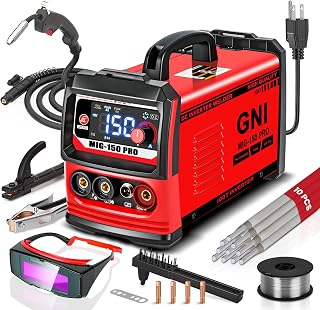 GNI Multiprocess Portable MINI WelderCheck price on Amazon
 150A 3-in-1 Synergic MIG Flux Core Spot Welder 120V PortableCheck price on Amazon
 Eastwood 180 Amp MIG Welder Machine Dual Voltage 110V 220VCheck price on Amazon
 YESWELDER 135A MIG WelderCheck price on Amazon
Side by side: mig vs stick for auto body
| Pick | Gear Score | Output | Processes | Thickness (stated) | Weight | Warranty |
|---|---|---|---|---|---|---|
| YESWELDER MIG-140DS PRO | 9.6/10 | 140A, 110V/220V | MIG, flux core, lift TIG, stick | not stated | 22.8 lb | not stated |
| INE ER70S-6 Wire 2-Pack | 9.5/10 | n/a (wire) | MIG wire | 20 ga – 16 ga | 10 lb spool (title) | not stated |
These numbers are the manufacturer’s ratings exactly as each listing gives them, recorded on 22 October 2026. A figure from one listing describes that listing only.
How MIG differs from stick on body panels
MIG feeds wire continuously and lays a controlled bead with low spatter, which is why body shops live on it. The INE listing describes low spatter from higher manganese and silicon content, a smooth bead and minimal post-weld grinding, and rates the wire for 20 gauge to 16 gauge sheet. The YESWELDER adds synergic MIG, where the machine matches voltage to the wire speed, and a manual mode for full control.
Stick burns a coated electrode and runs hotter with more spatter, which suits thick, rusty steel outdoors where wind would blow shielding gas away. It is the wrong temperament for thin panels: the heat that makes it forgiving on a farm repair makes it eager to burn through sheet metal. No stick listing was included here, so that side of the comparison rests on the process, not on stated specs, and it is not scored as a win for either side.
What the MIG listings state
The INE wire is a 2-pack of .023 in ER70S-6 solid wire on 10 lb spools, classified to AWS A5.18 with third-party certifications the listing names as ABS, TUV, RINA, DNV-GL, Lloyd’s Register, CWB and CE. It requires shielding gas, C25 or 100% CO2, runs DC positive, and the listing says it feeds reliably in Miller, Lincoln, Hobart, ESAB, Eastwood, Forney and most standard MIG setups. One wrinkle: the spec table lists a 2 lb net weight and a 4.36 lb item weight against the 10 lb spool in the title, so confirm the spool size with the seller.
The YESWELDER MIG-140DS PRO is a 4-in-1 machine: gas MIG, flux core, lift TIG and stick, at 140 amps on 110 or 220 volts. The listing states a wire feed range of 80 to 600 inches per minute, voltage trim of minus 3 to plus 3 volts in synergic mode, a digital display and protections against over-current, over-load and over-heating with automatic compensation for voltage fluctuation. It lists 22.8 pounds and 17.3 by 13 by 7.4 inches, and ships with E71T-GS and ER70S-6 wire, a gas hose, drive rollers, a ground clamp, an electrode holder and a MIG torch. No warranty term is stated.
Choose the YESWELDER MIG-140DS PRO if
You need one machine that covers body panels and everything else. The 4-in-1 listing means gas MIG for sheet metal today and stick or flux core for the rusty trailer tomorrow, with synergic mode smoothing the learning curve. At 22.8 pounds it moves around the shop, and the input is 110 or 220 volt.
Choose the INE ER70S-6 wire if
You already own a MIG welder and want better wire for body work. The .023 in diameter suits the 20 to 16 gauge range the listing states, the AWS classification and the named certifications are the paper trail a picky buyer wants, and the 2-pack keeps a spare spool on the shelf. Just confirm the spool weight against the listing’s own conflicting figures before ordering.
Wire, gas and setup for body panels
Wire diameter decides the heat window. The INE listing’s .023 in wire is rated for 20 gauge to 16 gauge sheet, which is exactly the auto body range; thicker wire needs more heat and risks burn-through on thin panels. Pair it with shielding gas: the listing calls for C25 (75% argon, 25% CO2) or 100% CO2, on DC positive polarity. Without gas, solid wire will not run properly, so a bottle and regulator belong in the real cost of a MIG setup.
Machine setup matters as much as wire. The YESWELDER’s synergic mode matches voltage to wire feed speed automatically across 80 to 600 inches per minute, with a manual trim of minus 3 to plus 3 volts for fine-tuning. Beginners should start in synergic mode and let the machine set the baseline; experienced welders can switch to manual MIG for independent control of wire speed and voltage. The machine ships with both E71T-GS flux core wire and ER70S-6 solid wire, so you can run gasless on a windy driveway or with gas in the shop, and the included drive rollers, gas hose and ground clamp mean fewer separate purchases.
FAQ for welders
Is MIG or stick better for auto body panels?
MIG. Body panels are thin sheet, and the INE listing rates its wire for 20 gauge to 16 gauge with low spatter and minimal grinding. Stick runs hotter and spatters more, which suits thick steel, not panels.
Can the YESWELDER do stick welding too?
Yes. The listing describes a 4-in-1 machine covering gas MIG, flux core gasless MIG, lift TIG and stick, and ships an electrode holder in the box. That makes it the one machine here that covers both sides of this comparison.
What gas does the INE wire need?
Shielding gas: C25, meaning 75% argon and 25% CO2, or 100% CO2, per the listing. It also states DC positive polarity. Without gas it will not run as solid wire.
Will the INE wire fit my welder?
The listing says it feeds reliably in Miller, Lincoln, Hobart, ESAB, Eastwood, Forney and most standard MIG setups. Check your drive rolls and liner for .023 in wire before ordering.
Why not just stick weld the body panels?
Heat control. Stick’s higher heat input and spatter risk burn-through and warping on thin sheet, where MIG’s lower, steadier heat keeps the panel flat. Save stick for the frame and the rusty brackets, where its tolerance for dirty metal is an asset.
Related: mig vs stick for thick steel, flux core vs stick for farm repairs, stick welder vs MIG welder for truck repairs.
Scoring, line by line
The Gear Score weighs performance, build quality, value, safety and warranty. A factor the listing does not state scores zero, which is why neither example scores on warranty.
| Product | Gear Score | Perf. /35 | Build /25 | Value /25 | Safety /10 | Warranty /5 |
|---|---|---|---|---|---|---|
| YESWELDER MIG-140DS PRO | 9.6 | 32 | 21 | 21 | 7 | 0 |
| INE ER70S-6 Wire 2-Pack | 9.5 | 29 | 21 | 20 | 0 | 0 |
Displayed scores fall between 9.2 and 9.8: the weighted point total is mapped onto that band in a straight line, so earning more points always lifts the score.