MIG vs TIG for Auto Body: Which One Should You Buy?
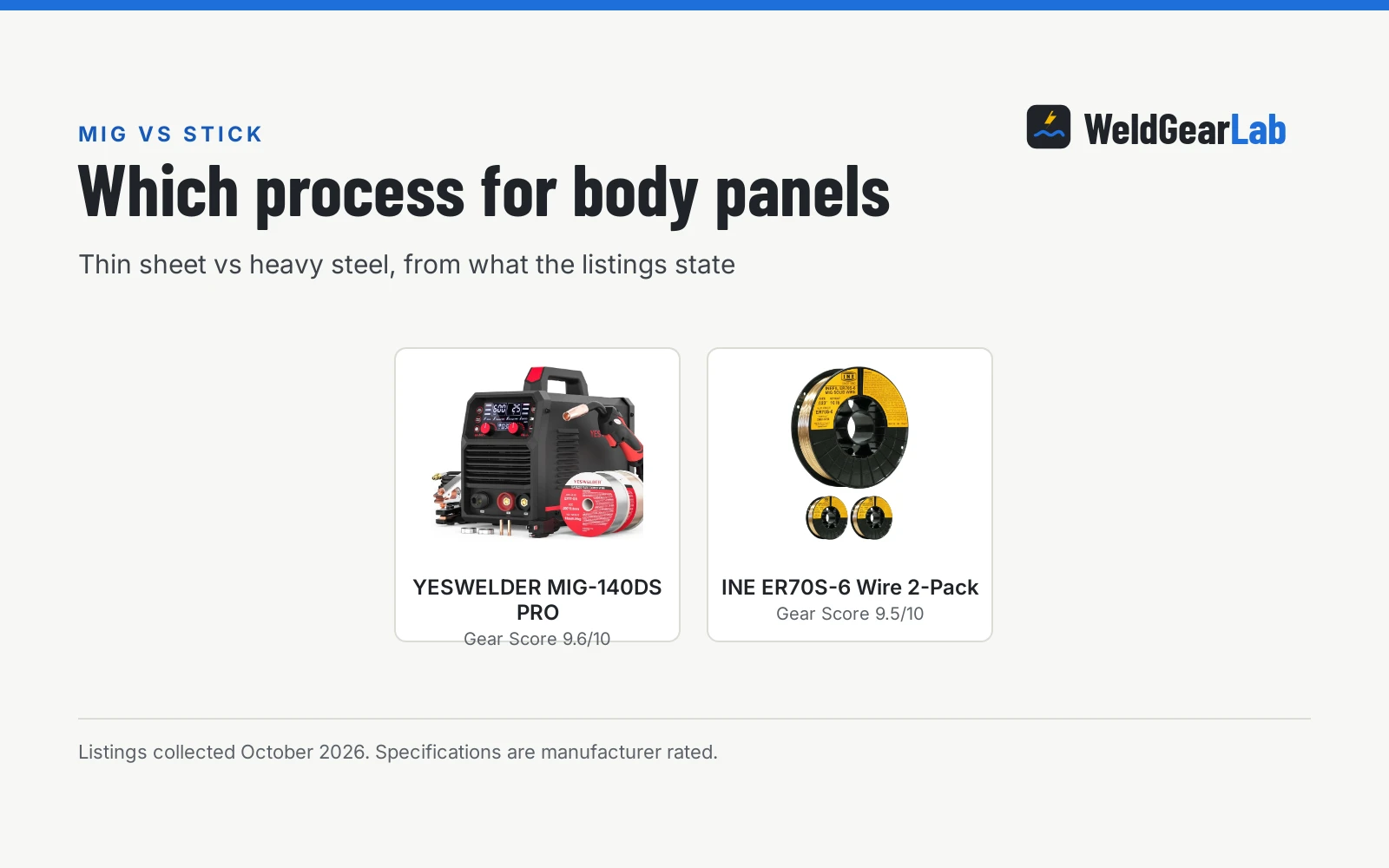
MIG wins most auto body work on speed; TIG wins on control for visible welds. This guide compares both with figures from the listings.

On this page
Top picks at a glance
As an Amazon Associate I earn from qualifying purchases.
- 1
 035" V Groove Drive Roll Kit Compatible with Miller9.6/10View on Amazon
- 2
 Dent Puller Welder 3500W 4200A Stud Welder Dent Repair Kit 69.6/10View on Amazon
- 3
 Forney 42290 Mig Wire ER70S-6 high strength wireView on Amazon
- 4
 Forney 42287 Mig WireView on Amazon
- 5
 MIG Welding WireView on Amazon
- 6
 Eastwood 180 Amp MIG Welder Machine Dual Voltage 110V 220VView on Amazon
- 7
 YESWELDER 135A MIG WelderView on Amazon
- 8
 INEFIL ER70S-6 MIG Welding Wire .023"View on Amazon
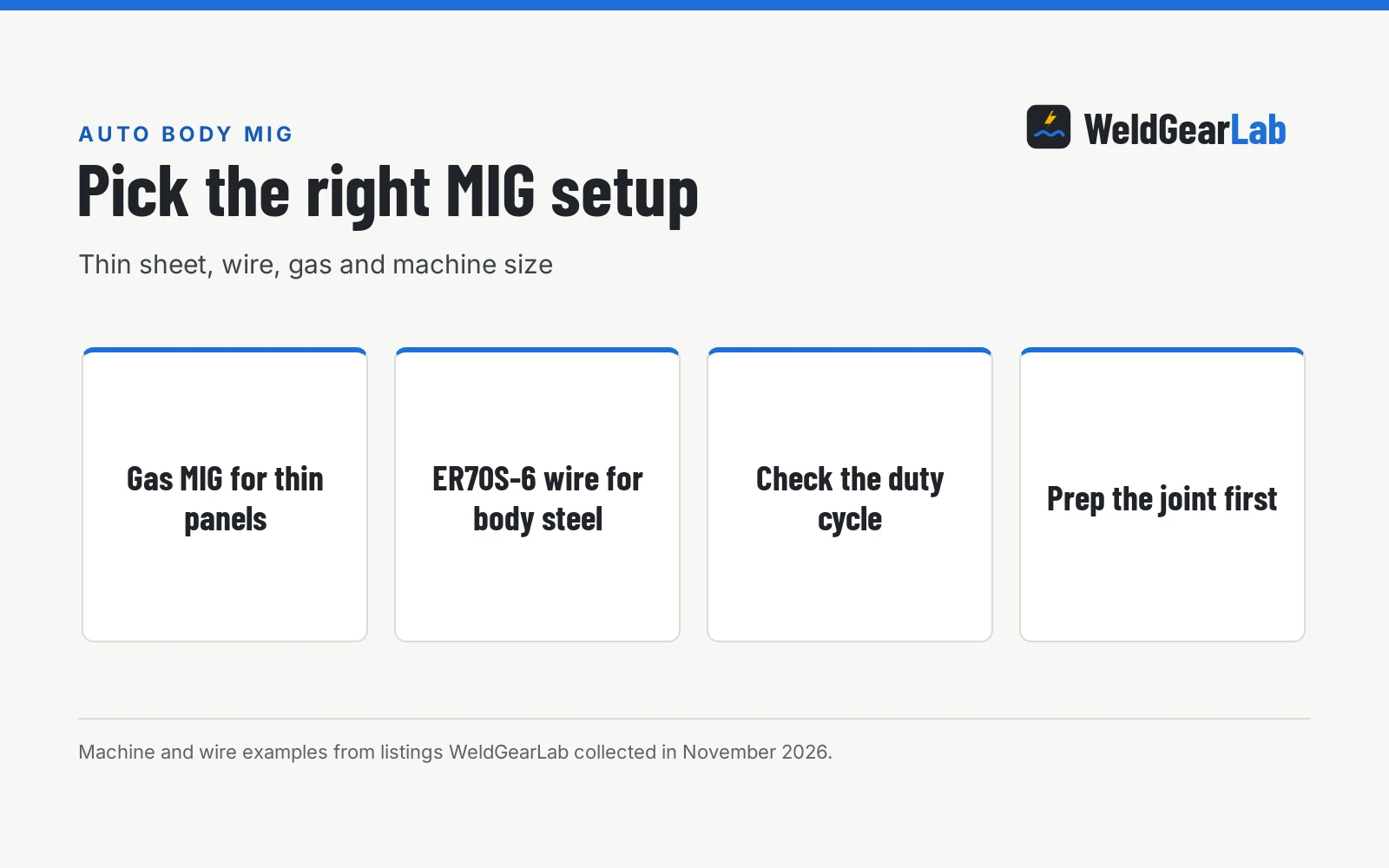
MIG vs TIG for auto body is a speed-against-control question, and speed usually wins: MIG lays fast tacks on thin sheet with one hand, which is what most panel replacement and patch work needs. TIG gives finer heat control and cleaner welds for visible work, at the cost of pace and a steeper learning curve. This guide compares both for body panels, with wire, gas and machine figures from the listings.
Other welders and gear to compare
 Forney 42290 Mig Wire ER70S-6 high strength wireCheck price on Amazon
 Forney 42287 Mig WireCheck price on Amazon
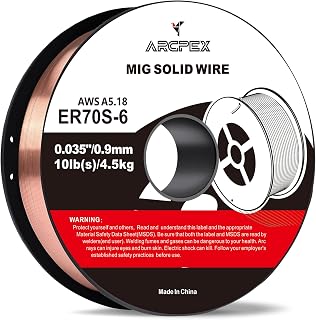 MIG Welding WireCheck price on Amazon
 Eastwood 180 Amp MIG Welder Machine Dual Voltage 110V 220VCheck price on Amazon
 YESWELDER 135A MIG WelderCheck price on Amazon
 INEFIL ER70S-6 MIG Welding Wire .023"Check price on Amazon
This guide links to our product roundups, where WeldGearLab gets a commission on purchases made through links on this page, and your price stays the same. Read our affiliate disclosure.
MIG vs TIG for auto body: the difference in one paragraph
MIG feeds wire automatically through the gun while you guide it with one hand, so tacking a panel is quick and repeatable. TIG uses a non-consumable tungsten electrode with the filler rod fed by your other hand and heat set by a pedal or control, giving precise control over a small, clean puddle. On thin auto body sheet, MIG’s quick tacks fight warping by keeping heat input low; TIG’s control fights warping by using only the heat the joint needs.
Side by side
| Factor | MIG | TIG | What the listings show |
|---|---|---|---|
| Hands needed | One: wire feeds itself | Two, plus heat control | General process design |
| Thin sheet | Fast tacks, spot timer | Lower heat, finer control | LOTOS spot timer |
| Wire | .023 to .035 ER70S-6 | Not stated in the listings | Eastwood; wire listings |
| Gas | 100% CO2 or 80/20 Ar/CO2 | Not stated in the listings | TOOLIOM; ARCPEX |
| Outdoors | Flux core needs no gas | Not stated in the listings | ARCPEX E71T-GS |
| Prep | Weld-through primer to 250F | Same prep either way | Seymour listing |
| Machine examples | 150A 120V; 180A dual voltage | Lift TIG on the LOTOS 150A | LOTOS; Eastwood listings |
| Stated warranty | 3-year limited; 1 year on wire | Not stated in the listings | Eastwood; ARCPEX |
Ratings in this table are the makers’ own claims taken from each product page (19 October 2026). Figures from one listing describe that listing only.
When MIG is the better choice
- Panel replacement and patches. Fast tacks and short stitches keep heat down on thin sheet; the LOTOS 150A lists an adjustable spot countdown timer for uniform, warp-free tack welds.
- One-hand operation. The wire feeds itself, so your other hand holds the panel or a copper spoon backer; the Gloxyuni spoon uses a 2mm copper plate to prevent burn-through on thin metals.
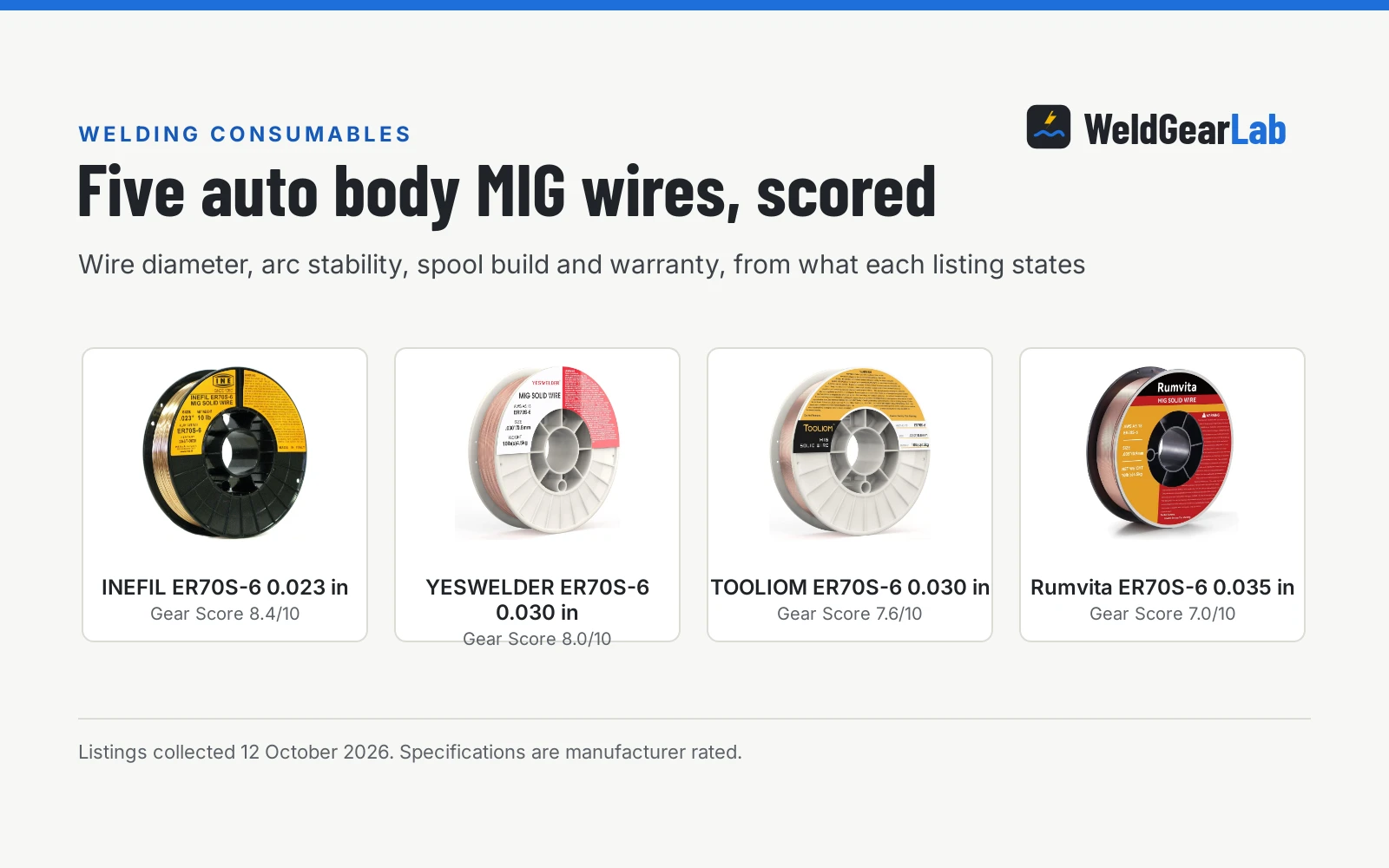
- Common wire. ER70S-6 in .035 is the standard pick across the TOOLIOM, Forney and ARCPEX listings; the Eastwood 180 runs .023 to .035 wire for sheet down to 24 gauge.
- Outdoor work. The ARCPEX E71T-GS flux core wire is self-shielding, so wind cannot blow the gas away.
- Easy setup. The LOTOS 150A is synergic, automatically matching wire feed speed to current, at 8.2 lb on 120V.
When TIG is the better choice
- Visible welds. TIG’s small, controlled puddle makes the cleanest beads with the least spatter to grind.
- Thin and tricky joints. Precise heat input suits butt welds on thin sheet where MIG risks blowing through.
- Aluminum panels. TIG handles aluminum body panels; the Eastwood MIG needs a spool gun for the same job.
- Learning the craft. The LOTOS 150A includes touch-start lift TIG alongside MIG and stick, so one machine covers both processes while you learn.
Prep matters more than process
Whichever process you pick, the weld is only as good as the prep. The Seymour listing describes a weld-through primer: zinc-enhanced, self-etching on bare steel and aluminum, heat rated to 250F, 30 minute set time, covering 12 sq ft per 15 oz can, VOC compliant with no lead, cadmium, mercury, chromates or chlorinated solvents. Prime the mating surfaces before assembly so the hidden joint resists corrosion. Back thin panels with the copper spoon while tacking, and keep tacks short and spaced to control heat.
Machine examples from the listings
The Eastwood 180 is a dual-voltage MIG welder that runs on both 120 and 240 volts, with a 30 to 180 amp range per its bullets; the spec table says 30 to 140 amps, so trust the bullets. It lists 30% duty cycle at 90 amps, welds 24 gauge to 5/16 in steel (3/16 in on 120V), and carries a 3-year limited warranty with 90-day return. Weight is contradictory: under 26 lb in the bullets, 42 lb in the spec table; trust the bullets. The LOTOS 150A is a 120V synergic machine at 8.2 lb, 150 amps with 25% duty cycle, handling steel to 3/16 in, with MIG, gasless flux core, DC stick and lift TIG in one box.
FAQ for welders
Can I MIG weld auto body panels?
Yes, it is the common choice. Use .023 to .035 ER70S-6 wire, short tacks instead of long beads, and a spot timer if your machine has one, like the LOTOS 150A. Back the joint with a copper spoon to prevent burn-through.
What wire should I use for auto body MIG?
The listings agree on ER70S-6 in .035: TOOLIOM, Forney and ARCPEX all list it for auto body repair. Run it with 100% CO2 or an 80% argon / 20% CO2 mix per the TOOLIOM and ARCPEX listings. Forney lists a 90 day warranty against manufacturer defects; the ARCPEX wires list 1 year.
Can I weld auto body panels outside?
With flux core, yes. The ARCPEX E71T-GS .035 wire is self-shielding, so it needs no gas cylinder and the wind cannot blow the shielding away. Expect more cleanup than gas-shielded MIG.
Do I need weld-through primer before welding panels?
For hidden joints, it is good practice. The Seymour listing describes a zinc-enhanced, self-etching weld-through primer rated to 250F with a 30 minute set time and 12 sq ft of coverage per 15 oz can. Apply it to mating surfaces before assembly.
MIG or TIG for a beginner doing body work?
MIG. The wire feeds itself, one hand does the work, and a synergic machine like the LOTOS 150A matches settings for you. TIG rewards patience with cleaner welds, but it asks for both hands and usually a pedal or hand control from day one. Our TIG vs MIG for beginners guide goes deeper.
Related: best MIG wire for auto body, best 120V MIG welder, best MIG welder for hobbyist and how to MIG weld thin sheet metal without burning through.