Flux Core vs Stick for Farm Repairs: Which One Should You Buy?
Flux core and stick both weld outdoors without gas. How they differ on wind, rust, setup, cleanup and cost, and which wire suits farm repairs.

On this page
Top picks at a glance
As an Amazon Associate I earn from qualifying purchases.
- 1
 ARCCAPTAIN Flux Core Welding Wire E71T-GS .035" 2LB x 39.5/10View on Amazon
- 2
 INETUB BA71TGS Flux Core Welding Wire .035"View on Amazon
- 3
 .040" Flux Core Welding WireView on Amazon
- 4
 .030" Flux Core Welding WireView on Amazon
- 5
 TOOLIOM E71T-GS .035" Gasless Flux Core Welding Wire 2LBView on Amazon
- 6
 findmall E71T-GS Gasless-Flux Core Wire Welding wire 0.035InView on Amazon
- 7
 Flux Core Welding WireView on Amazon
Flux core wins for most farm repairs. A wire-feed welder running self-shielded flux-core wire needs no gas cylinder, tolerates wind and light rust, and starts welding with a spool of wire like the INETUB BA71TGS or the Blue Demon E71TGS. Stick still earns its place for the heaviest, dirtiest repair work and for welders who already own a stick machine. This guide compares flux core vs stick for farm repairs across wind, setup, cleanup and cost, then names the wire to buy.
Other welders and gear to compare
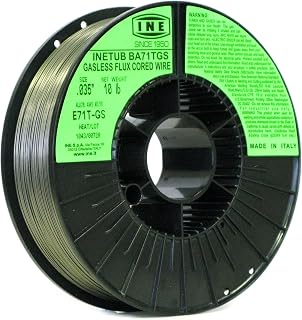 INETUB BA71TGS Flux Core Welding Wire .035"Check price on Amazon
 .040" Flux Core Welding WireCheck price on Amazon
 .030" Flux Core Welding WireCheck price on Amazon
 TOOLIOM E71T-GS .035" Gasless Flux Core Welding Wire 2LBCheck price on Amazon
 findmall E71T-GS Gasless-Flux Core Wire Welding wire 0.035InCheck price on Amazon
 Flux Core Welding WireCheck price on Amazon
This guide links to our product roundups, where WeldGearLab gets a commission on purchases made through links on this page, and your price stays the same. Read our affiliate disclosure.
The difference in one paragraph
Both processes shield the molten weld from air, but they do it differently. Self-shielded flux-core wire is hollow and filled with flux that burns to make its own shielding gas and leaves a layer of slag on the bead, so the welder needs no cylinder, hose or regulator. A stick electrode is a metal rod coated in flux; the coating burns off to shield the weld, and it also leaves slag. Flux core feeds wire continuously from a spool through a gun, while stick burns one electrode at a time and the welder stops to swap in a fresh rod.
What farm repairs actually demand
Farm work is rarely clean bench work. Repairs happen on gates, fences, trailers and equipment that carry rust, mill scale, paint and dirt, often outdoors where wind moves across the yard. That makes shielding gas from a cylinder hard to trust outdoors, since wind disturbs the gas shield and can leave the weld unprotected. Both flux core and stick work without gas, so the choice comes down to how much metal needs joining, how dirty it is, and what equipment is already in the barn.
For light to medium repairs, gates, panels, hinges and brackets, flux core on a small wire-feed welder is the faster setup: load the spool, set the polarity the wire calls for (DCEN on both wires listed here), and weld. For heavy sections, broken hitch parts and thick structural pieces caked in rust, stick electrodes keep burning where a small flux-core machine runs out of power. Many farms end up with both: flux core for the everyday fixes and stick for the jobs that need brute force.
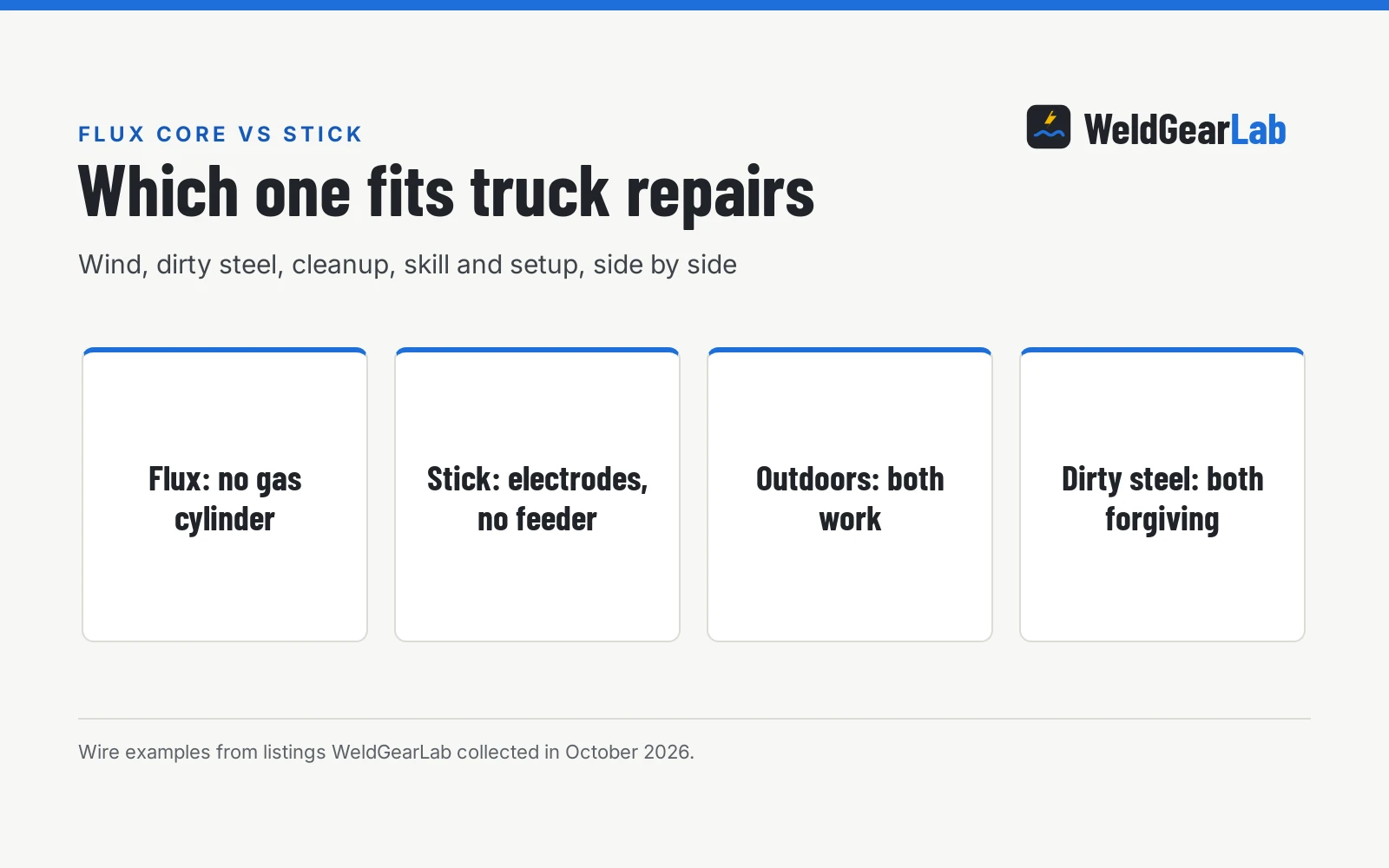
Flux core vs stick for farm repairs, side by side
| Flux core (self-shielded) | Stick (SMAW) | Farm verdict | |
|---|---|---|---|
| Shielding | Flux inside the wire makes its own gas | Flux coating on the electrode | Tie: neither needs gas |
| Gear beyond the welder | Spool of wire, no cylinder | Pack of electrodes, electrode holder | Tie: both simple |
| Wind and outdoor work | Tolerates wind; both listings name windy conditions | Tolerates wind | Tie |
| Rusty or scaled steel | Works with light surface rust or mill scale | Burns through heavier rust and scale | Stick on heavy rust; flux on light rust |
| Continuous work | Spool feeds without stopping (10 lb spool on the INETUB example) | Stop to change each electrode | Flux core |
| Cleanup | Slag to chip, some spatter | Slag to chip | Tie: both leave slag |
| Polarity | DCEN for both wires listed | Varies by electrode | Tie |
DCEN, straight polarity, is the standard setup for self-shielded flux-core wires like these two; always follow the polarity printed on your wire’s label and in the machine’s manual.
When flux core is the better choice
- Windy yards and fields. The INETUB listing calls its wire ideal for outdoor, field and windy conditions, and the Blue Demon listing names mobile welding and welding in windy conditions.
- Light rust and mill scale. The INETUB wire works on mild steel even with light surface rust or mill scale, which describes most farm equipment.
- No cylinder to buy or refill. Self-shielded wire needs no gas, so there is nothing to lease, refill or haul to the supplier.
- Continuous welding. A 10 lb spool feeds for long stretches without stopping to change electrodes.
- Thin to medium steel. The INETUB wire suits 10-gauge to 18-gauge metals, covering sheet, gates and light equipment.
When stick is the better choice
- Heavy, dirty steel. Stick electrodes keep burning on thick sections with heavy rust and scale where a small wire-feed machine runs out of power.
- You already own a stick welder. No new machine to buy; a pack of electrodes is the whole consumable list.
- Simple gear that travels. A stick machine, a stinger and a handful of rods need no drive rolls, liners or contact tips.
- Thick single passes. Larger electrodes deposit more metal per pass on heavy repair.
The wire to buy
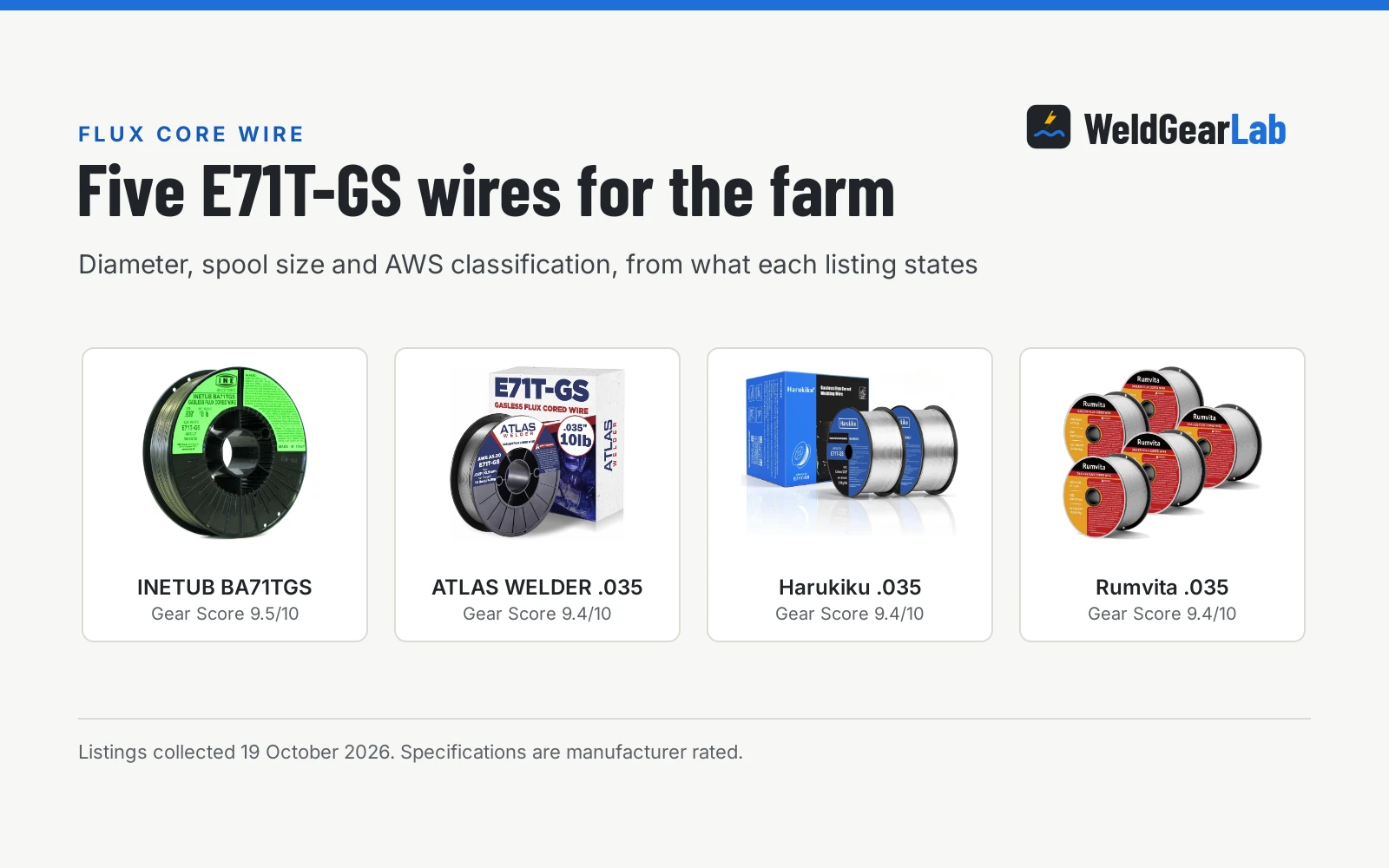
Of the two wires in the listings, the INETUB BA71TGS ranks first. It is an AWS E71T-GS classified wire made in Italy, rated for flat, horizontal, vertical and overhead positions, and its applications list names farm equipment, trailers, gates and fences directly. The .035 inch wire comes on a 10 lb spool and runs DCEN on most flux-core and MIG machines, with the maker naming Harbor Freight, Lincoln, Hobart, Eastwood and Forney among the compatible brands.
The Blue Demon E71TGS takes second. It is a .030 inch gasless flux-core wire sold as a 2 pack of 2 lb spools, also all-position and also DCEN, with easy slag removal stated. It suits buyers who want a smaller quantity on hand rather than a full 10 lb spool.
Flux core smoke and slag. Flux core makes more smoke and fumes than gas-shielded welding, and hot slag can flick off when chipped. Weld with good ventilation or outdoors with your head out of the plume, wear safety glasses under the helmet when chipping, and clear dry grass and anything flammable from the area. See the OSHA welding overview.
FAQ for welders
Can I weld outside with flux core?
Yes. Both wire listings name windy conditions as suitable work, because the flux makes its own shielding and there is no gas cylinder for the wind to disturb.
Will flux core work on rusty farm equipment?
The INETUB wire is listed for steel with light surface rust or mill scale. Heavy rust, thick paint and grease still need grinding or the weld will suffer.
What does E71T-GS mean?
It is the AWS A5.20 classification for a self-shielded flux-core wire. The INETUB listing notes it is a single-pass wire and not for multi-pass structural certification, so keep it to repair work rather than certified structures.
Do I need a special welder for flux-core wire?
A wire-feed welder that lists flux core, set to the polarity the wire calls for. Both wires here run DCEN, and the INETUB listing names machines from Harbor Freight, Lincoln, Hobart, Eastwood and Forney as compatible.
Is stick cheaper to start than flux core?
A stick machine plus a pack of electrodes can cost less up front than a wire-feed welder and spool. The trade is speed: electrodes stop every rod while a spool feeds continuously, so flux core wins on longer jobs.
How do I choose between the two wires listed?
Pick the INETUB BA71TGS for the larger 10 lb spool, the E71T-GS classification and the farm equipment applications it names. Pick the Blue Demon 2 pack for a smaller quantity of .030 inch wire to keep on hand.
Related: how to choose a MIG welder, best flux core welder, stick welder vs MIG welder for farm repairs, and the stick welders hub.