Elkskin vs Cowhide Welding Gloves: Which One Should You Buy?
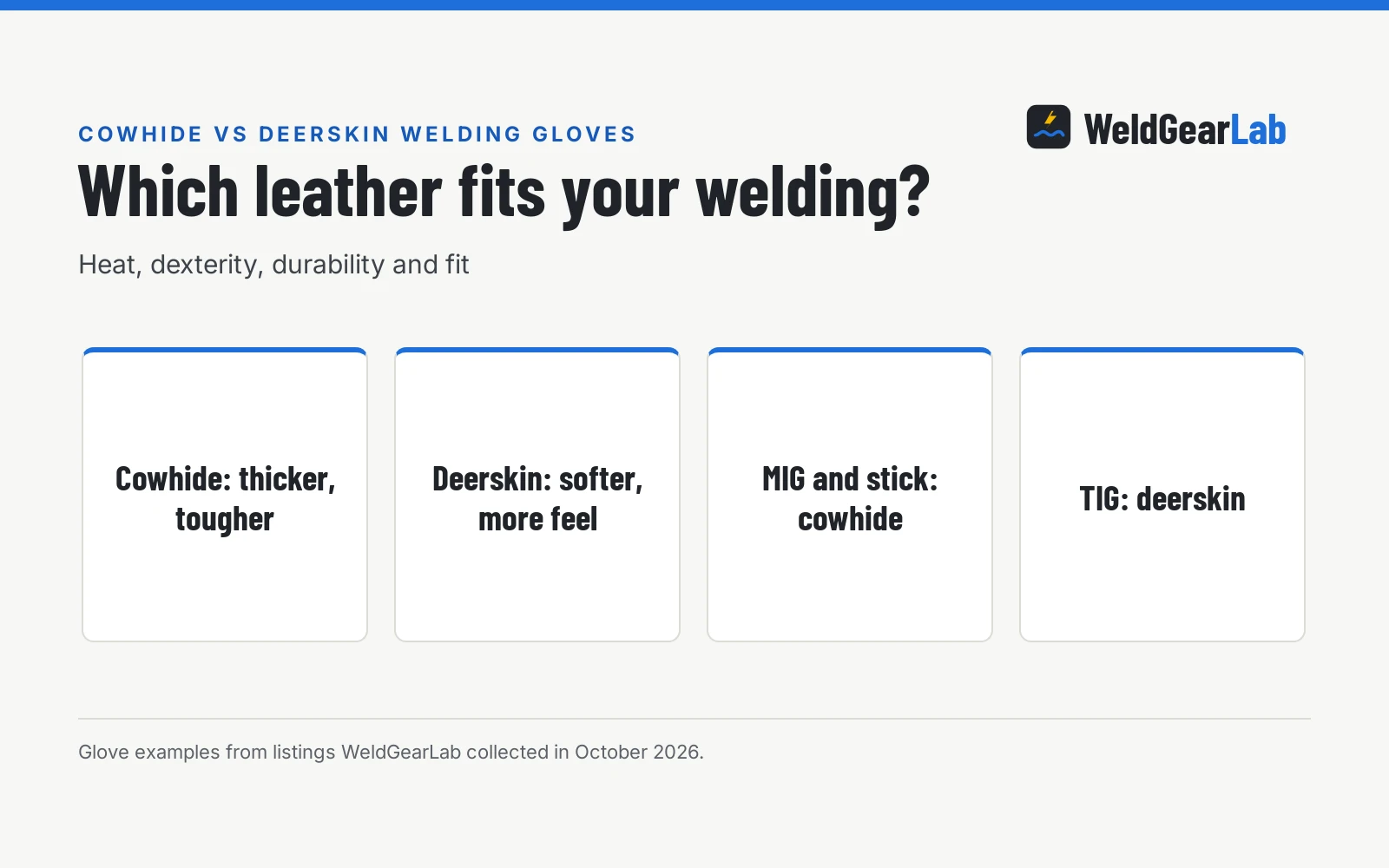
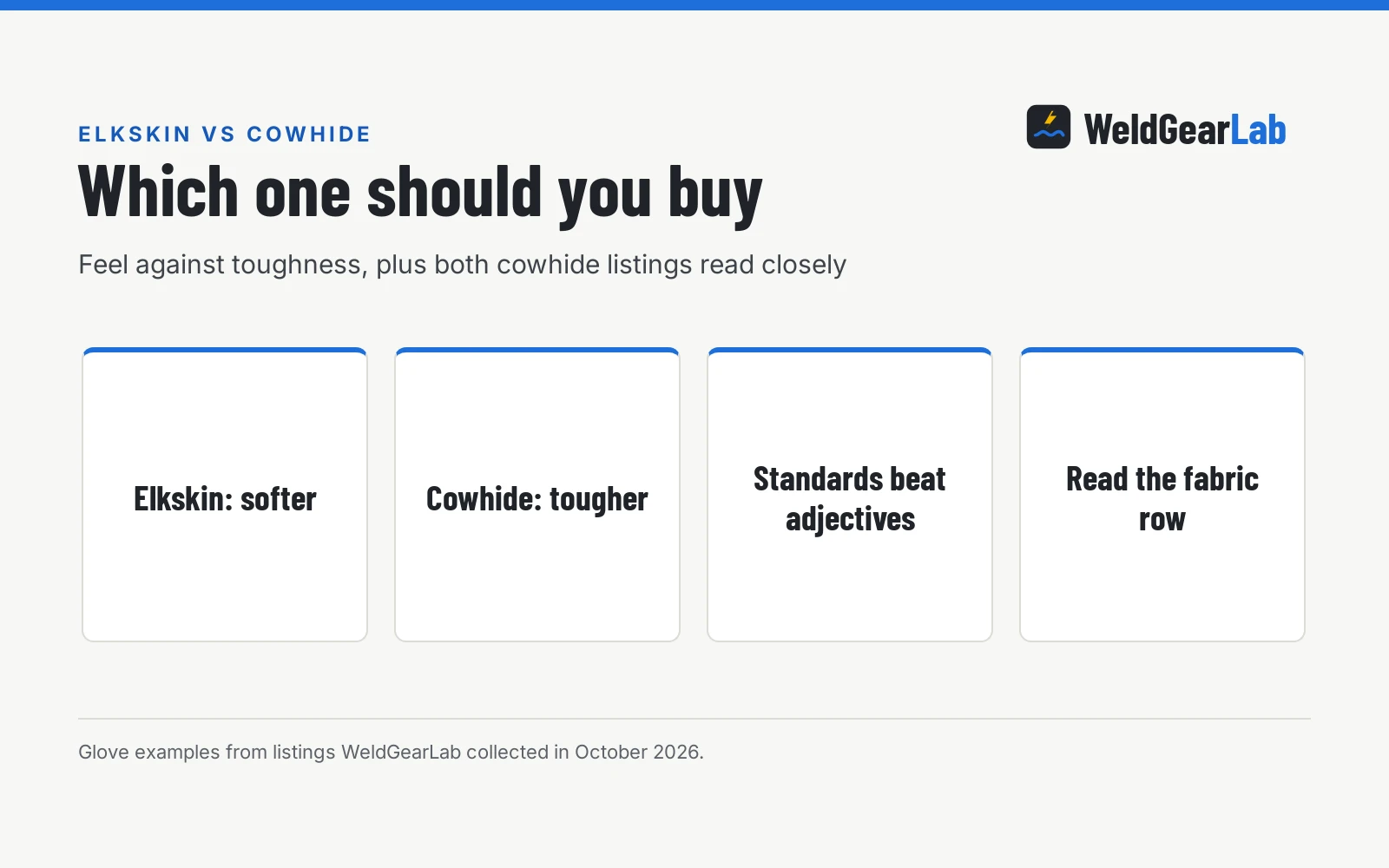
Elkskin stays softer and more flexible for TIG and light work, while cowhide takes more abuse from spatter and grinding; both listings here are cowhide, read closely below.

On this page
Top picks at a glance
As an Amazon Associate I earn from qualifying purchases.
- 1
 Wells Lamont TIG Welding Gloves9.6/10View on Amazon
- 2
 John Tillman and Co Tillman Large 14" Gold and Pearl Top9.5/10View on Amazon
- 3
 Black Stallion9.6/10View on Amazon
- 4
 Wells Lamont Leather Welding GlovesView on Amazon
- 5
 Cowhide Welding GlovesView on Amazon
- 6
 TOPDC Welding Gloves 16-Inch 932°F Heat Resistant Leather forView on Amazon
- 7
 TOPDC 14Inch Welding Gloves 482°F Heat Resistant Leather forView on Amazon
- 8
 TOPDC TIG Welding Gloves 14InView on Amazon
- 9
 OZERO 932°F Heat Resistant Gloves: Welding Gloves Men WomenView on Amazon
Sparks shower off the joint and the glove hand sits close to the heat. Between your hand and that heat, small differences in how a glove bends, breathes and holds up add up over a long day of tacking and grinding. This guide answers elkskin vs cowhide welding gloves directly: which leather feels better, which one survives rougher use, and which suits the MIG and stick work most home and farm welders do.
Other welders and gear to compare
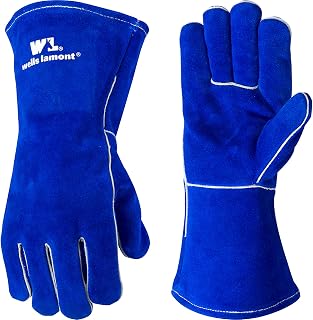 Wells Lamont Leather Welding GlovesCheck price on Amazon
 Cowhide Welding GlovesCheck price on Amazon
 TOPDC Welding Gloves 16-Inch 932°F Heat Resistant Leather forCheck price on Amazon
 TOPDC 14Inch Welding Gloves 482°F Heat Resistant Leather forCheck price on Amazon
 TOPDC TIG Welding Gloves 14InCheck price on Amazon
 OZERO 932°F Heat Resistant Gloves: Welding Gloves Men WomenCheck price on Amazon
This guide links to our product roundups, where WeldGearLab gets a commission on purchases made through links on this page, and your price stays the same. Read our affiliate disclosure.
Elkskin vs Cowhide Welding Gloves: the Difference in One Paragraph
Elkskin is the softer, more flexible hide. It molds to the hand quickly, gives a better feel for the puddle and the filler rod, and many TIG welders choose it for that reason. Cowhide is the tougher hide. It stands up better to abrasion, grinding sparks and rough handling, and it is the leather on most heavy MIG and stick gloves. Neither leather is wrong; the right one depends on the process you run and how hard the glove will be worked.
Side by side
| Intra-FIT Cowhide MIG Glove | Tillman Split Cowhide Glove | Why it matters | |
|---|---|---|---|
| Leather | Cowhide in title and fabric type row; a single spec row says goatskin palm and back | Split cowhide | Trust the title and fabric row over a stray spec row |
| Cuff | Long cuff with long sleeve listed | 18 inch glove length listed | Longer cuffs shield the wrist and forearm from spatter |
| Liner | Fleece liner listed | Cotton liner listed | Fleece insulates; cotton is lighter |
| Stitching | Kevlar stitching listed | Kevlar stitching listed | Heat resistant thread on both |
| Palm | Leather with reinforced palm | Leather palm | Reinforcement takes the wear on the work hand |
| Stated standard | EN388-2132X and EN407-413X4X, Type A | None stated | A stated code beats an unstated claim |
| Warranty | No concrete term stated | No concrete term stated | No stated term means no warranty credit |
| Sizes | Chart from 2X-Small to 3X-Large | Large in title, One Size in size row | A full chart lets the hand size be matched |
| Item weight | 0.29 kg listed | 12 ounces listed | Units differ across listings; compare within one listing only |
The Intra-FIT table lists a thickness of 1 centimeters, which is not a usable glove figure, and neither maker states a break-in time, so compare what the listings actually state: leather, liner, stitching and any stated standard. The table below compares both cowhide listings, with the better documented one first.
When Elkskin Is the Better Choice
- TIG and light MIG. When feel matters, the softer hide wins. Finger movement stays easy, which helps on thin stock and precise fit-ups.
- Long sessions. Elkskin molds to the hand sooner, so the glove fights you less.
- Delicate handling. Positioning small parts and holding filler rod are easier when the leather bends with the hand instead of against it.
When Cowhide Is the Better Choice
- Heavy spatter. Stick and flux core throw more spatter than TIG, and cowhide shrugs it off better.
- Grinding and rough stock. Abrasion is where the tougher hide earns its keep.
- Farm and shop abuse. Gloves that double as material-handling gloves last longer in cowhide.
- Long-cuff MIG work. Both long-cuff listings here are cowhide, and the Intra-FIT listing pairs it with EN388 and EN407 certification.
Heat around the weld is not the only hazard; sparks and slag reach past the gloves, which is why a wool vs fiberglass welding blanket comparison sits next to gloves on most safety shelves.
Both Cowhide Listings on Hand
Both listings for this guide are cowhide, so there is no elkskin listing to compare them against. The notes below cover each listing. Numbers below come straight from the listings.
Intra-FIT cowhide MIG glove. The listing states cowhide MIG welding gloves with a long cuff, EN388-2132X and EN407-413X4X certification and Type A protection. It lists a cowhide fabric type with split leather material features, a fleece liner, Kevlar stitching, a reinforced palm, a keystone thumb, a pull-on closure, a long sleeve, heat resistance, a water repellent level and an ambidextrous fit, with hand washing as the care instruction and an item weight of 0.29 kg. The title names MIG welding gloves, and the spec table lists TIG welding as the application. A single spec table row lists the palm and back as goatskin, which contradicts the title and the fabric type row; the title and fabric row win. The warranty description says NO and the product warranty field only points to a warranty information link, so no concrete warranty term is stated.
Tillman Premium Split Cowhide glove. The title states a split cowhide welding glove in brown, and the spec table lists an 18 inch glove length, 12 ounces item weight, Kevlar stitching, a cotton liner, a wing thumb, hand washing and an ambidextrous fit. The listing does not resolve its own conflicts: the number of items row says 2 while the unit count says 1 Count and the title is singular, the title says Large while the size row says One Size, and the recommended use says Construction on a welding glove. No safety standard is stated, and the warranty field only points to a warranty information link, so no concrete warranty term is stated.
Sizing and Fit Notes
The Intra-FIT listing gives a size chart running from 2X-Small to 3X-Large by hand width, so measure the hand and match the chart rather than guessing. The Tillman listing names Large in the title but lists One Size in the size row, so treat the fit as less certain and check the return terms before ordering. Both list an ambidextrous fit and hand washing for care.
How to Read a Welding Glove Listing
- Trust the title and fabric row. A stray spec row can contradict them, as the goatskin palm row above shows.
- Look for the liner and stitching. Fleece insulates, cotton is lighter, and Kevlar stitching holds up near heat.
- Check for a stated standard. EN codes or an ANSI reference that the listing actually names mean more than adjectives like heavy duty.
- Match the cuff to the work. Long cuffs shield the wrist and forearm where spatter lands.
Gloves are part of the kit; welding boots cover the feet while the gloves cover the hands.
FAQ for welders
Do elkskin welding gloves last as long as cowhide?
In rough service, cowhide usually outlasts elkskin because the tougher hide resists abrasion better. Elkskin trades some of that life for softness and feel. For TIG and light work the difference is small; for grinding and heavy spatter it shows.
Can I TIG weld in cowhide gloves?
You can, and many welders do when cowhide is what they own. The thicker, stiffer leather gives less feel for the filler rod than elkskin, so welders on thin stock often keep a softer pair. For occasional TIG, cowhide works fine.
What does EN388 on a welding glove listing mean?
EN388 is a European glove standard that rates mechanical protection such as abrasion, cut and tear. A listing that prints the code, like the Intra-FIT listing here, is making a checkable claim. A listing with no stated standard is asking you to take its word for the protection.
Should welding gloves fit tight or loose?
Snug enough to control the work, with room to make a fist without the seams pulling. A glove that is too loose catches on clamps and corners, and a glove that is too tight leaves the fingertips pressed against hot spots. Measure the hand against the size chart when the listing provides one.
How do I make welding gloves last longer?
Keep them dry, brush off grinding dust, and let them cool before stacking them near heat. The listings here state hand washing, so skip the machine. Rotate pairs when you weld often so each pair dries out between sessions.
Related: wool vs fiberglass welding blanket, leather vs rubber welding boots, and steel vs Teflon MIG liner.